
As the main port of entry for European wines, New York has always been America’s bellwether of international wine trends. Today, the Empire State is a domestic trendsetter in its own right, demonstrating how an adventurous approach to unexpected grape varieties, an eco-conscious mindset, and hospitality can elevate an entire region.
Unlike most appellations, where a deference to history and tradition is paramount, New York is blazing a trail based on a devotion to science and sustainability: Across the state’s 11 AVAs, the regional zeitgeist centers on a climate-first approach to planting that overflows into winemaking, education, and marketing.
By cultivating 134 varieties across the state’s 29,586+ acres of vineyards based on climatic nuances, New Yorkers are reimagining generational trends in winemaking. Historically, vintners often emulated Europe and chased the market, planting popular varieties in response to evolving consumer preferences, but this approach did not guarantee high-quality wines or economically viable wineries. Looking to new hybrids and unexpected Vitis vinifera clones is proving to be a successful alternative path.

Don’t miss the latest drinks industry news and insights. Sign up for our award-winning newsletters and get insider intel, resources, and trends delivered to your inbox every week.
This climate-first approach, supported by the efforts of the New York Wine & Grape Foundation (NYWGF), upends the reactionary process. Now, growers are setting themselves up to produce dynamic, high-quality wines while stewarding the land and their balance sheets for future generations. And the diversity across the state’s winegrowing regions—from the Atlantic-influenced South Fork of Long Island to the snowy Great Lakes Region—makes the state an experimentalist’s dream.
Embracing Hybrid Varieties
Unbeknownst to many, New York is the third-largest wine producing state in the U.S., yet it’s the dominant force in cultivating hybrid and native American varieties: Over 76 percent of New York grapes are American and hybrid varieties, according to the state’s 2024 survey. For wine production, the hybrid white grape Aurora is the most widely planted, followed by Riesling.
Prized for their resiliency compared to many vinifera varieties, hybrid grapes are a winning solution for New York’s varied terroirs. While well-known Mediterranean varieties boast widespread name recognition, many struggle to ripen in New York—especially in cold, continental climates like those found in Lake Erie, the Niagara Escarpment, Finger Lakes, Champlain Valley, and the Upper Hudson. Thanks to continued research by Cornell University, among other research institutions, contemporary hybrids are yielding exceptional wines in these regions. The hybrid grape Cayuga, for instance, yields bright and citrusy wines, yet can withstand freezing winter temperatures.

Other hybrids offer disease resistance to growers in damp climates, where mold can decimate vinifera varieties. Many popular hybrid varieties, like Traminette, Seyval Blanc, Vignobles, and Vidal are exceptionally resistant to fungal diseases, which means lower reliance on pesticides in the vineyards, and fewer passes through each row on a tractor—significantly reducing fossil fuel use and emissions, while protecting both the soils and local watersheds.
While previous generations eschewed hybrids in favor of vinifera varieties, modern hybrids combine the range of aroma and flavor complexities found in well-known varieties. In fact, many New York wineries are making direct substitutions for vinifera varieties with hybrids. Long Island stalwart Osprey’s Dominion, recently planted Sauvignon Kretos and Sauvignon Rytos as replacements for early-budding Sauvignon Blanc. These varieties deliver a similar flavor profile, yet bud later—delivering quality to consumers while ensuring a more reliable harvest and sustainable winery operation.
In the Finger Lakes, Osmote winemaker and business manager Ben Riccardi has been experimenting with hybrids, including Marquette and Aromella. Unlike more delicate varieties, these two hybrids were designed to withstand cold temperatures. As a result, Riccardi and his team won’t have to bury the vine trunks each winter to enable the vines to thrive—instead, the winery will reduce both its labor costs and erosion, two critical elements of long-term sustainability.
Reimagining Tradition
Elsewhere in the Empire State, vintners who rely on vinifera varieties are reimagining the future by experimenting with different clones and varieties better suited to specific New York terroirs.
At Chateau Niagara, for example, Jim and Kathy Baker dreamed of crafting Bordelaise wines. However, they’ve embraced obscure eastern European grape varieties, including Feteasca Neagra and Saperavi to deliver their flagship, full-bodied reds. Grown primarily in the Republic of Georgia and Romania, these varieties are naturally drought and cold tolerant, unlike many western European varieties, which struggle to thrive in northern New York’s cold, continental winters.
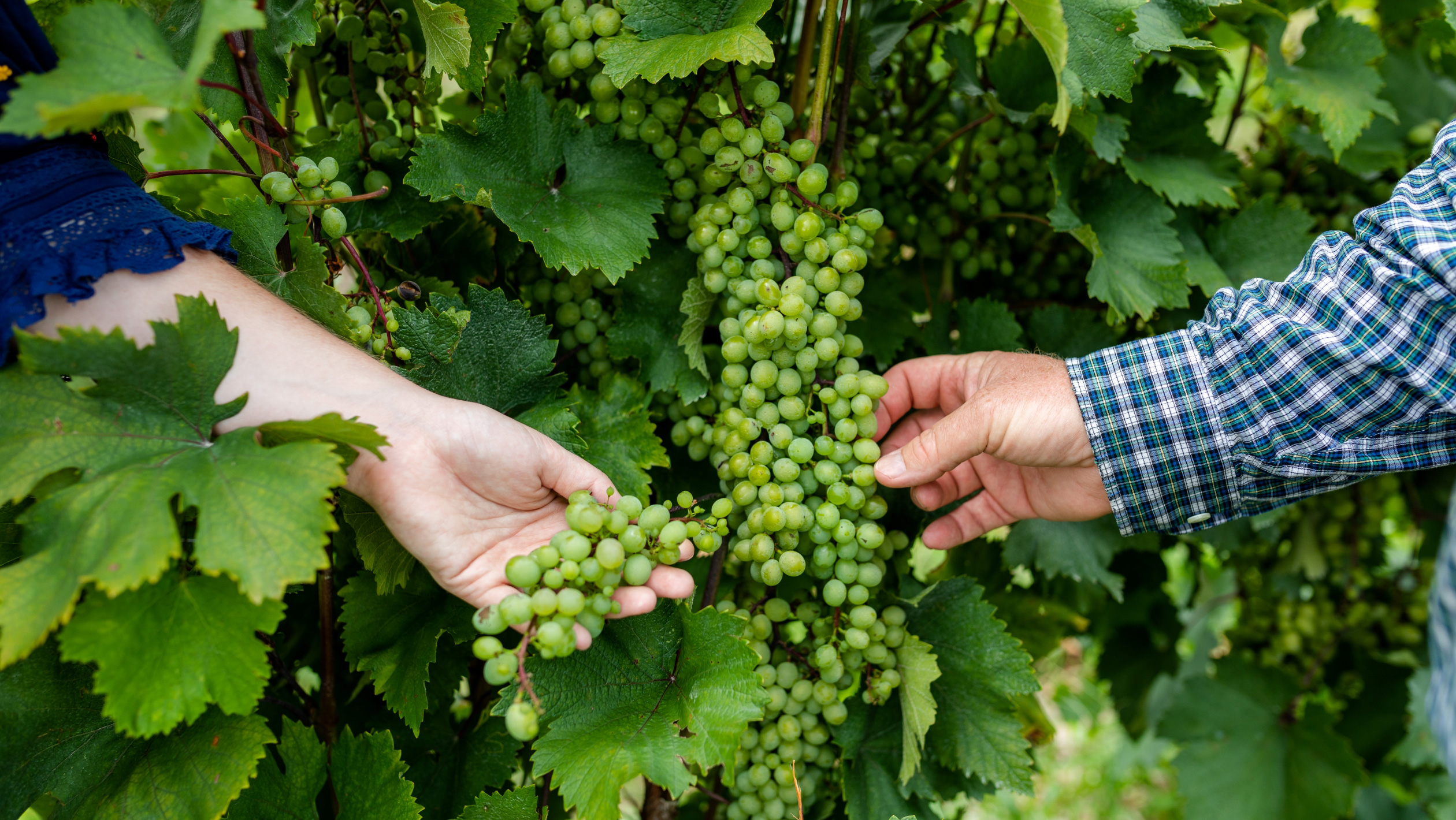
Riesling and Cabernet Franc remain New York’s flagship vinifera varieties and are not going anywhere, though local producers are continuing to refine their plantings of these standout varieties.
Across the Hudson Valley, for example, many producers have partnered with the Hudson Valley Cabernet Franc Coalition, a 501c(6) organization. With a mission to showcase and elevate this grape across the Hudson Valley AVA specifically, the coalition is elevating the status of the grape statewide by inspiring more thoughtful plantings of the grape, which has been grown in New York for over 30 years.
In Long Island, winemaker and Wölffer Estate partner, Roman Roth, has begun experimenting with Loire Valley clones of Cabernet Franc rather than exclusively using Bordelaise clones since Wölffer’s immediate climate is more similar to the Loire Valley than to Bordeaux. By utilizing these clones and conducting ongoing research, Wölffer and others are further refining New York’s Cabernet Francs—delivering exceptional wines that are more resilient to cold stress and the state’s future climate.
Ongoing research at institutions like Cornell University continues to foster the development of hybrid varieties and traditional vinifera varieties. As new research and data become available from growers, the Cabernet Franc Coalition, and the NYWGF’s in-depth two-year survey, producers are further refining their approaches. The early results show a self-perpetuating cycle: producers reinvesting in varieties naturally suited to their terroirs, resulting in high-quality, multidimensional wines that captivate consumers and elevate the reputation of modern and historical varieties alike.
As consumers seek out increasingly unique and authentic wines and tasting room experiences, New York producers are delivering—and their methodology is a blueprint that other American regions can emulate to capture the attention of future generations.

Dispatch
Sign up for our award-winning newsletter
Don’t miss the latest drinks industry news and insights—delivered to your inbox every week.