
SevenFifty Daily’s 2026 Drinks Innovators
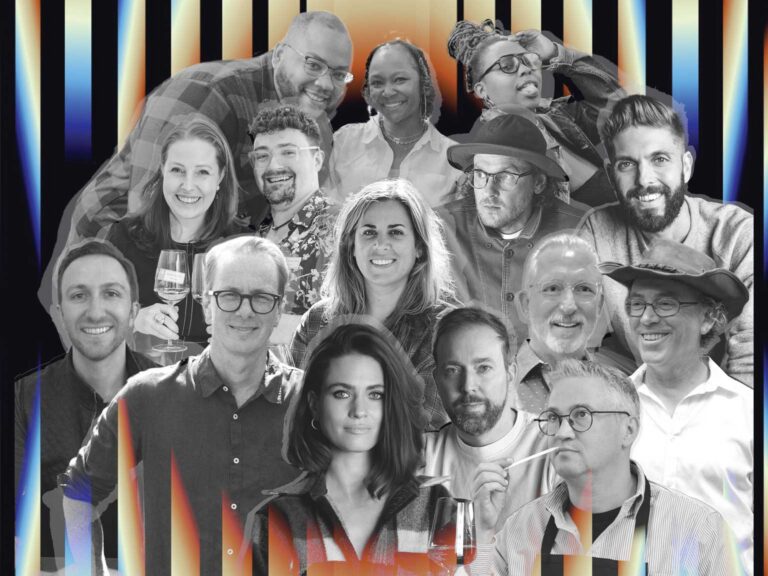
Introducing this year’s nine award winners, whose innovation, leadership, and advocacy are shaping the future of beverage
Innovation in the drinks industry doesn’t always come in a bottle. Sometimes it’s a new way of thinking about drinks education, or transforming how a wine region tells its story; perhaps it’s a technology that reimagines a vital resource, or an idea that creates opportunities where none existed before.
As the beverage industry continues to navigate changing consumer habits, economic pressures, and evolving expectations, this year’s SevenFifty Daily Drinks Innovators show that meaningful progress often begins by questioning long-held assumptions. From expanding access to wine education and strengthening opportunities for small producers to rethinking non-alcoholic spirits, cocktail service, and community building, these innovators are developing new models with the potential to influence the industry for years to come.
Selected from more than 100 nominations, the 2026 class of Drinks Innovators celebrates the people and organizations moving the beverage world forward—not simply through new products, but through new ideas, new systems, and new ways of connecting people with drinks and with one another.
Join us in celebrating SevenFifty Daily’s 2026 class of Drinks Innovators!
Our 2026 Innovators





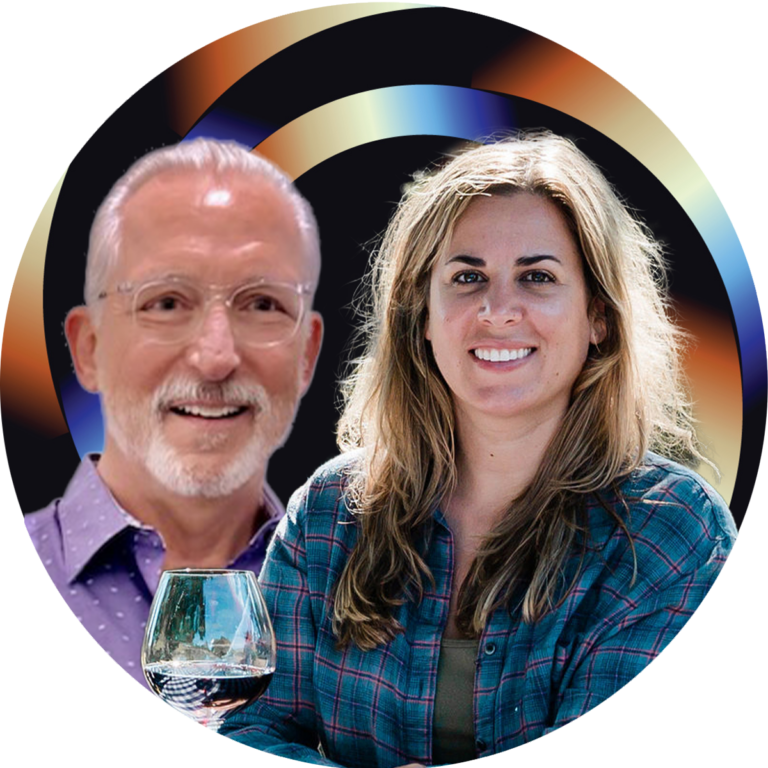

Erik Martella
Lecturer and wine specialist, Appalachian State University
Awarded for: Reimagining wine education as a tool for career access, confidence, and opportunity—and enticing younger drinkers into the world of wine in the process
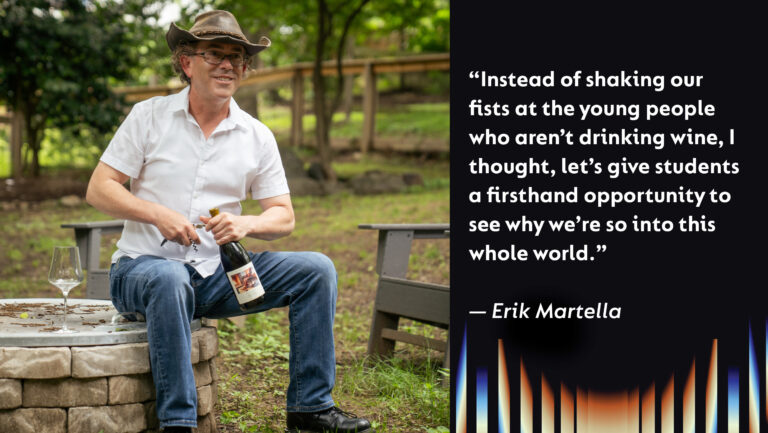
While the wine industry often casts Gen Z as a culprit for the current downturn, Erik Martella, a North Carolina winemaker with a foothold in higher education, resists that narrative. Instead of finger-pointing, the owner of Erik Martella Wines set his sights on solutions. He developed and funded an original program at Appalachian State University called “Wine and Fine Dining for Emerging Professionals,” which offers students an opportunity to learn the fundamentals of fine dining and wine appreciation in conversation with members of the local food and beverage industry. “As an industry, we lament that young people aren’t drinking wine,” says Martella. “So, we put something together to expose younger people to the fine-wine-and-conversation experiences we’ve so enjoyed and appreciated.”
Rather than training future sommeliers, the program offers students from all fields of study the skills to navigate business dinners and confidently approach wine lists and fine dining environments, which often serve as gateways to career advancement. By treating wine literacy as a form of professional access—while removing financial and cultural barriers through scholarships and immersive experiences—Martella is opening doors for a new generation of wine drinkers, while challenging the industry to think differently about who wine education is for. (Amy Beth Wright)
Ben Branson
Founder, Sylva
Awarded for: Developing a new class of wood-matured, non-alcoholic spirits that aren’t trying to be whiskey—they’re trying to be something entirely new
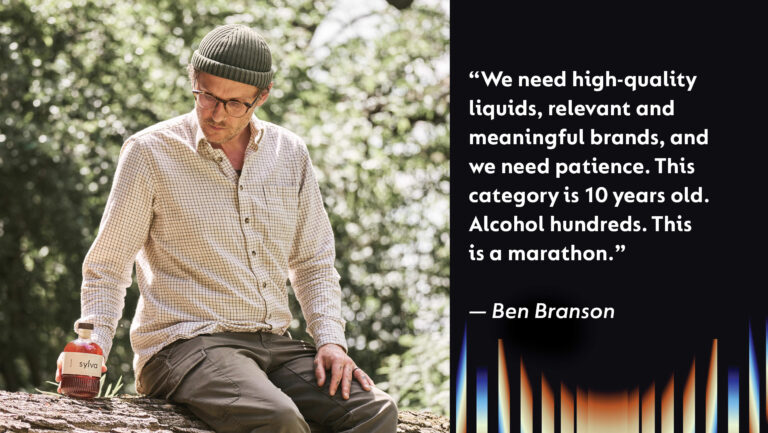
Ben Branson expects more from the non-alcoholic beverage landscape—and he thinks the industry should too. Back in 2015, he pioneered the non-alcoholic spirits category with Seedlip. A decade later, Branson is once again shaking up the now-multibillion-dollar category and challenging expectations with Sylva, the non-alcoholic distillery he launched in 2024.
Sylva’s lab is perched in England’s Colne Valley, on the site of a Benedictine monastery built more than 1,000 years ago. There, instead of recreating a familiar spirit, Branson is exploring wood itself as a flavor system. He’s experimenting with how to process, roast, smoke, caramelize, and toast more than 250 species of trees to extract natural flavors like chocolate cake, buttered toast, and smoked plum—and that’s just the beginning. Rather than asking what alcohol-free whiskey should taste like, Branson is asking what entirely new adult beverages might taste like. In doing so, he’s helping shift the conversation around non-alcoholic drinks from replacement to reinvention. (Kathleen Willcox)
Gabriella Macari and Max Rohn
Cofounders, Cab Franc Forward
Awarded for: Creating a blueprint for collaborative, producer-led movements to elevate underrepresented wine regions
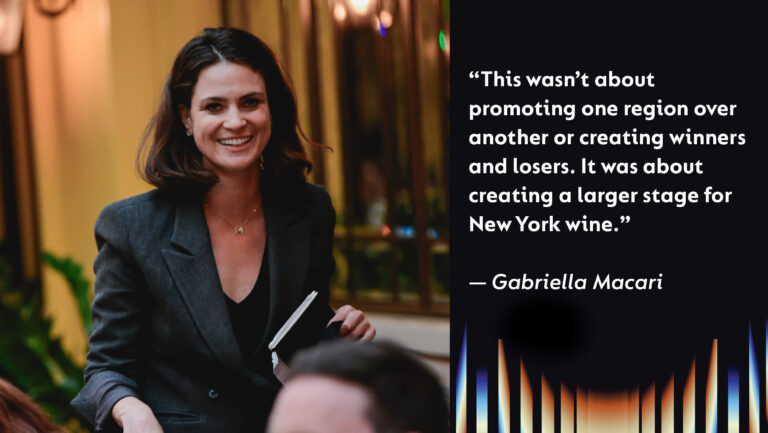
When Macari Vineyards’ Gabriella Macari and Wölffer Estate’s Max Rohn started comparing notes, they realized Cabernet Franc had become more than a bright spot for New York wine—it was an opportunity to rethink how American wine regions build identity. Across Long Island, the Finger Lakes, and the Hudson Valley, producers were making distinctive Cabernet Francs that reflected their origins, yet no single winery could tell the full story alone. In 2024, Macari and Rohn launched Cab Franc Forward, a winery-led initiative designed to position Cabernet Franc as a defining grape for New York State, and it’s become a model for regional collaboration in a challenging wine market.
What began with eight founding wineries quickly grew into a statewide movement. By its second grand tasting, 40 wineries were pouring Cabernet Franc for more than 600 trade and consumer attendees, with sold-out seminars and growing engagement from media, sommeliers, retailers, and educators. What has followed is more than a successful campaign—it’s a shift in how New York wine is discussed and understood. At a time when American wine faces shifting consumer habits and intense competition for attention, Cab Franc Forward is demonstrating how regional collaboration can create momentum that no single producer could build alone. (Emily Cappiello)
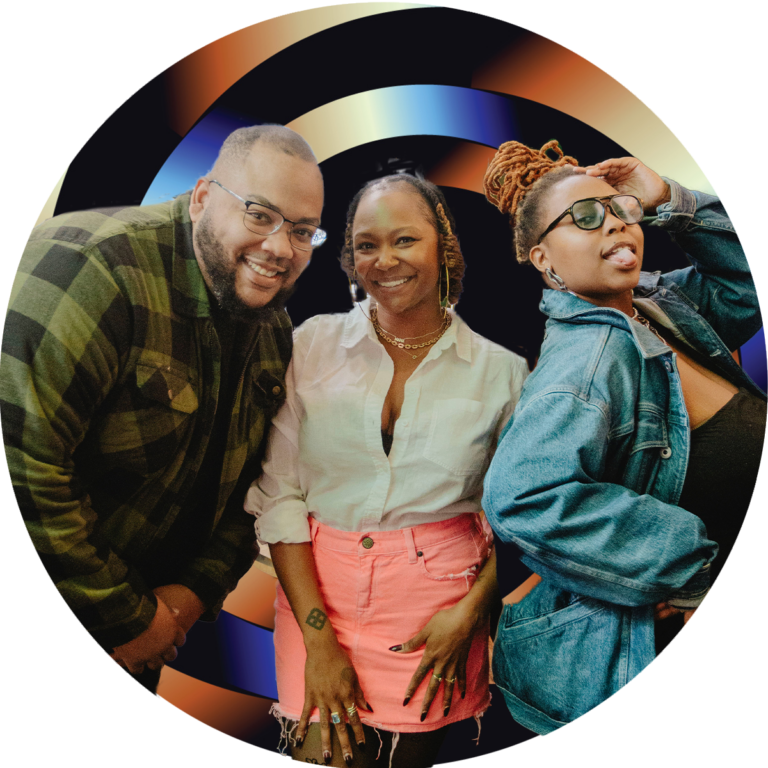
Kapri Robinson, Michael Holiday, and Denaya Jones-Reid
Cofounders, Future Giants
Awarded for: Equipping the next generation of Black and brown bartenders with the leadership skills to shape the future of hospitality
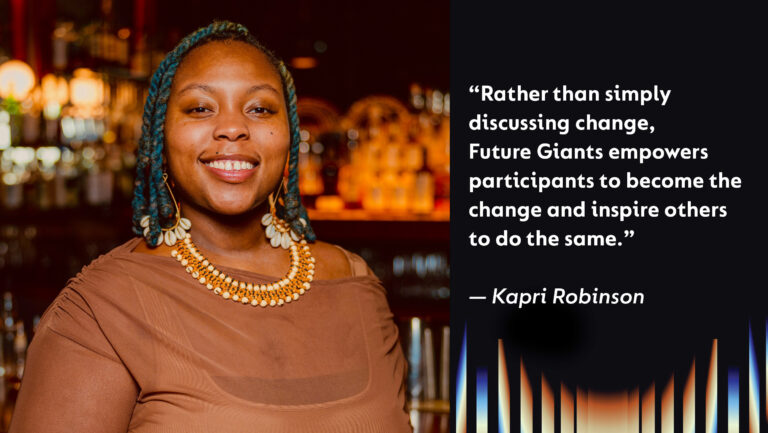
When Kapri Robinson, Michael Holiday, and Denaya Jones-Reid created Chocolate City’s Best in 2018, the mission was to simply establish a network that could provide opportunities to elevate the careers of Black and brown hospitality professionals in Washington D.C. The 2025 launch of Future Giants, a competitive program that combines mentorship and educational seminars, expanded the organization’s efforts to develop emerging Black and brown hospitality leaders nationwide and give them the tools and opportunities needed to implement the changes they want to see in the industry. Each stage of the five-day competition is designed to help transform contestants’ vision into an actionable proposal. At the end of the immersive program, each participant delivers a presentation outlining a tangible solution to the issue they identified in their application.
“Throughout my career, I have seen firsthand how transformative mentorship, education, and exposure can be, yet those opportunities are not always equally accessible to everyone,” says Kapri Robinson, the founder of Chocolate City’s Best and president of Future Giants. The goal isn’t another competition, but a platform to amplify the voices of future industry leaders and help them acquire the tools to influence the future of hospitality. (Jacy Topps)
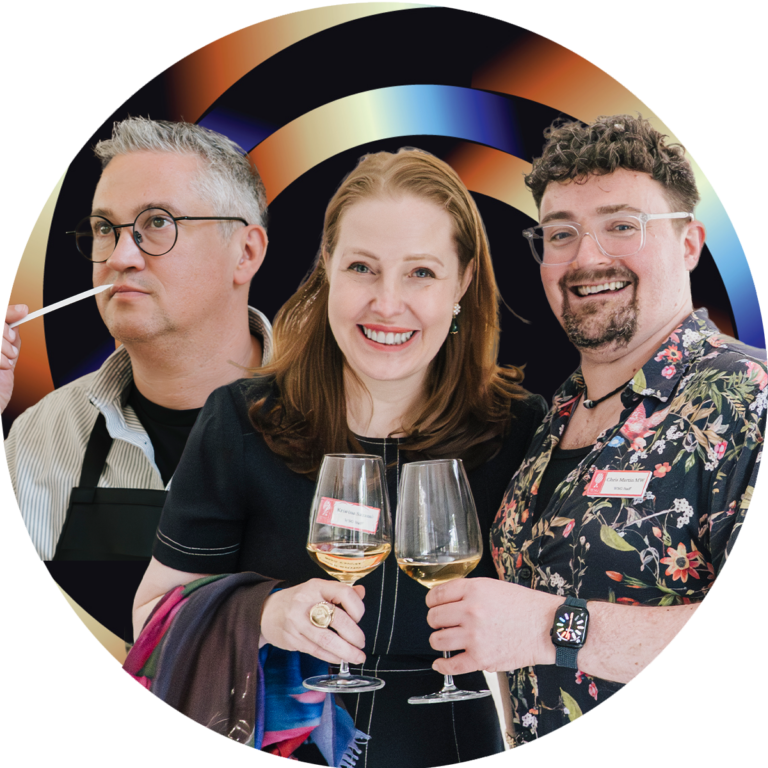
Julien Camus, Chris Martin, MW, and Kristina Sazama
Creator and co-lead educators, respectively, Wine Scholar Guild Tasting Diploma
Awarded for: Challenging conventional approaches to wine tasting education by developing a more intuitive, human-centered approach to sensory evaluation
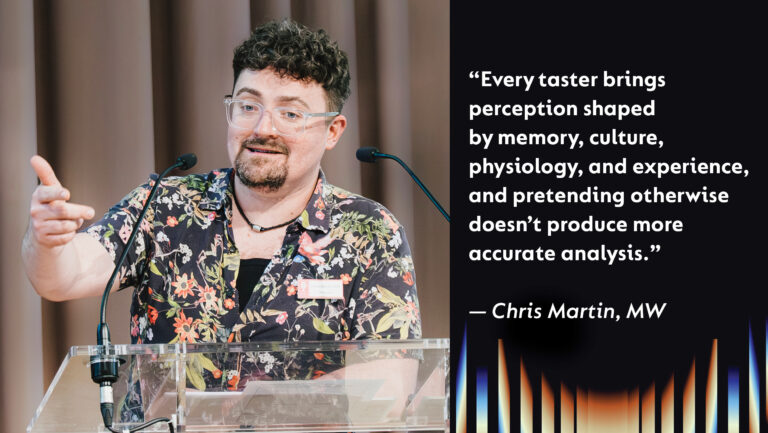
As Julien Camus, the CEO of Wine Scholar Guild (WSG), observed wine styles, regions, and consumer expectations evolve over the years, he began to wonder if the way we taste wine should evolve as well. Convinced that traditional tasting frameworks left too little room for individual perception, he worked with WSG’s director of education, Chris Martin, MW, and associate director of tasting programs, Kristina Sazama, to develop an entirely new Tasting Diploma, which launched in January 2026. “We wanted to build a program that develops self-awareness, genuine curiosity, and the ability to articulate a real, personal encounter with wine,” says Martin.
Working with a range of experts, the trio developed a curriculum that aims to expand how we think about tasting by creating space for sensory awareness, personal reflection, and more nuanced communication. Rather than positioning the program as another certification, they see it as a complement to traditional wine education—one that encourages tasters to better understand both the wine and themselves. “We’d love for the Tasting Diploma to play a small but meaningful role in making wine feel less intimidating, more engaging, and ultimately more human,” says Sazama. (Caitlin A. Miller)
Aaron Tartakovsky
Cofounder and CEO, Epic Cleantec
Awarded for: Leveraging beer to build public trust in the future of urban water recycling
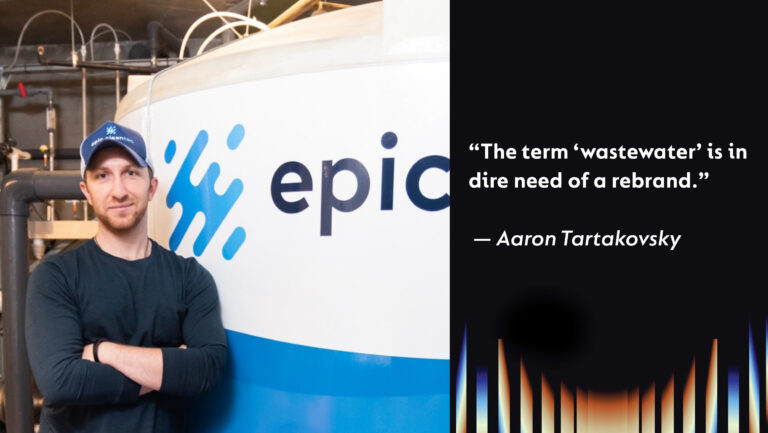
Drinking cold beer while taking a hot shower is one of life’s delights. And thanks to Epic Cleantec, that sudsy water can be used to make more beer. The San Francisco firm installs wastewater-treatment tech in residential and office buildings, then partners with Devil’s Canyon Brewing in San Carlos, California, to transform purified recycled water into kölsch-style Laundry Club ale and a juicy IPA called, yes, Shower Hour. “The term ‘wastewater’ is in dire need of a rebrand,” says Aaron Tartakovsky, the co-founder and CEO of Epic Cleantec.
Like a glass bottle, water can be cleaned and recycled to be used again and again. The tested technology exists. “My father worked in aerospace science, and he often says, ‘What do you think astronauts have been drinking in space?’” says Tartakovsky, who started Epic in 2015 with his dad, Igor. The hurdle is recycled water’s “yuck factor.” A tasty Shower Hour can eliminate apprehension, paving paths for broader water-saving applications in a world dealing with drought, data centers, and growing populations. “Beer is a fun vehicle to tell the story about recycled water’s potential,” Tartakovsky says. (Joshua M. Bernstein)
Mike Capoferri
Owner, Here In Spirit LLC
Awarded for: Transforming one bar’s operating philosophy into an industry playbook by teaching the systems that are redefining modern cocktail service
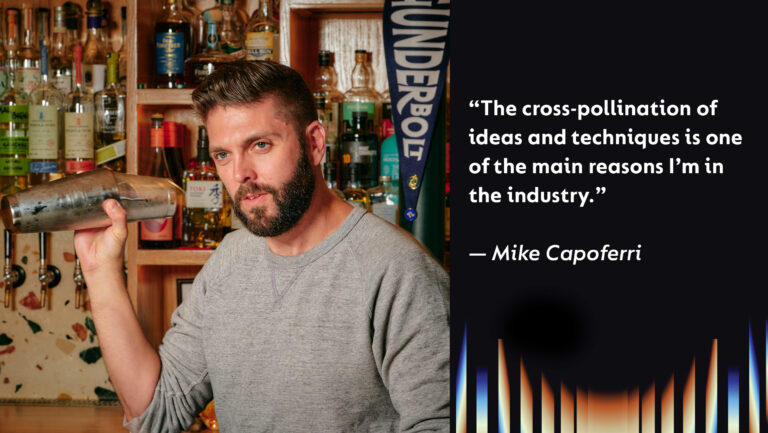
One of Mike Capoferri’s most formative roles in the bar industry was serving as Campari’s Italian portfolio ambassador, a role that positioned him early on as both a trade educator and a cocktail innovator. “The cross-pollination of ideas and techniques is one of the main reasons I’m in the industry,” he says. As the first person in the role, access to Campari Academy’s facilities also provided a workshop for experiments in cocktail technology, which organically led to similar experiments during the build-out for his first bar, Thunderbolt, and his following two bars, Night on Earth and Semiprecious.
Rethinking approaches to dilution, refrigeration, carbonation, and texture in cocktails has now put him in even higher demand as a trade educator and “bar fixer,” as others seek to adopt the bar technology he champions—which supports a more sustainable and profitable way of making drinks. Through pop-ups, workshops, and industry seminars around the world, including sessions at Campari Academy and Tales of the Cocktail, he teaches operators how to build cocktail systems that deliver consistency, speed, and quality at scale. As with all great innovators, he also considers himself a forever student. ”Education is a two-way street,” he says. “We share all of our recipes and techniques freely, and we hope to glean some learning from every bar we collaborate with.” (Pamela Vachon)
Elise Nerlove and George O’Meara
Cofounders, The Micro-Winery Guild
Awarded for: Ensuring the smallest wineries have a place in the future of wine tourism
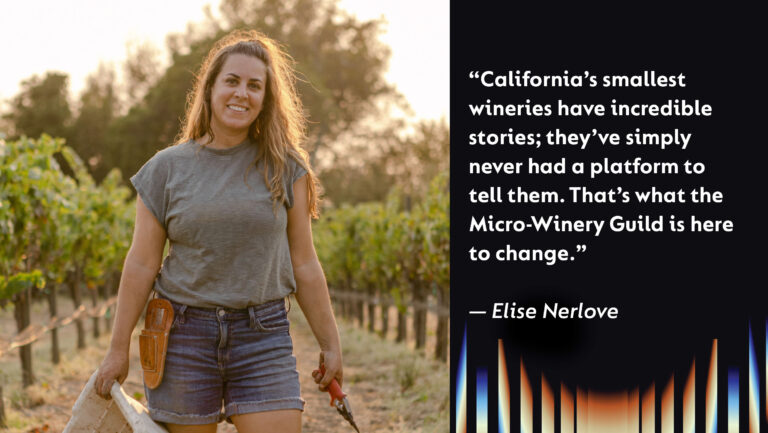
California’s smallest wineries have long struggled to participate in wine tourism. By law, a winery must produce wine on-site in order to enjoy the perks of hospitality, so small producers who rely on custom crush facilities miss out. Elise Nerlove, a second-generation grape grower and the owner of Elkhorn Peak Cellars, started advocating for these micro-wineries—those that produce 5,000 gallons or less—in 2018 in Napa County so they could participate in California’s lucrative tourism industry. When new statewide legislation enacted this year provided an opening, Nerlove, along with George O’Meara, cofounded The Micro-Winery Guild (a rebrand of Save the Family Farms, with a new mission) to strengthen the state’s micro-wineries through collective advocacy.
“For decades, wine tourism has largely revolved around tasting rooms,” says Nerlove, who calls the new bill transformative. The end goal, though, is less about tourism; it’s about helping small family farms stay in business. “If we want family farms to survive, we have to give them more ways to make a living from the land they’re already protecting,” Nerlove adds. “I hope this becomes part of a much larger conversation about the future of agriculture and how we preserve these landscapes for generations to come.” (Shana Clarke)
Robb Jones
Founder, The Shift Change Tour
Awarded for: Organizing a hospitality-led rapid response network that combines emergency preparedness, education, and community support
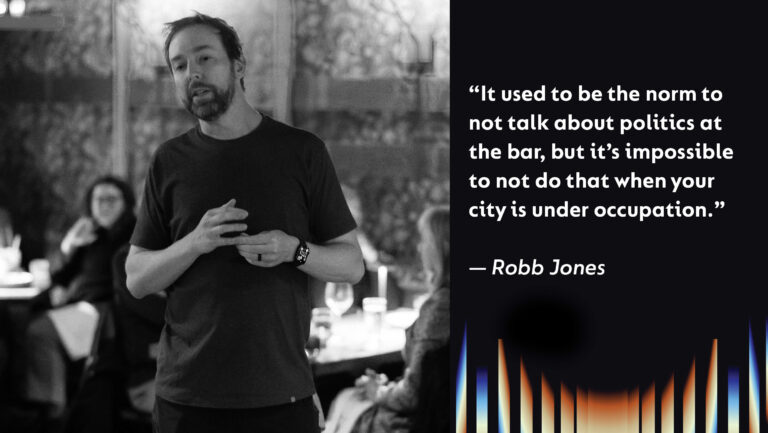
In February 2026, when Immigration and Customs Enforcement (ICE) descended on Minneapolis, wreaking havoc on the city, Robb Jones, the owner of Meteor Bar, thought, “What can I do?” He came up with The Shift Change Tour.
A partnership with Escuelitas founder and former SevenFifty Daily Drinks Innovator Tiffany Hernandez, The Shift Change Tour pairs de-escalation, bystander/observer, first-aid, and Know Your Rights training for hospitality professionals with an evening pop-up to benefit local rapid response and immigrant advocacy. Aimed at preparing the industry for ICE actions and other emergencies, the tour centers the survivor accounts of Minneapolis bar staff. Pop-ups were held in Chicago and Denver, so far—events are planned for Milwaukee; Phoenix; Austin, Texas; and Kansas City, Missouri—and at each location Jones’ team and others turn their trauma into action. “It used to be the norm to not talk about politics at the bar, but it’s impossible to not do that when your city is under occupation,” Jones says. “Our story is worth telling.” (Betsy Andrews)