
This advertising content was produced in collaboration with our partner, Vignamaggio.
How is it possible for a vast Italian wine estate founded in the hills of Chianti Classico in 1404 to feel simultaneously authentic and longstanding, as well as progressive and exciting in 2025?
Perhaps because Vignamaggio has managed to stay—for seven centuries—rooted in its laudable history and outstanding terroir, while still being able to respond to and forecast the needs and desires of the evolving culture of wine.
The 1,000-acre estate’s vineyards have been cultivated since the 15th century, and while Vignamaggio has changed hands, the estate itself has been consistently farm-focused, with a variety of crops, forests, and ornamental gardens maintained onsite. (The current owner is the architect Patrice Taravella. Vignamaggio, perched halfway between Florence and Siena, was previously owned by a series of aristocratic Italian families.)

Don’t miss the latest drinks industry news and insights. Sign up for our award-winning newsletters and get insider intel, resources, and trends delivered to your inbox every week.
Vignamaggio has also seen its share of pop cultural virality over the centuries. Were the estate ever to come up as a clue on Jeopardy, it would most likely be featured as the birthplace of Lisa Gherardini (the subject of Leonardo da Vinci’s Mona Lisa), one of the companies that founded Consorzio del Chianti Classico in 1924, or the filming location for the Emma Thompson and Kenneth Branagh vehicle, Much Ado About Nothing.
Planting and Cultivating the Seeds of Chianti’s Diverse Garden
Vignamaggio’s calm, strategic advancement through the centuries has been characterized by its strategic, philosophical, and geographically central place in the vast garden of Chianti Classico. At Vignamaggio today, a vast array of crops are grown in a way that respects the land, and the humans, insects, birds, and animals that also thrive here, as they were in 1404.
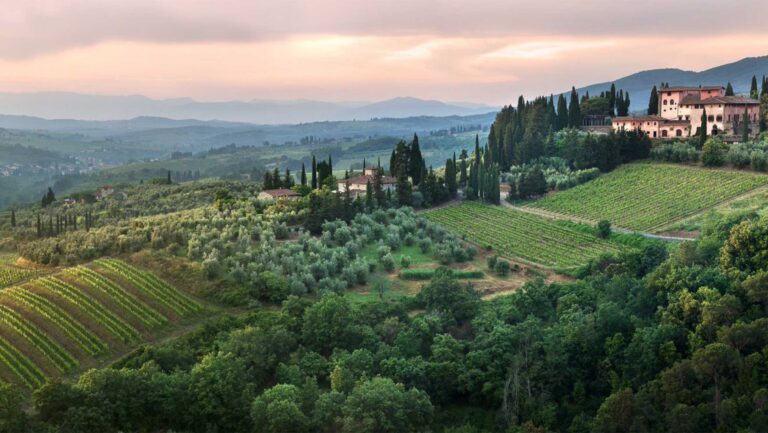
Vignamaggio cultivates close to 1,000 acres of land in a valley between Greve in Chianti and Panzano in Chianti. And while it is most known as a winery, there are only around 160 acres of grapes under vines across seven distinct micro-terroirs, the flavors of which are shaped by their different soils, elevations, and climates. The balance is devoted to ancient forests, olive groves, cereal fields, vegetable gardens, ornamental Renaissance-style gardens, and orchards. It also serves as the stomping and breeding grounds of Cinta Senese pigs and sheep.
A Modern Vision for Chianti
Vignamaggio may be one of the oldest agricultural estates in Italy, but it deploys a decidedly contemporary paradigm when it comes to both thriving in harmony with nature, and providing a place of authentic retreat for wine-lovers from afar.
There are two primary ways to engage with Vignamaggio: in the glass, or in person. Either way, la dolce vita will be on tap.
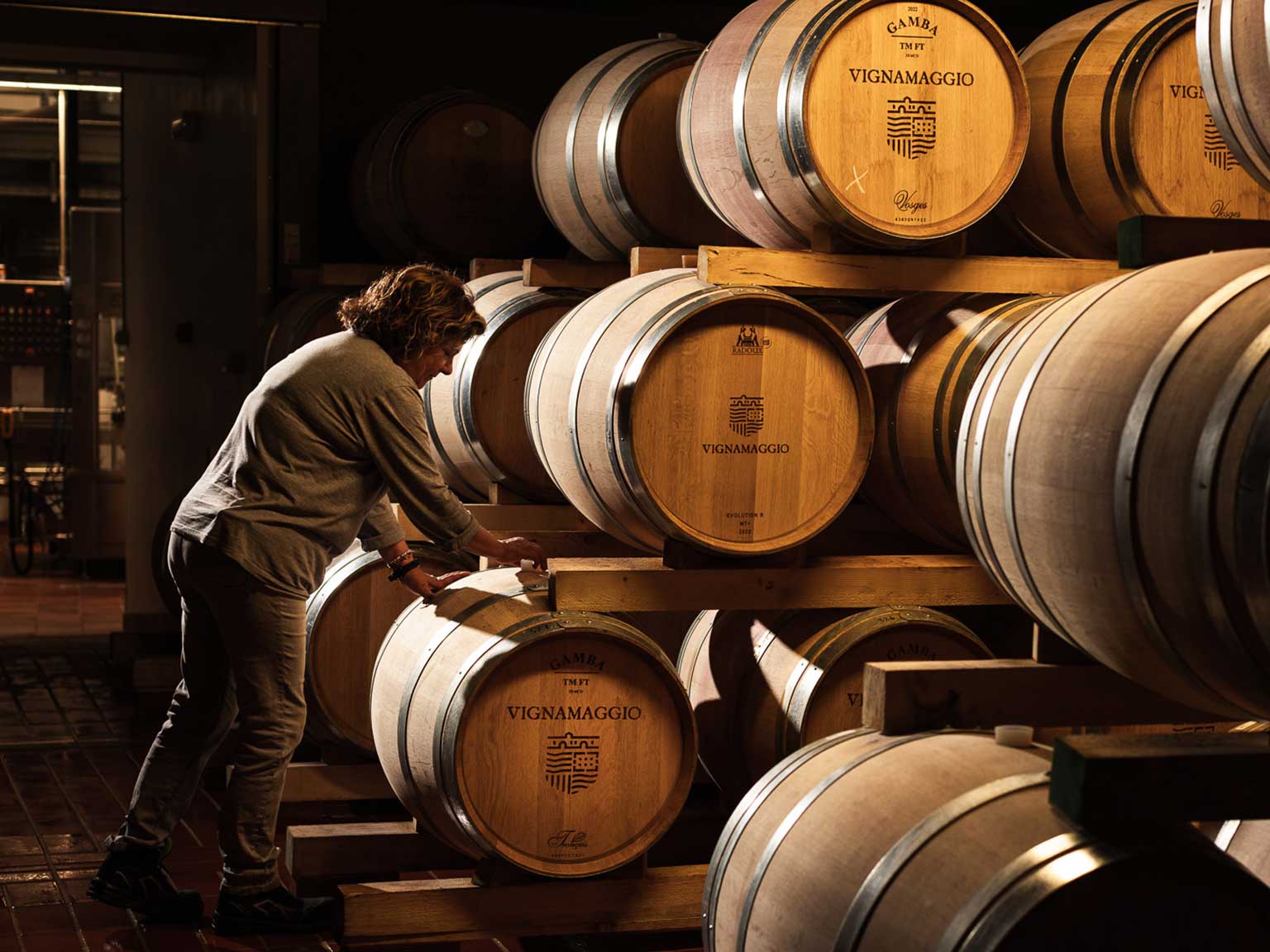
The grapes are cultivated and harvested with the utmost care and analytical precision amid a riot of biodiversity, and while the wine cellars date back to the 1400s, they have been continually updated to reflect technological advancements and changing tastes.
The winegrowing and production team’s collaborative, nature-centric, and scientific approach can be tasted in long-aged DOCG releases like the Chianti Classico ‘Terre di Prenzano,’ a 100 percent Sangiovese bottling aged in large oak barrels, or the Chianti Classico Riserva ‘Gherardino,’ a blend of primarily Sangiovese with a small amount of Merlot, aged in oak barrels. Art and wine lovers will want to try the Chianti Classico Gran Selezione: the Monna Lisa, a blend of primarily Sangiovese, with some Cabernet Sauvignon, aged in French oak barrels for 30 months.
Vignamaggio also offers historic IGT Toscana wines (including award-winning modern classics like the old vine Cabernet Franc di Vignamaggio) and classic Italian spirits, like aged grappa, amaro, vermouth, and acquavit.
The blend of tradition and innovation that is reflected in the wines can also be seen in person at the estate, where Vignamaggio’s approach to hospitality can be summarized as per fare bello il giorno. (Or, “make the day wonderful.”) Guests are offered a range of immersive experiences that can be enjoyed for just a few hours, or for many days. The on-site La Pensione hotel includes three beautifully restored farmhouses.
Il Borgo di Vignamaggio is the main event for visitors, and as a site for Cinderella-style balls and weddings. Approached via a long avenue lined by towering Cypress trees and blankets of vineyards and olive trees, the rose petal Borgo has been restored to its former 15th century glory. The villa includes 17 sleeping suites, a 144-seat theater, a chapel adorned with frescoes, event rooms, a billiard room, and a ballroom. Vignammagio also offers seasonal workshops, events and farm-fresh exquisitely executed meals at La Fattoria.
From a Chianti Classico estate that is the future, gazing fondly at the past, comes wines with timeless appeal for any wine program.


Dispatch
Sign up for our award-winning newsletter
Don’t miss the latest drinks industry news and insights—delivered to your inbox every week.