

This advertising content was produced in collaboration with our partner, Bodegas LAN.
The wine business is at an inflection point. Consumer demand continues to decline amid economic, social, and generational shifts, notes Silicon Valley Bank’s 2026 “State of the U.S. Wine Industry Report.” Brands that aim to outlast myriad global headwinds need to be proactive to reach and retain new audiences, according to Rob McMillan, the EVP and founder of the Silicon Valley Bank Wine Division.
Bodegas LAN is poised to meet this moment. The Rioja icon, founded in 1974, is reimagining how it communicates and connects with consumers. “We knew we had to respond to the challenges facing the sector—and we have,” says Alberto Saldón, the director of marketing at Bodegas LAN. “This is a conscious transformation that reflects who we are today: bold, uncomplicated, and inspiring.”
With its eye-catching redesign and uncomplicated language, LAN’s new brand platform focuses on cultivating emotional bonds with far-reaching audiences. This enterprising approach meets consumers wherever they are and invites them to discover all that LAN has to offer. “Our wines encourage people to say yes to their convictions,” Saldón continues. “And our brand now reflects that same authenticity and optimism.”
Don’t miss the latest drinks industry news and insights. Sign up for our award-winning newsletters and get insider intel, resources, and trends delivered to your inbox every week.
A Rioja Icon, Reimagined
With more than 50 years of winemaking history, Bodegas LAN navigates industry challenges with energy and expertise. Since 2002, Rioja native María Barúa has served as the head winemaker, leading a team focused on creating wines with a profound sense of place across multiple tiers.
Many of LAN’s low-yielding vines are 60 years old. The estate farms Tempranillo, Mazuelo, Graciano, and Garnacha grapes across 24 plots divided by soil type, grape variety, and aspect. Grapes are sustainably farmed and hand-harvested, while in the cellar, Barúa and her team use oak aging thoughtfully. LAN pioneered a proprietary hybrid barrel made from American staves and French oak heads—an approach designed to balance structure and aromatic nuance.
The winery’s recent evolution extends beyond the work in LAN’s vineyard and cellar. Its updated brand platform reflects an understanding that the modern landscape requires listening to and putting its consumers first. The new brand platform and packaging “really taps into that market of consumers who are looking for a product that is traditional, but accessible and consistent as well,” says Amber Rill, the wine manager of Ambassadors Clubhouse in New York City.
Design With a Difference
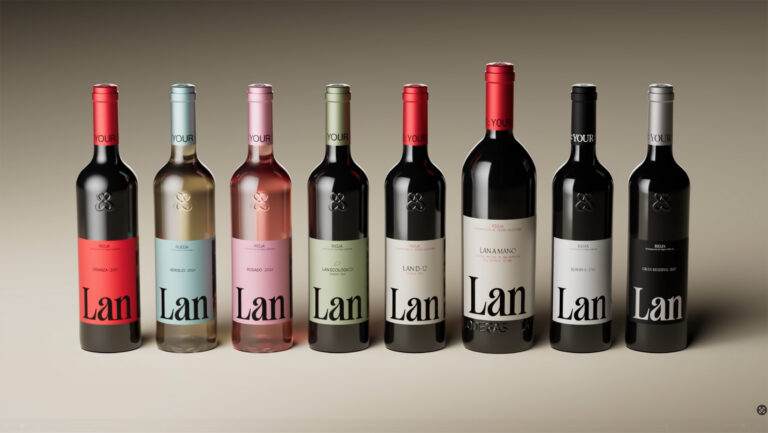
To make LAN’s historic wines feel fresh and approachable, the company refreshed the way it connects with consumers, starting with an updated label. The clean, bright aesthetic moves away from the ornate labeling that adorns many traditional Rioja bottlings in favor of bolder hues and simplified language. “I love the colors,” says Oscar Garcia Moncada, the wine and spirits director of 67 Wine in New York City. “This is going to be a wow moment when I put these wines on the shelf.”
Paula de Pano, the owner of Rocks + Acid Wine Shop in Chapel Hill, North Carolina, agrees. “It’s a lot cleaner and it resonates with a younger wine drinking market,” she says.
The front labels clearly communicate vintage and geographic origin. Back labels include rotating images and a blank space devoted to “your wine moment,” where consumers can personalize their bottles however they choose. “It allows you to be interactive,” says Garcia Moncada, noting that the back label is especially appealing for those who may “have a birthday coming up, or a special occasion.”
In a competitive marketplace, this sort of customization is key. “You have people looking for specific types of wine that they want to gift or they want to try with their families,” says de Pano. It also helps consumers develop lasting relationships with the brand. According to a 2024 Deloitte study, brands that excel at personalization are 71 percent more likely to report improved customer loyalty than their peers.
Rill adds that many modern and younger consumers make wine purchasing decisions based on experiential factors, such as what they want to do or feel when they open the bottle. She calls this phenomenon “vibe wines” and believes that LAN’s refreshed approach and tiered offerings fits the trend perfectly. Whether someone is uncorking a LAN Crianza for a casual Tuesday night on the couch, or bringing LAN Gran Reserva to a dinner party, the clever label design puts consumers’ perspectives and experiences first.
The Proof is in the Pour
LAN’s wines span multiple price points. The range includes a bright and food-friendly Verdejo, while the 2021 D-12 Crianza is an accessible, 100 percent Tempranillo wine ideal for everyday drinking. “I would be very happy if I was a consumer and walked into a shop and purchased this at $20,” Rill says of the Crianza. “It’s very classically Rioja.”
The lineup also features a nuanced LAN A Mano 2022, which de Pano calls “a great alternative for your big Cabs.” Made from Tempranillo, Graciano, and Mazuelo grown on 40- to 45-year-old vines, it “looks and feels expensive,” she says, and its modern aesthetic appeals to wide-ranging audiences. “This will fly off the shelves.”
The top of LAN’s range includes reserva and gran reserva bottlings. The 2017 Gran Reserva is a Tempranillo-forward, special-occasion wine whose sleek black label would look especially elegant on any celebratory table.
In addition to its layered flavors and chic packaging, Garcia Moncada notes that the 2017 Gran Reserva could bring newer drinkers into the market for aged wines. “This most likely outdrinks a lot of Bordeaux in that price range,” he says. The inclusive price point and understated design can empower more consumers to see themselves in these wines and these wines in their lives.
From a brand perspective, the approachability of LAN’s portfolio, coupled with the diversity of the range, demonstrates how one winery can not only appeal to various consumers, but also draw in the same consumer on different nights of the week.
“The idea of rebranding is scary for a lot of Rioja producers because it hasn’t happened en masse,” says Garcia Moncada. LAN’s refreshed approach widens the appeal of the wines without losing the brand’s historic identity. “It’s a welcoming change, and I think they’re going to see the response in the market from consumers both on- and off-premise,” adds Garcia Moncada.


Dispatch
Sign up for our award-winning newsletter
Don’t miss the latest drinks industry news and insights—delivered to your inbox every week.