

This advertising content was produced in collaboration with our sponsor, the European Union.
Presented with a glass of wine from Europe, even casual enthusiasts typically expect a high-quality product. They know that European wine is crafted based on traditions and know-how passed down from generation to generation over centuries.
Wine experts, meanwhile, recognize that European producers laid the groundwork for the way grapes are grown, wine is produced, and bottles are labeled across the world. Centuries of heritage, innovation, and wisdom, coupled with top-notch grape varieties, mean that many professionals count on the European Union (EU) for high-caliber wines that are produced in consistent and safe ways.
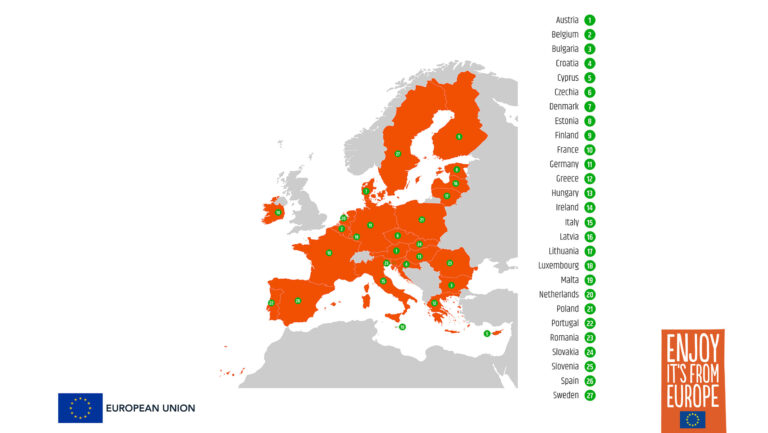
But even professionals may have trouble clearly differentiating between key EU wine labels and quality standards. That’s partially due to the incredible diversity of soils, climatic conditions, and elevations found across the EU’s 27 Member States.
Don’t miss the latest drinks industry news and insights. Sign up for our award-winning newsletters and get insider intel, resources, and trends delivered to your inbox every week.
“European wines are incredibly diverse and complex,” says Nicole Muscari, a wine consultant working with the EU on its campaign, More Than European Food and Drinks, Savoring Stories. “The EU is home to hundreds of wine regions, each shaped by its own climate, soil, grape varieties, and winemaking traditions.”
Indeed, the variety found between the different terroirs is staggering, from Alpine vineyards in Austria to volcanic soils in Sicily to windswept islands in Greece. “That complexity is part of what makes EU wines so compelling,” Muscari notes. “But also why they can be misunderstood or underappreciated if not properly contextualized.”
Because the EU’s standards are consistent and rooted in quality, safety, sustainability, and authenticity, learning to decipher the nuances between the different labels and standards from region to region is as straightforward as it is essential; the EU accounts for almost half of the planet’s working vineyard space. France alone produces 20 percent of the world’s wine, and the EU as a whole accounts for 47 percent of the world’s wine consumption, which means there are no bigger and more influential players in the world of wine.
History
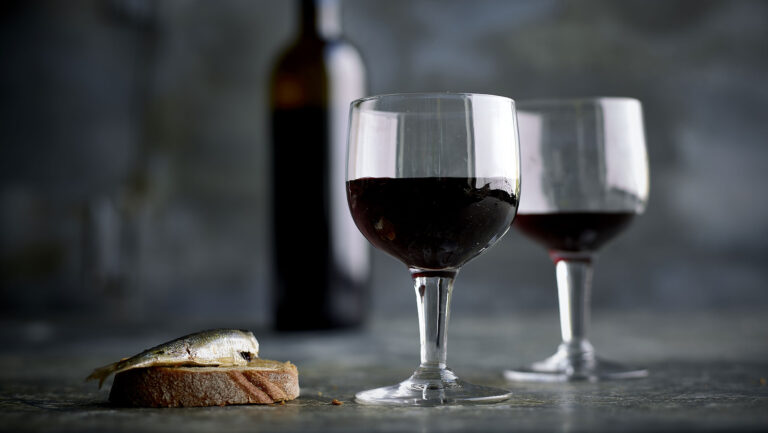
In Europe, wine has been a key element in the art of living well for centuries. Far from being just another alcoholic beverage, European wines harbor history, refinement, and culture in their bottles.
While the earliest evidence of winemaking can be traced to modern-day China and Georgia, wine as we know it was developed and spread across Europe by ancient Greeks and Romans. Practices like fermenting and aging wine, first in amphorae and then in oak barrels, were developed. After the Roman Empire fell in the 5th century, the Roman Catholic Church preserved the tradition of grape growing and winemaking, and laid the groundwork for ever-more precise ways of utilizing soil types, grape varieties, fermentation, and aging techniques to create terroir-driven wines that reflect the time and place in which they were made.
Modern winemaking began in the 1700s, when scientists and vintners began to identify and understand the power and potential of yeast and bacteria, and the process of fermentation began to be explored.
In 1855, modern wine culture was sanctified with the first wine classification system. Since then, winemaking across the EU’s distinct assortment of terroirs has developed with a certain sense of unity, characterized by an unwavering commitment to quality, but also as a champion of diversity and complexity. Wine is, more than any other agricultural product, synonymous with the unique place and time in which it was created. European winemakers introduced and popularized the concept of terroir after all, and there has arguably never been a better time to drink the EU’s full range of wines than right now.
Understanding Key EU Labels
In order to drink, understand, and explain the EU’s offerings, an appreciation of the established and most famous regions is essential, as is recognition for areas of the EU that may have flown under the radar in past decades.
“The European Union is home to some of the world’s most iconic wine regions—think Bourgogne in France or Rioja in Spain,” Muscari says. “But it also includes a wealth of lesser-known regions that deserve attention. Places like Slovenia, Hungary, and Croatia are producing distinctive wines rooted in centuries of tradition and unique terroirs.”
These wines are increasingly garnering the attention of wine professionals for their quality, but also because they offer a fresh opportunity to tell the full story of European wine. Understanding EU standards is all the more valuable when exploring wines from lesser-known regions.
The EU holds food and drinks producers to an incredibly high level, with every Member State sharing common food and farming quality and safety standards. Using these standards, the EU guarantees a wine’s stated place of origin and that it has been produced safely with limited, if any, use of pesticides, fertilizers, and herbicides. Strict health standards also ensure that hygiene measures are implemented throughout the process, from the vineyard to the bottle.
The wine labels themselves, meanwhile, deliver a clear indication of what’s inside. “For wine professionals, these labels serve as trusted guides, offering key insights into the origin, quality, and production practices behind each bottle, without needing prior in-depth knowledge of the region,” says Muscari.
The EU protects wine products and makers from appropriation with Geographical Indications labels, ensuring that no other region or producer can claim a wine is grown or made in a place or way that it is not.
“While many U.S. wine professionals are deeply knowledgeable, there’s an opportunity to explore the broader context of EU wines beyond grape varieties and geography,” Muscari says. “A key element of that, which is often overlooked, is understanding the meaning behind EU quality labels like Protected Geographical Indication and Protected Designation of Origin.”
More than just logos on packaging, they’re tools that explain where a wine is from, and its connection to the local terroir and traditions inherent to that place.
- Protected Designation of Origin (PDO):

This label indicates the strongest possible link between a product and the place of origin specified on the label, which means every step of the production process must take place there. For wines, that means 100 percent of the grapes must be grown in the specified geographical area. - Protected Geographical Indication (PGI):

This label highlights the relationship between a product and the place of origin. The label requires that at least one stage of the production, processing, or preparation must take place within the specified origin. For wine, that means that at least 85 percent of the grapes used to make the wine must come from the specified geographical area. - European Organic:

This label signifies a commitment to environmental responsibility. Wines produced with this label are made with grapes grown without chemical fertilizers or pesticides. It also ensures that the entire production, transportation, and storage process is conducted in a way that respects ecosystems and upholds the highest environmental and ethical standards.
More than 1,700 European wines have PDO and PGI protections, which makes finding a quality red, white, rosé, orange, still, or sparkling wine at every price point possible.
However, it’s important to keep in mind that there are many wines produced with the EU’s trademark standards without a PDO or PGI label. That’s partially because each EU country uses its own traditional classification system and language, which is recognized by the EU as equivalent to PDO or PGI.
Examples of National PDO Equivalents
- France: AOC (Appellation d’Origine Contrôlée)
- EU PDO = AOP (Appellation d’Origine Protégée)
- Italy: DOC (Denominazione di Origine Controllata), DOCG (Denominazione di Origine Controllata e Garantita)
- EU PDO = DOP (Denominazione di Origine Protetta)
- Spain: DO (Denominación de Origen), DOCa (Denominación de Origen Calificada)
- EU PDO = DOP (Denominación de Origen Protegida)
- Portugal: DOC (Denominação de Origem Controlada)
- EU PDO = DOP (Denominação de Origem Protegida)
- Germany: QbA (Qualitätswein bestimmter Anbaugebiete), Prädikatswein
- EU PDO = g.U. (geschützte Ursprungsbezeichnung)
- Austria: Qualitätswein, Prädikatswein, DAC (Districtus Austriae Controllatus)
- EU PDO = g.U. (geschützte Ursprungsbezeichnung)
Examples of National PGI Equivalents
- France: VDP (Vin de Pays)
- EU PGI = IGP (Indication Géographique Protégée)
- Italy: IGT (Indicazione Geografica Tipica)
- EU PGI = IGP (Indicazione Geografica Protetta)
- Spain: VT (Vino de la Tierra)
- EU PGI = IGP (Indicación Geográfica Protegida)
- Portugal: VR (Vinho Regional)
- EU PGI = IGP (Indicação Geográfica Protegida)
- Germany: Landwein
- EU PGI = g.g.A. (geschützte geografische Angabe)
- Austria: Landwein
- EU PGI = g.g.A. (geschützte geografische Angabe)
Key Regions
There are several up-and-coming EU regions that are capturing the attention of wine professionals and the imagination of curious wine enthusiasts. Such enthusiasts are eager to have wines from less familiar PDOs become as familiar to their palates as wines from the Loire or Tuscany. These five regions represent some of the most exciting yet underappreciated wine regions across the EU.
Tokaj/Tokaji PDO, Hungary
Founded in 1613 in the northeast corner of Hungary, Tokaj is the oldest protected wine region in Europe. The terroir is characterized by clay and volcanic subsoils. The grapes grown there, primarily Furmint, Hárslevelű, Sárgamuskotály (also known as Muscat Blanc à Petits Grains), are capable of producing some of the most desirable and long-aging dessert wines in the world.
Hrvatska Istra PDO, Croatia
Hrvatska Istra, or Istria, is the largest peninsula on the Adriatic Sea, with rolling hills and terraced vineyards. The summer is warm, the winter is mild, and there is very little disease pressure. The vineyards are dominated by white grapes, especially Malvazija Istarska. Grown and made with care, these wines can be fresh and fruit-forward or, when produced in contact with the skin, can deliver complex, textured, and rich results.
Vipavska dolina PDO, Slovenia
Vipavska dolina, or the Vipava Valley, grows an array of elegant white and red grapes, many of which are farmed organically and biodynamically by small, family producers. The valley is best known for its white Ribolla Gialla, and the traditional white blend of the region, Vipavec. Other mainstays include Sauvignon Blanc, the native Zelen, and Malvasia. Reds are gaining acclaim as well, especially Merlot, Cabernet Sauvignon, and Refosco.
Σάμος (Samos) PDO, Greece
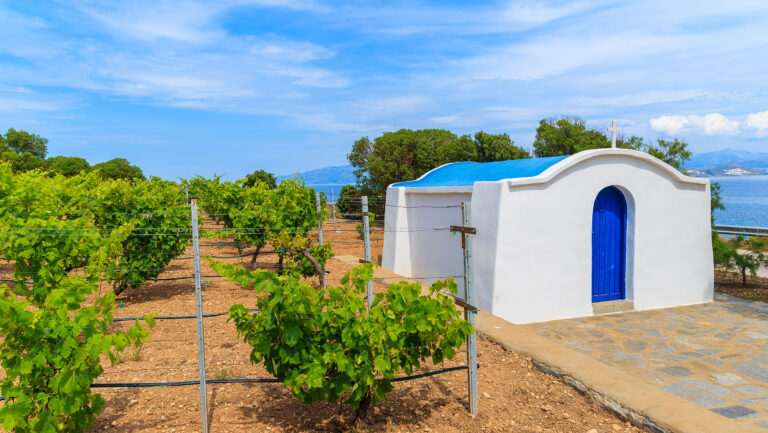
The windswept Greek island of Samos is located in the Aegean Sea, off the coast of Turkey. Samos is celebrated for being one of the most beautiful wine zones, with most vineyards occupying the northern part of the island, and small winegrowing areas scattered in the center and southwestern corner. The white grape Muscat is so closely associated with the region it is sometimes called Muscat Samos. There are also red and rosé wines made in small quantities from Ritino and Fokiano.
Minho PGI, Portugal
This subregion is hemmed in to the north and east by Spain, and to the west by the Atlantic Ocean. Minho’s history dates back to Roman times, and production there covers an array of wine styles that cannot be produced by the Vinho Verde PDO, which is located in the same geographic area. Wines here include red, white, and rosé, both sparkling and still, and dry and sweet. Minho allows 63 varieties of grapes, dominated by whites like Alvarinho and Loureiro, and reds like Brancelho and Espadeiro.
What’s Happening Today
Today, the EU accounts for 45 percent of the world’s winegrowing area, 65 percent of the world’s wine production, 57 percent of the world’s wine consumption, and 70 percent of the world’s wine exports. As the world leader in every single one of these categories, the sheer breadth and depth of its offerings could seem overwhelming.
But the EU pours delicious stories about history, culture, and innovation into every bottle of wine it makes, and there are a lot of stories to tell, many of which may feel refreshingly modern. While EU’s winemakers may have centuries of history behind them, they are certainly not stuck in the past.
By understanding the EU’s regulatory structure, U.S. wine professionals and consumers can be confident in the transparency, safety, and quality of what’s in the bottle—and better appreciate the incredible diversity of EU wines. “I think there can be a misconception that EU wines are rigid or traditionalist,” says Muscari. “But in reality, many EU producers are leading the way in sustainable practices, organic certification, and low-intervention winemaking.”
For more information, visit more-than-food-us.

Dispatch
Sign up for our award-winning newsletter
Don’t miss the latest drinks industry news and insights—delivered to your inbox every week.