For some Champagne producers, the most valuable wines aren’t the ones slowly aging in the house’s caves. Instead, they are the abandoned bottles, squirreled away in cellars throughout the region.
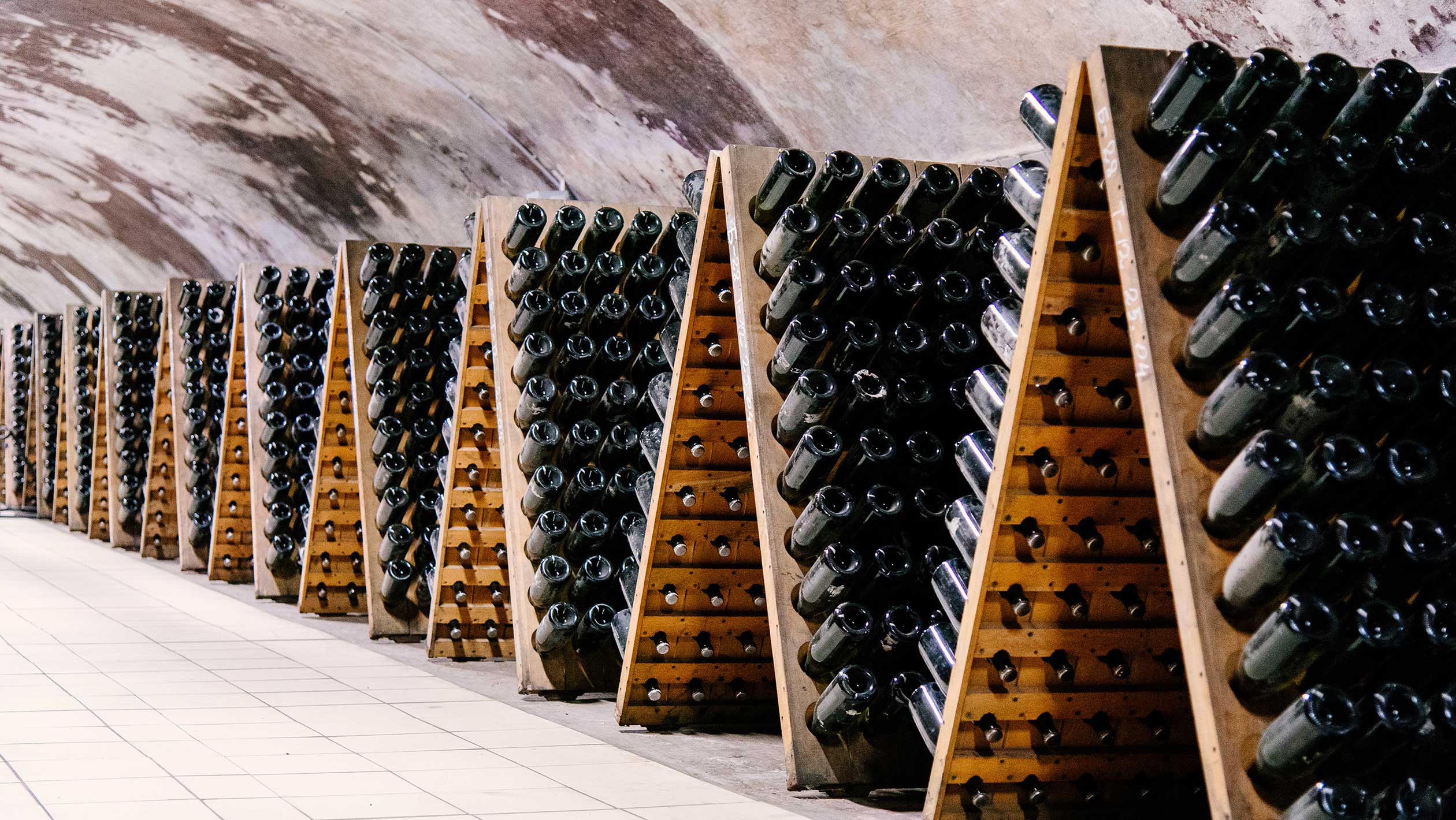
In recent years, Champagne producers have shown a growing interest in purchasing this back stock of wines en tirage, or not yet disgorged. These wines can benefit a producer in many ways, such as helping a new producer build a brand, or making it possible for a winemaker to craft a specific style.
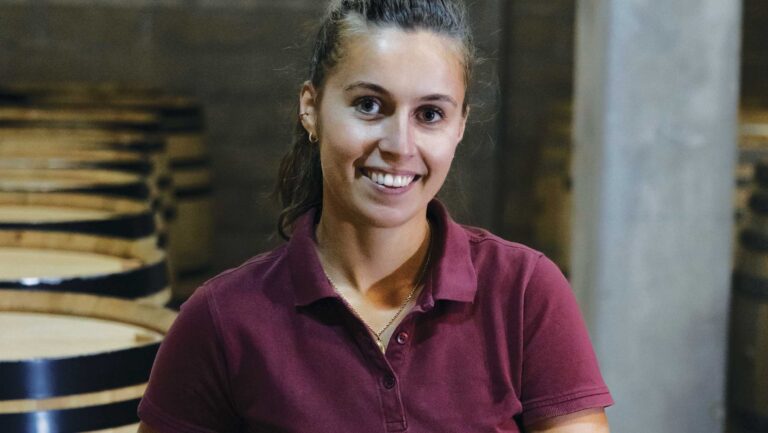
This type of production is possible thanks to French law: “If we look at the law, the winemaker is the person who disgorges the bottle,” explains Juliette Alips, the winemaker for Domaine Les Monts Fournois. Even so, this practice is a fairly hush-hush part of the industry, but two producers proudly tout the role these wines play in their business. Here’s how they are utilizing these rediscovered stocks of Champagne to their benefit.
Don’t miss the latest drinks industry news and insights. Sign up for our award-winning newsletters and get insider intel, resources, and trends delivered to your inbox every week.
Building a Champagne Brand
Launching any new wine brand can take years. For Champagne, given the time required to age a wine on the lees—a minimum of 15 months, but often as long as 10 years—the process is even more time-consuming. But working with purchased back stocks of Champagne can help a producer accelerate that timeline.
For example, Juliette Alips, along with her cousins Raphaël and Vincent Bérêche of Champagne Bérêche et Fils, are in the process of launching Domaine Les Monts Fournois, a new Champagne brand sourced from a 22.2-acre premier cru vineyard in Ludes. The Bérêche family has worked with the site for many years, and they are now slowly buying up the vineyard for estate production. While the project started 10 years ago, the first vintage of Les Monts Fournois, 2022, is expected to be released in 2027.
It’s challenging for a business to have so much stock tied up in cellars, so in the interim, Domaine Les Monts Fournois is building awareness and financial capital in two ways. The first is through the production of Pinot Noir and Chardonnay Côteaux Champenois from the Monts Fournois vineyard. These still wines don’t have the same aging requirements as Champagne. The second is through sales of their Crus Sélectionnés Champagnes, a line under the Monts Fournois brand, which comprises old stock of en tirage Champagne from other producers.
Working with brokers, they buy wines aging on their lees but not yet disgorged. After obtaining bottles, they select the final dosage and disgorge the wine. “We are searching for treasures that are sleeping in cellars,” says Alips. There are several reasons why these bottles may have been abandoned; sometimes the winemaker didn’t have the time or resources to finish and sell the wines. “Or the winemaker died and all the stock is in the cellar,” adds Alips.
They source only from premier cru and Grand Cru sites from three subregions: Côte des Blancs, Vallée de la Marne, and Montagne de Reims. They also only buy vintage wines. “We think of this collection as a selection,” says Alips. It’s also an extension of the brand ethos. The goal is to express the terroir of the three regions, much as Les Monts Fournois is meant to be a terroir-driven cru Champagne.
Crafting a Specific Style of Champagne
While Les Monts Fournois is focused on brand creation, Rodolphe Péters, the winemaker of Pierre Péters, uses old stock of Champagne to craft an ideal style for Fleur de Miraval, a rosé Champagne.
Working with the Perrin family, who produce the Miraval line of wines in conjunction with actor Brad Pitt, Péters sought a style that “shows the qualities we love in old Champagne—the pastry flavors, buttery brioche, plus the toast and roasted nut flavors, because we all agree that we love that,” he says. But at the same time, the family sought fruity, fresh elements and juiciness often found in rosé Champagne. “I said to Jean-Pierre [Perrin], ‘you ask for a kind of magic,’” recalls Péters. “You like showing maturity, but with very fresh flavors. It doesn’t exist, you know?”
They eventually struck upon a three-part cuvée. Using purchased bottles of 100 percent vintage Grand Cru Chardonnay still on the lees, Péters imparts a technique known as remise en cercle, where bottles still on the lees are opened and then blended with vins clairs. He looks for a blanc de blancs that’s at least 15 years old to blend with their estate-produced vins clairs to provide the desired rich, autolytic qualities to the fresh, fruitier base.
The remise en cercle component, which accounts for approximately 25 percent of the cuvée, is blended with a perpetual reserve of 100 percent Grand Cru Chardonnay from the Côtes des Blancs (approximately 50 percent of the overall Fleur de Miraval blend). Saignée of Pinot Noir from Vertus rounds out the rest. The wine then ages on the lees for four years, with a final dosage of about five grams per liter of sugar.
How Back-Stock Champagnes Can Benefit a Brand
Les Monts Fournois and Fleur de Miraval are the rare labels that are transparent about their use of purchased wines, although rumors abound that several brands have started this way. However, Shannon Coursey, the executive vice president of sales and marketing at Wilson Daniels, the importer of Les Monts Fournois, says a project like Crus Sélectionnés Champagnes strategically sets a new brand up for success in a foreign market.
“We’re really trying to help them build excitement for something that’s not even here yet,” says Coursey, referring to the first release in 2027. “We are building a brand and anticipation by using the Crus Sélectionnés wines.”
Strategically, Coursey is bringing the wines to markets that already know and love grower Champagnes. For markets where bigger houses dominate, she’s been pouring Les Monts Fournois as a welcome glass at events as an introduction to the brand.
She also notes that the Crus Sélectionnés provide something special for a Champagne list. “These get wines with age out there on the market, while usually you’re spending quite a bit of money to get a 10 or 15-year-old Grand Cru wine on a list,” says Coursey. “And yes, these are not inexpensive, but I think they’re a great value because they’re coming right from the winery. They’re not traveling around or found at an auction.”
There’s also the rarity factor: once these wines are gone, they’re gone for good. By offering something with an interesting story and unique selling point, it builds brand affinity for Les Monts Fournois.

A Sustainable Practice?
Given that en tirage Champagnes are quite limited in quantity, will there be a point when houses can no longer rely on back stocks?
Péters says remise en cercle is often done by houses with their own reserves of Champagne, and the goal is to build the same useful library at Fleur de Miraval. “Every year, we struggle to find en tirage bottles,” he says.
For the past four years, they’ve started bottling a portion of the perpetual reserve on its lees to replace a portion of purchased bottles. The hope is that the aged qualities they seek in the en tirage wines will still come through with a higher percentage of reserve wines in the blend.
But given that the purchased stock is all vintage Champagne, whereas the perpetual reserve is multivintage, Péters notes that purchased wines en tirage will always have a role in Fleur de Miraval in order to maintain the integrity of the style.
At Les Monts Fournois, it remains a big question mark. Coursey, for her part, is a champion. “It’s just such a cool opportunity to have wines of age from these sites,” she says. “So I’m hopeful.”

Dispatch
Sign up for our award-winning newsletter
Don’t miss the latest drinks industry news and insights—delivered to your inbox every week.
Shana Clarke is a wine, sake, and travel writer, and the author of 150 Vineyards You Need To Visit Before You Die. Her work has appeared in Saveur, Fortune, NPR, Wine Enthusiast, and Hemispheres. She was shortlisted for the Louis Roederer 2020 International Wine Writers’ Awards and ranked one of the “Top 20 U.S. Wine Writers That Wineries Can Work With” by Beverage Trade Network in 2021. She holds a Level 3 Advanced Certificate from Wine & Spirit Education Trust and is a Certified Sake Sommelier. She will always say yes to a glass of Champagne. Learn more at www.shanaspeakswine.com and follow her @shanaspeakswine.