
This advertising content was produced in collaboration with our sponsor, Inter Beaujolais.
It is a peculiarity of our modern consumption habits that we assign certain wines seasonal drinking windows. Just as we instinctively reach for crisp rosé and Sancerre the moment temperatures begin to rise, the arrival of sweater weather has become synonymous with another French classic: the iconic Gamay-based reds of Beaujolais.
This long-standing connection is no accident. The same vibrant, food-friendliness that historically made Beaujolais a perfect medium for washing down the rich, rib-sticking fare of Lyon’s traditional bouchons has secured the wine’s status on this side of the Atlantic as a fixture of the American holiday table. At no time of year is that more evident than Thanksgiving, when Beaujolais tops the annual recommendation lists from journalists and critics eager to highlight wines nimble enough to complement the disparate elements of a meal (turkey, gravy, cranberry sauce, and all the usual “fixings”) that famously defies intuitive wine pairings. Then there’s the annual spectacle of Beaujolais Nouveau Day. Celebrated on the third Thursday of every November, when the first fresh wines of the harvest hit the global market in all their juicy, easy-drinking glory.
However deeply ingrained such associations have become, the region’s charms extend far beyond this seasonal appeal. Just ask any professional buyer or sommelier, and they’ll explain how, with their bright acidity and juicy fruit flavors, Beaujolais wines have long served as the industry’s go-to, all-season chillable reds.

Don’t miss the latest drinks industry news and insights. Sign up for our award-winning newsletters and get insider intel, resources, and trends delivered to your inbox every week.
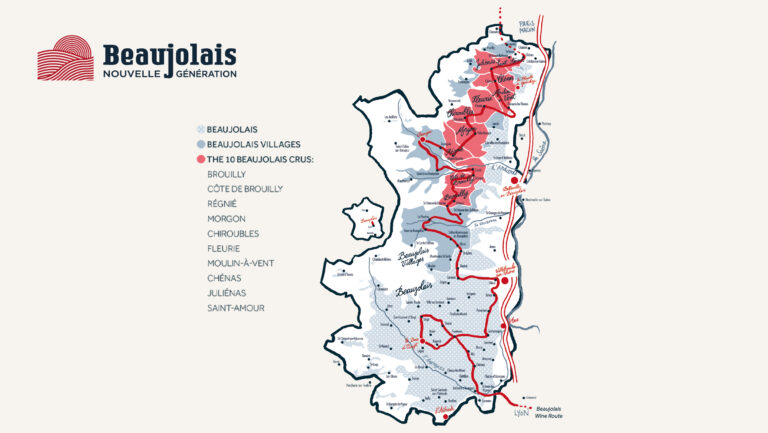
Perhaps more than any other wine, Beaujolais renders the notion of seasonal drinking obsolete. An incredibly diverse viticultural zone, the area encompasses a wide range of official appellations and terroirs. These include: Beaujolais AOC, a regional designation that showcases its charming everyday side; the 38 villages that comprise the appellation of Beaujolais-Villages; and the area’s 10 celebrated crus, known for their world-class age-worthiness and complexity.
The Diverse Geology Of Beaujolais
Many factors contribute toward creating the identity of a wine region. While winemaking choices—from fermentation techniques to aging methods—play as important a role in the formation of Beaujolais as they do anywhere else, the simple fact remains: A wine region is only as diverse as its soils. And Beaujolais is no exception.
Between 2009 and 2017, Beaujolais undertook a rigorous, in-depth analysis of its soils with the express mission of carving out a meticulously detailed map of the area’s varied terroirs (learn more about the results through this short video in the Beaujolais hub here). Some 15,000 soil samples and fifty field visits later, the process confirmed what the region’s growers had suspected all along. Far from monolithic, the vineyard area of Beaujolais comprises a rich tapestry that offers a much more intricate and nuanced portrait of the region than previously imagined. From the chalk, schist, and clay of the region’s southern tip, with its gently rolling hills, to the granitic slopes of the North, where most of the crus are clustered, the area is home to no fewer than 300 unique soil profiles. Given this rich geological makeup, it’s no wonder that Beaujolais offers up such an exceptional diversity of styles.
Savvy wine consumers, sommeliers, and other industry insiders have long regarded the ten famous crus of Beaujolais as the epitome of the region’s potential. Starting with Saint-Amour, the northernmost cru, and running south through Juliénas, Chénas, Moulin-à-Vent, Fleurie, Chiroubles, Morgon, Régnié, Brouilly, and Côte de Brouilly, these crus provide a fascinating study in contrasts.
Until recently, the popular narrative surrounding their identities revolved around a general set of talking points. If you were to poll a cross section of contemporary wine professionals, they’d probably begin by explaining how Morgon and Moulin-à-Vent get singled out for producing the most powerful wines, whereas Fleurie, known for its delicate finesse, occupies the lighter, more delicate end of the spectrum. Accordingly, each of the remaining crus lands somewhere in between. There’s also generally a lot of excitement over the high-toned elegance and minerality of Gamay grown on the region’s abundant granite. But with the widespread reconsideration of the region’s terroirs, that generalized narrative has grown far more complex, introducing additional degrees of nuance typically reserved for a select handful of elite viticultural zones.
“If you’re interested in terroir distinctions, it has become increasingly evident that Beaujolais rewards the kind of microscopic, detail-oriented approach that attracts wine lovers to the complexity of places like Piedmont or Burgundy,” says Josh Orr, MS, the director of education and regional sales manager at Virginia-based importer Broadbent Selections. “You can taste the different effects of a wine grown purely on granite in Fleurie as opposed to volcanic rock in Juliénas. As a wine professional, I love being able to experience that cause and effect coming to life in the glass.”
This expanded view of the region has sparked growing interest among producers to showcase Beaujolais’ potential through single-vineyard expressions. Hence the modern influx of site-specific bottlings labeled with specific lieux-dits. While longtime fans may be familiar with historically significant sites such as Morgon’s Cote du Py or Fleurie’s La Madone, long distinguished for the unique character they impart to their respective wines, the next generation of vignerons has enthusiastically embraced the opportunity to highlight the legions of lesser known yet equally distinctive parcels scattered across the region’s ten crus. As granular snapshots of specific microclimates within their respective villages, these highly terroir-driven wines represent the area’s current state-of-the-art, facilitating a far more nuanced appreciation of Beaujolais, both as a region and a wine.
Beyond Vin Rouge
While the region’s popular image will always be that of red wine, this monochromatic view is increasingly short-sighted. In recent years, Beaujolais has emerged as a robust producer of rosé. The very same freshness and acidity that make Beaujolais reds such effective gastronomic partners also lend themselves to equally savory, food-friendly rosés. With their bright, fruity Gamay character, Beaujolais rosés have become an exciting addition to the pink wine canon—particularly as the price of rosé from southern France continues to climb. And while it’s ideal for summer sipping, as might be expected, Beaujolais rosé has proven to possess an unexpectedly long shelf life, displaying enough structure, depth, and savory complexity to reward drinking through Labor Day and into the cooler months.
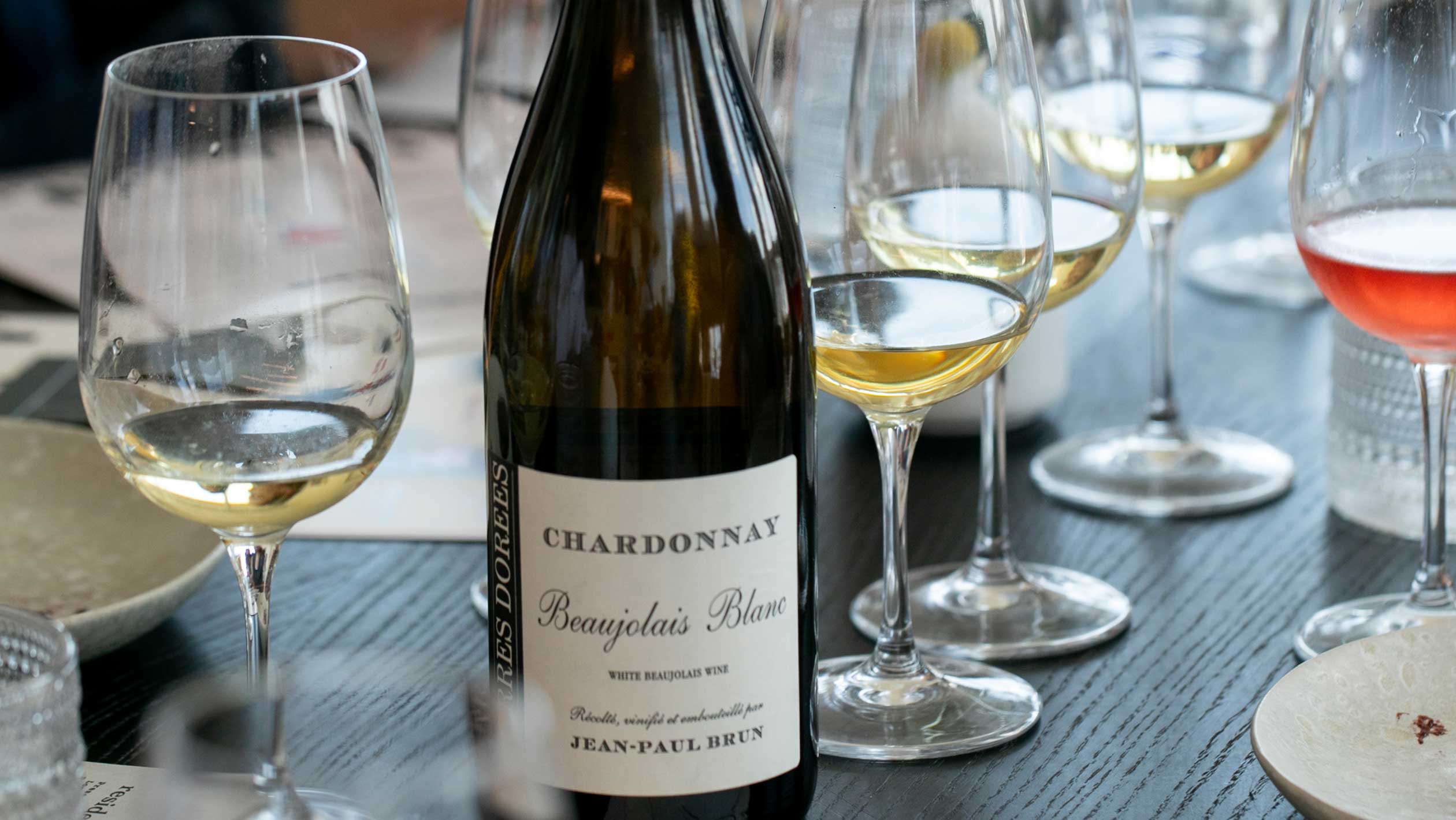
Perhaps the greatest testament to the Beaujolais’ diversity as a wine region, however, comes in the form of a relatively recent realization. While the emblematic Gamay will always be the dominant grape of Beaujolais—and understandably so—the area has lately received increased attention for its lesser-known, but over-performing Chardonnay-based whites. For now, Beaujolais and Beaujolais Villages Blanc account for just four percent of the region’s production. While that’s little more than a sliver of the region’s annual output, thanks to the enormous potential Chardonnay continues to display in the area, the category has started to assume an outsized importance amongst sommeliers.
“I’ve been lucky enough to taste an extremely wide range of Beaujolais Blanc, and I’ve been enormously impressed with their texture, their brightness, and their overall quality,” explains Greg Van Wagner, the beverage director at PARC in Aspen, Colorado.
According to Wagner, who cites Chardonnay’s proven kinship with limestone, many of the top examples hail from the limestone-rich soils of southern part of Beaujolais known as Les Pierres Dorées, named after the porous, golden-hued stones that litter the area’s vineyards, imparting elegance, minerality, and finesse. While differences in both ambition and intent among producers makes it difficult to generalize, stylistically Beaujolais Blanc ranges from fresh, lively whites for immediate enjoyment to broodingly introspective, powerful wines that reward time in the cellar. Not unlike their red siblings, they occupy that rare sliver of the Venn diagram where complexity and drinkability overlap—always a welcome addition to the table, no matter the season.


Dispatch
Sign up for our award-winning newsletter
Don’t miss the latest drinks industry news and insights—delivered to your inbox every week.