Mexico has long had a global monopoly on the commercial export of spirits from the native agave plant—and to great success. The past two decades witnessed an 180 percent increase in the volume of tequila sold in the U.S., and in recent years this has driven interest in agave spirits production outside of the homeland of tequila. There’s now a small but burgeoning industry in agave spirits—both new and traditional—hailing from Australia to the Andes, but, also, notably, from the U.S. itself.
Over 500 brands of American distilled agave spirits have been registered in the U.S. market, according to the U.S. Alcohol and Tobacco Tax and Trade Bureau (TTB). The number is only increasing year over year. Brands originally relied on imported Mexican agave or agave syrup to make their spirits, but now American distillers are looking to U.S. farmers for a supply of agave from fast expanding fields of domestic agave crop.
Within the mighty, tequila-dominated category of agave spirits in the U.S., however, this growth represents a tiny fraction of the market. What will it take to push domestically produced agave spirits from niche to mainstream? And is there a future in which California agave spirits find shelf space beside premium Mexican tequilas? Some producers are betting on it.

Don’t miss the latest drinks industry news and insights. Sign up for our award-winning newsletters and get insider intel, resources, and trends delivered to your inbox every week.
The Emergence of a Growing Agave Spirits Category in the U.S.
Since the 1994 signing of NAFTA, the TTB has recognized tequila as a distinctive spirit of Mexican origin. Subsequently, U.S.-Mexico trade in spirits boomed by 4,080 percent. For the longest time, Mexico enjoyed a monopoly on the entire category of agave spirits according to U.S. law, but in 2018, the TTB, which had previously recognized tequila at the class level—as it does other spirits like rum, gin, or vodka—proposed a new class of agave spirits, housing tequila and mezcal as specific subcategories from Mexico, but also allowing for non-Mexican products.
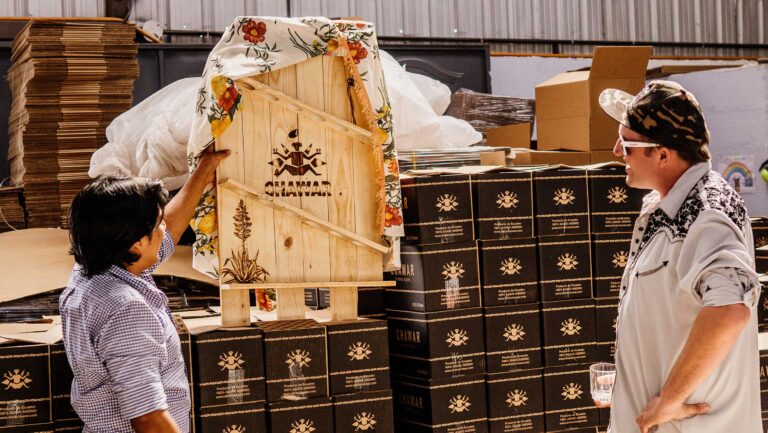
“There is no other spirit that suffers from the category being captured by a denomination of origin,” argues Eliot Logan-Hines, who founded Chawar in 2019. An Ecuadorian spirit distilled from the fermented sap of agave, chawarmishki, as it’s called in Quechua, is more similar in production to Mexico’s pulque than mezcal or tequila. “Champagne exists in a broader category which is sparkling wine, which exists in a broader category which is wine.”
American craft distillers and their advocate groups generally welcomed the proposal. Mexico’s Consejo Regulador de Tequila (CRT) did as well, so long as tequila and mezcal retained their naming protection. Meanwhile, larger spirits interests like Diageo and the Distilled Spirits Council of the United States opposed it, lest it allow other producers to “take advantage of tequila’s or mezcal’s prestige.”
Ultimately, the new category was approved in 2020, and for the first time, tequila and mezcal, long the catch-all for agave spirits, became part of a broad and diverse category in the U.S. In the five years since, U.S. distillers in dozens of states have filed nearly 500 applications for a Certificate of Label Approval (COLA) from the TTB in this new class. And the pace is accelerating. In 2020, 58 U.S. agave spirit labels were registered; in 2024 that number rose to 143.
There have also been 900 filings from Mexican distillers, representing a variety of distillates like raicilla, bacanora, and wild agave blends that are not labeled tequila or mezcal due to cost, producer preference, or legal constraints surrounding the two denominations of origin. And there have been about two dozen filings from producers outside of the U.S. and Mexico, including from distillers in India, Australia, Ecuador, Peru, and Venezuela, where the species Agave cocui (which is not endemic to Mexico) has long been distilled into cocuy, soon to arrive in the U.S. market. “We are coming in as an agave spirit,” explains Sofi Smith of La Capilla Cocuy. “We are next to the bacanoras. Right next to sotol. We are lucky to be next to Mexican spirits, but we are agave with a twist.”
Sourcing Agave in the U.S.
Many American craft distilleries rely on agave or agave syrup exported from Mexico as their base material. Distillers, such as Connecticut’s Litchfield Distillery or Virginia’s Mt. Defiance Distillery, import agave nectar from Mexico. Another strategy, approved by U.S. Customs in 2019 for San Diego’s Cut Water Spirits, involves importing a blend of tequila and fermented agave wine at around 25% ABV to be further distilled and fortified into an American agave spirit. A new option will also be open to U.S. distillers in the coming months; Grover and Scarlet Sanschagrin, the founders of Tequila Matchmaker, created Respeto Agave, a distillery-ready syrup that retains the characteristics of traditionally roasted and milled Blue Weber agave.
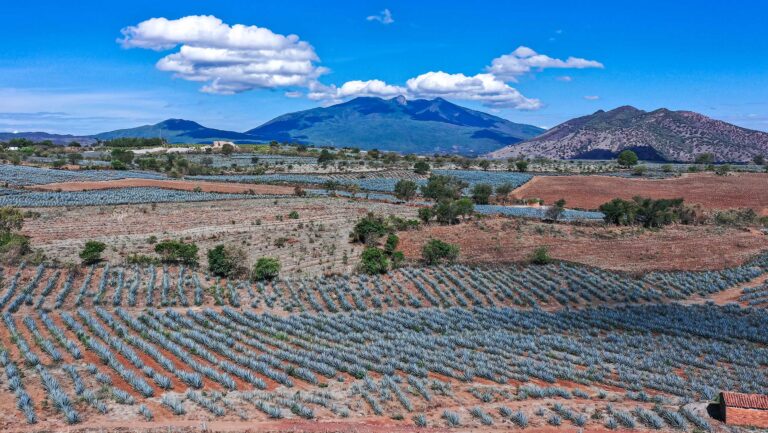
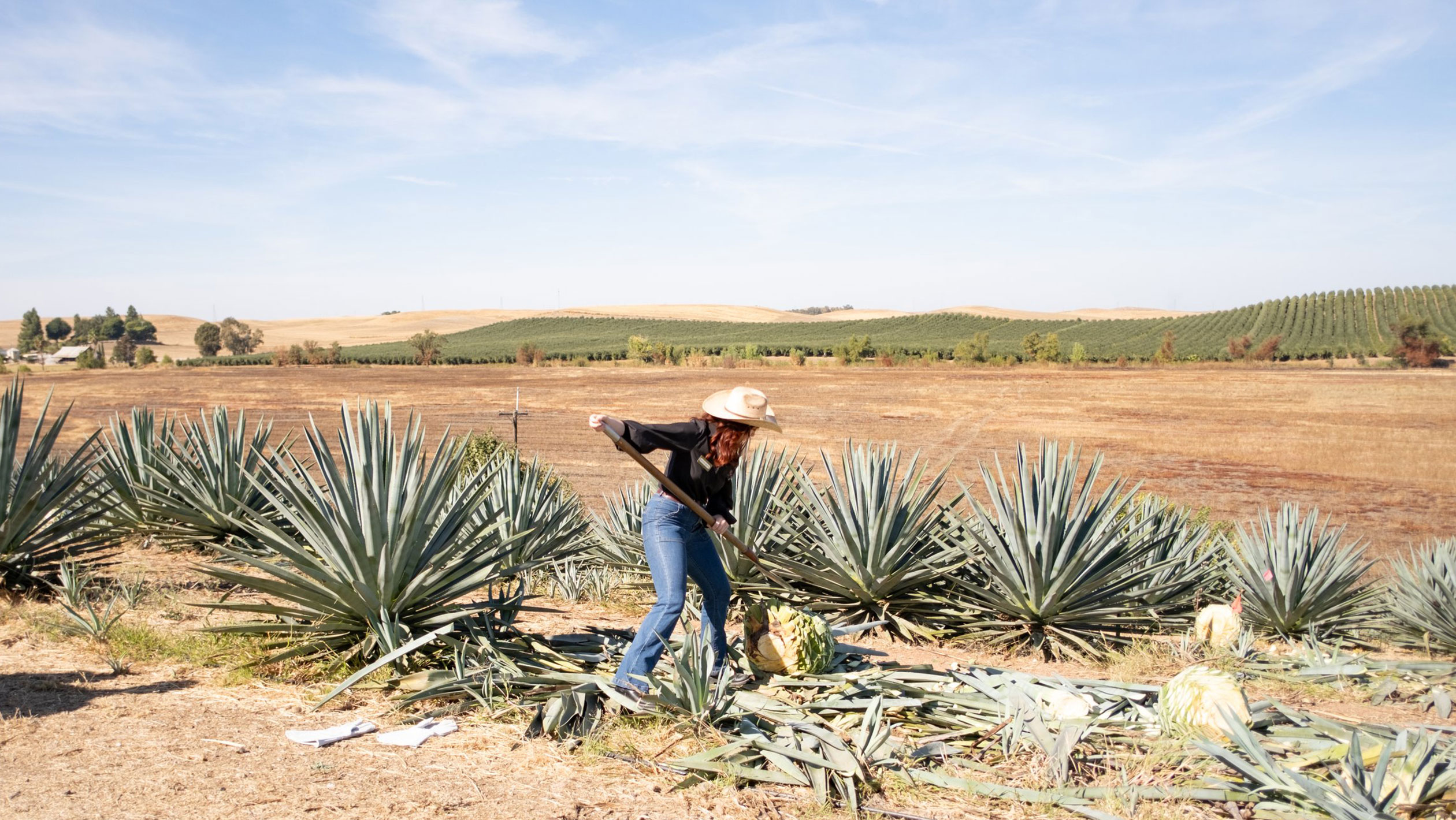
Some U.S. distillers are producing agave spirits from domestically grown plants, but agave cultivation is still so negligible that the United States Department of Agriculture (USDA) does not yet track it as a crop, even though it’s native to eight U.S. states and Puerto Rico. “It’s pretty niche right now, but it’s growing,” says Stuart Woolf, the president and CEO of Woolf Farming, who has planted around 200,000 plants a year for the past two years, making him California’s largest grower. “If you went back before I started growing, there were probably 40 to 50 acres [in California]. Today it is closer to 700 acres. I’d say in another year, we will be closer to 1,200 to 1,400 acres.”
Woolf has also seen a spike in interest in reselling agave plant pups—or hijuelos in Spanish—imported from Mexico for cultivation by other California growers. “The number I’m selling is doubling and tripling as the years go by,” says Woolf. “It’s still a chicken and egg thing—anyone who is planting now is betting that someone is going to put in the capacity to process and distill them.”
Where over-planting and agave monoculture has caused economic and environmental issues in Jalisco, California farmers see the plant as an environmental solution. In 2024, the USDA awarded UC Davis Agave Center and the California Agave Council—a non-profit trade association established in 2022 to represent the growing number of agave growers and distillers in the state—$500,000 each to train farmers in agave cultivation and research the crop’s potential in the state. Agave is not just a potential cash crop, it is an answer for many California farmers facing water shortages that prevent the cultivation of most other traditional crops. “I’ve got this family legacy of land, but I don’t have enough water to farm it all,” says Woolf. “So I have this challenge of how to manage this land. One thing I can do is to grow a crop that is drought tolerant and climate resistant.”
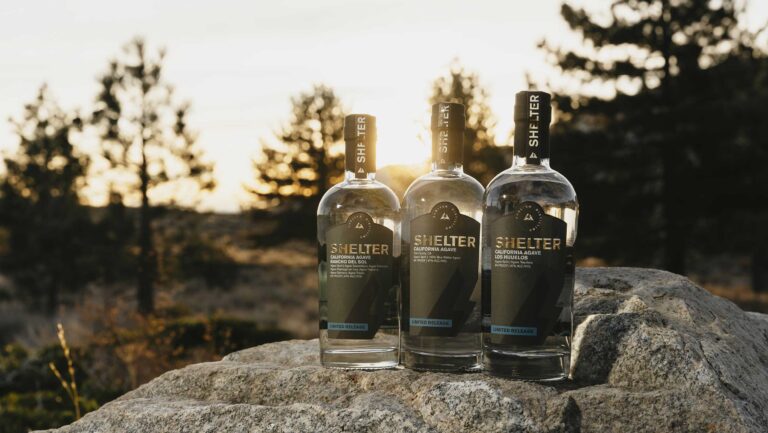
Some California distillers, like Shelter Distilling, already have American-grown agave spirits on the market, although they consider their production as R&D and count their bottles by the hundreds. Most producers are still testing which varieties will grow in California to make domestic production viable. “The state is in the very early steps of finding what plants will grow here and what flavors will be produced here,” says Adam Goldberg, the cofounder of Stargazer Spirits in Sonoma County. “There are folks looking to grow Agave tequilana—a high-sugar agave. It has commercial appeal and it’ll be used for larger scale projects.” But producers like Stargazer, who have planted 36 different varieties to see which ones thrive and produce distinctive spirits, will focus on building brands that feel more like family wineries than Jose Cuervos. In 2022, California passed a law protecting its agave growers and distillers—a bottle labeled “California agave spirits” must now be produced entirely from agaves grown within California, with no additives permitted.
Nonetheless, California’s efforts are dwarfed by Mexico’s prowess. In 2023, Blue Weber agave (Agave tequilana) covered an area of around 214,621 hectares in the Mexican states that produce tequila. From 2014 to 2023, the state of Jalisco alone saw the cultivated area increase by nearly 6,382 hectares on average annually. The growth has been so meteoric—leading to a crisis of overproduction of the plants—that the state of Jalisco has committed to replanting 796 hectares with sugar cane. In other words, Jalisco will purposefully uproot double the acreage of agave than is currently planted in all of California.
What Does This Mean for Tequila and Mezcal?
The CRT is wary of others piggybacking on tequila’s hard-earned success. “In the event that the cultivation [of U.S. agave] prospers and some agave distillate is made, this may not under any circumstances make reference to or take advantage of the reputation of tequila, directly or indirectly, since it will become a clear unfair competition, which will be duly denounced at the time, demanding the respect that tequila deserves based on the recognition in that nation of tequila as a certification mark,” a spokesperson for the CRT shared with SevenFifty Daily in an email.
Mexico’s industry has expressed concern over similar competition in the past. In 1997, as Mexico faced an agave shortage, the CRT worried about a “tequila war” with South Africa where non-native agave grew extensively in the Karoo semidesert region. The South African company Tequila and Mezcal Distillers Ltd was slated to produce 240,000 liters of alcohol per month by 2000, but the product never materialized. Similarly, there was some concern from the Unión Mexicana de Productores de Nopal, Tuna y Maguey in 2007 when Chinese companies were patenting products based on agave and prickly pear cactus.
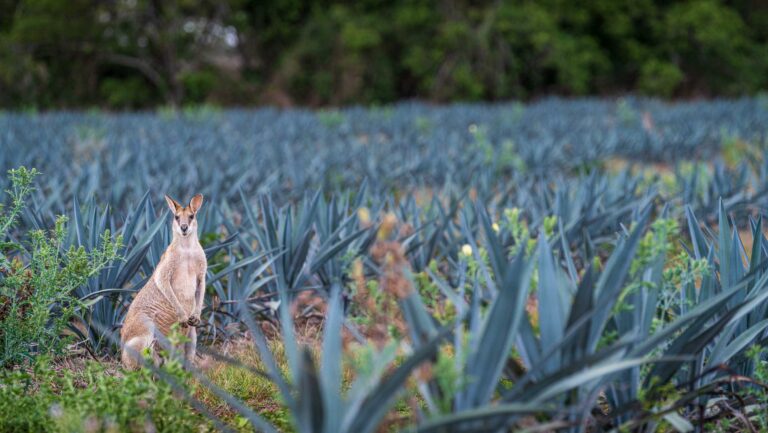
Craft producers in California, however, don’t see themselves in competition with Mexican distillers. “The French used to make great wine, but everyone knows what happened when California entered,” quips Patricia Swenson, the executive chairman of Shelter Distilling. “But that didn’t diminish the value of French red wine. So we aren’t trying to diminish the importance of tequila and mezcal distillers, we just want to make something unique in California. We are very much positioning this as its own category.”
Terroir, agave species, and production technique all figure prominently in the way they communicate about their spirits, so the fledgling world of California agave spirits is more likely to dip into the market share of premium Mexican products than any of the bulk options. “The cost of growing agave in Mexico is so much cheaper than here in the United States,” Grover Sanschagrin says. “For comparison, the going rate right now for mature agave in California is 66 pesos ($3.25) per kilo, and at the highest point of the crisis in Mexico, agave was at 31 pesos ($1.53.) All of the California stuff is going to be really expensive.”
While the U.S. industry is in its infancy, the era of agave spirits being the sole commercial domain of Mexico is ending. Markets like India and Australia benefit from local agave spirits with cheaper transportation costs. Farmers in increasingly arid regions in Israel and California will find agave an ever-more attractive crop. And consumers the world over, who have proven to have an insatiable thirst for more agave spirits from Mexico, will be intrigued by new, local offerings. No, these won’t be tequilas or mezcals, but they are coming nonetheless. “Within my lifetime, I have no doubt,” says Goldberg, “there will be a California agave spirit on the shelves at Costco.”

Dispatch
Sign up for our award-winning newsletter
Don’t miss the latest drinks industry news and insights—delivered to your inbox every week.
N.C. Stevens writes about the role beverages play in communities and cultures around the world. He has published on a range of drinks including herbal tea, coffee, beer, and the more obscure spirits of the world. His work has appeared on Atlas Obscura, Wine Enthusiast, and his self-curated website, DrinkingFolk.com.