The holiday season has traditionally been essential to retailers’ bottom lines. And for wine and spirits merchants, who have been facing declining sales as alcohol consumption rates drop across the board, the months of November and December have become increasingly important.
Beer, wine, and liquor stores get close to 20 percent of their revenue in the weeks leading up to the holidays—and some find that, with the right offerings, events, marketing plan, and extra elbow grease, these exhausting months can deliver even further returns to their bottom lines.
We spoke with retailers across the country to find out what works, from strategic behind-the-scenes planning to on-the-floor product pushes.
Don’t miss the latest drinks industry news and insights. Sign up for our award-winning newsletters and get insider intel, resources, and trends delivered to your inbox every week.
Offer Extended Shopping Hours
When it comes to anticipating customer needs, put yourself in their shoes. This time of year can be chaotic, so anticipate and meet that chaos with solutions and sanity.
“When I write my newsletters, I try to think about what I would want in my house,” says Samanta Ettore, the owner of wine-sense in Andover, Massachusetts. “How can I get the help I need, but from the wine retailer? This customer-first mindset drives everything, from my signature holiday packages, to my willingness to open at 9 am on what would normally be a closed Monday, simply because the Whole Foods across the street is bustling with holiday shoppers.”
Like Ettore, Sage Wine & Spirits owner Jes Rich also extends the Ballston Spa, New York, shop’s hours and clearly communicates these additional hours and days across digital channels.
“I make sure that my hours are clearly posted on Google, Yelp, my website, Instagram, and the shop door,” Rich says. “I usually do this a few weeks ahead of time, and I start mentioning the holidays in my individual interactions with customers, so as to plant the seed early.”
For Andrew Turner, the proprietor of Valley Wine Merchants in Newburg, Oregon, it’s not just about extending hours—it’s about extending convenience.
“I offer an increased schedule of porch drop-offs within certain zip codes leading up to the holidays,” he says. “Again, making it ‘let me take the wine part off your plate for the holidays’ is appealing to our customers.”
Lead With Hospitality
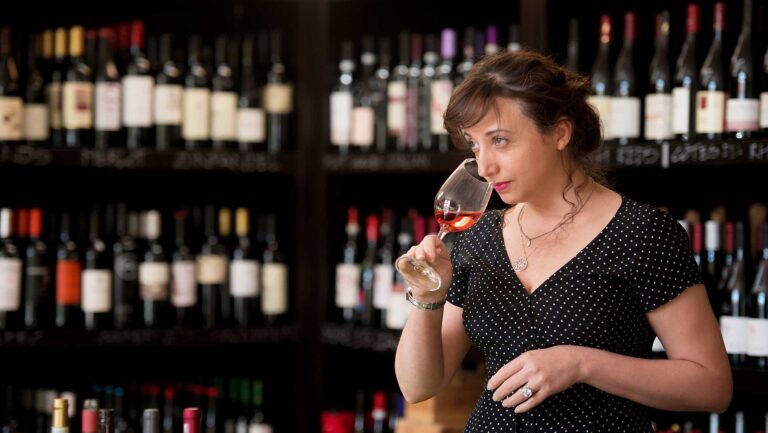
Ettore thinks about the different stages many of her customers are in with their planning process and their level of wine knowledge, and tries to accommodate a range of needs.
“I let people know that we’re here to help them with pairings, from private appointments for organized planners or corporate clients who want dedicated consultations, to email menu consultations, and even text-based pairing advice for last-minute shoppers,” Ettore says. “It translates to more stress and more work, but this is the season where we have to give it our best.”
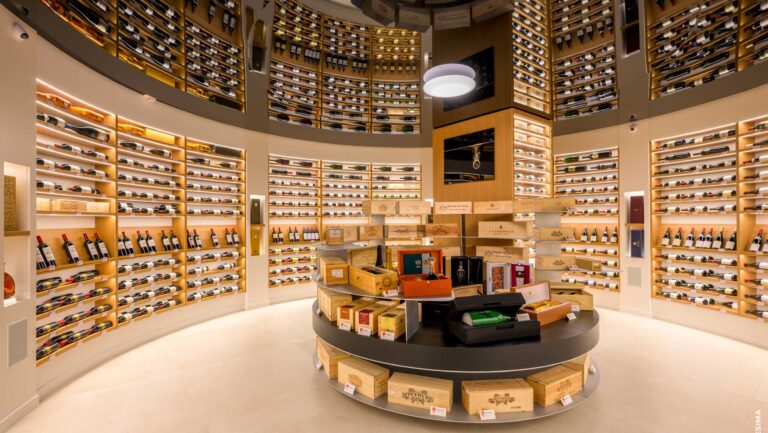
At Millesima in New York, which draws customers with a range of budgets, general manager Fabrizio Germano creates à la carte and custom gift sets that start at $40 and surge past $2,000.
“We work with individuals and on the corporate level for gifts that feel personal and are truly memorable,” he says. “They always include a beautiful box with a handwritten card, and they are completely customizable.”
Promote Holiday Specials and Events on Social Media
Because many people live and shop on their phones, getting social during the holidays is crucial. Close to one-third of consumers research their purchases on social media before making them, according to the “State of the Consumer 2025” report from management consulting firm McKinsey & Co., and according CGA Strategy Powered by NIQ data, 83 percent of Gen Z consumers are more likely to purchase a food or drink product because they saw it on social media.
“I post more diligently on social media, with posts featuring items that are perfect for gifts, from reasonably priced host gifts to more expensive special bottles,” Rich says. “But I’m also careful not to overdo it, because people are already overwhelmed during the holidays.”
Turner uses social media to lure in customers with fun taste-and-shop events. He finds that keeping it simple and straightforward often has the best ROI, and once people come in, the wine sells itself.
“A post on Instagram just saying, ‘stop in and stock up before the holidays while sipping bubbles’ works,” he says. “Once they taste an inexpensive but high-quality wine, like a Crémant de Bourgogne, the wine just flies out the door along with other wines that I help them select around their menu. It’s a lot of fun for me and adds an extra touch of the old-fashioned service that I’ve become known for.”
Collaborate With Winemakers
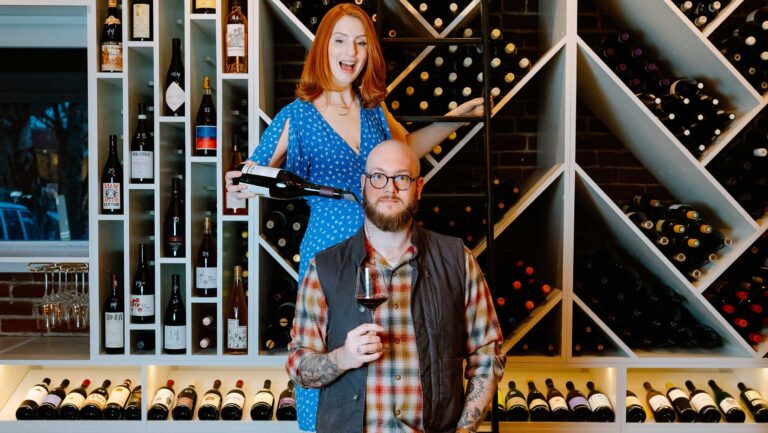
David and Sarah Gregory, who co-opened Ora et Labora in Portland, Oregon, three years ago, have found that creating opportunities to meet winemakers while shopping keeps their cash register busy.
“We host independent winemakers for a winter wine market, even though 95 percent of our wines are from Europe,” David Gregory explains. “We have five vignerons coming in, each of whom farm and make wine as one-man or one-woman operations, including Junichi Fujita, Little Crow, Dacha, Perkins-Harter, and Amiti.”
They’ll each pour three or four wines, and the ticket price covers the cost of sample bottles (though each producer contributes a bottle to keep the price low). Similar events typically bring in between 70 and 100 guests.
At Millesima, Germano says that hosting intimate tasting experiences with Champagne producers like Laurent-Perrier and icons like Château d’Yquem moves the needle in terms of sales, but even more importantly, creates the distinct luxury experience for which the store has become known.
“Our goal is always to turn buying wine in a retail setting into an experience,” Germano says. “Proposing a product that you cannot try is always going to be limited in success, so we have activations that are designed to deliver unique, special experiences. While the events themselves don’t necessarily drive the majority of the holiday spending, they create a sense of exclusivity that turns people into long-term clients.”
Create Curated Gift Sets
Gift packages are common around the holidays, so how do retailers make theirs stand out? Turner finds that it’s best to create options that speak to customers’ holiday needs, insecurities, and pain points.
“The key with the holidays is to make it stress free and a no-brainer,” Turner says. “Take one thing off their plate.” Valley Wine Merchants packages mixed cases as “what Andrew would drink for Thanksgiving” or “the perfect holiday six-pack,” which are both appealing and accessible. “I find that people buy it for personal festivities and as gifts,” he adds.
Then there are the packages ready for last-minute panic purchases. “Last-minute shoppers are a reality,” Rich says. “At Sage, I always have a grab-and-go six pack of wine curated to pair with typical holiday meals.”
If your state’s liquor laws allow you to sell non-alcoholic products as well, use food items and other tools to add value to gift packages. “My most successful holiday strategy revolves around my Wine Essentials packages,” Ettore says. “And they aren’t wine-only. My formula includes a wine suitable for cooking and sipping at the same time, a premium olive oil for holiday meal prep, a specialty salt or other popular seasoning, food-pairing suggestions, and a set of glasses with a wine key.”
She packages it up, and makes it easy to order online and pick up in the store.
Hospitality is always foundational to successful sales. During the holidays, and amid a rash of unanticipated challenges across the industry, making wine easy to select for a range of occasions, eminently available, and stress-free to purchase is as vital for retailers as it is for their customers.

Dispatch
Sign up for our award-winning newsletter
Don’t miss the latest drinks industry news and insights—delivered to your inbox every week.
Kathleen Willcox is a journalist who writes about food, wine, beer, and popular culture; her work has appeared in VinePair, Edible Capital District, Bust magazine, and Gastronomica, and on United Stations Radio Networks, among other venues. She recently coauthored, with Tessa Edick, “Hudson Valley Wine: A History of Taste & Terroir.” She lives in Saratoga Springs, New York.