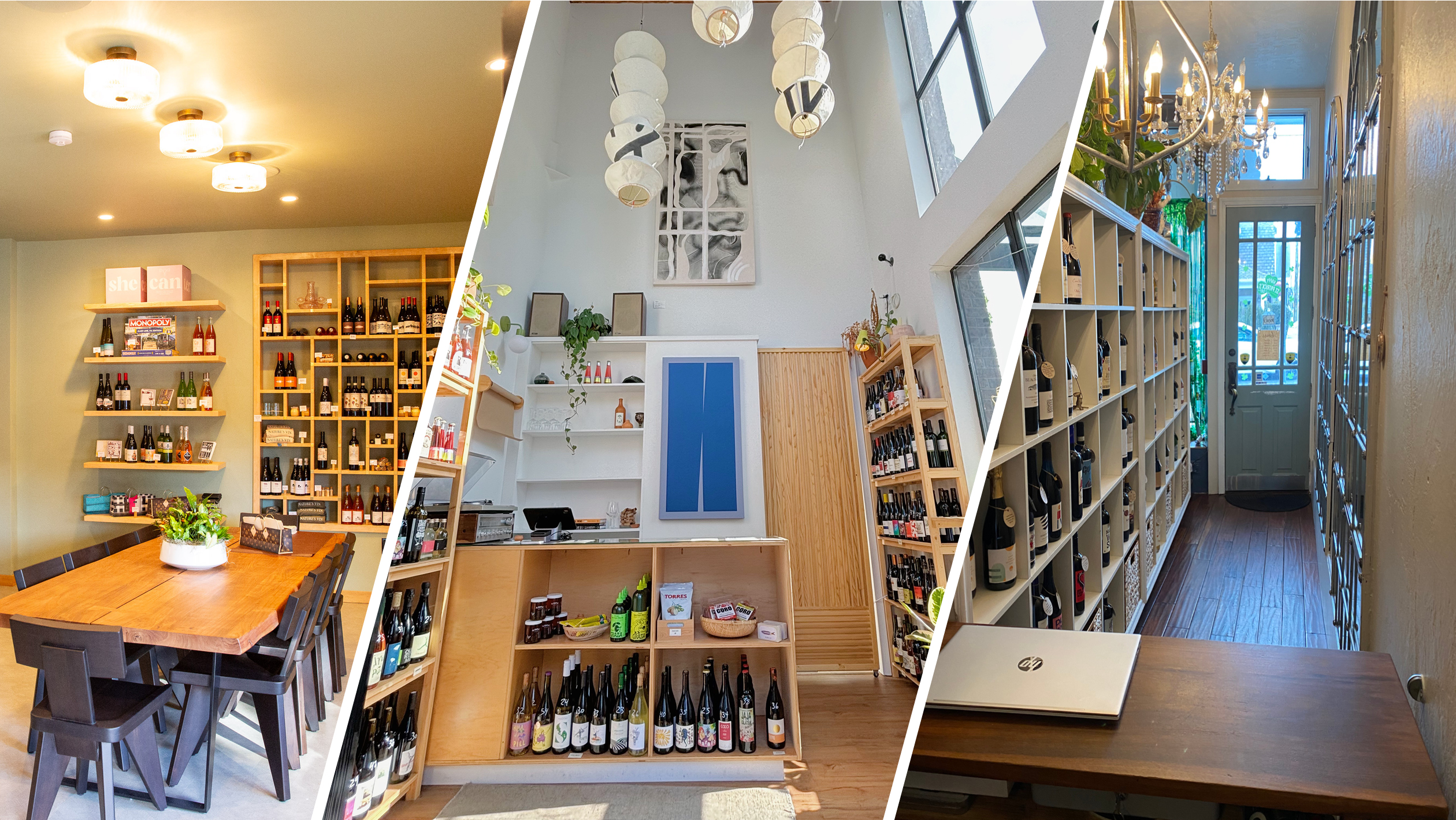
At a time when wine consumption is reportedly softening and distributors are continuing to consolidate, a different kind of wine retail shop is unexpectedly finding its footing: the sub-1,000-square-foot wine store. In some cases, these tiny wine shops are not just holding steady—they’re driving sales.
In what may be smaller than a living room, several wine shops around the country are creating a customer base that is repeat and loyal. And even more uniquely, each of these wine shops has a hyper-curated niche that distinguishes their selection from big-box—or even medium-box—stores. While these two factors may seem like a hindrance, they are actually creating a bright spot for retailers and consumers alike.
“Running a micro-shop fundamentally changes every business decision,” says Laura Kinsman, the owner of Standing Room Only in Southern Pines, North Carolina, where only a few customers can fit at a time.

Don’t miss the latest drinks industry news and insights. Sign up for our award-winning newsletters and get insider intel, resources, and trends delivered to your inbox every week.
Instead of competing on volume or recognizable labels, these retailers are defining exactly who they are—and who they are not—and building around that clarity. In doing so, they’re proving that smaller buying power can translate into sharper inventory decisions and faster turn—advantages that really matter in a contracting category.
Creating a Point of View
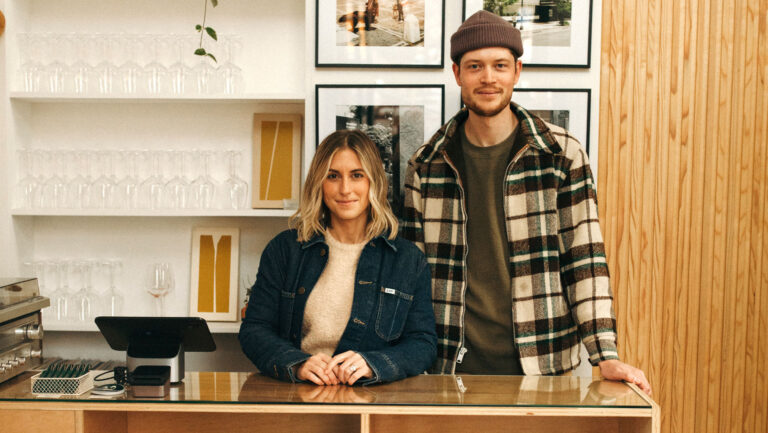
For Nick Bentley, the co-owner of Petite Wine Shop in Seattle, Washington, a 900-square-foot store specializing primarily in natural wine, owning a wine shop wasn’t always his path. He didn’t enter wine through what he dubbed the “traditional” sommelier-to-retail pipeline. Instead, it was tasting serious natural wines for the first time that shifted his perspective entirely and opened the door to a deeper curiosity about farming, fermentation, and intention in the cellar.
“Natural wine was my road to seriously liking wine,” he says. “I could tell that there were cows nearby and that [the wine] was alive; and that the person who made this was really having fun doing it.” That, he says, shapes the store’s identity.
Petite Wine Shop focuses “hands down” on natural wines, though not just the flashiest or most overtly funky examples. The selection spans the spectrum, from organic and low-intervention producers to bottles that push stylistic boundaries as well as seasonal options. The throughline is intention.
“I would like to say we offer something for everyone,” says Bentley, noting they have about 70 or 80 SKUs, most of which rotate out since he loves the discovery of something new and likes to share that with customers.
And while Petite Wine Shop leans into natural wine with a broad, exploratory approach, other shops are taking that philosophy even further. Down The Rabbit Hole in Sayville, New York, curates a tightly edited mix of natural, organic, and biodynamic bottles, while Nature’s Vin in Wayne, Pennsylvania, applies an even more rigorous lens.
In 600 square feet, Nature’s Vin keeps between 164 and 170 SKUs at any given time, and all must be minimal intervention in the cellar—indigenous yeast, wild fermentations, minimal added sulfites—plus farmed sustainably, organically, or biodynamically. They also must be owned, grown, or made by women, explains Elyse Lovenworth, the director of operations. That specificity narrows the pool intentionally. The goal isn’t to stock everything, it’s to stock very specific things—and to let that point of view guide the customer experience.
Focusing on Customer Service
The emphasis on customer connection isn’t accidental—it’s built into how these shops operate. For Bentley, customer service is the foundation. “Customer service is a huge part of why we’re successful,” he says, noting that the intimacy of a small footprint naturally shapes behavior. “It’s forced when it’s in a space this small; they can’t hide and I can’t hide.”
That proximity, however, isn’t about pressure—it’s an opportunity. “I ask them what they’re looking for, but I also make sure they don’t feel pressure,” he explains, describing the balance between expertise and approachability as a defining part of the experience.
At Standing Room Only, that same dynamic is taken even further. With limited space, every interaction carries weight, turning transactions into something more personal. “What larger retailers gain in volume, we gain in connection,” says Kinsman. “People come in curious and leave feeling understood.”
That connection is built not just through recommendations, but through discovery. Glen Decker, the co-owner of Down The Rabbit Hole along with his wife, Karin, sees constraint as an advantage, particularly when it comes to introducing customers to something new. “For new customers, it can be a good thing that we don’t have specifically what they’re asking for,” he says. “Then we can suggest something.” Over time, trust builds and regulars start returning not for a specific bottle, but for the consistency of the experience itself.
Increasingly, that relationship becomes collaborative. “It’s a two-way street,” Karin Decker adds, noting that customers often introduce them to new regions or producers, shaping future buying decisions. The goal isn’t just a successful sale, but a shared sense of discovery. “We really want them to buy a bottle and be just thrilled.”
In that context, customer service becomes more than attentiveness—it becomes the business model. In a market defined by endless choice, what these shops offer isn’t more options, but better ones, and someone to guide you to them.
Finding the Right Purchasing Strategy
Across all four shops, the pattern is clear: Niche is not exclusionary—it is magnetic. Rather than attempting to serve every possible wine drinker, these stores define their lane and invite customers into it. And in many cases, that magnetism is reinforced by scale. Smaller purchase quantities mean limited availability. Customers understand that if they love something, it may not be there forever, which subtly encourages both repeat visits and multi-bottle purchases.
“Our customers are testing us, in a sense,” says Glen Decker. “A lot of our regular customers come in once every three weeks, but they’ll buy six bottles. So, we have mainstays now that people always grab, but then they always want to know what’s new. So that’s the tricky part for us right now, having new products to taste.”
On the positive side, that frequency—and multi-bottle purchasing—reflects something larger than curiosity. It signals trust. In a market where casual wine buying is softening, these shops are cultivating customers who return with intention.
Small purchasing—often by the case or even partial case—allows Bentley to experiment without tying up cash in slow-moving inventory. In a store this size, smaller purchase quantities reduce risk and keep the assortment dynamic. So what could be a limitation in a larger shop becomes agility here.
In tiny shops, there is no room for filler inventory. Every bottle must justify its place on the shelf, a constraint that reinforces discipline and builds customer confidence. Restraint, however, does not mean rigidity. Lovenworth explains that she curates for discovery, reliability, or education as “the most successful programs are always some combination of those three,” she notes.
A focused assortment, she believes, accelerates connection. “A focused and mission-driven program helps customers quickly understand the ethos and overall approach to the wine. It also lets us get to the more meaningful parts of the interaction faster, like occasion, preferences, budget, all of that.”
Kinsman explains that because of the tiny space, she has become more intentional about what she purchases to stock, knowing she may not have something for everyone. She tries to tailor the selection to two things: what she knows customers drink and emerging wine trends she knows will be a hit.
“I don’t stock broadly; I stock deliberately,” says Kinsman. “That means curated selections built around quality and a story. There’s no filler inventory and no ‘just in case’ buying. We run tight inventory and track everything carefully, including full bottles versus tasting pours, which keeps turnover strong and waste low. Customers recognize that what’s on the shelf is there because we believe in it,” she says.
The Challenges of Small Spaces
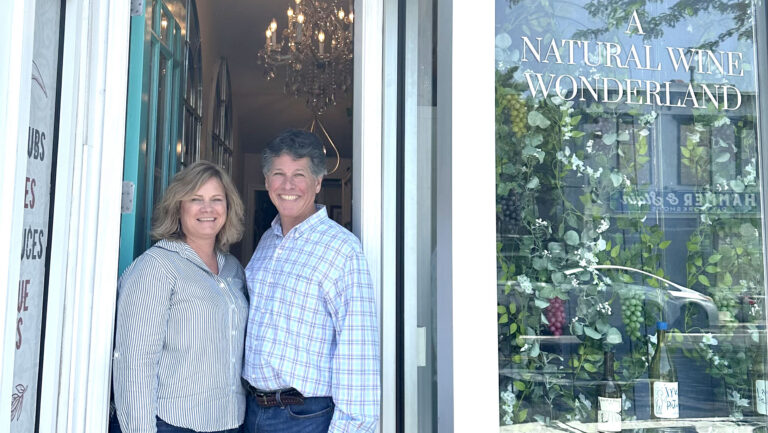
Small spaces, however, come with unique challenges. Without room for in-store tastings or larger events—particularly in colder months—shops are forced to think beyond their four walls. For Karin Decker, that has meant looking outward, partnering with neighboring businesses and activating Main Street as an extension of the shop itself.
Bentley has faced similar constraints in Seattle. While Petite Wine Shop always keeps a bottle open for casual tastings, he has expanded beyond the store’s footprint by extending his license to include catering, which allows Petite Wine Shop to host off-site events, corporate tastings, and pop-ups. In this model, growth doesn’t come from more space, but from more flexibility.
Even inventory, one of the defining strengths of small-format retail, presents its own challenges. With a constant focus on discovery, consistency can be harder to maintain for less frequent customers.
“It’s hard for me because I am always looking for the next new thing,” Bentley says. “So sometimes when a customer comes in every six months, they’ll look for something they had, and I may not have it again.” A handful of core wines remain, often tied to personal relationships with winemakers or distributors, but the overall model favors movement over permanence.
At Nature’s Vin, that precision extends to staffing as well. With a tightly curated selection and limited space, Elyse Lovenworth notes that the challenge lies in maintaining both depth and breadth, and ensuring the team is fully trained on current inventory while continuing to evolve the program. In a small shop, there’s little room for error. Everything, from the selection to the service, has to be dialed in.

Dispatch
Sign up for our award-winning newsletter
Don’t miss the latest drinks industry news and insights—delivered to your inbox every week.
Emily Cappiello is an experienced travel, food and beverage writer, often writing about the intersection of delicious bites, sips, and travel adventures.