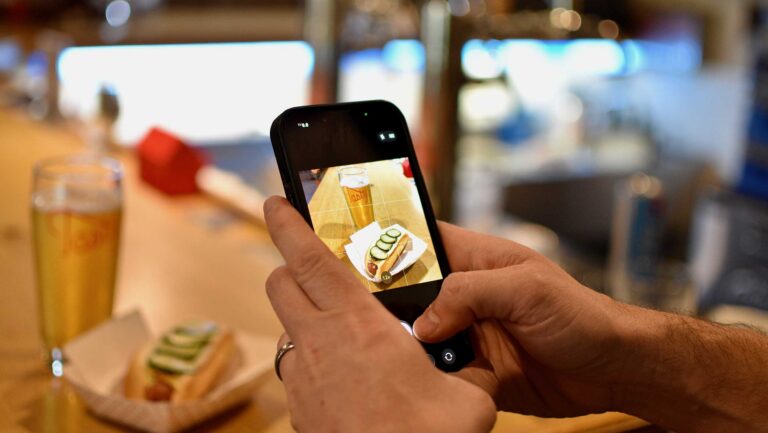
Each Wednesday, customers hit Tasty Beverage Co. for the latest limited release. Instead of IPAs or barrel-aged stouts, the Raleigh, North Carolina, beer store rolls out hot dogs with toppings inspired by crab rangoons, Big Macs, and bánh mì.
“We’ve done more than 55 hot dog specials,” owner Johnny Belflower says of the Wiener Wednesdays tradition. “Hot dogs have created new regulars.”
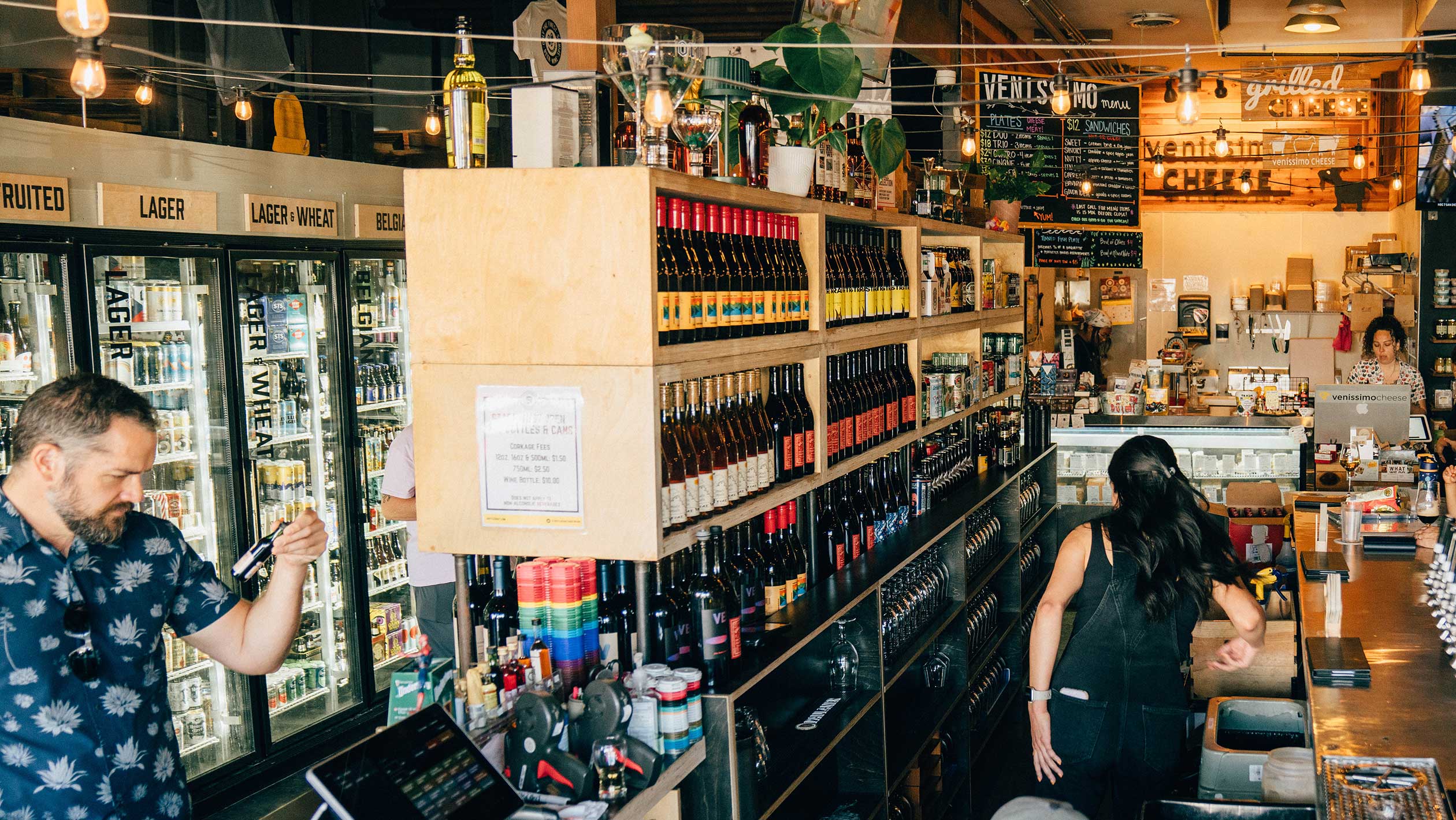
In 2011, when Tasty became Raleigh’s first beer store, the focus was selling to-go beer augmented by sales at the shop’s small bar. Now the script is flipped. Belflower removed shelving to add seating, encouraging customers to grab pints or THC-infused drinks from coolers.
Don’t miss the latest drinks industry news and insights. Sign up for our award-winning newsletters and get insider intel, resources, and trends delivered to your inbox every week.
“I’m very grateful for weed and hot dogs,” Belflower says. “If it weren’t for selling those two things, I don’t know how we’d be doing.”
These are trying times for the American beer store. During craft brewing’s 2010s surge and summit, drinkers flocked to proliferating beer shops to buy cans, bottles, and growlers filled with fresh beer, the rarer the better. Fans tailgated delivery trucks carrying IPAs from Lawson’s Finest Liquids and the Alchemist, and customers queued every Black Friday for Goose Island’s Bourbon County Brand Stout.
The mania has subsided, and “margins on retail are so tight that if people are just coming for a four-pack, that’s not making ends meet,” says Brian Jensen, the founder of Bottlecraft, a chain of five southern California beer stores.
Increasingly, long-running beer stores are shuttering nationwide. The Craft Beer Cellar franchise filed for Chapter 7 bankruptcy in 2024, the same year that City Beer Store in San Francisco concluded its 18-year run. Last fall, Top Hops went dark after 13 years on New York City’s Lower East Side, while John’s Marketplace shut one of three locations around Portland, Oregon, in December.
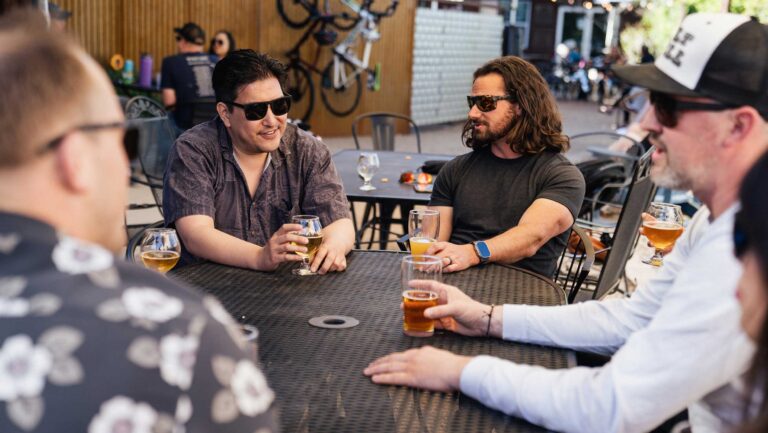
To better meet shifting consumer habits, beer stores are offering cocktails and wine, adding food, and catering to communities. A warm welcome will draw more people than another cold beer. “It’s tough to get people to travel for a double IPA,” says Joshua van Horn, the co-owner of Gold Star Beer Counter in Brooklyn.
Bottle Shops Shift Focus to On-Premise Experiences
Specialty beer stores once stood apart by stocking beverage alcohol’s hottest commodity, craft beers. Flavorful IPAs are now sold widely, and grocery stores compete for consumers’ beer spend through convenience. “You can find Russian River’s Pliny the Elder at any Whole Foods,” says Jensen.
At his Bottlecraft shops, Jensen recently converted retail space into seating for customers to enjoy draft beer, which earns more than twice the profit margin of packaged beer. Better margins help meet higher costs for minimum wage, insurance, and rent. Moreover, one San Diego location saw tips increase nearly 52 percent from the previous year. “That impact is huge for our staff,” says Jensen.
Location and rent are also essential to success. Tucson Hop Shop opened in 2015 inside an arts complex as a 1,250-square-foot “starter bar” selling beer to stay and go, says David Zugerman, the co-owner. The store sat off a popular biking and walking path, and the rent was affordable. During the pandemic, the store paused on-premise service. “Selling just bottles to go in the pandemic was like trying to subsist on the frosting of a cake,” says Zugerman. As it happened, a new owner purchased the property and let the store expand with an open-air beer garden.
“That changed our business model to more of a service model,” says Zugerman. Extra square footage helped the store evolve into a neighborhood hub supporting community events, including maker markets and nonprofit fundraisers. “It’s been nice to be able to support causes that are close to us,” adds Zugerman.
Hiking groups, board-game meet-ups, and homebrewers all gather at Belmont Station, a Portland, Oregon, staple since 1997. “I want Belmont Station to always be a public house,” says Lisa Morrison, the co-owner. The store stocks more than 1,400 cans and bottles, plus pours nearly three dozen drafts that mix IPAs and pilsners with rosé wine, non-alcoholic functional beverages, ciders, and hard seltzers.
Several coolers now contain non-alcoholic drinks and hemp-derived THC beverages. “If somebody who’s a beer fan drags their friends or a spouse who isn’t as big a beer fan, we want to offer them something too so they’ll stick around,” says Morrison.
It’s also important to offer the right beer format. Gold Star Beer Counter in Brooklyn, near Prospect Park, has a window to sell cans and crowlers of draft beer to go. “People drop by and grab a crowler to take to the park for picnics,” says van Horn.
This spring, van Horn plans to open a second location on the other side of Prospect Park. The new spot will have less shelving and bottles, a reflection of declining interest in mixed-culture beers, but a to-go window is a must for busy Brooklynites. “We’re leaning into being a neighborhood spot,” he adds.
Food Service Becomes a Key Revenue Stream
A bottle shop becoming a bar might improve margins, but many customers today require food to stick around for another round. Behind Belmont Station, the Monster Smash Burgers cart serves both beef and vegan burgers and fries “that draw people in,” says Morrison.
In 2013, The Beer Temple in Chicago began as a craft beer store, then expanded four years later to include a 20-draft taproom. Last March, The Beer Temple partnered with Bungalow by Middle Brow, a Chicago brewpub, bakery, and pizzeria, to offer Detroit-style pizzas. (Middle Brow supplies the dough and training, and The Beer Temple prepares and cooks the pizzas.)
Convincing customers to buy pizza at a beer store proved initially challenging. “It’s hard to change people’s sense of your identity,” says Pete Ternes, a cofounder of Middle Brow. “When people think about pizza, they’re not like, ‘Is there a good bottle shop where I can go get pizza?’” But after a year of grinding, Ternes says, the partnership is in a healthy place and The Beer Temple now sells upward of 200 pies weekly.
Detroit’s Eight Degrees Plato opened in 2015 and operated as a “bottle shop first and a bar second,” says Elliot Hoffman, the cofounder.
Declining to-go sales led to the store’s closure at the end of 2024; Hoffman, who intended to open a brewery, instead helped revamp the bottle shop into Meantime, adding build-your-own charcuterie boards to enjoy while lingering on a couch with a Czech-style house pilsner, glass of orange wine or a shaken daiquiri. Grab a bite and drink, sit down and hang out for a while. “We flipped the narrative,” Hoffman says.
For today’s beer stores, the traditional model of selling packaged beer is no longer economically viable. To thrive, beer stores must think like bars that broadly appeal to everyone’s appetites, be it roller-cooked hot dogs or a frosty old-fashioned. Selling to-go beer is an added bonus, but it need not drive the bottom line or be the main draw.
“We want Meantime to be inviting,” Hoffman says, and “you don’t have to be into hazy IPAs or imperial stouts.”

Dispatch
Sign up for our award-winning newsletter
Don’t miss the latest drinks industry news and insights—delivered to your inbox every week.
Contributing editor Joshua M. Bernstein is a beer, spirits, food, and travel journalist, as well as an occasional tour guide, event producer, and industry consultant. He writes for the New York Times, Men’s Journal, New York magazine, Wine Enthusiast, and Imbibe, where he’s a contributing editor in charge of beer coverage. Bernstein is also the author of five books: Brewed Awakening, The Complete Beer Course, Complete IPA, Homebrew World, and Drink Better Beer.