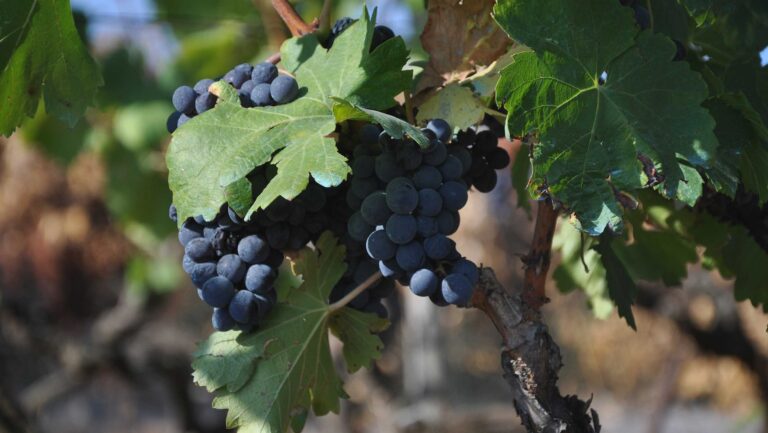
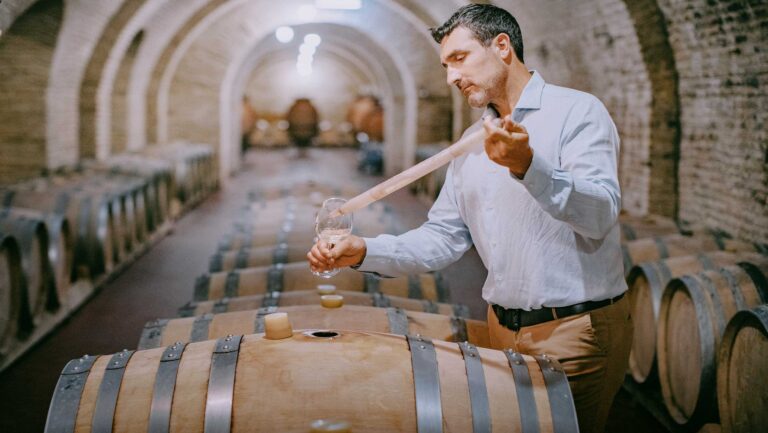
Patrick Honnef, the winemaker of Georgia’s Chateau Mukhrani recently spent weeks pouring his wines across New York, Boston, and Washington, D.C. He returned with a bleak verdict: “Georgia is qvevri,” he says. “That’s it. And it hurts my heart.” Yet, winemaking in Georgia extends far beyond the clay vessels that define the country abroad.
In local parlance, any wine made in a qvevri is simply “Georgian style,” while all other vessels, like those used for direct-press, are deemed European. Authentic Georgian amber wine—also known as orange wine—is a structural philosophy: white grapes fermented and aged on their full skins, seeds, and stems for a minimum of five to six months. This extended maceration pulls pigment, tannin, and tension from the skins, resulting in a white wine built with the texture of a red and an amber or orange hue.
“Amber is only a small picture of our country and winemaking potential,” says Honnef. To him, selling Georgian wine strictly through qvevri is like selling wine from “Germany with Bavarian lederhosen and bratwurst,” he says. “That is not the image of a serious wine culture. It is the image of an emotional experience.”

Don’t miss the latest drinks industry news and insights. Sign up for our award-winning newsletters and get insider intel, resources, and trends delivered to your inbox every week.
When Georgian wines entered the U.S. market over a decade ago, the initial storyline was often framed as an unbroken 8,000-year-old tradition of fruit fermented in clay vessels buried in the earth. The market’s embrace of these wines was hardly automatic. It required reclaimed vineyards, drained bank accounts, and the relentless travel of winemakers determined to resurrect family estates lost to Soviet rule. They carried the wines outward by hand until the textured, savory style found a home within the natural wine movement, giving Georgia an identity the market could immediately grasp.
Yet, the danger of this successful export campaign is that it risks building its own boundary, what winemakers call an “amber ceiling.” While qvevri-fermented wines account for barely five percent of Georgia’s commercial production, in the U.S. they threaten to dictate the entire narrative.
Outgrowing the Origin Story
Despite that narrow framing, Georgian wine is gaining traction in the U.S. By 2024, shipments reached 1.07 million liters—a 58 percent jump in volume year-over-year, according to Wines of Georgia. The U.S. now pays around $6 per liter, among the highest premiums for Georgian wine globally. Although amber wines built the foundation, they are no longer the only bottles deserving of attention. “Georgia contains multitudes,” says Noel Brockett, the president of import company Georgian Wine House.
For Brockett, the amber category has limits, and he is finding broader commercial success by leaning into the country’s powerful, dry reds, such as Saperavi, which currently lead his import portfolio. “Selling yourself on difference alone is a risky thing,” he says.
John Wurdeman, the owner of Pheasant’s Tears winery in Sighnaghi in Georgia’s Kakheti region, sees danger in the singularity that amber wine has created for a county where 525 indigenous varieties still grow. “It’s like what a potato is to Peru,” he says. “Their national heritage is in the diversity of the potatoes they have. Our national identity is the diversity of the grape culture. By championing only one style, you take the whole tradition very much out of context.”
Yet the narrative holds, driven by an on- and off-premise market that actively reinforces the stereotype. “The bread and butter is orange wine,” Wurdeman admits. He notes that when fine dining restaurants look to fill a Georgian slot on their lists, they specifically seek out bold, macerated styles to provide a stark contrast to classic European offerings. “If they’re going to put something from Georgia on the menu, then they usually want something that is as different as it could be from French, Italian, Spanish, and so forth,” he explains.
As a result, buyers routinely bypass other compelling, highly drinkable options, such as Wurdeman’s crisp, mineral-driven western Georgian whites, to revert back to amber.
The qvevri remains a necessary figurehead, according to Simon J. Woolf, the author of Amber Revolution, who likens it to Tokaj—a category that puts Hungary on the global wine map while representing only a fraction of what the country actually produces. “We all need something to hang a country on a peg,” he says.
Yet, as Georgia’s commercial wineries chase the amber trend, some fear a market flooded with easy approximations, diluting the category until consumers lose all sense of what authentic amber wine actually is.
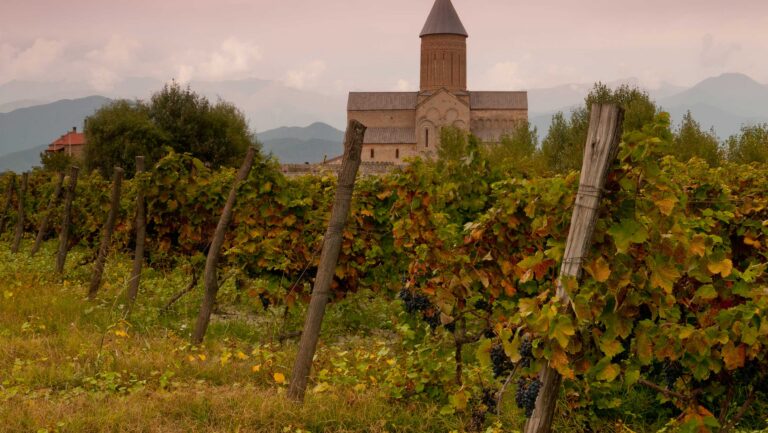
The Limits of Amber Wine
To break the ceiling, Georgia must offer a compelling argument beyond the orange-hued wine born from clay vessels. Historically, it hasn’t.
For Honnef, the path forward is not imitating styles of easily recognized and widely available wines like New Zealand Sauvignon Blanc and Italian Pinot Grigio. Classic Georgian wine, he insists, must lean into its indigenous identity, something Honnef calls “the Georgian twist.”
“We have to talk about grape varieties, about the diversity of soils,” he says. The solution is not to abandon the country’s heritage, but to illuminate it, applying modern precision to the genetic material that has grown there for millennia.
The potential for expansion may lie in western Georgian white wines and bold reds like Saperavi.
The Saperavi Shift
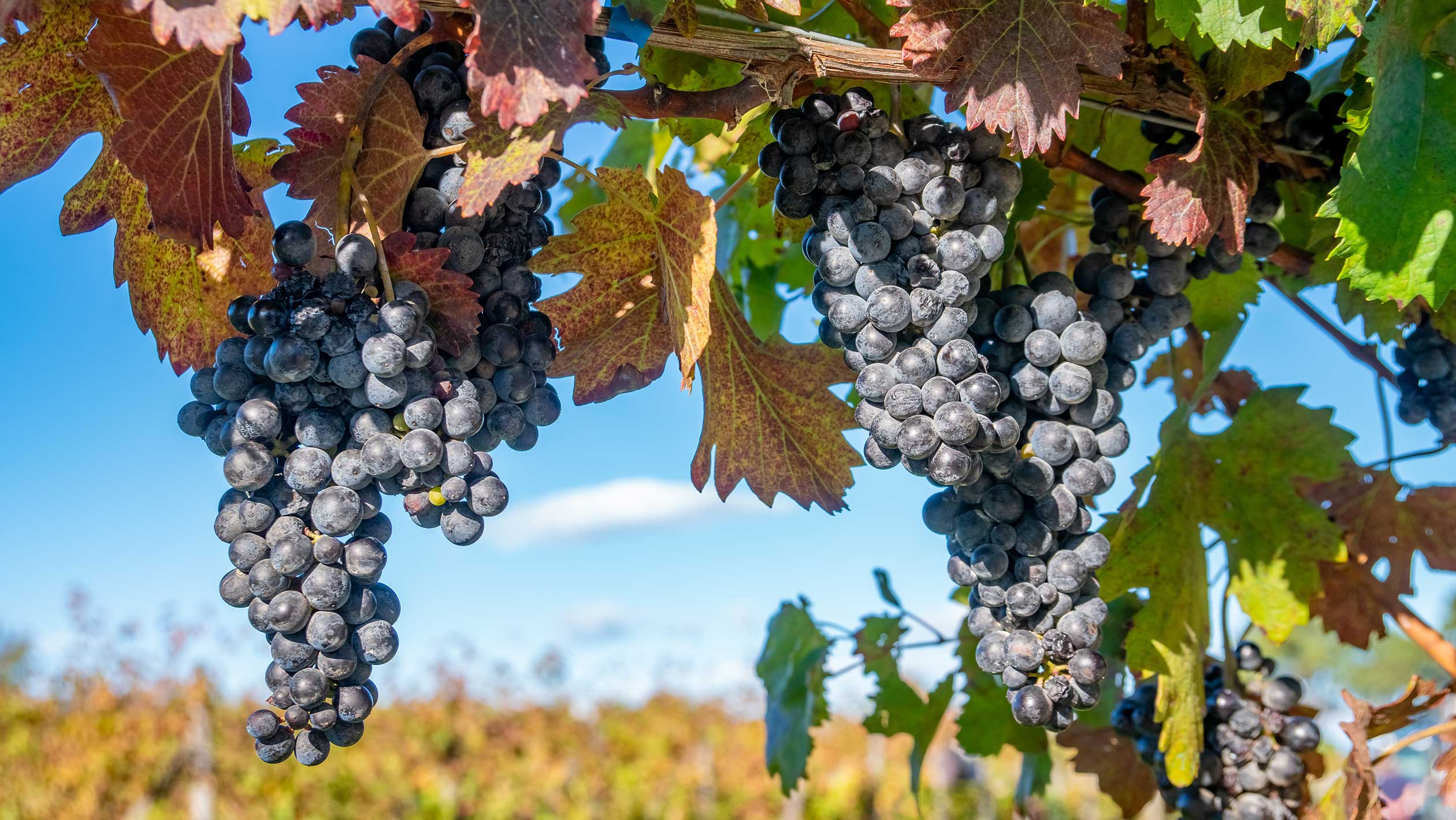
For many importers, Saperavi does the structural work with its dark fruit and intense nuances, and vivid, natural acidity that roots it firmly in the Caucasus.
Wurdeman pushes the variety further with a nimble Saperavi featuring semi-carbonic maceration, using a 30 percent whole-cluster fermentation in qvevri. The wine is pressed and finished in steel. “Light-bodied, fruity Saperavi is a joyful thing,” says Woolf.
Brockett sees a further opening in semi-sweet Saperavi, quietly relevant as off-dry reds remain one of the few growing categories in a contracting U.S. market. “If we tell the lie that sweet wines are bad, then we cede that market to corporate America,” he says, pointing to the dominance of wines like Apothic Red and Ménage à Trois.
Woolf points to Khvanchkara as the authentic alternative: a semi-sweet co-fermentation of Aleksandrouli and Mujuretuli grapes from the mountain slopes of Racha in northwest Georgia, its residual sugar is balanced by the piercing acidity of altitude. It stops fermenting in the cold Georgian winter. “You hardly notice the sweetness,” Woolf says. “This is a traditional style and a very beautiful and under-appreciated one.”

Beyond Kakheti: The Pull of the West
“When you think about big, heavy amber styles and massive, structured Saperavi, that’s Kakhetian wine,” says Woolf. “But there’s a whole world of other styles once you start going west.”
Kartli is Georgia’s most classically minded region. It sits between Kakheti—an area in the east where the weather is typically warm, and the wines are notably bold and tannic—and Imereti, a hot, dry western region known for aromatic light-bodied wines. The climate in Kartli is more continental than its neighbors. The air is cooler. There’s less rainfall. And the wines are distinctively elegant and structured with higher acidity and minerality.
In Imereti and Guria, a humid climate and limestone soils dictate a different winemaking approach than in the East. Winemakers here use the Imeretian method, which involves only five to 10 percent of the skin and excludes the stems entirely. Varieties like Tsolikouri and Tsitska yield white wines that are fresh, linear, and focused. Skin contact versions offer a “vibrant acidity” and a lanolin register that reminds Brockett of Riesling. When aged in stainless steel tanks, the wine is stripped down to austere, exposed minerality.
Wurdeman, who produces direct-press, steel-aged western whites, says the wines “show a bigger slice of the spectrum of what Georgian wine can be.” He also points south to the black volcanic basalt of Meskheti, where ancient vines produce reds with tension, and to the mountains of Adjara for ethereal reds reminiscent of Trousseau.
Even Kartli offers new possibilities. With its Pinot-like charm and delicate aromas, Shavkapito, a red grape indigenous to the region, has the “potential for elegance on an international level,” says Honnef. Producing wines that are chalky, bright, and nimble, anchored by a darker edge, Shavkapito has been compared to Pinot Noir or Mencia, despite relatively low plantings across Georgian vineyards.
The work ahead is not to abandon the qvevri that first seduced the U.S. wine world’s imagination, says Honnef, but to prove they were never the whole story.
Behind the clay lies a vast viticultural frontier, a tapestry of indigenous vines, shifting altitudes, and disparate regions. For the people of Georgia—a struggling democracy that has seen a year of non-stop protests for a pro-European future—wine is more than an export; it is their greatest geopolitical tool. Eight thousand years of winemaking provided the foundation. No one can say for sure what will come next, or how it will end. That may just be the whole and beautifully Georgian point.

Dispatch
Sign up for our award-winning newsletter
Don’t miss the latest drinks industry news and insights—delivered to your inbox every week.
Paula Redes Sidore is an American wine journalist based in Germany, the cofounder of TRINK magazine, and a regional specialist for JancisRobinson.com. Armed with an MFA in Creative Writing, she brings a narrative-driven approach to her international wine coverage for publications including Saveur, Full Pour, FINE Das Weinmagazin, and SevenFifty Daily. A member of the Circle of Wine Writers, she explores the intersection of people, culture, and terroir, convinced that the surest way to understand a wine is from the ground up.