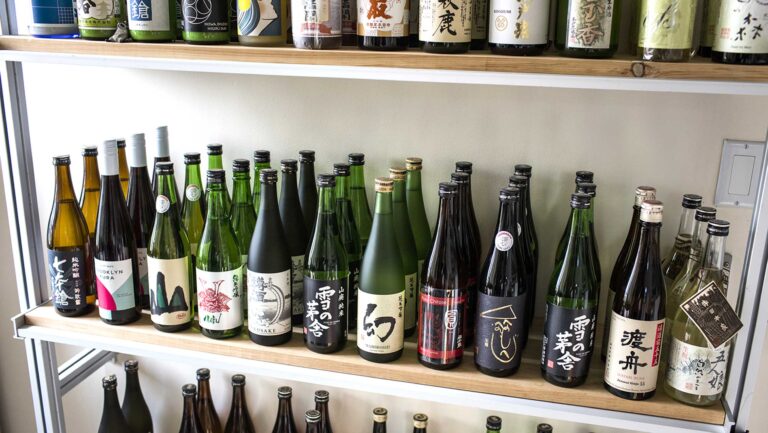
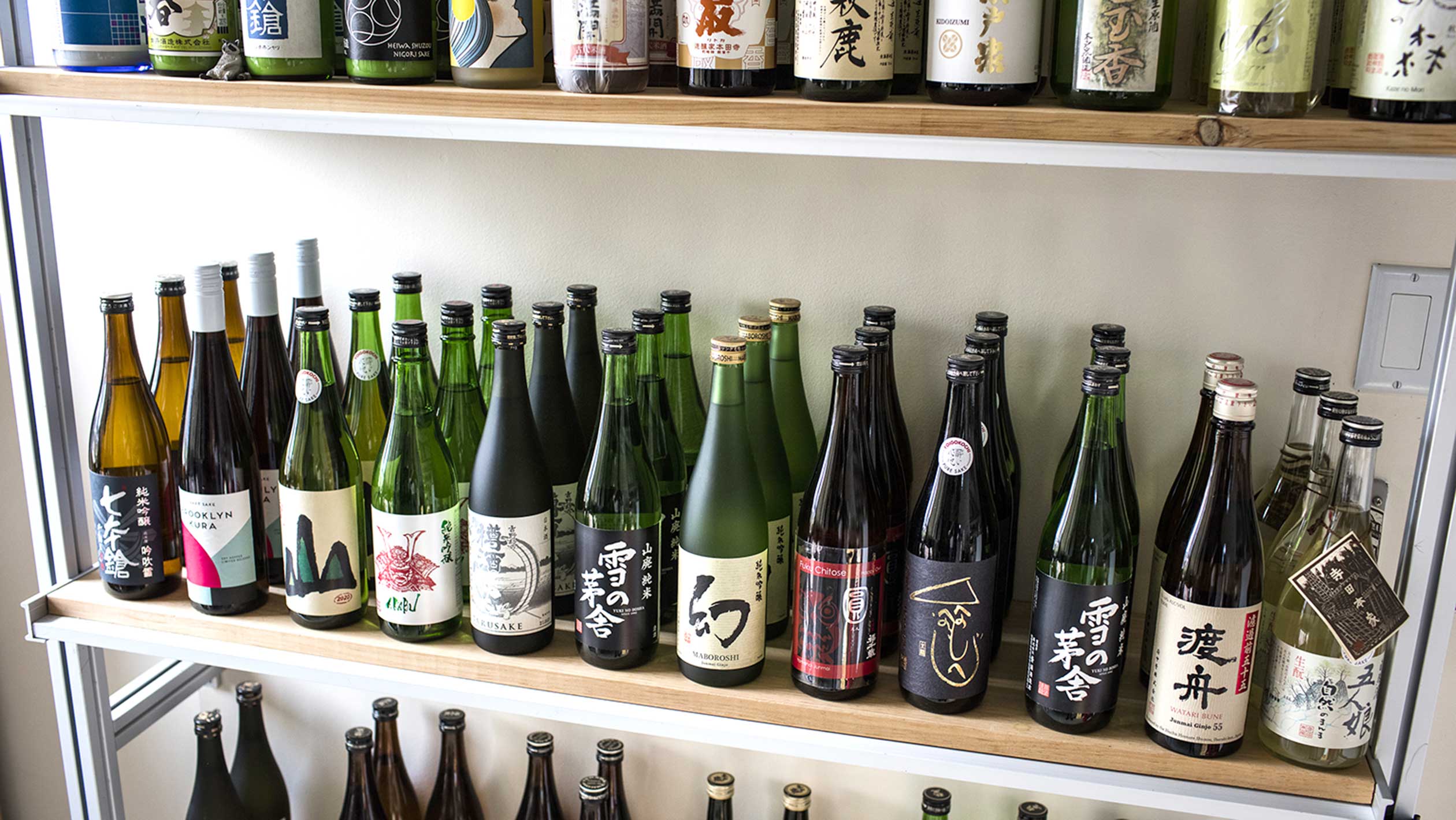
Sake remains one of the few alcoholic beverages that still sees healthy sales numbers in the U.S. Growth has slowed, but imports have not declined yet; through May 2025, sales are level with last year’s. However, statistics reflecting the 15 percent tariffs on Japanese imports—which Japan and the U.S. negotiated in July—are not yet available.
Sake’s overall health reflects a number of factors. Sushi, which many Americans see as the natural pairing, is more popular than ever. Other Japanese foods, such as ramen and yakitori, are also proliferating, and sake, especially domestic sake, is moving into restaurants that feature various cuisines. Plus, more consumers are enjoying it at home. “It seems like once it gets to your home, you fall in love with sake,” says Sachiko Miyagi, the relationship manager at Tippsy, a sake subscription club and online store. “You get used to having it with anything.”
With more and more sake reaching U.S. shores, new styles are appearing, driven by greater availability, consumer preference, and producer innovations. Here are several trends worth keeping an eye on in the world of sake.

Don’t miss the latest drinks industry news and insights. Sign up for our award-winning newsletters and get insider intel, resources, and trends delivered to your inbox every week.
Fruit and Freshness Come to the Fore
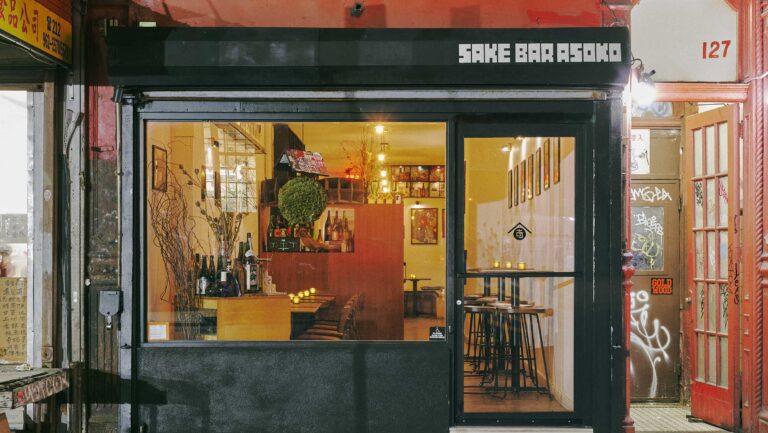
“We’ve noticed that a lot of people, when they think of sake, they think of the dry, clean style,” says Arianna Cho, part of the trio behind Sake Bar Asoko in Manhattan. The style she’s referring to, known as karakuchi in Japan, came to typify modern sake in the 1980s. But brewers and sake drinkers are now moving beyond this classic style.
“Recently, we’ve seen more of a fruity or floral kind of sake becoming popular,” says Arianna Cho. Her partner, Shintaro Cho, adds that more pronounced acidity is often typical in these aromatic sakes.
Namazakes are one example of this trend. “Nama-style sakes are super trendy in our bar,” Arianna Cho says. “It’s very akin to a natural wine in many ways, just because of the natural and rawness of it.” Namazakes are unpasteurized, so they keep some of the zip, freshness, and acidity; it’s one way to capture that expressive style so in vogue right now. Traditionally available only in spring, they have become year-round phenomena thanks to more reliable shipping and storage.
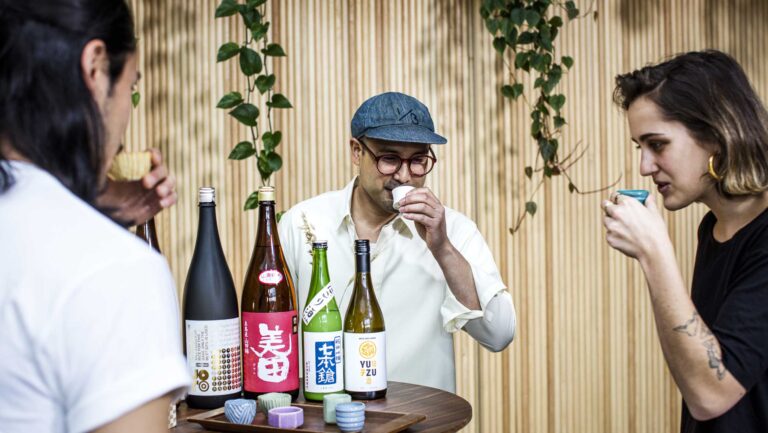
While namazakes are traditional, brewers are experimenting with other approaches as well. “There’s definitely a big trend in creating more of this juicy, sweet, tart flavor profile,” says Monica Samuels, the president of the sake import company Komé Collective. “Brewers are incorporating things like white and black koji to achieve high citric acid levels, or sourcing different types of lactic acid bacteria that can raise the acid levels.”
Koji, a mold that converts rice starch into sugar in preparation for fermentation, comes in various forms. While sake is traditionally made with yellow koji, which produces very little acid, other kojis can produce more. White koji, traditionally used in making shochu, and black koji, used in making awamori, both produce tasteable amounts of citric acid.
“It’s interesting to me that for a long time acidity was kind of a bad word in sake,” says Courtney Kaplan, the cofounder of Ototo, a sake bar in Los Angeles. She points to Senkin brewery, which introduced sakes with more pronounced acidity several years ago. “Everyone sort of mocked them, but now it seems like pushing acidity levels is very on-trend. I think it’s effective with newer sake drinkers, or people who are coming to sake from the world of wine. They’re very impactful styles that can be a really great gateway into the world of sake.”
Changing Textures Add to Sake’s Intrigue
Other subcategories are also evolving. “I think nigori sakes in general are tending towards a lighter texture,” says George Padilla, the cofounder of Rule of Thirds and Bin Bin Sake in Brooklyn. He says these roughly filtered, cloudy sakes, known as nigori, which were previously sweet and simple, introductory sakes, have become drier and brighter in flavor.
“Boken’s nigori, for example, is thinner and sharper, and it’s got a firmer structure to it,” he adds. “Kato Sake Works’s nigori is also in this much lighter, brighter style. I think it’s a response to sake drinkers looking for drier sakes, but still wanting that smoothness and the light haziness of nigori sake.” Padilla also finds them more versatile at the table.
Sparkling sake options have also widened and become more popular. “I think there’s some really cool stuff happening in the sparkling sake world,” Padilla says. “And on the consumer side, people are looking for it. We had a request for four cases of sparkling sake for somebody’s wedding recently.” In that case, Padilla recommended a sake that Skurnik Wines and Spirits imports, the Bijofu ‘Schwa’ Ginjo Sake. “We retail it at about $22 on the shelf for a 500-milliliter bottle. It’s clean, dry, and crisp, with really persistent bubbles. It’s very good and really good value.”
Value, Padilla adds, is the big change in the sparkling sake category. “A few years ago, the options were either almost prohibitively expensive or cheap, not really serious sakes, force carbonated, like soda,” he says. Now he’s able to offer better values even in the middle range, including both traditional-method awazakes, as well as sakes made in more of a pét-nat style.
Producers Are Rethinking Rice
There was a time when sake styles hinged on how much of the rice grain’s outer hull was milled away; daiginjo is the most milled, ginjo second most, and junmai or honjozo, the least. For a time, brewers took rice polishing to an extreme, in a battle not unlike the contest for super-high IBUs in super-hoppy craft IPAs. “I think the rice polishing ratio race is done,” says Miyagi. Instead of milling away most of each grain, aiming for pure, clean flavors, she says brewers are exploring minimal polishing, allowing people to “understand the umami of the rice.”
As milling ratios are de-emphasized, brewers and prefectures are highlighting their rice varieties’ contribution to their sake’s character, and creating fans in the process. Okayama prefecture, for example, is heavily associated with Omachi rice. “My sense is that Omachi was probably the first rice that started developing a following,” Kaplan says. “There are people in Japan who call themselves ‘Omachists’ and hunt down Omachi-based sakes.”
“I see the interest in heirloom varieties going hand in hand with brewers becoming more interested in growing their own rice,” Kaplan says. “Kuheiji grows most of his own rice. He’s growing Yamada Nishiki in Hyogo and Omachi in Okayama, and he has different site-specific plots that he calls out.”
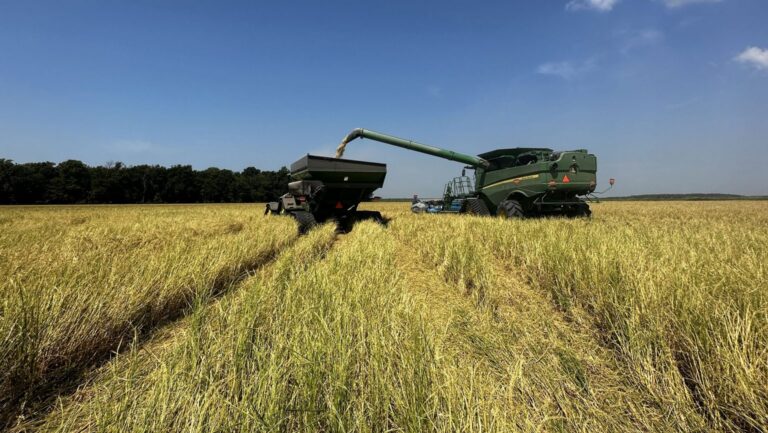
There are structural and economic reasons for brewers to rethink their milling and rice sourcing, too. “I think the fact that there’s such a rice shortage in Japan makes it hard to promote sakes that are milled down to nothing,” Samuels says. Sake rice prices have doubled since 2023, so milling overmuch means wasting a lot of an expensive raw ingredient. Government policies, climate change, and inflation are all having an impact on rice farming. “The most sought-after, most obvious areas to get the most well-known rices are being hit really hard,” adds Samuels. “So I think people are probably diversifying more than ever. I think there’s going to be a lot of creativity and innovation with rice. It’s a matter of survival.”

Dispatch
Sign up for our award-winning newsletter
Don’t miss the latest drinks industry news and insights—delivered to your inbox every week.
Jim Clarke writes about wine, beer, and spirits for trade and consumer publications, including Beverage Media, Fortune, and World of Fine Wine. He is a sommelier and the U.S. marketing manager for Wines of South Africa.