For long-term success in the wine industry, producers must be prepared for shifts in market trends and consumer preferences. Now, as inflation tamps consumer spending—prices for all items have increased 3.3 percent in the past year—and alcohol consumption hits a new low, that preparation is key to survival. Top-performing wineries, for example, “acknowledge the headwinds but respond with more strategic clarity,” writes Rob McMillan, the author of the Silicon Valley Bank (SVB) “State of the U.S. Wine Industry” report.
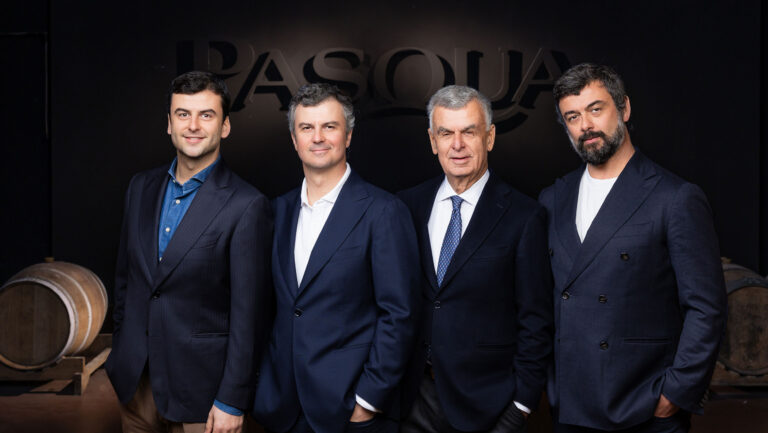
One such strategy is developing an accessibly priced tier of wines that’s produced at a much higher volume. These wines are still high quality, priced above the $12 threshold for a premium wine, but usually below $30 to ensure greater accessibility. Higher-volume SKUs are proving “fundamental, especially in a challenging market, as they balance the portfolio and protect margins while reinforcing identity,” says Alessandro Pasqua, the president of Pasqua USA.
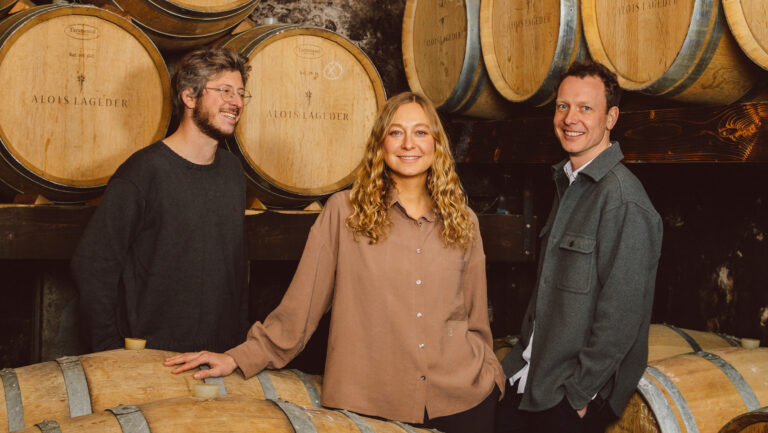
“Entry-level wines with higher rotation play an important strategic role for us,” says Helena Lageder, the sixth-generation brand ambassador for Alois Lageder. “They open the door to our brand and allow more people to discover our wines through strong drinkability and reliable quality. They also help us maintain a healthy presence in restaurants and wine bars where wines need to perform well by the glass.”

Don’t miss the latest drinks industry news and insights. Sign up for our award-winning newsletters and get insider intel, resources, and trends delivered to your inbox every week.
Even wineries settled firmly in the premium tier acknowledge the potential of high-volume, entry-level wines. “It’s a healthy way to be thinking about where the industry is right now,” says Braiden Albrecht, the winemaker for Mayacamas Vineyards. “Everyone’s got to be nimble and okay with thinking outside the box no matter how established you are. We can’t close ourselves off to different ways of connecting with people and finding a way for them to enjoy a glass of wine.”
Along with assuring a consistent revenue stream, these SKUs can help wineries realize much bigger ambitions, from farming sustainably at scale to accelerating brand visibility, which is vital for recruiting a new generation of wine drinkers—and ensuring long-term success in the industry.
High-Volume Wines Support Brand Growth
The revenue stream generated by higher-volume wines allows wine producers to pilot new initiatives that, in turn, draw new customers to the brand. “Products like Summer in a Bottle have led us to be financially stable and to take risks,” says Max Rohn, CEO of Wölffer Estate in Long Island.
When second-generation owners Joey and Marc Wölffer took over the winery in 2013, Summer in a Bottle Rosé production gradually scaled up from 10,000 cases to 100,000 cases. At $27 per bottle, “The price still conveys quality,” explains Rohn. By 2014, Wölffer was producing as much as it could, but it would still sell out by the end of June.
“Long Island is a small, boutique region, and we couldn’t scale it,” says Rohn. “So we expanded to family vineyards in Argentina. That released the pressure and allowed us to fulfill that market of what people wanted, and to start selling in Florida, Texas, and California,” says Rohn. This turning point led to partnerships in Provence and the Loire Valley, eventually launching Summer in a Bottle Loire, Spring in a Bottle, a non-alcoholic wine line, ciders, and experiments with low-alcohol wines.
Pasqua has had a similar experience leveraging its higher-volume wines to achieve smaller, niche production goals that reflect meaningful growth. Entry-level wines, like Passione Sentimento Bianco and Rosso, both made from indigenous varieties and available for $17.99 at retail, “create momentum across the entire portfolio,” says Pasqua. Those sales also support passion projects, like investment in renewed passito production in Passito di Pantelleria DOC in Sicily.
Financial Savings on the Production Side
The benefits of high-volume production are about more than just increased sales and growth. Success with higher-production SKUs can subsequently increase efficiency within the winery, leading to savings that can be passed on to the consumer—a win-win in today’s challenging market conditions.
Producing more by volume doesn’t necessarily require increasing winemaker costs, for example. “We may make between 12,000 to 15,000 cases of these wines, but we only need one extra person in the cellar to do that,” explains Jason Haas, a partner and the general manager at Tablas Creek Vineyards in Paso Robles, California. Overhead costs are then shared over more gallons and cases, lowering the cost per bottle of all of Tablas Creek’s wines.
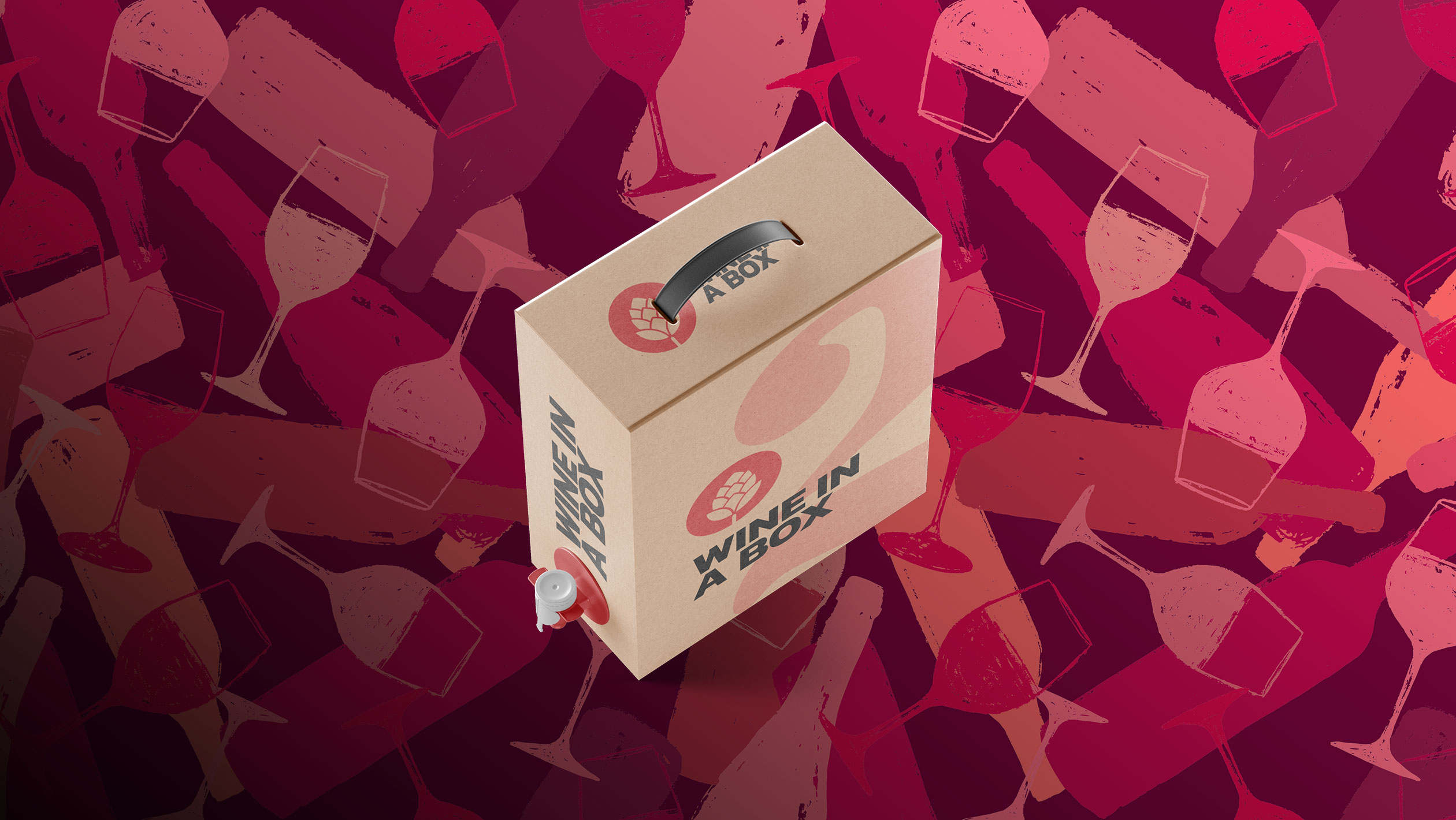
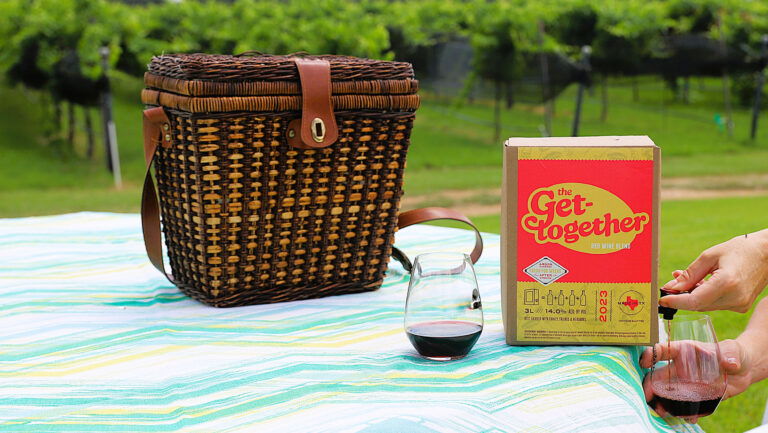
For Ron Yates Wines, packaging wine in larger volumes leads to similar savings. For example, The Get Together, a three-liter, Bordeaux-style boxed wine made from grapes grown in the Texas High Plains, makes use of quality fruit and “allows me to pass on a ridiculously cheap price for high-quality wine to customers,” says Yates.
Cardboard boxes and bag-in-box plastic liners are less expensive than glass bottles and corks, and production entails less time and labor. Therefore, the markup on boxes, even at wholesale prices, is much less. By-the-glass margins are better for the local breweries and restaurants that serve it, and customers benefit from comparatively inexpensive prices for wine by the glass.
“I was trepidatious, wondering if this would cheapen the way people see us, so I approached it as a whole new brand,” says Yates. “Now, I’m not as afraid to tie it to our brand. We need to find ways to appeal to younger and more frugal wine consumers, and boxed wine is a gateway wine.” In fact, while total sales value of wine in bottles declined more than six percent last year, boxed wine sales grew by just under one percent.
Ensuring Quality in High-Volume Production
Large-scale production can also ensure access to the best raw materials. “Our volume is key to our ability to be first in line with our grower partners for the highest-quality fruit,” says David Bowman, the former CEO of Chateau Ste. Michelle, the largest producer of wine in Washington State. [Bowman was interviewed for this article while still serving as CEO.]
When producers buy wine in large supply, they both ensure access to exceptional fruit, and have the opportunity to “mitigate difficult vintages due to the amount of volume we have to work with,” says Thomas Seiter, the CEO of Maison Louis Jadot in Bourgogne.
Producers can also encourage and support farmers as they pursue organic, biodynamic, and regenerative farming certifications. Tablas Creek’s director of vineyard operations, Erin Mason, works closely with farming partners providing grapes for Patelin de Tablas, a line of Rhône-style blends that are available at retail between $23 and $32, and in boxes. “We require [our partners to] begin a transition to organic in order to start selling to us, and we help with the process,” says Haas. “We can advocate for the kind of farming we think should really matter.”
Alois Lageder, based in Italy’s Alto Adige region, produces Misto Mare, a field blend that retails for about $20 a bottle. The winery buys fruit for Misto Mare from more than 60 grower partners who are converting to organic and biodynamic practices; once grapes are certified, the growers become part of the main range of Alois Lageder wines, while grapes from new growers take their place, supporting a wave of organic and biodynamic grape growing. “These wines carry values that are important to us and help foster healthier agriculture in our region,” explains Lageder.
High-volume wines also ensure revenue for grape growers, protecting long-standing farming partnerships. Kim McPherson, the owner of McPherson Cellars in the Texas High Plains, vinifies a red Rhône blend for Terlato, Federalist Texas, and produces a McPherson red and white wine from Rhône varieties for H-E-B Grocery Company in Texas. McPherson has as much pride and attachment to these as his top-tier, single-vineyard wines. “I can put my name on them, and our growers know we are trying to sell more of their fruit as wine,” says McPherson.
High-caliber yet inexpensive wines can act as brand ambassadors, making consumers more likely to explore additional wines in the future.
Value Beyond Revenue: Messaging, Visibility, and Brand Loyalty
To recover and stabilize sales, the wine industry must find relevance with a new generation, and higher-volume production tiers are often the first wines new and potential consumers encounter.
“High-volume production tiers offer market presence in a way you don’t get from high-end small production, where some states may see just a few dozen cases—that’s not really enough to keep you top of mind,” says Haas. “Now, part of having wines at an approachable price and in enough volume is that if people read about it or get a recommendation, they can find them, and take advantage of that impulse.”
Gassier, located in Provence, produces up to a half-million bottles of Gassier Côtes de Provence Rosé and 30,000 to 40,000 bottles of Gassier Côtes de Provence Blanc. Both run between $14.99 and $26.99 retail, and are produced in the same valley, Sainte-Victoire, as Maison Gassier’s smaller-production wines. “It’s just not possible to give visibility to the brand with only one reference wine from the vineyard,” explains Olivier Souvelain, the managing director and president at Gassier.
In 2019, Château Angélus, a Grand Cru Classé vineyard in Saint-Émilion since 1954, released the first vintage of Tempo, a Merlot-dominant blend designated Bordeaux AOP, “almost as a reaction to Bordeaux bashing, to demystify the approach to Bordeaux wines,” explains Yves de Launay, the executive vice president, Americas, for Château Angélus. Compared to the winery’s annual production between 80,000 and 90,000 bottles, Tempo has gradually increased production since the first vintage to 250,000 bottles. “It’s affordable, versatile, and unpretentious—a wine you do not have to think too much about when to open it,” says de Launay.
“Engaging younger audiences, with less pretension and in more inviting ways, is essential,” says Morgan Lee, the winemaker and partner at Two Vintners in Washington State. Lee’s highest-production wine, Two Vintners Columbia Valley Syrah, has a standard retail price of $28, and has increased by just $7 since the inaugural 2007 vintage. “I’m strict on pricing because I believe Washington State Syrah needs to be out in the world for people to enjoy and afford,” says Lee.
Many of Chateau Ste. Michelle’s higher‑volume wines originated as small projects and grew organically; Dry Riesling production, for example, began in 1991 as a wine club exclusive. “Our Columbia Valley blends might be the first Washington wine a consumer encounters in a retail space, something we view as both a responsibility and an opportunity,” says Bowman.

Dispatch
Sign up for our award-winning newsletter
Don’t miss the latest drinks industry news and insights—delivered to your inbox every week.
Amy Beth Wright is a creative nonfiction writer and journalist covering wine, food, and travel. In addition to SevenFifty Daily, she contributes to Wine Enthusiast, Decanter, and Imbibe, and publishes Wine Flights on Substack. She holds a Level 3 certification from the Wine & Spirit Education Trust (WSET). Keep in touch on Instagram @amyb1021 and visit amybethwrites.com to read more of her work.