The wine trade has spent the last year in a familiar squeeze. Demand remains uneven, tariffs are still unpredictable, the dollar keeps moving, and distributor reorganizations continue to ripple across the market. Instead of battling uncontrollable market forces, some wine importers have accepted this new reality—and have started developing new ways to operate in this shifting environment. Importers that are holding their ground, and in some cases growing, are rethinking the fundamentals: how they get to market, how they support sell-through, how they finance inventory in a higher-cost world, and how they reduce friction for their partners.
As a result, a new importer playbook is taking shape, and it focuses more on disciplined execution than the hunt for more brands. That mindset is increasingly explicit among the importing companies that are successfully weathering the storm. Alexander Michas, the president and COO of Vintus, sees the current environment as a sorting mechanism that rewards focus and follow-through.
“The exceptional will come out stronger,” he says. “The brands that truly matter in the market, the accounts that adapt quickly to their consumers, the wholesalers who utilize new tools to improve their operations, all companies that double down on customer engagement—they will grow stronger.”

Don’t miss the latest drinks industry news and insights. Sign up for our award-winning newsletters and get insider intel, resources, and trends delivered to your inbox every week.
Route-to-Market Control Is the New Advantage
In a volatile market, operational control looks different depending on an importer’s model. The common thread is reducing fragile handoffs between importer, wholesaler, and account. Some companies do that by owning distribution in key states. Others do it by aligning incentives with suppliers, or by becoming a more indispensable partner to wholesalers through tighter execution.
Some importers, such as Banville Wine Merchants, also own a direct wholesale business and have leaned into this route as a controllable channel to create measurable execution. According to president Simone Luchetti, the company closed 2025 up 26 percent in revenue over 2024, a figure he noted was measured against a slow start in 2024. As of mid-February, Banville was up 39 percent versus last year.
“The majority of our growth is coming from our own wholesalers, where we can manage the business more directly and execute with greater precision,” says Luchetti.
For Dalla Terra Italian Wine & Spirits, the approach has been of shared control—an importer-producer relationship rooted in alignment rather than ownership. President Scott Ades describes the company as a national agent for its producers, with a partnership structure that makes the producer relationship feel closer to shared investment than a transactional supply arrangement.
“In that partnership, the producers take on some of the cost of the expanded sales organization and will also reap the benefits of our success,” says Ades. “Deciding to expand our team was not just an internal operations decision. Our producers are supporting this fully. A rising tide raises all ships.”
For Bartholomew Broadbent, the CEO of Broadbent Selections, the broader shift is about how importers earn attention in the market. In a three-tier system, that attention is its own form of route-to-market control, because it determines whether a portfolio gets prioritized, presented, and reordered inside a wholesaler’s book.
Broadbent Selections has long represented a deep bench of South African producers alongside European-origin wines, leaving it especially exposed when the U.S. imposed a 30 percent tariff on South African wine. “The job of the importer is, now more than ever, to be a demonstrable and valued contributor to the wholesaler’s business,” says Broadbent.

Boots on the Ground Is Back
When distributor teams turnover, wine portfolios lose momentum; new sales reps don’t know the book as well and key accounts stop getting consistent attention. Importers are responding by putting more of their own resources into the market. During and after the pandemic, many parts of the trade leaned harder on remote selling and inbox communication, and some of the in-person cadence never fully returned. In many cases, the most effective response has been straightforward: Show up more; train more; taste more. Keep wines top-of-mind for accounts and sales teams.
Dalla Terra answered this call by investing in boots-on-the-ground execution, adding six new market managers to rebuild market coverage and account support. Ades says the goal is measurable and rooted in execution. “We expect an increase in account placements and depletion velocity,” he says, adding that the hiring push is tied to Dalla Terra’s philosophy that engaged, knowledgeable market support stands out in a business that has become more transactional.
Banville is scaling the same concept inside its footprint. Luchetti says the company added about 15 to 20 people, primarily in its wholesale markets, and expects to add more market managers soon. He also emphasized that fieldwork cannot stop at the edge of owned wholesalers. “More than ever, we need people actively selling our wines in the field, not just within our wholesale network, but also in markets served by third-party distributors,” says Luchetti.
At Vintus, a premium and luxury importer with a multi-country roster, the execution conversation returns to first principles. Michas describes fine wine sales as inherently high touch, which requires understanding and enthusiasm from sales teams. In his view, success depends on removing the logistical obstacles that kill momentum, including out-of-stocks, backorders, late arrivals, and delivery or allocation hiccups that make planning difficult for sales teams and accounts.
“There’s a generation of trade and consumers that we need to engage directly in order to share our burning passion for fine wine, and that happens face-to-face,” says Michas.

Landed-Cost Pressure Forces Hard Pricing Math
Tariffs and foreign exchange swings are often discussed as abstract headwinds. In practice, they show up as compounding landed costs and a series of uncomfortable choices. Timing matters, too. Many importers built inventory ahead of tariff uncertainty, which delayed price moves for a time, but it did not eliminate them.
Banville estimates wineries absorbed less than five percent of the additional costs, while importers and wholesalers absorbed about 40 to 50 percent, and the remainder was passed on to the final consumer through price increases. “The combined impact of tariffs and currency fluctuations has effectively created what feels like a fourth layer in an already complex system,” says Luchetti.
At Broadbent Selections, net profit slid from 11 percent in 2022 to 3.94 percent in 2024. But in 2025, “Sales fell to an unsustainable 0.3 percent despite our sales bucking the trend by increasing by eight percent,” says Broadbent, who attributes the hit to tariffs and the resulting collapse of the dollar. “The impact for us was sharper because a large proportion of our sales are with South African wines.”
The responses were all the familiar levers importers have been pulling, from holding prices on the most sensitive wines to splitting tariff costs with some suppliers and absorbing the full burden when others could not help. But in the end, Broadbent says the dilemma was a Catch-22.
“If you raise prices too much, sales are killed,” he says. “We chose to sell, make almost no money, protect our employees, and just hope that the tariffs go away.”
The Cash Squeeze Is Not Theoretical
Tariffs do not only raise costs. They change timing. That timing change can become a strategic constraint.
Luchetti describes the sequence that many importers are now managing more aggressively. Once the product lands, importers are required to pay the tariffs immediately. The wine then goes into the warehouse and is typically sold within 60 to 90 days. According to him, distributors pay 30 to 60 days after that. “We are effectively advancing those funds for four to five months before receiving payment,” he says.
That cash gap helps explain why credit posture is tightening. Luchetti says Banville is more cautious than ever when extending credit and has implemented tighter limits on exposure to individual customers while monitoring due dates more closely.
Broadbent describes another mitigation lever that functions as a practical hedge: investing in tariff-free California production to offset pressure on imports. It reflects a broader shift in the importer playbook toward deeper producer-side partnerships, whether through co-invested sales models or closer involvement in production decisions that can protect supply and margins.
“Our California production helped us to sell more wine in a declining market,” says Broadbent, adding that with so many California wineries struggling, the company was able to purchase grapes at advantageous prices with tangible results.
Retail Reality Check
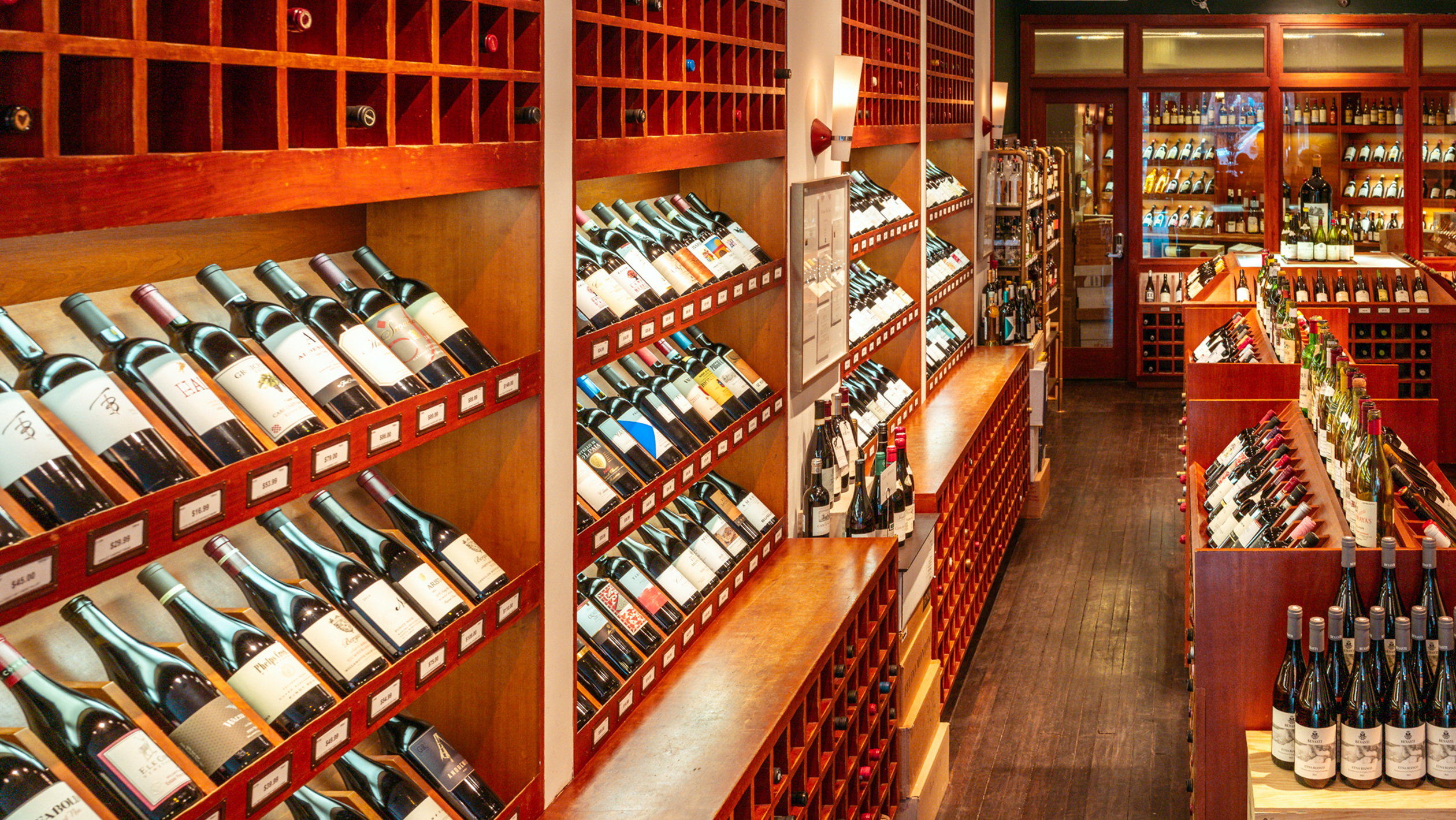
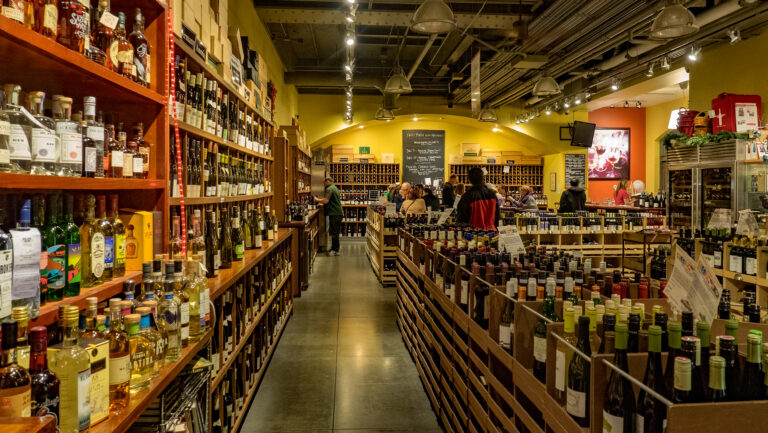
Retailers experience importer strategy as real-world friction or real-world relief. Price moves, allocation behavior, delays, and communication quality translate directly into what gets reordered and what stalls.
At Tribeca Wine Merchants in New York, partner Lauren McPhate says the pricing story has not moved in a straight line. Early in the tariff cycle, many importers and distributors held off on price increases because they had built up significant stock ahead of potential changes and because tariff signals kept shifting. By late summer 2025, she began to see meaningful price adjustments, with some importers passing on the entire tariff while others spread increases across the portfolio to protect pricing continuity, particularly on by-the-glass wines.
Allocation pressure has also changed, including for wines that once felt nearly impossible to get. “What’s been notable is the softening of highly allocated wine selections,” says McPhate. When her team asks for additional quantities of wines that once felt impossible to access, “now, we are often able to secure them.”
In a softer demand environment, she says, the shift suggests a market where more inventory is finding its way to retailers, and where highly allocated wines may not be quite as tightly rationed as they were in recent years.
Port delays of several weeks have also become fairly common, but McPhate notes that “the retailers that feel it least are those working with distributors who communicate clearly and proactively.” Her bottom line for importers: “Make it easy for us.”
In San Francisco, Ferry Building Wine Merchants co-owner Peter Granoff sees a different dynamic playing out, mostly in everyday, replenishment wines rather than highly allocated bottles. “Importers are committing to smaller quantities and sometimes there’s a longer wait time,” he says. He has seen an increasingly common practice from importers who have added a line-item for “tariff per case” on the pricing sheets for cases of wine, thus making a clear indication of exactly where the cost of tariffs is being offloaded.
Both retailers noted demand shifting rather than disappearing, with Champagne, white Burgundy, and Spanish, Portuguese, and Argentine wines all drawing renewed interest.
The Operators Who Adapt Will Win
The new importer playbook reads as discipline: tighter route-to-market execution, heavier investment in field support, clearer pricing architecture, more careful cash and credit management, and less tolerance for friction. Reduced demand continues, and volatility remains the operating condition. The companies that keep improving their model are giving themselves the best chance to stay relevant in a changing system.

Dispatch
Sign up for our award-winning newsletter
Don’t miss the latest drinks industry news and insights—delivered to your inbox every week.
Jessica Dupuy is a wine, spirits, and food writer based in Austin, Texas, whose credits include work in Texas Monthly, Imbibe magazine, Wine Enthusiast magazine, Sommelier Journal, and The Tasting Panel magazine and with the Guild of Sommeliers. A Certified Sommelier, Certified Specialist of Wine, and Certified Specialist of Spirits, she holds the Diploma in Wines through the Wine & Spirits Education Trust. Dupuy keeps her palate sharp through travel, reading, and endless tasting.