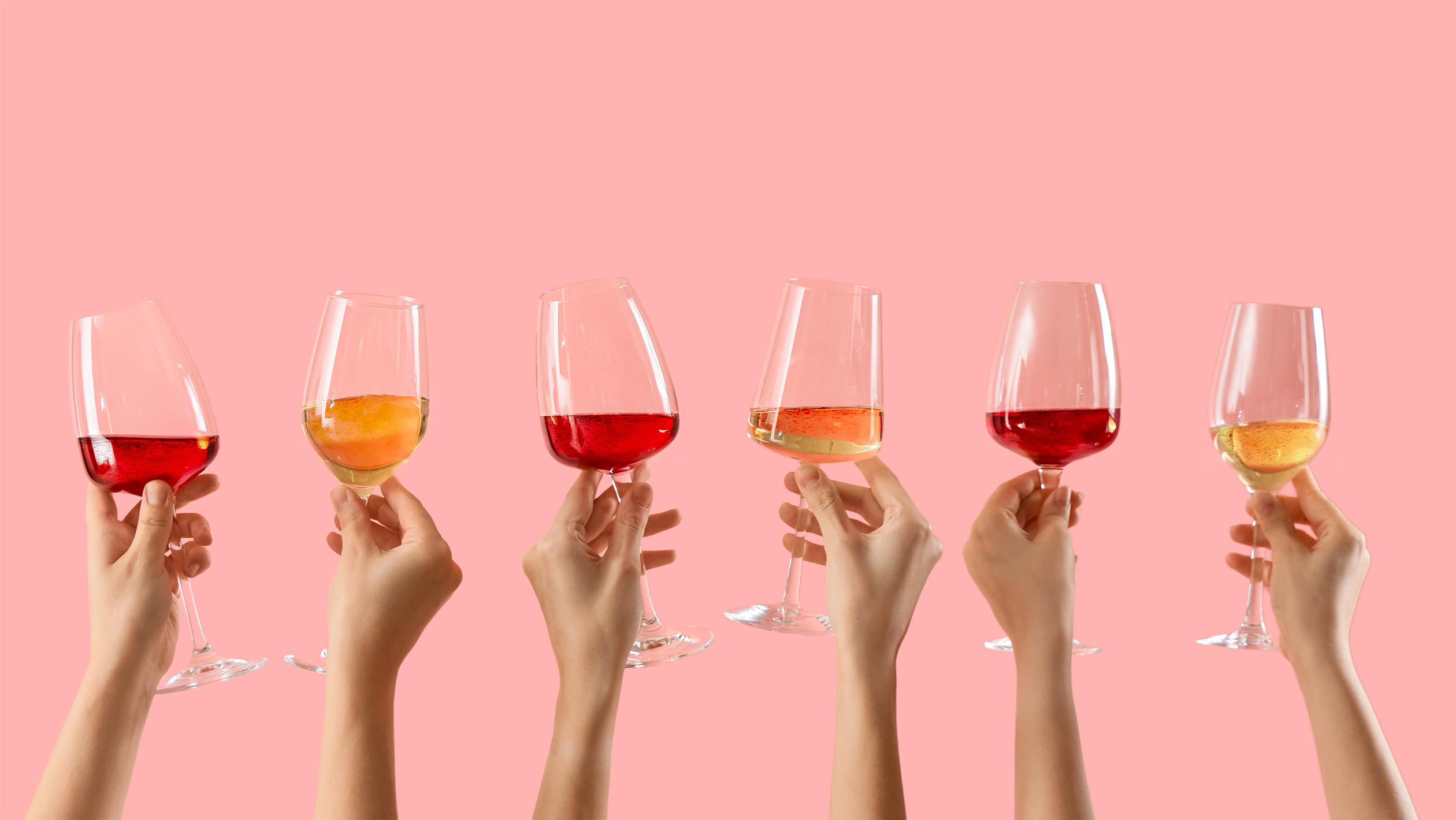
There is a bright spot in the wine business, and it is largely unsung by many industry members. While alcohol consumption dips to record lows—only 54 percent of adult Americans drink, down from 67 percent in 2022, according to a recent Gallup poll—flavored wine sales are growing.
Infused with almond, watermelon, mango, Calabrian chilli, and other extracts, flavored wines have bold, spicy, and tropical notes that don’t require any swirling and sniffing to identify. Many are effervescent and typically have between 5% and 7% ABV. Those on the lower end technically fall below the TTB’s definition of wine, but their easy-drinking characters coincide with consumer trends toward low- and no-alcohol beverages.
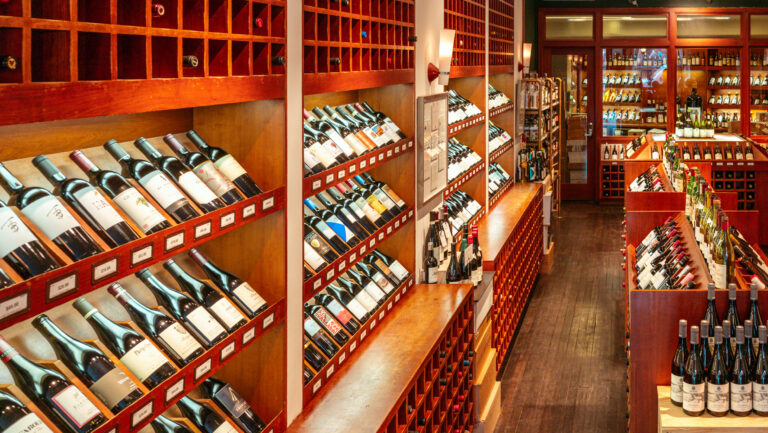
Historically, however, many classically trained drinks professionals dismiss flavored bottlings as unserious or anathema to real wine. “So many of us in the industry have been taught to appreciate fine wine, and it’s all about selling that bottle of DRC or Château Margaux,” says Timothy Buzinski, the assistant professor at the Culinary Institute of America and co-proprietor of Artisan Wine Shop in Beacon, New York. “It’s unfortunate because there are definitely groups of people, including a lot of younger folks, who are interested in exploring [flavored wine].”
Don’t miss the latest drinks industry news and insights. Sign up for our award-winning newsletters and get insider intel, resources, and trends delivered to your inbox every week.
As the industry faces historic headwinds, the popularity and potential of flavored sparkling wines deserve a closer look. SevenFifty Daily spoke with retailers, analysts, and producers to explore the factors behind these wines’ downturn-defying success—and what the rest of the industry can learn from it.
Understanding Flavored Wine
While certain traditional wines might present tropical fruit aromas or spicy black pepper notes on their palates, flavored wines get their distinctive characteristics via manually added distillates. “They are made using traditional winemaking methods,” says Jen Wall, the winemaker at Barefoot Wine. Wine grapes are picked at “peak ripeness,” she explains. “In the winery, the grapes pressed and juice inoculated. The fermentation is arrested to ensure and preserve intense aromas and flavors.”
For sparkling iterations, some winemakers blend in the extract toward the end of Charmat fermentation. Others inoculate and ferment their juice, add flavored distillates, and then mix in sparkling water “to ensure a more moderate alcohol level for better sessionability,” says Wall.
Introduced in 2018, Barefoot’s fizzy and flavorful Fruitscato line is among the more prominent labels in the space. The company created it “to provide more welcoming options to the wine category and to folks who are new to wine,” Wall says. Another major player is Stella Rosa, the family-owned California label whose pineapple-and-chili-flavored semi-sweet sparkler was the top-selling new wine SKU in the United States in 2023. Other flavored wine brands include Arbor Mist, Dragon Fire, and XXL.
Flavored wines are packaged and marketed similarly to ready-to-drink (RTD) cocktails. “You can make your own at-home cocktail with just the wine over ice,” suggests Steve Riboli, the CEO and president of Riboli Family Winery, the parent company of Stella Rosa. Rarely included on bar or restaurant wine lists, bottlings tend to be shelved near bottled sangrias or RTDs in retail stores, and their labels highlight flavors like peach or watermelon rather than grape varieties.

Market Trends Propel the Category
Flavored sparkling wines align with trends in and beyond the beverage business. “Consumers across the nation in multiple categories are really intrigued with adding flavors to what they eat and drink,” says Liz Thach, MW, the president of the Wine Market Council. She cites the popularity of flavored spirits, beers, still and sparkling waters, yogurts, and coffees as examples. In other words, if you’re prone to ordering a Starbucks espresso drink topped with yuzu-infused cold foam, what’s to stop you from giving raspberry-flavored Moscato a try?
Many successful flavored bottlings are effervescent, and their popularity coincides with surging enthusiasm for all types of sparkling wines. Between 2019 and 2025, flavored sparkling wine volumes grew at a compound annual growth rate (CAGR) of +25 percent while Prosecco was up seven percent and Champagne stayed flat, reports IWSR. During the same period, wine sales overall declined between one and five percent annually, according to a study by the marketing firm OhBev.
Their lower alcohol levels are similarly trending. Barefoot’s Fruitscato and Arbor Mist’s Peach Moscato have around 7.5% and 6% ABV, respectively, while Stella Rosa’s pineapple-and-chili bubbles have 5% ABV. “You can sit and have a couple of glasses and feel really good without getting too buzzed,” says Riboli.
The bold, tropical fruit characters of many flavored bottlings align with consumer preferences; in 2025, global researcher Innova Market Insights reported that nearly 20 percent of North American consumers favored fruit and superfruit flavors in alcoholic beverages, and strawberry, peach, watermelon, mango, and orange were the top flavors for wine launches in the U.S. and Canada. At Fruitscato, “the top four fruit types accounting for 80 percent of the business [are] peach, strawberry, blueberry, and apple,” Wall says.
These flavors can also create a perception of sweetness in wine, regardless of actual residual sugar content. Stella Rosa’s pineapple and chili bubbles have 14 grams of sugar per five-ounce serving, for example, and a similar-sized pour of watermelon-flavored Barefoot Fruitscato contains approximately 10 grams. Meanwhile, traditional off-dry wines can contain five to 20 grams of sugar.
Riboli believes that profile can appeal not only to people who typically drink fruity cocktails, but also to the estimated one in eight Americans who take GLP-1 medications like Ozempic and Wegovy. “These meds change your palates, and you crave sweet things,” he says. While data on the sensory impacts of GLP-1 drugs is emerging, there are reports that they can alter taste receptors.
Meeting Consumers Where They Are
Arguably the biggest advantage to all flavored wines is accessibility. For people who find wine confusing, stuffy, or both, it can feel like a relief to drink an unpretentious bottle that tells you exactly what recognizable flavor profiles to expect. This is particularly true for those familiar with and partial to tropical fruits like mangoes or pineapples.
“They make wine easy,” says Adam Lapierre, the in-house Master of Wine at Total Wine. Flavored bubbles “are approachable, expressive, and immediately understandable to the consumer. That matters in a category that can still feel intimidating to some.” This reflects patterns identified in a March 2026 survey conducted by Wine Market Council and Vancouver-based wine analytics and evaluation company Quini. Their research found that 34 percent of wine drinkers report being disappointed when a bottle didn’t have the flavors they expected.
Thach also notes how anxiety-producing it can be for some consumers to choose a bottle to take home or bring to a party. “With flavored wines, it’s casual,” she says. “You don’t have to worry about, ‘Am I picking the right thing?’”
!["There are definitely groups of people, including a lot of younger folks, who are interested in exploring [flavored wine],” says Timothy Buzinski, an assistant professor at the Culinary Institute of America and the co-proprietor of Artisan Wine Shop. Photo courtesy of Artisan Wine Shop.](https://daily.sevenfifty.com/wp-content/uploads/2026/05/SFD-The-Industry-Cant-Ignore-the-Popularity-of-Flavored-Wine_Artisan-Wine-Shop_CO_Artisan_Wine_Shop-768x433.jpg)
Leveraging the Popularity of Flavored Wines
Thach says that a recent Wine Market Council survey found that 46 percent of American wine consumers who reported drinking fruit or flavored wine also buy traditional wine. Those purchasing habits play out at Total Wine. “There is often overlap with traditional wine, and our customers often buy both in the same visit,” Lapierre says. With their approachable flavors and marketing, flavored bottlings can also be a gateway for people who don’t consider themselves wine drinkers at all.
Both present opportunities for a wine industry beset with challenges. Drinks professionals making or selling traditional bottlings can view audiences for flavored wines akin to any customer who drinks across categories. “In some cases, flavored wines do act as gateway wines [to traditional bottles],” Lapierre says, “but a lot of consumers simply move comfortably between flavored wines and more traditional wines depending on the occasion, the setting, and what they are in the mood for.” For instance, someone who picks up a bottle of flavored sparkling wine to take to the beach might order a traditional Sauvignon Blanc at a restaurant.
The key is not to isolate the category or sideline people who like it, but rather to appreciate that flavored sparkling wines are among the array of choices that modern consumers have at the bar or bottle shop. Retailers might consider stocking flavored sparkling wines alongside RTDs or ciders, Buzinski suggests. “Put them with similar beverages, and treat them like any other bottle you sell and stand behind.”
Leveraging audiences’ enthusiasm for the perceived sweetness—often achieved without added sugar—and tropical profiles of these bottlings can help drinks professionals make cross-category recommendations, or to guide consumers toward another flavored wine they haven’t tried yet. “The secret sauce is to give the customer what they want,” says Riboli. “If you get stuck thinking ‘This is how it’s to be done because it’s been done like this for centuries,’ you have to get out of your own way.”

Dispatch
Sign up for our award-winning newsletter
Don’t miss the latest drinks industry news and insights—delivered to your inbox every week.
Emily Saladino is a writer, editor, and recipe developer based in New York. Previously a culinary editor at Food Network, she reviews wines from Croatia, Georgia, Greece, Hungary, and Lebanon for Wine Enthusiast, where she used to be a managing editor and remains a writer at large. She writes a monthly column about wine for The Washington Post, and her work has been published in BBC, Bloomberg, Bon Appetit, Food and Wine, and others.