Up until the early aughts, launching a wine brand followed a formula: Find some land, maybe in a then-budding region like the Napa Valley. Plant vines, build a winery, add labels, and send it out into the world.
These days, unless your pockets are deep—eight-figures deep—and your connections deeper, that’s not a feasible blueprint. Napa land can cost you $525,000 per acre, $215,000 in Sonoma. Labor costs in California are rising, as is almost every other cost of doing business—corks, glass, shipping, marketing, and storage. At the same time, drinking is down, the market is crowded, and tariffs are causing turbulence.
Launching a new wine brand can feel like a madman’s mission.
Don’t miss the latest drinks industry news and insights. Sign up for our award-winning newsletters and get insider intel, resources, and trends delivered to your inbox every week.
Nick Perr’s father launched Pali Wine Co, a beloved Central Coast brand, in 2008. In 2019, Perr launched his own brand, Neighborhood Winery, to play with organic vineyards and natural practices. While both are small-scale and family-run, their experiences have been vastly different.
“When [my parents] started, they didn’t even have an email list,” says Perr. “If you wanted their wines, you got a form in the mail to order from. It’s a very different environment now. You’re on the clock 24/7, competing for attention, trying to get people to choose your wine over someone else’s.”
While undoubtedly more difficult, this doesn’t mean launching a wine brand in 2025 is impossible. One just needs a certain set of skills: nimbleness, creativity, experience, and a thick skin. SevenFifty Daily spoke with five owners of newly minted and recently successful brands on how to go about launching a wine brand in the current climate.
Have A Compelling ‘Why’
Everyone who knows Shalini Sekhar, the winemaker at Waits-Mast and Xander Soren, knows she never wanted to start her own brand—she’d never let herself get caught up in such romantic notions. “How many wine brands are out there?” asks Sekhar. “Besides, I already get paid to make other people’s wines. To charm people, represent the brand, and sell the products—that energy level is so different from winemaking. I just want to be alone with my barrels.”
But as she made wine for other brands, she was given access to fruit that intrigued her, things like Grüner Veltliner and St. Laurent. She took some, for experimentation’s sake. Her project grew, unintentionally, and by 2020 she had launched Ottavino Wines. While she makes serious Pinot Noirs and Chardonnays for her other clients, Ottavino serves as a hub for her interests and experimentations—expressions she can’t explore as a hired winemaker.
While there are emotional and philosophical reasons to start any wine brand, there are other questions to ask. Who is the brand for? What will it add to an already-crowded category? Does the wine world need, for example, another Napa Cabernet, at a time when sales are slow? If you’re going to enter a crowded market, what are your unique propositions? What does your perspective add to the market?
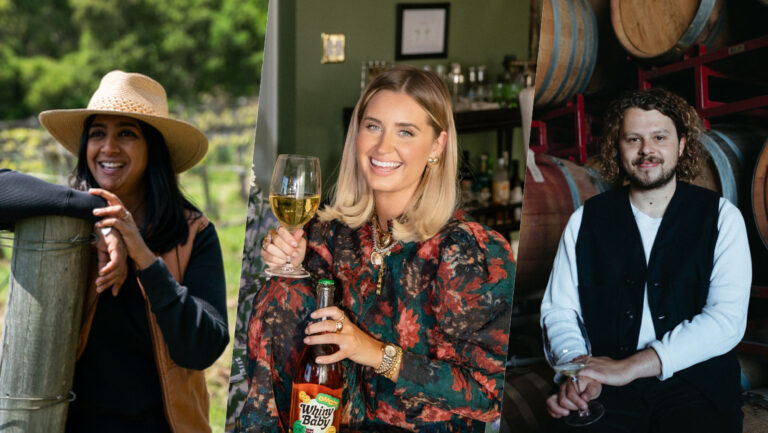
This last question pushed Jess Druey to get into the wine world. As a Gen Z drinker, she realized few brands were talking directly to her cohort, a segment the wine industry has struggled to capture. “There’s no shortage of wine, but there’s a shortage of brands that actually resonate with the consumer,” she says.
With Whiny Baby, launched in 2020, she uses tasting notes her peers would understand. “My friends wouldn’t know what Zinfandel tastes like, but they do know fruit punch,” says Druey. “My core consumers are on the newer side to wine. We wanted to eliminate the difficulty for them.”
Whiny Baby’s labels peel off and can double as stickers (excellent free marketing) and she asks her social media following to vote on new blends and bottle names. As a brand, she’s trying not to sell them wine, but an experience. “Our consumers are increasingly leaning to occasion buying—buying for a housewarming or a pool party. I ask myself: what is that experience, and how can we as a brand enhance it for them?”
Build a Strong Business and Financial Foundation
Druey knew she wanted to start a wine brand, so she took whatever was left in her college fund (under $20,000) and started Whiny Baby. She didn’t come from a wine background, so there were rude awakenings—she was quoted $75,000 for branding. Instead, she found an up-and-coming designer on Instagram.
You can start a brand for the romance of the winemaking experience, but, particularly in the current climate, Sekhar stresses the need to understand the less sexy parts of the wine industry. When she launched, she already knew trucking companies and warehouse pricing. “When my warehouse raised its rates last year, I knew 10 other warehouses to call.”
“Most have a creative idea of their wine—a vision of what they want to do in the vineyard and cellar,” adds Sekhar. “But before you launch a brand, you need to understand how. Do you have restaurant relationships? Do you know a broker or distributor who will take you on? Think of it as selling one case at a time—how many sales are you going to have to close?”
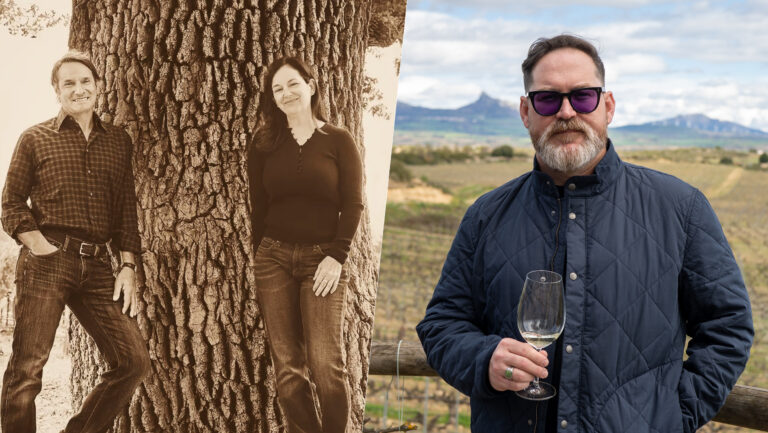
Luke Evnin and Deann Wright have lived in the Napa Valley for years. So when they went to launch Annulus Cellars—a family-centered project rooted in Napa history—they knew the region, the vineyards they wanted to work with, and the consulting winemakers to call. At that point, they ran into a roadblock: growers wouldn’t sell to just anyone—they wanted a winemaker on board before they signed a dotted line. And winemakers didn’t want to sign on without knowing what grapes they were working with. Only deep knowledge of the region could bridge this gap.
Once they landed a winemaker who aligned with their vision—Nigel Kinsman—they needed a space. Fronting a full winery is prohibitively expensive—purchasing equipment, building out a productive space, hiring staff—so they moved into Wheeler Farms, a coworking space for makers of Cabernet Sauvignon, complete with a full hospitality program.
Sekhar also works in a shared space. It helps her keep overhead costs down—she doesn’t have to shell out for new tanks, fermentation equipment, or her own facility. Shared winemaking facilities, like the one Sekhar works out of, allow winemakers to utilize equipment and space in exchange for a fee, charged per ton. While exact pricing will depend on use (say, custom crush versus alternating proprietorship), California producers can expect to pay around $3,000 per ton for facilities to make premium wines. Once the wine is made, storage costs are charged per gallon, per month.
Sekhar shares her space with other satellite winemakers, so she can work collaboratively—share failures, wins, and insights. Collaboration has become a crucial asset to starting a brand for Sekhar. As a brand owner, she’s been tempted to do it all—work the market, oversee all the picking. Instead, Sekhar recommends building a team you trust. Get a financial advisor, give yourself work-life balance, and “get QuickBooks,” she says.
Financial systems are crucial, as things are expensive right now. “Wineries are having a hard time selling wine,” says Sekhar. “All our costs are going up. The cost of the bottle, glass, cork—literally everything. Then we’re dealing with a slower market. We’re sitting on wine for longer.”
Her advice: proceed with thought and a good degree of caution. Stay small, intentional, and focused—keep calm and carry on, as the saying goes. Case and point: Shekhar has been wooed by affordable fruit, caused by oversupply issues. “People are offering me crazy prices,” she says. “But I still have to crush the fruit and pay for storage.” She passed, knowing that it would overextend her efforts—she only has two employees, herself and her assistant winemaker.
Strengthen Your Distribution Network and Sales Strategy
Once you have structures in place to source fruit and make wine, how do you actually sell the wine?
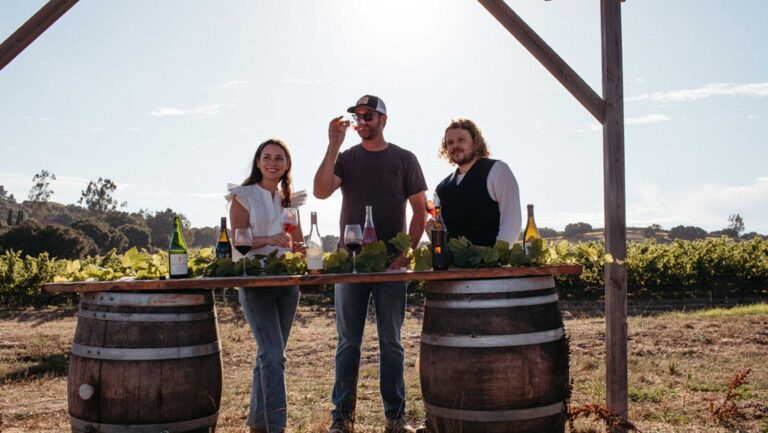
“I love wine, I love nature, and I want to mash grapes with my feet, but how are you going to sell this stuff?” says Ted Glennon, the owner of Vinos Finos de California, which launched in 2023, though Glennon has been making wine since 2012. “Maggie [Harrison] from Antica Terra always tells me, if you’re not in the cellar, you’re on the road. You have to constantly be advocating, championing, and selling your wine.”
He has distribution around the country, but he personally drives up the California coast telling the story of old vines, heritage clones, and California viticultural history. He finds that hand selling is often key to standing out in a crowded market—building relationships and connections to give a why to his wines.
If you do have the production to support distribution, be it national or statewide, that sales job will be largely outsourced. But not all distributors are built equally, flags Glennon. New brands, especially independent ones, can get lost in large portfolios, especially ones where sales reps operate on large-sale incentives.
“Finding distributor partners and markets that will champion you is really important,” says Glennon.
He focuses on boutique distributors, who share his same vision. As does Sekhar—she asked other winemakers what brokers and distributors they had positive experiences with, and went with someone who had a smaller book and could advocate for her wines.
Druey went an alternative route with her distribution—she knows her core consumer isn’t to be found browsing dedicated wine stores. Winemaker Amy Butler—in collaboration with the McBride Sisters—makes enough Whiny Baby wine to sustain larger-scale national distribution, so they are focusing on chain retailers like Target and Whole Foods, where everyday drinkers are shopping.
Learn to Stand Out in a Crowded Market
The Evnins have all the parts in place to make a great Napa brand—good land, a talented winemaker, a compelling story, and incredible critic scores right out of the gate.
But the Cabernet Sauvignon stage is crowded and the market is slow. “There’s been pushback from distributors we want to work with in the key Cabernet markets—Florida, Texas, and Georgia,” says Luke Evnin. They love the wine, are impressed with the scores. “But they’re not taking on new customers. They’re struggling to service the relationships they already have.”
Even after the wheels are in motion, how do you keep up momentum?
Sekhar knows social media is crucial for small brands—a place for storytelling, and connection with potential customers. “It’s where our next drinkers are.”
Druey looked to alternative ways of catching attention. She went on reality TV (Gordon Ramsay’s Food Stars) with Whiny Baby and won. The attention paid off: in September 2025, her brand was acquired by Gallo.
In a crowded market, winemakers underline the importance of considering where their consumers are, and where other brands are not.
Perr doesn’t have national distribution—he makes a barrel or two of most SKUs, which isn’t enough to feed a national market. Instead of focusing on traditional distribution channels, he’s connecting with wine drinkers where they hang out. Neighborhood Wines pops up at coffee shops, collaborates with local burger joints, and brings in DJs. He finds these more personal, casual moments are key to building relationships with drinkers and creating returning customers.
“We’ve really found success in meeting people where they are and welcoming them in,” Perr says.
Sekhar, who similarly doesn’t make enough to entertain conversations with national distributors, focuses on building a wine club. “It’s a powerful piece of the puzzle for selling wine,” she says. “You want people to believe in the brand. You want people who drink it regularly—they’re a return revenue stream and instant brand ambassadors.”
Instead of launching with a tightly allocated waiting list, as many of the top brands in Napa Valley do to maintain a halo of exclusivity, Annulus opened up orders. They’re at charity events, catering to people who care about their community, and talking to drinkers who aren’t Napa Cabernets’ usual audience—millennials and people of color.
“People have been really appreciative of our decision to originally be open to all consumers and not launch a brand on allocation,” says Elena Evnin, the brand’s creative director. “It lets them get to know us better before we start to kind of cultivate and curate our community. That’s our goal: get our wine into people’s cellars.”

Dispatch
Sign up for our award-winning newsletter
Don’t miss the latest drinks industry news and insights—delivered to your inbox every week.
By day, Kate Dingwall is a writer, editor, and photographer covering the intersection between spirits, business, culture, and travel. By night, she’s a WSET-trained working sommelier at one of the top restaurants in Canada. She writes about strong drinks and nice wines for Forbes.com, Wine Enthusiast, Vogue, Maxim, InsideHook, People Magazine, Southern Living, Liquor.com, and The Toronto Star.