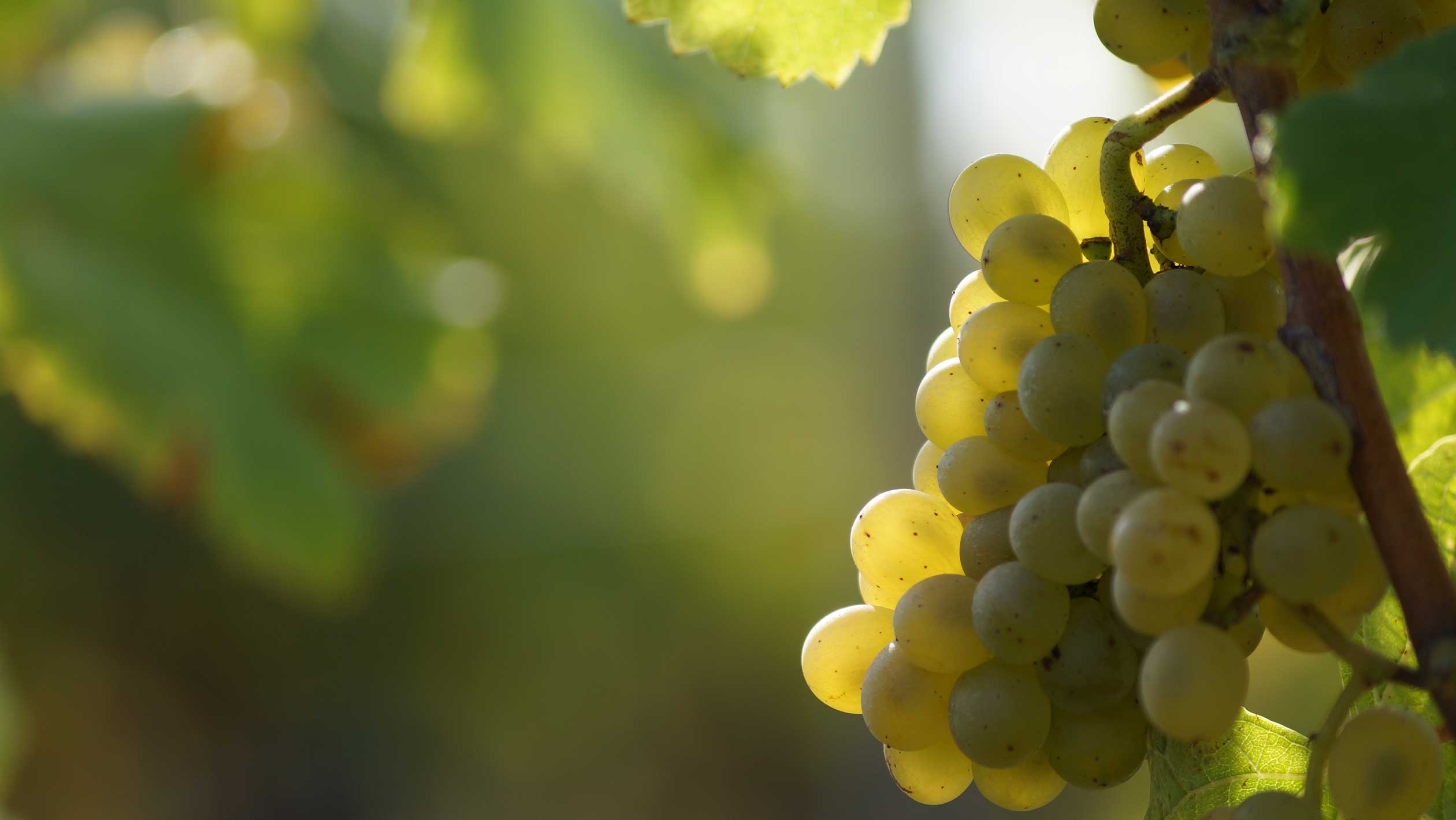
In 1655, Chenin Blanc traveled from its native Loire Valley to South Africa with members of the Dutch East India Company. In spite of the hot, dry, Mediterranean climate of the Western Cape—in stark opposition to the cool, wet oceanic conditions of northwest France—Chenin (or Steen, as South Africans dubbed it) thrived.
370 years later, South Africa boasts 40,000 acres of Chenin under vine, making it the world’s largest Chenin-producing nation by a long shot (in contrast, France grows 25,000 acres, and the U.S.—namely California—4,700 acres).
Few international grape varieties have proven as climatically adaptable as Chenin Blanc, especially in its adopted Southern Hemisphere home.

Don’t miss the latest drinks industry news and insights. Sign up for our award-winning newsletters and get insider intel, resources, and trends delivered to your inbox every week.
“We can grow Chenin on hills, valley floors, on [all kinds of trellising], often dry-farmed and in most climates and terroirs of the South African landscape,” says Rosa Kruger, the founder of The Old Vine Project and a Western Cape viticulture consultant through her company Myvine. “Even in the harshest of conditions, we seem to be making wines with depth and great character with Chenin when other varieties seem to show stress in the vines and wines.”
The variety’s phenotypic plasticity—its ability to respond to a variety of environmental conditions—is proving useful for Loire Chenin Blanc producers. The French region has felt the effects of climate change particularly acutely in recent years. In the last five vintages alone, Loire vignerons have battled everything from devastating frosts to torrential rain to extreme heat and drought.
In order to continue to craft the high-acid style of Chenin the region is famed for—whether sparkling, dry, or sweet—the Loire Valley must adapt. (Chenin Blanc may have phenotypic plasticity, but it can’t keep up with the rapid pace of climate change.) One of the ways it’s doing so is to study Chenin clones that have adapted to warmer, drier conditions, namely those in the nation it first sent cuttings to in the 17th century: South Africa.
“A more heat- and drought-tolerant Chenin clone from South Africa could allow the Loire Valley a substantial solution to preserve its wine identity, constructed over many centuries,” says Etienne Neethling, an associate professor and researcher at the Ecole Supérieure des Agricultures in Angers who specializes in climate variability within the wine sector.
Homing in on Chenin Blanc Clones
Understanding which South African clones may best suit the Loire’s increasingly erratic climate and distinctive soil types requires in-depth research of virus-free clones studied over many vintages in a range of conditions. It’s a lengthy process that can take decades. Thankfully, research is well under way in the central Loire.
Clonal selection has been part of Loire viticulture since the 1970s, with two Chenin Blanc clonal gardens established between 1983 and 1998. Research was taken to the next level in 2017 when a new garden—a mix of old and new plant material from around France—was created in Montreuil-Bellay, just south of Saumur, managed and farmed by researchers at the French Wine and Vine Institute. “To date, a total of more than 440 Chenin selections have been conserved in this clonal garden,” says Virginie Grondain, one of the leading scientists and viticulturists at Montreuil-Bellay. In 2026, Grondain and her team will add an entirely new variety to the garden, the pink-skinned Chenin Rosé, a mutation of Chenin that was supposedly brought to France from South Africa in 1979. (It can’t be sold commercially as it’s not listed in France’s official catalog of grape varieties, so it is, for now, solely being grown for preservation purposes).
One of the most significant upgrades in the new clonal garden is the addition of international Chenin clones, namely those from South Africa (U.S. and Australian clones are “coming soon,” says Grondain), back on French soil for the first time in three and a half centuries.
In 2018, Vititec, a clonal nursery based in the Western Cape, was approached by Interloire, the Loire Valley’s organizational body, to “assist in the selection of Chenin Blanc in South Africa from blocks that were older than 40 years,” recalls Charles Visser, Vititec’s chief viticulturist.
Vititec called upon Kruger and Andre Morgenthal, The Old Vine Project’s project manager, to assist with the selection. By 2019, 96 selections were made, eventually whittled down to just 15 old-vine cuttings planted in Loire’s clonal garden in 2023 after multiple virus tests and three years in quarantine. All 15 were from the Citrusdal Mountain wine district, at the northernmost edge of the Western Cape, where highly respected producers like Eben Sadie and Chris Alheit source fruit for their renowned Chenins. It’s one of the hottest dry-grown regions in the country, making it perfect for clonal studies in a warming Loire Valley.
A Clonal Divergence
In recent years, the relationship between the two famed Chenin nations has deepened. In 2019, organizers from both countries co-hosted the first Chenin Blanc International Celebration held in Angers. A second iteration of the event took place in Stellenbosch in 2022, and the third was held in Angers again in July 2025.
“As of today, I do not know of such international collaboration at a regional level between countries,” says Neethling. “The Chenin Blanc International Celebration has helped to bring South African winemakers to Loire and Loire producers to South Africa, looking at vineyard practices and winemaking techniques, and obviously asking the question of clonal material. My hope is that this will continue with California and Australia joining the movement too.”
It was at the most recent Chenin Celebration that one of the most surprising and arguably most important findings in Chenin’s cross-continental research was revealed. During the “Exploring Genetic Richness” seminar, Patrice This, a senior genetic scientist at France’s National Research Institute for Agriculture, Food, and Environment. spoke about the results of his team’s decades-long study which proved that French and South African Chenin vines are no longer genetically identical. The French vines planted in South Africa nearly 400 years ago have since mutated into entirely new clones.
“Minor modifications at the DNA level lead to different clones,” This stated during his presentation. “We know they are very close genetically, but with very simple differences that make the wines completely different.”
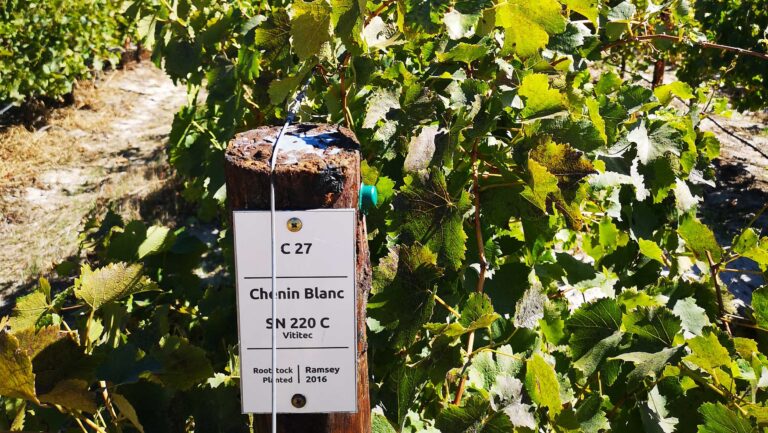
The clonal divergence took place not just in older clones, the study found, but in more recent ones too. Clone 220, for example—which became France’s first certified Chenin Blanc clone in the 1970s and is now the nation’s most widely planted—was brought to South Africa in the 1980s. This’s research findings revealed that a vine less than four decades old can mutate too.
For some, like Kruger, the findings solidify what she already suspected from decades of her own viticultural work in South Africa.
“I think this study really confirms that after a certain amount of years—we do not know the exact time—vines mutate and become a reflection of the landscape and the culture of the people that farm the land.”
The Impact on Loire Valley Chenin Blanc’s Future
While the study’s findings open a can of worms when it comes to the nature versus nurture argument of plant adaptation, it’s clear that Chenin has adapted its DNA to suit South Africa’s Mediterranean climates. Genetic differences may not be as vast as varietal ones (“The French and South African clones are therefore still Chenin,” This was quick to point out), but where genetic variations express themselves most distinctly is in how the plant grows.
“Epigenetics plays a crucial role in clonal selection by enabling heritable, environment-responsive gene expression changes that enhance traits like drought tolerance and phenological adaptability,” says Visser.
In other words, clones may not drastically change the style and flavor characteristics of a wine, but they can make all the difference when it comes to their ability to withstand and thrive amidst climactic challenges.
Researchers may still be a ways off knowing exactly which of South Africa’s Chenin clones will end up in Loire’s most famous subregions, but the collaborative, full-circle efforts between this region of Chenin Blanc origin and the nation to which the variety has comfortably immigrated provides a road map for other countries to follow.
“Chenin,” says Neethling, “is paving the direction for other international varieties which should foster similar international collaboration at a regional level.”

Dispatch
Sign up for our award-winning newsletter
Don’t miss the latest drinks industry news and insights—delivered to your inbox every week.
Christina has been telling wine stories for 15 years, from her former homes in London, England and Perth, Australia, and now in her current home in New York’s Hudson Valley. She has written for publications around the globe and is currently Wine Enthusiast magazine’s Writer at Large for New Zealand, Australia, New York and Great Britain. Each year, she tastes and reviews over 1,500 wines from these regions and pens dozens of articles. Christina is also an active presenter and educator.