Climate change is a cause for concern everywhere, but the south of France, which is famously warm and dry, is at the forefront of the struggle. As heat records break each year—France saw its highest average temperature ever on June 23—harvests are getting earlier, sugar levels are rising, acidity is plummeting, and maintaining healthy vines is getting more challenging.
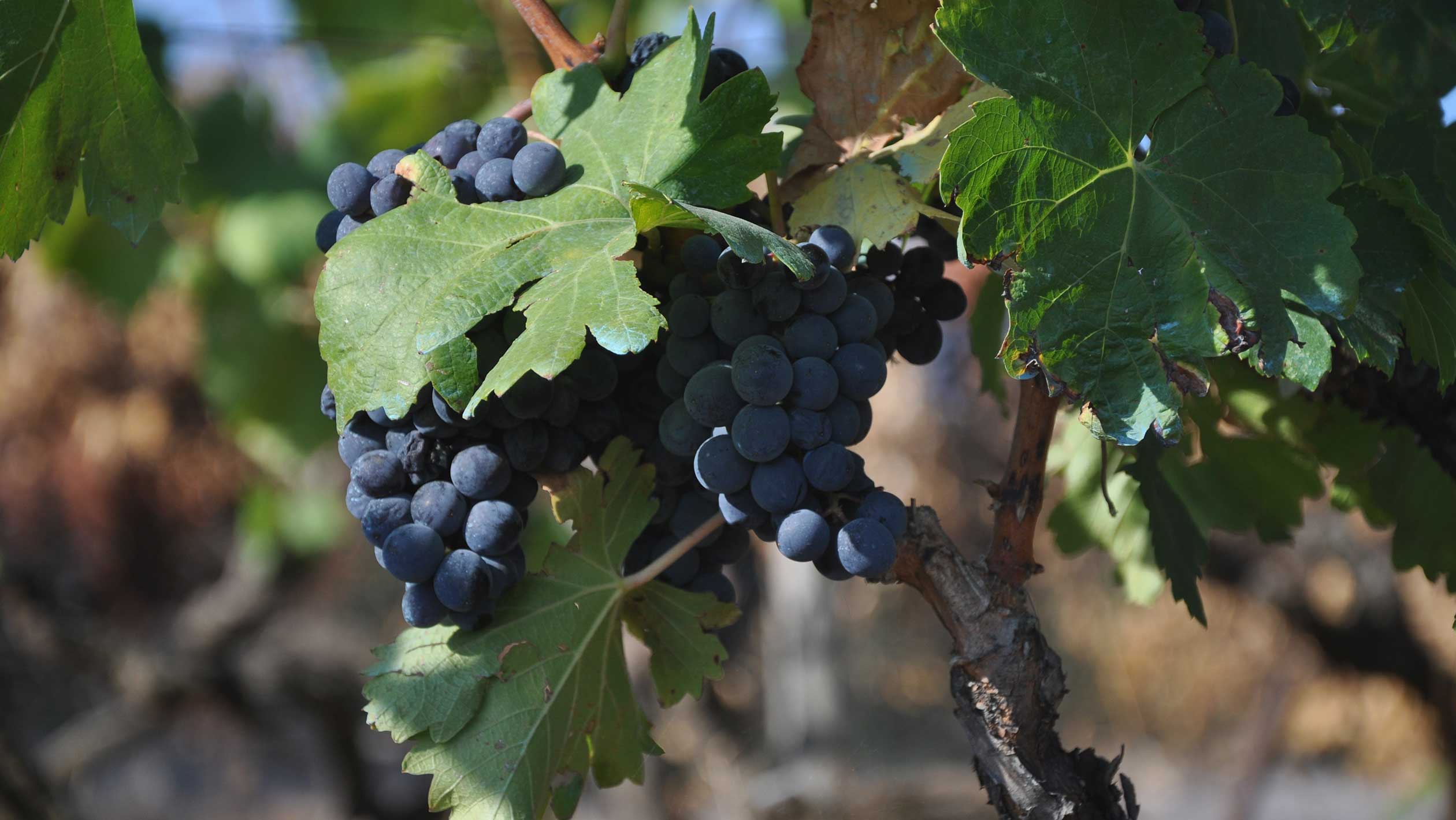
As regions around the world are pushed to explore heat-tolerant varieties, Mourvèdre has emerged as a particularly interesting case study. In southern France’s Bandol region, hot-weather-loving Mourvèdre has long been used as the dominant variety in red and rosé wines. Away from the coast, Mourvèdre was long avoided, as its notoriously late ripening precluded it from yielding phenolically ripe grapes, and therefore great wine.
Now, as the climate becomes more erratic and increasingly warm, is Mourvèdre’s heat tolerance allowing it to thrive in a warming world? It’s useful to look at exactly how heat-tolerant grape varieties like Mourvèdre are faring, rather than assuming they are better off than others.

Don’t miss the latest drinks industry news and insights. Sign up for our award-winning newsletters and get insider intel, resources, and trends delivered to your inbox every week.
Mourvèdre’s Evolution in Bandol
Mourvèdre is known as Monastrell in much of Spain, where it’s the fourth most-planted red grape variety. It is also sometimes called Mataro in California and Australia. Although its exact origins are uncertain, the variety is believed to have originated in Spain’s Levante region. According to tradition, pilgrims returning from Santiago de Compostela brought cuttings across the Pyrenees, planting them at Saint-Gilles in what is now the southern part of Costières de Nîmes.
As a late-ripening variety, it needs a hot, dry climate with a long growing season. It is also susceptible to both mildews and low winter temperatures. However, the heat needs to be moderated. In Jumilla, the vineyards are moderated by high altitude, and in Bandol the climate is moderated by the nearby sea. The expression that Mourvèdre “needs its head in the sun and its feet in the sea” reflects this.
In Provence, Mourvèdre was the most-planted vine before phylloxera, but lost its premium position in all but the hot, coastal region of Bandol. Though an increasing number of Bandol wines have a very high percentage of the grape, the reds cannot be 100 percent Mourvèdre. Grenache is usually blended for fruit, while Cinsault is added for freshness.
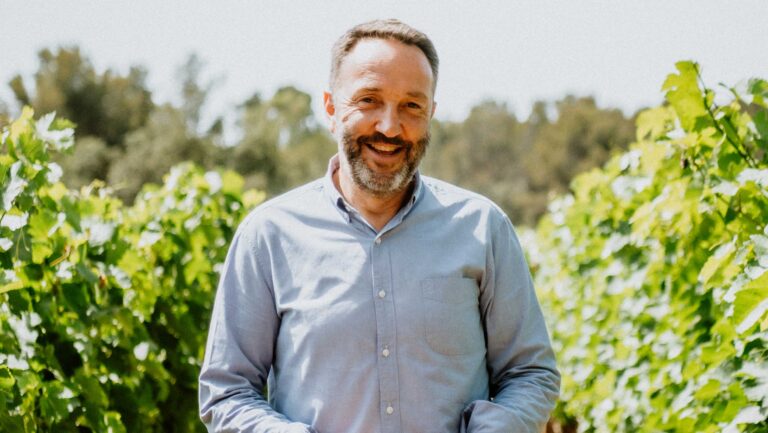
With increasingly hotter, drier vintages, even Mourvèdre is struggling to maintain its balance and elegance, and producers are looking at how they can help mitigate the effects of the changing weather. Jean-François Ott, the fourth-generation winemaker for Domaines Ott, is clear that with climate change, adaptation is essential. “This year, if we followed the same recipe as last year, the wines and vines would be dead, especially if there are high yields that might tire the vines,” he says.
Finding New Ways to Manage Heat and Drought
Canopy management as a means of shading Mourvèdre from extreme sunshine is a relatively easy way to take action. At his Bandol property Château Romassan, Ott is experimenting with a form of gobelet (free-standing, head-trained vines) or échalas (gobelet-trained vines fixed to stake) that provides three-dimensional shade, rather than simply following the row. The extra shade helps the grapes avoid sunburn, producing better wines. At Domaine Gueissard, Pauline and Clément Gueissard have been following the practices of French agronomist Konrad Schreiber—which look similar to regenerative farming—since 2020. They are adapting the canopy to provide shade and planting trees around the small parcels to encourage shade and protect from wind.
At Domaine Tempier, chef de culture Jean-Philippe Fourney is pruning Mourvèdre higher as part of their solution. “We want to raise the gobelet as high as possible … for the sap to have to travel as far as possible, to slow the cycle, to restart the season as late as possible,” says Nirvan Rougeot, a third-generation member of the Peyraud family, which owns Domaine Tempier.
Dealing with drought is another pressing problem. Many are critical of the long-term sustainability of dry farming. “In Provence, especially when making rosé in the time of climate change, irrigation is compulsory in most vineyards,” claims Alain Deloire, a viticulture professor at Institut Agro Montpellier, a winemaking school in southern France. For him, either water or fundamental change is required. Provence “should be making more red wine because it is dry and warm here,” he adds. According to Deloire, Bandol, proudly dry-farmed, is not going to last long. Defenders of dry farming feel that the advent of irrigation will reduce the typicity of their terroir.
Olivier Colombano, the director of the Bandol appellation, is cautiously pragmatic about irrigation. “Almost nobody irrigates, but a grower had two parcels last year with shallow soil,” he says. “The vines were on the brink, I told them to irrigate or the vines would die before the end of the season.” Colombano says that the remarkably hot 2019 vintage survived due to heavy rains in the autumn of 2018, especially where there were deeper soils with strong water retention.
The Gueissards have adopted a year-round approach to ground cover to significantly help retain moisture during the hotter months. Initially, the planting of cover crops was regarded as competition for water with the vines, but after a few years they found that the ground cover and vines addressed the balance, with vine roots being forced to go deeper for moisture.
Similar Issues Are Playing Out in Spain
Even for older vines with deeper root systems reaching down for water, Monastrell growers in Jumilla have reached the same conclusion. “The last three-year drought, from 2022 to 2024, combined with high temperatures, was so severe that even old bush vines have suffered and some died,” says Carolina Martínez Origone, the general secretary of the Jumilla Consejo. “Irrigation may be essential in very dry years for the mere survival of the vines.”
This raises the question whether sites will need to be abandoned, even when planted with heat-tolerant grapes like Mourvèdre. In Jumilla, the surface area has halved over the past 20 years, with sites in the hotter, southerly areas abandoned. Yet, “the best terroirs remain intact, as they are the ones located at higher altitudes, around 600 to 800 meters, with a more marked continental hue and diurnal temperature contrasts,” says Origone.
However, because winemakers have now shifted their attention to parcels that are likely to withstand the changing climate, wine styles are changing. Back in France, Colombano acknowledges that although no sites in Bandol have been abandoned yet, the cooler and fresher sites, which are traditionally reserved for rosé, are now being considered for red wine production. This raises another question as to whether rosé production—currently 75 percent of the region’s total production—will be reduced.
How Wine Styles Are Changing
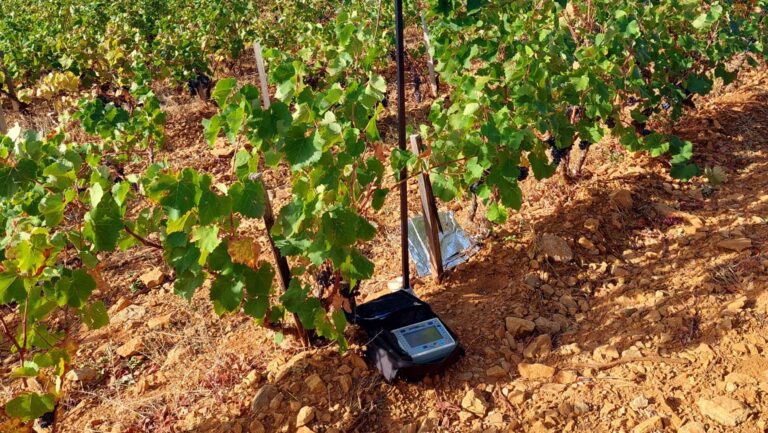
Colombano has initiated detailed monitoring of temperature, moisture, and vine health throughout the region so that the effects of climate change can be more precisely evaluated.
The 2019 vintage was extremely hot, with an average of 77 degrees Fahrenheit in July, but not excessively dry following a wet winter. Hot summers tend to yield wines with softer, more approachable, ripe tannins, which is more suitable to the palates of most consumers. This vintage in particular produced some deep, structured rosés well suited for aging.
In 2021, however, it was dry (13.4 inches of rain compared to the normal annual average of 23.6 inches), but not excessively hot, with temperatures between 71 to 76 degrees Fahrenheit during the summer. The depth of soil and water retention were more important. At Domaine Tempier, the 2021 harvest started earlier and the ratio of juice to skin and pips was lower than usual.
During a tasting Bandol organized in December 2025, which spanned two vintages—2019 and 2021—with the 28 wines presented in each vintage, the impact of climate change was less noticeable in the glass. Results seemed to indicate that 2021 did much better, but the highest scores from the tasters going to the 2019 vintage. This could also be due to an extra year of age. Some of the 2019 seemed a little dried out and old, while the 2021 had more balanced, fresher notes.
While Mourvèdre thrives in heat, the changing climate still causes concern; vine training and site selection are vital, but slow to result in real change. The hotter, drier summers may shift production away from the high percentage of rosé, as producers move to use the cooler sites for their red wines. At the same time, the rosés may shift away from their current lighter, Provence-style profile to more robust, deeply colored wines, as winemakers work with more concentrated berries, creating wines not dissimilar to now-fashionable light summer reds.

Dispatch
Sign up for our award-winning newsletter
Don’t miss the latest drinks industry news and insights—delivered to your inbox every week.
Elizabeth Gabay, MW, has been working with the wines of Provence since the mid-1980s and has lived in the region since 2002. She has written several books focused on rosé and southern French wine. Ben Bernheim grew up in the South of France, becoming firmly involved with wine through his university tasting team, after which he worked on vineyards and then as a hotel sommelier. Since 2020, he has specialized in building awareness of premium rosés and has co-authored two books with Gabay. Their latest book, The Wines of Provence, was published in July 2026, along with a new Provence Guide.