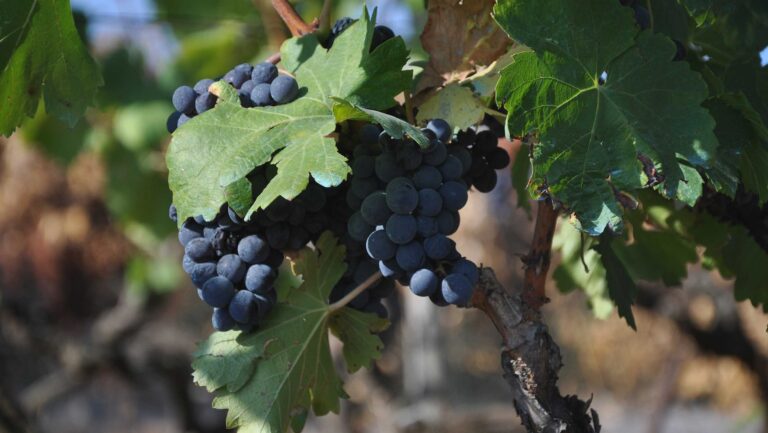
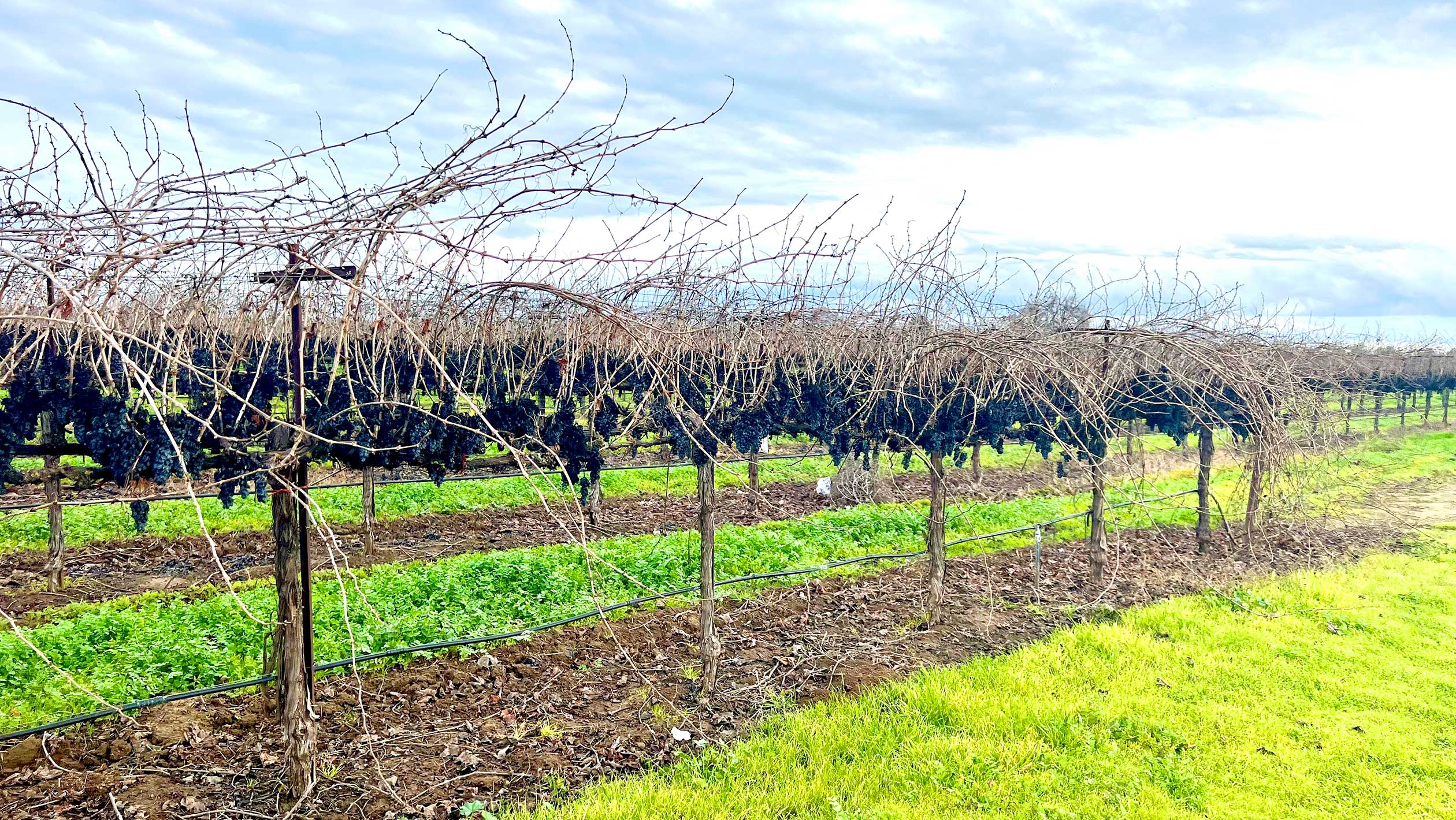
It’s become an all-too-familiar sight in California’s Lodi wine region. Among the scenic vineyards and almond orchards lie heaps of grapevines that have been pulled from the ground. It’s not that the vines are diseased; no one wants to buy the grapes.
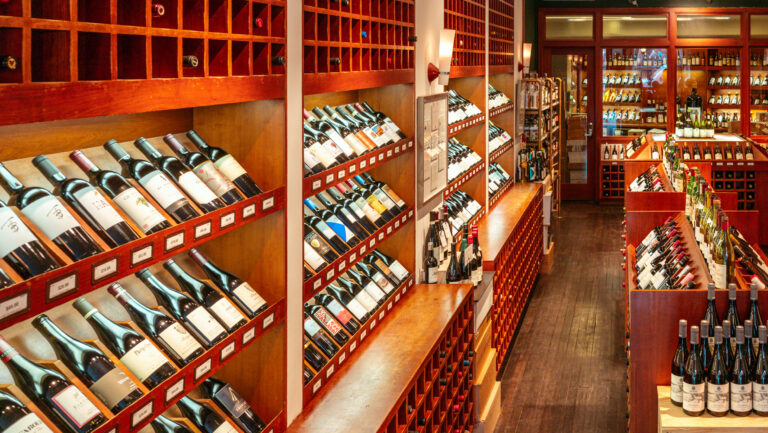
The U.S. wine industry remains in oversupply following a couple of tough years, and according to Silicon Valley Bank’s latest report on the state of the U.S. wine industry, the situation isn’t likely to improve in 2025. Wine consumption is down due to myriad headwinds including generational shifts away from wine, competition from other beverages, and anti-alcohol messaging. And when consumers buy less wine, wineries buy less fruit.
Yet California grape growers say the drop in demand is only part of the story. Many contend that unfair trade policies and loopholes in federal regulations are crushing them in the domestic marketplace. With a 10 percent tariff on global imports currently in effect, some California growers are hoping the additional tax will inspire big wine producers to buy more domestic fruit.

Don’t miss the latest drinks industry news and insights. Sign up for our award-winning newsletters and get insider intel, resources, and trends delivered to your inbox every week.
Hard Times and Pulling Vines
The California Association of Winegrape Growers (CAWG) and the Lodi Winegrape Commission (LWC) have been particularly vocal about the plight of growers. In a joint presentation to the winemaking community earlier this year, LWC executive director Stuart Spencer and CAWG president Natalie Collins described a system stacked against growers due to tax loopholes, import incentives, and European subsidies estimated at €2 billion ($2.2 billion) annually.
“We import six times more wine than we export and we’re the largest wine consumption base in the entire world,” Collins says. “There are just so many factors at play, but what these all result in is less purchasing of California-grown fruit.”
At the Unified Wine & Grape Symposium in January, Jeff Bitter, the president of Allied Grape Growers in Fresno, called for California growers to remove 50,000 acres of vines in 2025, mainly from the North Coast and Central Coast. That’s in addition to the 37,000 acres California growers pulled last year.
The state’s bearing acreage for wine grapes peaked at 590,000 acres in 2019, according to the U.S. Department of Agriculture. Acreage has since dropped to just under 446,000.
“I know growers—multi-generational families—that have removed their vineyards altogether,” says Collins. Others, she adds, are selling their land or planting alternative crops. And it’s not only happening in interior appellations. “We’re seeing it in all regions of the state,” she says.
Unpicked Fruit and Lower Prices
In addition to pulling out vineyards, many California growers without contracts for their fruit have left grapes hanging on the vines. CAWG estimates that 300,000 tons of California wine grapes went unharvested in 2024, and the California Department of Food and Agriculture’s California Grape Crush 2024 Preliminary Report shows that the state’s harvest was the lightest in two decades, down more than 25 percent.
According to a recent report by Terrain, a provider of analysis and insights to the agriculture industry, California’s statewide average price for grapes fell eight percent per ton in 2024.

Bitter points out that average prices don’t include zero dollar amounts for the grapes that didn’t get picked because growers couldn’t find a buyer. “What is being harvested and crushed, and therefore reported, are grapes that were under contract previously,” he says. “Those contracts have higher supporting prices and many of them have some type of increase built in or some type of reference price to the previous year.” Growers that didn’t have contracts in 2024, he says, likely left fruit unharvested.
The Problem of Imported Bulk Wines
Though the dip in demand is hurting California growers at all levels of the quality spectrum—even Napa Valley wine growers had trouble selling grapes in 2024—those in high-volume production areas face additional challenges.
Lodi growers such as Spencer, whose family farms 40 acres of wine grapes in Lodi, says California’s largest wine companies are contributing to the problem of unharvested grapes. Instead of buying more locally grown fruit, he explains, they are blending cheaper foreign wines into their products and labeling them with the American appellation of origin.
Though federal law allows U.S. wineries to include up to 25 percent imported wine in these products, Spencer says the practice is misleading to consumers and an insult to California grape growers. The motivation, he says, is cost.
“It allows them to lower their cost of goods and retain more profits and it’s almost creating a race to the bottom as the producers are fighting for market share,” he says. “It’s left many growers without a home for their grapes.”
CAWG estimates that 38 million gallons of imported bulk wines replaced California-grown grapes last year. Collins says the organization has tried petitioning the Alcohol and Tobacco Tax and Trade Bureau for changes to the American appellation requirements, but its efforts were not successful. “It’s something we would like to revisit,” Collins says. “I think there are some loopholes that tie into consumer transparency that we’re going to look to tackle.”
Duty Refunds and Potential Tariff Benefits
Another federal policy that hurts California growers, Spencer says, is duty drawback. The federal program allows large U.S. companies that bring in as much wine as they export to claim refunds on import duties and excise taxes. The benefit applies to both bulk wine and case goods. Over the last six years, Spencer estimates that the U.S. government has spent more than $200 million subsidizing imported wines. “The largest buyers of California grapes have also become the largest importers of foreign wine,” Spencer says. “It’s undercutting California farms.”
Collins says CAWG is advocating for the elimination of duty drawback for alcohol, because she says it puts domestic growers at a disadvantage. “We believe it functions as an import subsidy that distorts the market,” she says. “We’d like to see a program in place that supports exports without requiring imports as a condition for eligibility.”
“When we have to compete with countries that don’t have those same standards and our costs are significantly higher because of them, then it is appropriate to look at tariffs as a way to level the playing field.” — Jeff Bitter, Allied Grape Growers
Until that day comes, many in California’s grape growing community say tariffs on imported wines could provide some relief. “One of the frustrating things for those of us that own and farm vineyards in California is the wine industry is being characterized as only importers, retailers, and restaurants, and the grower has been left out of the conversation,” says Spencer. “Many of the growers in our communities see tariffs as a positive option.”
Bitter adds that California growers often have greater farming and business expenses than those in many other countries, especially if they are upholding higher standards for environmental practices and protections for workers. “When we have to compete with countries that don’t have those same standards and our costs are significantly higher because of them,” he says, “then it is appropriate to look at tariffs as a way to level the playing field.”
However, unless an exemption is made, any tariffs could be negated by federal loopholes. “They could potentially be refunded through the duty drawback program,” Spencer says, removing the incentive to buy domestic fruit.
Farming for the Future
Despite the challenges California growers face, the glass is still half full for those who find ways to adapt.
Craig Ledbetter, a vice president and partner at Vino Farms in Lodi, says he has removed nearly 1,000 acres in Lodi and other regions in the last year or so. The grower and vineyard management company farms roughly 18,000 acres of vineyards in several North Coast, Central Coast, and interior appellations.
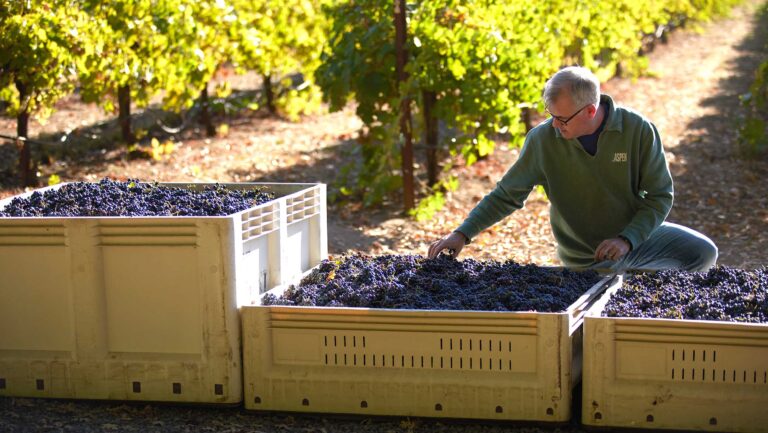
However, Ledbetter is also shifting his farming practices for wine grapes. Rather than solely catering to the state’s largest wineries at low district-average pricing, he’s making a move toward certified organic and regenerative farming for his family-owned vineyards.
“You’re seeing growth in that market,” Ledbetter says. “When I’m selling to my small guys that are really interested in [that kind of farming], I’m seeing three times the district average.” Even for the big buyers in the organic market, such as Bonterra, he says he’s getting almost twice the district average for his grapes. “That’s the direction that we are trying to go.”
For his organic clients, he says he makes $850 to $1,000 per ton depending on the variety. “We can make those numbers work even if we are farming it organically.”
Ledbetter says this approach could provide a profitable future for Lodi growers if the industry is willing to make big changes. “Lodi has too many acres of vineyards in the ground for all of us to do that, so we need bigtime growth in the market,” he says. “We need the [major wine brands] of the world to start playing with the organic market and see what they can do at a higher price point.”
With the under-$12 wine category continuing to decline, he says he questions whether California should remain a player in that market. Instead of selling California appellation wines for $10 or less, he suggests, maybe it’s time for big players to put Lodi on the label and sell those wines for $16 or $18 a bottle.
Vino Farms recently began growing grapes for the Avivo wine brand. Launched in 2020, the Lodi-based producer makes 30,000 cases each year from regeneratively farmed, certified organic grapes. The wines are priced at $18.99 to $21.99. “California is not an entry-level region,” Ledbetter says. “It’s more of the mid-level and higher region in terms of price point and quality because our costs are so high here.”
Moving in that direction, Ledbetter says, would mean rethinking where grapes are grown in California. “There really can’t be a whole lot of fruit south of Lodi in the valley, because when you get south of here your temperatures change dramatically,” he says. “You cannot get to the same quality that we can in Lodi, especially if you’re farming it for [premium wines].”
Vino Farms is now building a custom crush facility in Lodi as a benefit to its smaller winery clients. Ledbetter hopes to have it up and running in time for the 2025 harvest. “We’re going to continue to be grape growers,” he says. “We know this market will turn around eventually, but until that’s happening, we as a family, are going to continue to diversify.”
Bitter also says he’s optimistic about the future for California growers—if they can fine tune their production to match what consumers want going forward. “We’re talking about adjusting our acres from what was 580,000 at one time to closer to 500,000, so this is still a huge industry,” Bitter says. “There are still plenty of opportunities for success within that.”

Dispatch
Sign up for our award-winning newsletter
Don’t miss the latest drinks industry news and insights—delivered to your inbox every week.
Tina Caputo is a writer based in Northern California who covers wine, beer, food, and travel. She was formerly the editor in chief of Vineyard & Winery Management magazine, and her work has appeared in Wine Enthusiast, Visit California, Sonoma magazine, the San Francisco Chronicle, and many other publications. She also produces the podcast Winemakers Drinking Beer.