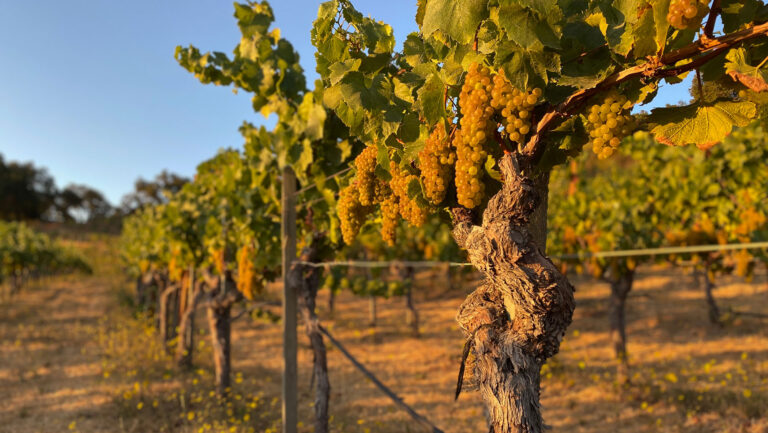
“Grapevine trunk diseases (GTDs) represent a chronic and escalating risk to vineyard longevity and economic sustainability,” explains Chloé Delmas, Ph.D., the director of research at France’s National Research Institute for Agriculture, Food, and the Environment. “The main issues are vine decline, which can lead to yield losses, and premature death, which steadily reduces the productive vineyard area over time.”
In Napa Valley alone, estimated losses reached at least $160,000 per acre over a 25-year period, while in France annual losses are thought to total around $1.14 billion.
For such a devastating scourge, each detection should send shockwaves through the industry. Yet the disease has become so pervasive, and its uncovering such a daily routine, that it now rarely attracts public attention. Experts suggest that GTDs can now be found in almost every vineyard worldwide, with an incidence of up to 85 percent globally. Long-term monitoring data collected over more than 20 years by France’s national GTD observatory, for instance, shows that symptoms have been consistently recorded across all major winegrowing regions, with an overall average of around three percent of plants affected.

Don’t miss the latest drinks industry news and insights. Sign up for our award-winning newsletters and get insider intel, resources, and trends delivered to your inbox every week.
While management practices in some regions have helped slow the spread of GTDs, the difficult detection, lack of a cure, and progressive banning of chemical fungicides, means the threat to the future of viticulture remains high globally, and, as a result, the industry is gradually taking the risk more seriously.
What Are Grapevine Trunk Diseases?
Rather than a single condition, GTDs are a broad group of fungal infections that attack the vine’s woody tissues. Examples include Botryosphaeria dieback, Eutypa dieback, Diaporthe dieback, esca, black foot, and Petri disease, with new forms continuing to emerge. Each requires its own understanding of causes, symptoms, and responses, complicating efforts to tackle the diseases and, in turn, contributing to the continuous spread worldwide.
With various forms of GTD, “portions or other appendages of the vine suddenly die off, sometimes from the exterior and sometimes further in,” explains Adam Casto, the winemaker at Napa’s Ehlers Estate. “The challenge is to detect and identify the disease, and then determine the appropriate course of action.”
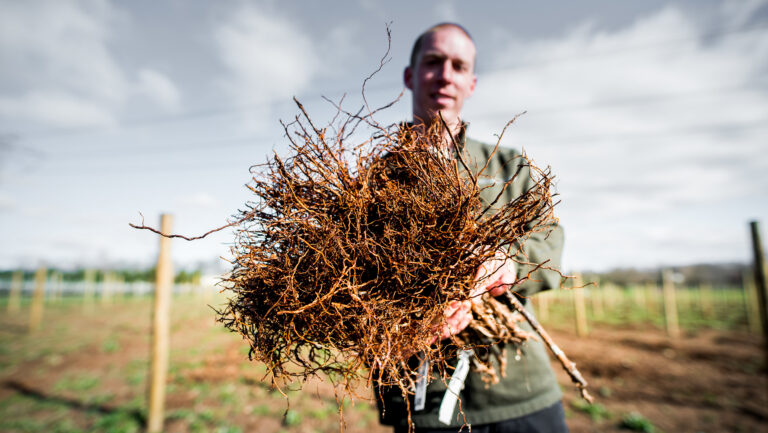
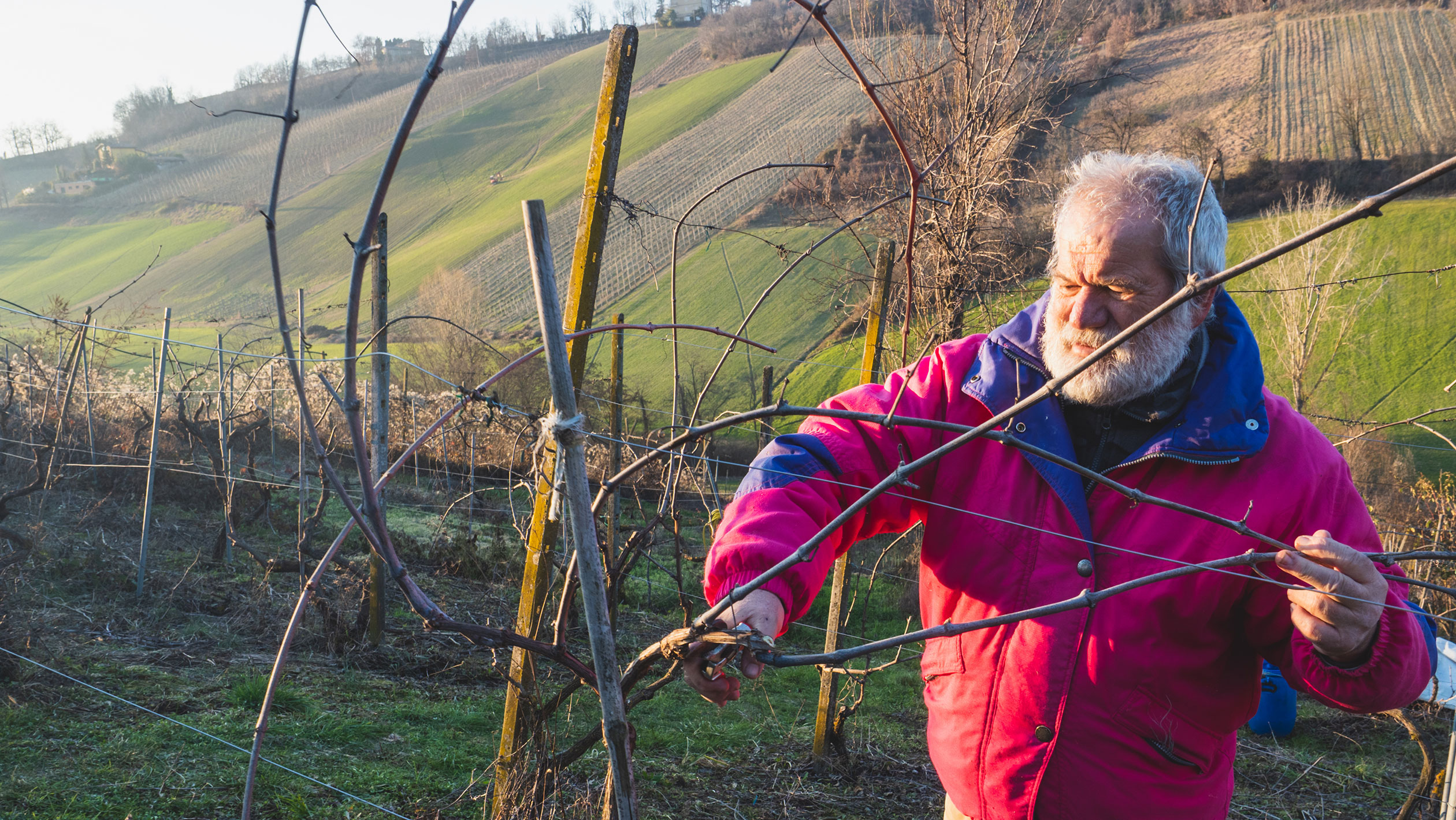
With Eutypa dieback, for instance, vines become infected through fresh wounds, such as those caused by pruning. Early symptoms include stunted shoot growth, and over time the fungus can kill infected parts, and potentially the entire vine. There is no cure for the disease, but where permitted, fungicides can be applied immediately after pruning as a preventive measure. By contrast, some symptoms of black foot disease, which primarily affects young vines, may appear above ground, yet the main signs are below ground, particularly necrotic root lesions. Like Eutypa dieback, there is no cure, so management focuses on prevention, especially through proper soil preparation before planting.

How Grapevine Trunk Diseases Spread
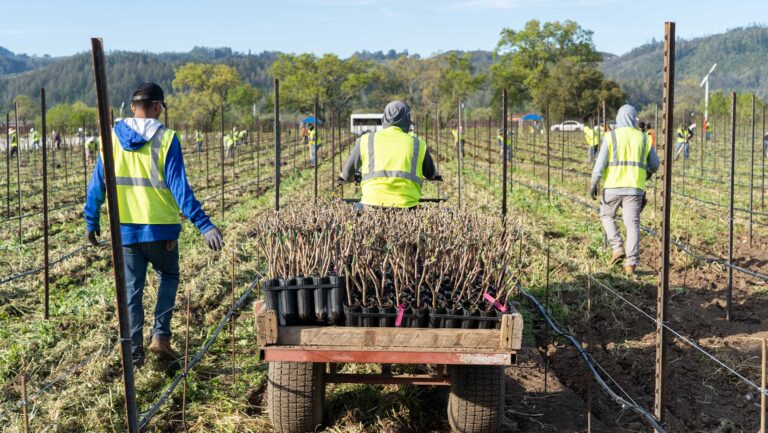
The spread of GTDs can occur through several routes, including pruning wounds, insects, or contaminated tools, and some soil-borne fungi can even infect vines through the roots. Yet studies suggest that nursery vines are one of the main routes by which GTD pathogens are brought to vineyards and, after planting, spread to nearby healthy vines.
Plant material—infected through a combination of vertical transmission (from the mother plant) and horizontal transmission (from other plants or the surrounding environment)—can cause losses of up to 60 percent during propagation and after planting, and become a significant long-term reservoir of disease within vineyards. “These pathogens live in the vascular system,” says David Gramaje, Ph.D., a plant pathologist at Spain’s Institute of Grapevine and Wine Sciences. “Often the plant shows no external symptoms, which allows them to spread easily.”
Nurseries do have procedures in place to assess the health of plant material, yet limiting the spread of the disease, or its negative effects, is far from as easy as merely detecting the presence of fungi. “It’s not just about finding a pathogen,” says Dr. Gramaje. “You need to quantify the amount of inoculum and establish if that’s enough to kill the plant or at least cause negative symptoms.” He points out that, while testing may be feasible under laboratory conditions, it is not realistic in the field once the plant has reached the grower. “The ideal solution,” he says, “would be for nurseries to focus on providing the healthiest planting material possible.”
Fresh plant material, however, is not the only culprit behind the spread of GTDs. High-density, trellised training systems—which are increasingly replacing less dense traditional setups worldwide—have also significantly contributed to transmission by crowding plants into smaller spaces, increasing the risk of contamination. Gaps in understanding of the disease and poor vineyard management further exacerbate the problem, and both remain common issues in several regions worldwide.
“Approximately 80 percent of growers in Spain know how to identify GTD symptoms in the vineyard,” notes Gramaje, stressing the crucial significance of educational efforts. “But in other European regions, for example Serbia, North Macedonia, or Romania, that percentage is likely to be much lower.” Indeed, a first-of-its-kind study on the state of GTDs in Romania, where vineyards suffered years of neglect following the collapse of the communist regime in the early 1990s, confirmed that GTDs are widely spread across all viticultural zones, while management measures remain limited.

Rethinking Disease Management
In response to the increased incidence of GTDs worldwide, the industry has recently accelerated efforts to find more effective solutions than mere preventive and containment measures by exploring a range of approaches, from advanced technologies to natural treatments.
A recent study investigated how silver–selenium nanoparticles (AgSe NPs)—a synthesized nanomaterial combining silver and selenium—can be applied directly to pruning wounds to inhibit the growth of major GTD pathogens, including Eutypa lata and Diplodia seriata. It’s also been demonstrated that antioxidants and low-toxicity chelators (common food additives) can disrupt the chemical reactions triggered by GTD fungi that damage the vine.
Similarly, two Canadian fungal species—Trichoderma canadense and Trichoderma viticola—have been identified as potential natural antagonists to certain GTD pathogens, with a remarkable 70 to 100 percent effectiveness in eliminating the disease, albeit only under laboratory conditions. Meanwhile, other studies have shown that the use of aqueous ozone in nurseries can achieve effects comparable to chemical treatments, without negatively impacting plant growth.
The volume and promising results of recent research have given the industry optimism about effectively combating GTDs. “I’d expect GTDs to decline as early detection improves through technology, provided these gains outpace the impacts of climate change and the increasing interconnectedness of vineyards through shared genetics and machinery,” says Casto.
With GTDs affecting numerous other plant species, however, academics remain cautious about the prospect of fully eradicating the disease. “I wouldn’t say the situation is getting better; if anything, it’s neutral or worsening,” argues Gramaje. “These pathogens affect alternative woody hosts—like almond, olive, walnut, and apple—and we hypothesize that when a pathogen doesn’t find a susceptible grapevine, it jumps to these hosts, meaning a source of infection is always present. So, I don’t see the situation improving in the future. We will simply have to learn to coexist with it—but it certainly won’t be the end of viticulture.”

Dispatch
Sign up for our award-winning newsletter
Don’t miss the latest drinks industry news and insights—delivered to your inbox every week.
Dr. Jacopo Mazzeo is a U.K.-based freelance drinks journalist, consultant, and photographer. He contributes to leading trade and consumer publications including Decanter, Wine Enthusiast, Whisky Magazine, and Good Beer Hunting. Jacopo consults on consumer trends and marketing strategies, is a former sommelier, and judges international wine, beer, and spirits competitions. Before he embraced full-time journalism, he studied musicology at the University of Bologna and took a PhD at the University of Southampton. Follow Jacopo on Instagram @jacopomazzeophoto