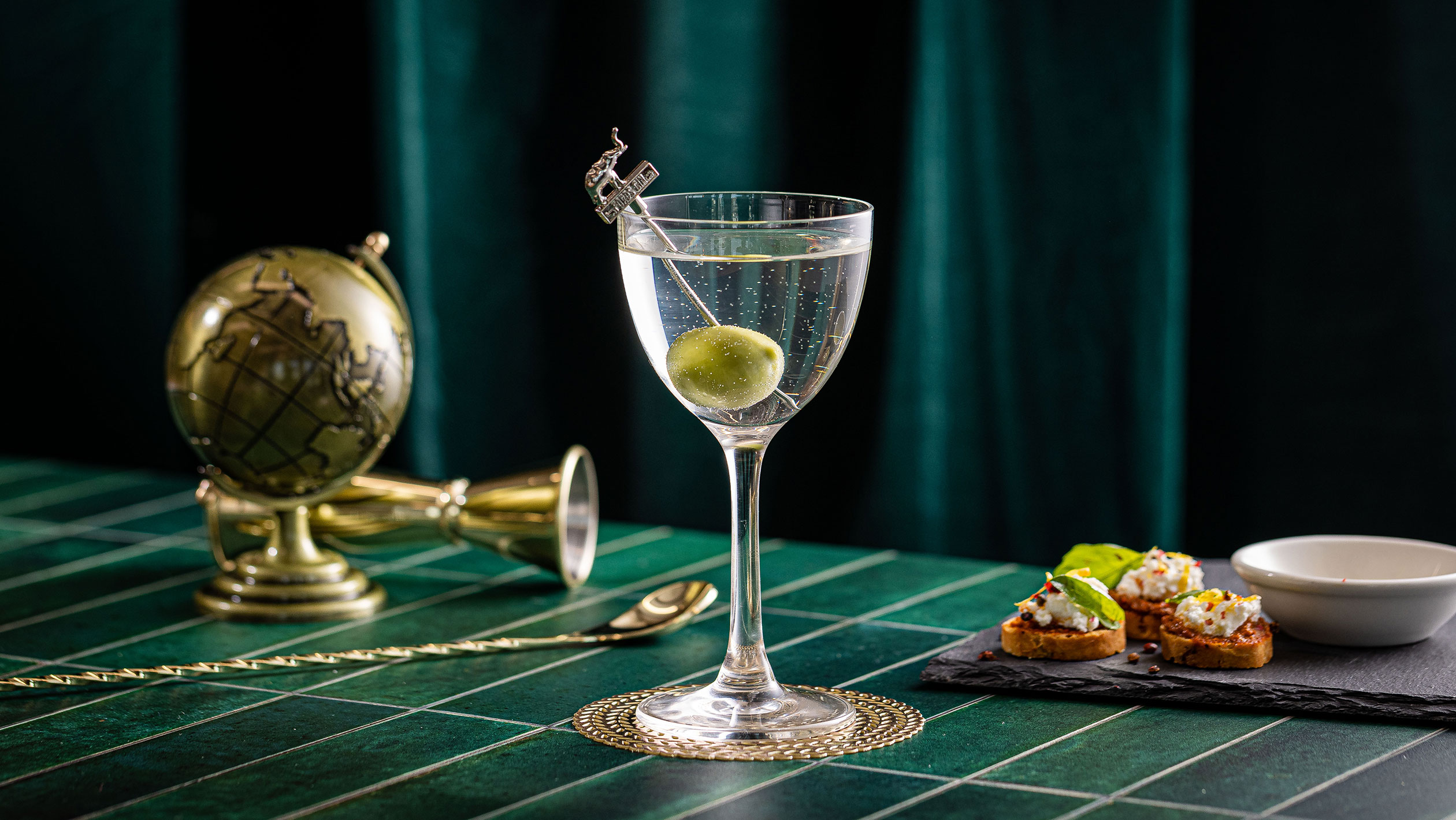
Walk into any craft cocktail bar today and you’re likely to see a young person drinking a Martini. This shouldn’t be remarkable, except that it is. Thanks to its straight-up booziness, for years the Martini remained an acquired taste. When made with gin, there’s the added complexity of the botanical, juniper-laden spirit to contend with—and, as Simon Ford, the founder of Fords Gin, argues, “gin is taking the Martini back from vodka, as its rightful owner.”
The Martini is even knocking the Margarita off its long-held top spot in some bars. “In maybe every menu I’ve been a part of at Grand Army, our number-one selling drink is almost always the spicy Margarita riff,” says bar director Patty Dennison, who has been with the Brooklyn bar since 2021. “On our current menu, it’s the [gin] Martini variation.”
But it isn’t just the Martini that’s on the upswing; more bar goers are finding their way to gin in general. “We’re seeing traditionally gin-based cocktails becoming more popular, and people being more open to try them,” says Dennison. “They’re like, ‘I actually do like this thing I thought I hated for so long.’”
Don’t miss the latest drinks industry news and insights. Sign up for our award-winning newsletters and get insider intel, resources, and trends delivered to your inbox every week.
In the past 20 years, there have been periodic headlines about a potential gin boom in the U.S., but since the initial craft cocktail renaissance of the early 2000s, which put gin drinks back on the menu, there has been little movement in the market. In 2024, 8.3 million cases of gin were sold, according to the Distilled Spirits Council of the United States (DISCUS), down from 10 million in 2014 and 10.9 million in 2004.
However, these figures don’t tell the full story. Ask anyone working in the category and they’ll say that something palpable is happening. In October, Ford attended Ginworld in St. Louis, Missouri, the largest nationwide gin festival in the U.S., and he says it reminded him “of being in England before the gin boom, the conversations that were happening, the buzz.”
There are several key factors that make this an interesting inflection point for a category that was never embraced by the American public like it was in Europe or the U.K. As gin effectively rides the coattails of the Martini trend, it’s finding new fans among Gen Z and building on-premise momentum. With the right tactics, this could translate into growth in the off-premise market, too, where super-premium brands are already gaining traction. To build a clearer picture, SevenFifty Daily spoke to gin experts, producers, and strategists about what needs to happen for gin to break out of its holding pattern and grow its share of the U.S. spirits market.

The Data Tells a Mixed Story
According to DISCUS, there has been a 30 percent drop in gin volume sales from 2019 to 2024, and a 14 percent drop overall. In the super-premium category, however, there was a 187 percent increase. While this only represents eight percent of cases sold in 2024, it’s driving a lot of excitement and innovation.
In 2024, Spirit of Gallo entered the super-premium segment with Mexican brand Condesa, and Patrón founder John Paul DeJoria purchased Texas-based Waterloo Gin. This year, actor Emma Watson’s gin brand Renais plans to expand across the U.S. with help from InvestBev. Celebrity endorsements are still a strong sales factor—take the success of Ryan Reynolds’ Aviation American Gin, for example.
The super-premium bottles, however, are a distraction from the true workhorse of the category—premium gin—says Natasha Bahrami, the owner of The Gin Room in St. Louis, cofounder of Ginworld, and the first woman inducted into The Gin Guild. The top three imported gin brands above $25 by total volume in 2024 were Hendrick’s, Empress 1908, and The Botanist, all premium gins, with other premium brands demonstrating significant growth.
Super-premium gin brands arriving in the U.S., Bahrami argues, are disappointed that they’re not performing as well as the reporting suggests. “I’m trying to tell them the price point that they need to come in at is the $25 to $32 range,” says Bahrami. “Super premium is not sustainable on-premise because more and more these bars are looking at their bottom line.” It’s the slow and steady premium gin, she says, that “shows the strong sustainable growth.”
Keli Rivers, a spirits industry business strategist for Suntory Global Spirits and a gin specialist, agrees that the data doesn’t tell the full story. “These numbers do not reflect the human element … what happens in the bars and restaurants,” says Rivers. “It’s the human element, the unknown, and what isn’t predictable; that is what isn’t being tracked.” The data becomes a self-fulfilling prophecy, Rivers notes. Declining numbers mean marketers pull dollars from their gin brands and investors are cautious to take a risk. But, “cocktails will always be the way to introduce the public to flavors and trends, and gin will always lead that category,” she says. “It has the proof, flavor profile, and usually the price point, plus recognition, so education doesn’t have to be a big lift.”

A Bartender-First Approach
The picture in bars is that gin is doing just fine. According to IWSR, since 2021, the gin category has delivered a 3.8 percent compound annual growth rate (CAGR) in the on-premise, with premium gin growing even faster at a 7.3 percent CAGR. “That growth closely mirrors the resurgence of the Martini on cocktail menus, where bartenders are leaning into simplicity, precision, and quality over complexity,” says Ford. “Bars and restaurants are driving renewed interest, relevance, and premiumization for the category.”
Fords’ brand strategy centered around the bartender, from when they first developed their “jack of all trades” gin in 2013 in consultation with 150 bartenders, to last year opening a “bartenders’ bar” at the new Thames Distillery in London, their 10th-generation distilling partners. When it comes to trends, “it always starts with a bartender,” says Ford.
Rivers agrees this is the right approach. As a previous U.S. brand ambassador for Sipsmith, Rivers helped put gin back on the radar in the U.S. “You want to get bartenders on your side because they’re doing the work for you when you’re unable to,” says Rivers. “They’re your number one recommenders.”
When Bahrami opened The Gin Room in 2013, St. Louis was what she describes as a “beer, bourbon, and barbecue town,” where “no one drank gin.” Since then the city has become one of the largest growth markets for gin in the U.S., according to data shared by Bahrami, with the number of gin distillers ballooning from three to 21. This year, Ginworld expanded into secondary and tertiary markets, hosting events in 15 cities, including for the first time in Oklahoma City, Oklahoma; Pittsburgh, Pennsylvania; and Sioux Falls, South Dakota. This is part of an ambitious three-year plan to grow gin’s market share, which is currently 3.8 percent of value and volume sales according to NielsenIQ.
“If we do not widen the demographic base, the guests, the age groups, the enthusiasm for the category, then we’re not creating more drinkers of gin,” says Bahrami. “We’re just fighting over the same market share.” Bahrami’s strategy is backed by insights from IWSR, which reports that while premium-and-above gin is confronting challenges in a number of mature markets, targeted pockets of opportunity exist in areas like Texas, Illinois, New York, and Florida.
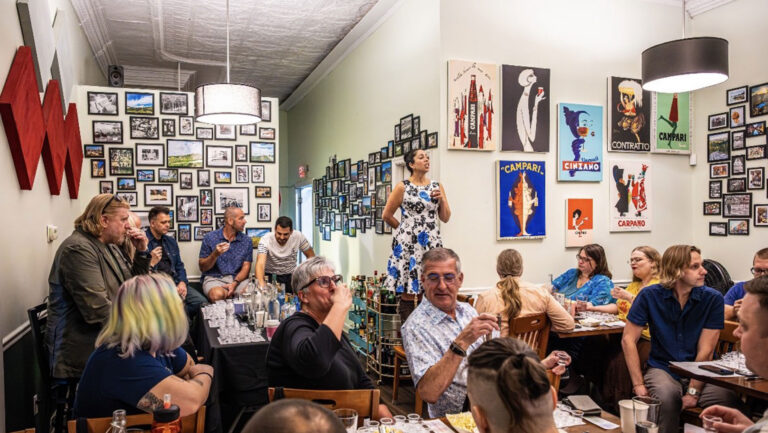
The key is to not just focus on one brand, but the whole category, to use its variety as a strength in growing its audience, Bahrami suggests. “We’re going in there with a spectrum of gins, blind tasting seminars, and letting people in the industry and enthusiasts taste through the flavor profiles. Maybe they’ve stuck their toe into the category, but they’re coming out enthusiastic about what is happening.” This mobilization of bartenders has contributed to the growing embrace of gin cocktails—but where to go from here?
Capitalizing on the Martini Moment
“That Martinis are so trendy right now is genuinely wild,” says Dennison. “Specifically over the summer, it’s really taken off.” From freezer-door Martinis to Mini-Tinis, tableside flourishes to radical riffs and garnishes, bartenders have been going full throttle creatively for the past few years, and their efforts are being rewarded by popular consumer uptake. The first Martini Expo launched in September from drinks writer Robert Simonson with a lineup of seminars, tastings, presentations, and dinners.
Part of the Martini’s appeal for Gen Z is its aesthetic, serving as a blank canvas for playful flourishes that resonate on social media. Of course, some of these Martinis are vodka, but 42 percent of gin drinkers are between 21 and 34 years old (compared to 34 percent for spirits drinkers generally), and Gen Z and late millennials lead the charge when it comes to cocktail consumption in the on-premise. According to NielsenIQ, 13 percent of Gen Z consumers typically order gin when out—a three percentage point increase from last year—compared to 10 percent on average.
“The culture of drinking Martinis has really crept into a younger audience and that, for me, might be one of the best signifiers that gin has a really strong potential future,” says Ford.
While there is no doubt that gin has benefitted from this trend, with the Martini and Negroni acting like a gateway to other gin cocktails, Bahrami suggests gin’s growth can’t be tied solely to the Martini’s fortunes. She hosts events such as Agave Loves Gin to bring more tequila drinkers into the fold and partners with tiki bars to explore gin’s potential in that context.
The Complicated Potential of the Off-Premise
In England, gin and tonic is an after-work drink, and the gin boom there was directly tied to a new generation embracing the classic drink, among other important factors, like changes in distillation laws. Here in the U.S., however, Fever-Tree saw sales rise by four percent in the first six months of 2026, which is expected to continue with Molson Coors acquiring an 8.5 percent stake and expanding the brand into its network of 400 regional distributors in June 2025. While Fever-Tree’s portfolio includes more than tonic, its performance can be seen as an indicator of growing interest in gin in the off-premise.
“The thing that is slowing us down is people don’t know how to use it at home,” says Ford, who launched a freezer-door Martini campaign in 2018 aimed at cocktail enthusiasts. “With the recent popularity of the Martini cocktail, we plan on rekindling the campaign and rolling it out to a wider consumer audience next year,” he says.
Rivers agrees the off-premise is hard to crack for gin brands because it’s a spirit designed for mixing, and most consumers are reluctant to make cocktails at home, even gin and tonics. “When you’re looking at the off-premise, make it so that the people who want to purchase your gin can replicate something easy at home and demystify it,” she says. “For a lot of people [making drinks at home] is still scary.”
Bahrami seconds that: “If only people understood how easy a freezer-door Martini is.”

Dispatch
Sign up for our award-winning newsletter
Don’t miss the latest drinks industry news and insights—delivered to your inbox every week.
Tyler Wetherall is a journalist and author, and the former senior editor for SevenFifty Daily. Her drinks journalism has appeared in Punch, The Guardian, Condé Nast Traveler, Thrillist, and The Spirits Business, which awarded her the Alan Lodge Young International Drinks Writer of the Year. Tyler is also the author of No Way Home: A Memoir of Life on the Run, and the novel Amphibian. Follow her on Instagram at @tylerwrites.