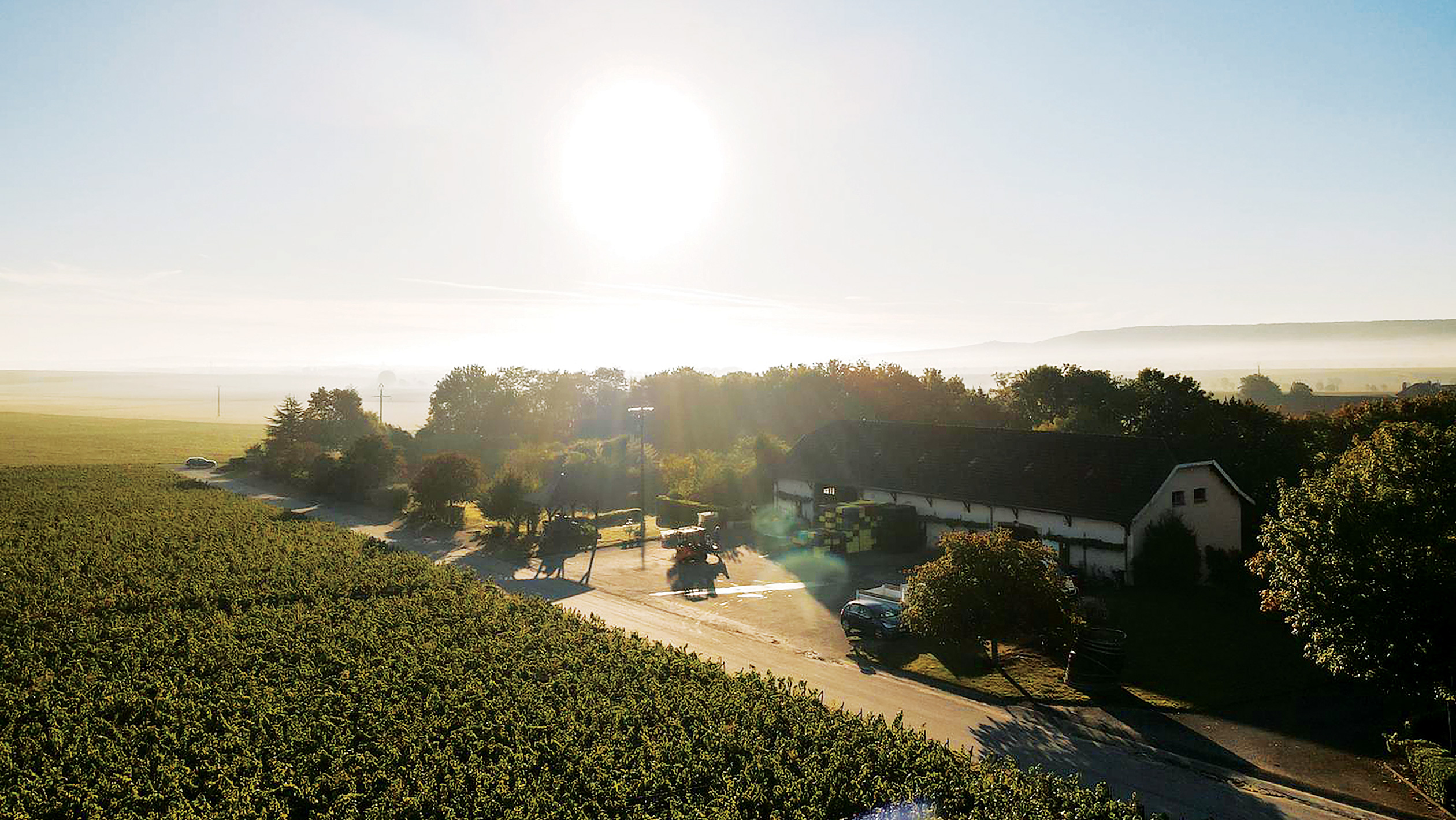
The wine market today is more crowded than ever. In some ways, that’s a good thing; buyers and consumers across the country have access to an incredible variety of wines from around the world. However, it’s also a challenge. What does it take to stand out from the pack as a producer—and as a buyer, has market saturation segued into decision fatigue?
Even when it might seem like every corner of the wine world has been uncovered and every new philosophy or innovation has been tested, some wineries and winemakers are still finding ways to surprise and delight industry professionals and consumers alike. And that alone proves that even in a difficult economic climate, new wine endeavors are still worthwhile—especially when they’re fueled by true passion.
To find out which wineries are capturing the attention of the industry, SevenFifty Daily asked professionals to name the projects that are on their radar this year. Some are taking a new approach to premium wine packaging; others are bringing fresh perspectives to traditional regions. All of them are wineries to watch in 2026.

Don’t miss the latest drinks industry news and insights. Sign up for our award-winning newsletters and get insider intel, resources, and trends delivered to your inbox every week.
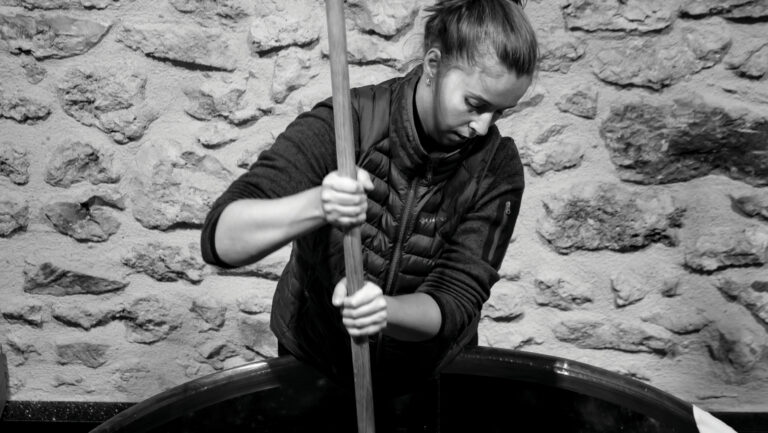
Domaine Les Monts Fournois (Champagne, France)
Celebrated Champagne brothers Raphaël and Vincent Bérêche have joined forces with their cousin Juliette Alips on Domaine Les Monts Fournois, a small estate in the cool Montagne de Reims. While their first estate vintage Champagne won’t be released until 2027, early Champagne—made from sourced wine—and Coteaux Champenois bottlings made from the Les Monts Fournois vineyard are already generating buzz.
Erin Healy, the chef sommelier at Restaurant Daniel, first met Alips at a Coteaux Campenois tasting in the region; it was her first public appearance with Domaine Les Monts Fournois. “She was so astute about analyzing these still wines in a way that was completely technical, but also deeply emotional,” says Healy. “Coteaux, unlike classic Champagne, is still in its infancy, so having such a thoughtful perspective was fascinating.”
Alips brings that same rigorous yet philosophical approach to Domaine Les Monts Fournois: single-plot farming, indigenous yeast fermentations, and minimal intervention. “The plot faces the press and the cellar; this proximity is unique and ideal for ensuring quality control,” says Alips. “As soon as they are picked, the grapes are pressed less than 50 meters from the vineyard. My philosophy is to guide the wine to ensure it fully expresses the characteristics of its terroir. Help the wine but not make the wine.”
The white and red Coteaux Champenois wines that are already available are tough to keep in stock, Healy says.
“We blow through them,” she notes. “I love that this project has a lineage in Champagne, but is its own thing because of Juliette’s vision, and the special terroir of the domaine. I think it represents the present and future of Champagne at its best.”
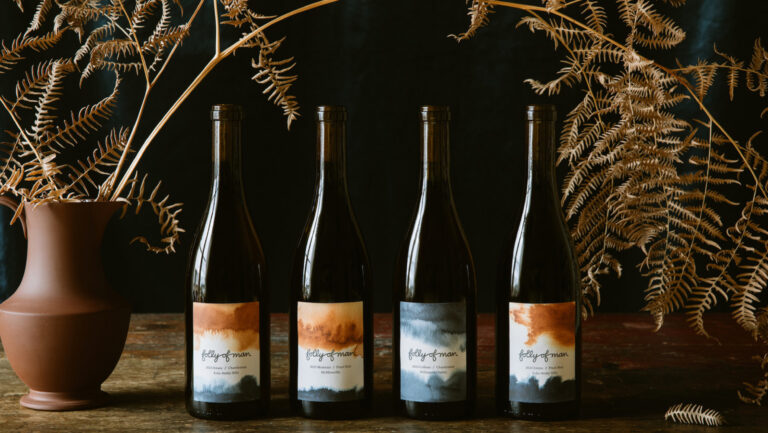
Folly of Man (Willamette Valley, Oregon)
Aaron and Tracy Kendall’s Folly of Man in Oregon’s Eola-Amity Hills is grounded in a simple philosophy: for a wine to be great, it must be rooted in living soil. Farming organically, biodynamically, and regeneratively, the Kendalls focus on restoring vineyard ecosystems first, working in the cellar second. Originally founded in 2023 as a passion project, Folly of Man soon grew well beyond the bounds of their original vision, and has attracted intense loyalty from buyers.
“Bringing a new wine onto our list is a big deal because we only have a spot for about 100,” says Brenna O’Malley, the beverage manager at Grounded Table in McMinnville, Oregon. “But everything they do aligns with what we do. They use ethical, progressive farming practices to make the soil and the farm better than it was before they came.”
The Kendalls devote most of their time to building up the health of their 48-acre estate’s soil, making the work in the cellar more of an act of herding than control. Folly of Man’s low-intervention love letter to the land delivers a harmonious blend of idealism and excellence through Chardonnay and Pinot Noir.
“It’s the best-case scenario where people are actively trying to make the world a better place, and in the process produce a completely transcendent wine that speaks transparently of time and place,” O’Malley explains. “Their Estate Pinot is lighter bodied, with so much energy and tension. I selected their Momtazi Pinot for our list because it’s just a touch darker and broodier, and pairs beautifully with our grass fed and finished steak.”
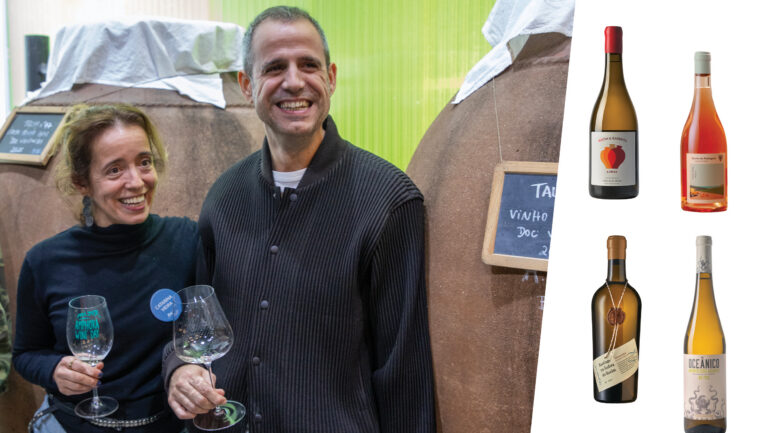
Herdade do Rocim (Alentejo, Portugal)
Pedro Ribeiro, a co-owner and the winemaker at Herdade do Rocim in Portugal’s Alentejo region, never stops exploring the world of Portuguese wine. In addition to his primary work at Rocim, Ribeiro currently has seven collaborations across his home country in the works.
In his ceaseless quest for a deeper understanding of Portugal’s viticultural potential, he rejects the popular notion that terroir eclipses the vintner. “There are two pillars of winemaking for me,” says Ribeiro. “Terroir is one pillar. I try to pick sites that will produce freshness and elegance, and I work to express that terroir. But my wines are authorial. They have a lot of me in them, and they reflect the experiments I do.”
Ribeiro is widely credited with reviving amphora winemaking in Alentejo, and he’s reframed “peasant wine” as collectible fine wine. Herdade do Rocim’s Jupiter Code 01 2015, aged in amphora and released in 2021, became Portugal’s most expensive unfortified wine at €1,000 a bottle and sold out in weeks.
“When I first met Pedro, I had not paid much heed to amphora wine,” says David Shiverick, the founder of the bicoastal boutique import company Shiverick Imports. “I thought of it as a Georgian wine, but he saw it as much more. He has a singular intelligence about sourcing top quality grapes and making brilliant wine and marketing it to the world.”
Ribeiro is currently training his eyes on the rest of Portugal, and he’s teaming up with other producers to do so. His current collaborations include A Meias – Rocim & Barbeito in Madeira, Oceânico in Azores, Dr. Bruno in Bairrada, Quinta da Pedragosa in Algarve, Ribeiro & Moser in Lisbon, and Santiago na Ânfora do Rocim in Vinho Verde.
“I’m still learning from regions across Portugal,” he says. “I love collaborations, because I’m exposed to new terroirs, and their interpretations of those terroirs. By learning from new regions and different winemakers, I bring back new energy and creativity to my own projects.”
Raúl Moreno (Jerez, Spain)
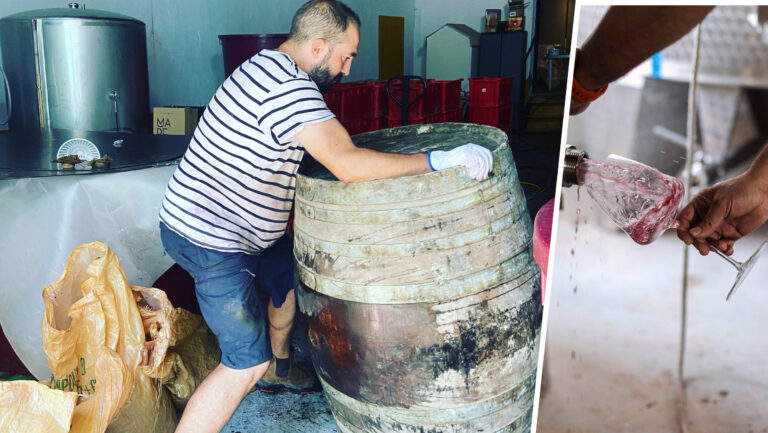
After years working on cutting-edge wine projects around the world, Seville-born Raúl Moreno returned to Spain with a global perspective and a deep commitment to indigenous Andalusian grapes—and he’s determined to make the world fall for these underloved varieties.
Buyers like Txus Fernández, the founder and director at Spain’s online wine emporium 2Hectareas Vinos Natureles, have followed Moreno’s projects with excitement, especially after the launch of Vinos Oceánicos in 2017. “We’ve always been amazed by his unique way of seeing the world,” says Fernández. “After traveling the world under the guise of wine, he’s able to bring the freedom of the New World to old Europe. ”
Through Jerez-based projects like Vinos Oceánicos and his eponymous line, which launched during COVID, Moreno says he works with historic varieties—Palomino, Listán, Moscatel, and more—often using clay, chestnut, flor yeasts, and minimal sulfur to show a modern way of celebrating ancient grapes and techniques.
“For us, Raúl embodies continuous change, endless improvement, and constant self-criticism,” Fernández says. “We are huge fans of La Retahila, their 100 percent Perruno wine, and how they manage to macerate while remaining true to the terroir. Their Chardonnay, El Día, continues to advance by leaps and bounds, increasingly resembling the great Burgundies.”
His eponymous line is still small, but growing in volume (it’s currently at about 25,000 bottles annually) and scope. This year, Moreno says wine lovers should look for his “answer to Barolo Chinato—Raúl Moreno Natura Medica, a Spanish amaro based on Palomino and Tintilla de Rota.”
Sorèlune (Carneros, California)
Up to half of a wine’s emissions come from glass bottles. But few premium vintners dare to produce a wine without presenting it in this most classic and historic of packages.
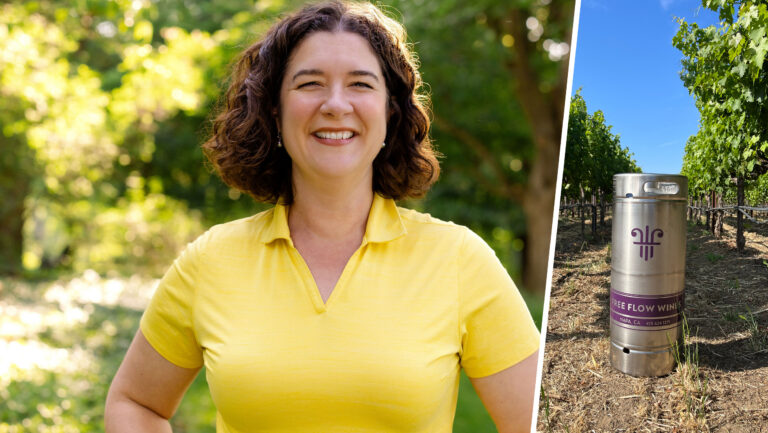
Sorèlune, created by noted vintner Nova Cadamatre, MW, tackles wine’s carbon footprint where it stacks up most. And she doesn’t abandon her devotion to single-vineyard, pristinely sourced, terroir-driven farming or viticulture in the process. Sorèlune’s organically farmed Carneros wines are exclusively sold in reusable kegs.
“Each keg eliminates 26 bottles worth of glass, corks, and labels, reducing waste and the carbon footprint, while ensuring consistent, oxidation free pours from first glass to last,” Cadamatre says. “Sorèlune offers the elegance and pedigree of a single-vineyard Napa Valley wine, but in a format that manages costs and delivers freshness.”
Tim Seberson, a managing partner at Kitchen Door in Napa, says he was immediately drawn to the project. “Nova has a stellar background from making wine at top wineries in Napa Valley and Sonoma and a MW behind her name, so we knew that the wine quality was going to be exceptional,” says Seberson. “Coming to us with a great Carneros Chardonnay in kegs shows she understands the changes in the market.”
The Set (Sta. Rita Hills, California)
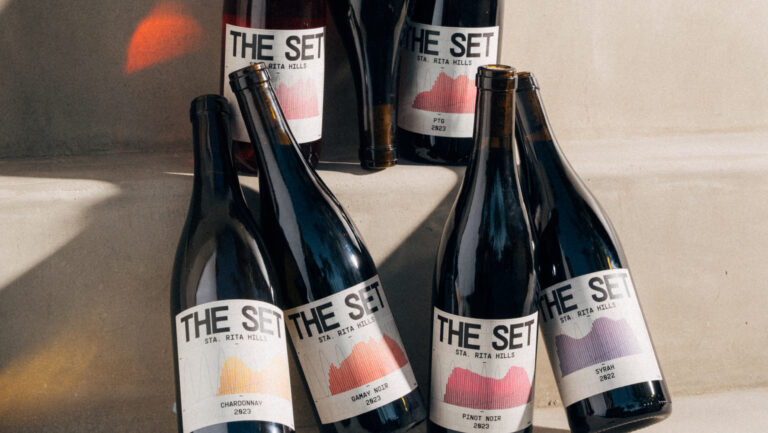
For centuries, wine’s success was built on a foundation of mystique. But many modern wine drinkers are looking for less mystery, more contemporary, relatable cool. Made in Santa Barbara’s Sta. Rita Hills, The Set produces organically farmed Pinot Noir, Chardonnay, Syrah, Gamay, and Viognier rooted in Burgundian technique but wrapped in modern, art-forward branding. Consulting winemaker Sashi Moorman guided the viticultural vision, with cofounders and brothers Christopher and Billy Hines establishing the branding, tone, and trajectory of The Set.
“I wanted to build solid foundations in a generally tumultuous time in wine,” says Christopher Hines. “We focus on the vineyards and the soil and transparent work in the cellar. But at the core of The Set’s identity is a desire to simply have fun with wine. We’ve dressed the wines up in a brand that draws inspiration from other art forms, in the hope that using these different vernaculars can help bring people not necessarily educated in wine into the world of wine.”
The Set’s ability to strip wine of its intimidation factor, without sacrificing depth, has allowed them to ramp up production from 500 to 2,500 cases in three years, and draw advocates like Flo Clemons Conte, the co-owner of Flo’s Wine Bar & Bottle Shop in Austin, Texas.
“The Set speaks to people who are seeking low-intervention, fun wines,” Conte says. “But they are also made from classic varieties with freshness and balance, which appeals to all wine drinkers.”

Dispatch
Sign up for our award-winning newsletter
Don’t miss the latest drinks industry news and insights—delivered to your inbox every week.
Kathleen Willcox is a journalist who writes about food, wine, beer, and popular culture; her work has appeared in VinePair, Edible Capital District, Bust magazine, and Gastronomica, and on United Stations Radio Networks, among other venues. She recently coauthored, with Tessa Edick, “Hudson Valley Wine: A History of Taste & Terroir.” She lives in Saratoga Springs, New York.