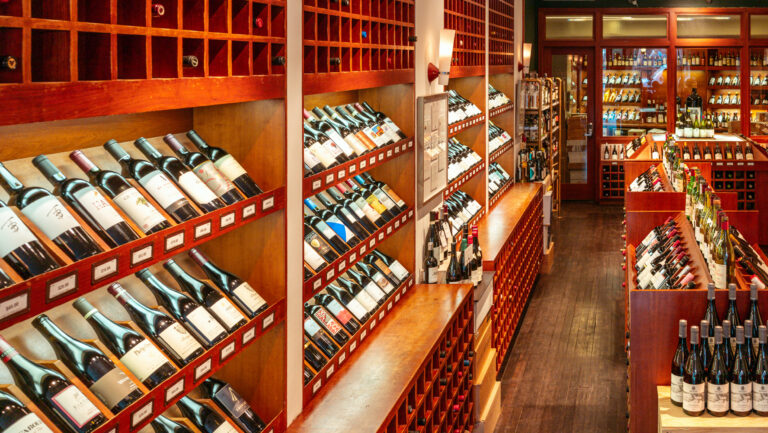

For many U.S. wineries, on-site visitor spend is an essential part of their business model. According to Silicon Valley Bank’s “2026 State of the U.S. Wine Industry” report, tasting rooms and wine clubs account for 53 percent of the average winery’s sales.
That direct-to-consumer revenue has become more important as wine sales slipped two percent by volume in 2025 amid excess supply and changing consumer taste preferences. These days, many wineries are hoping to better leverage consumer interest in hospitality-focused experiences and are looking for new ways to get customers to spend time and money on their properties through events, food service, and tasting opportunities.
But tapping into that revenue stream is not as easy as simply hosting events or inviting customers to visit a winery. In most cases, what wineries can and cannot do on-site is determined by a complex mix of local laws, and any violation of those laws can have serious consequences, as recent legal cases have illustrated. In a tough market where every dollar counts, wineries are increasingly butting heads with local laws—and the results of those conflicts can make or break a wine business.

Don’t miss the latest drinks industry news and insights. Sign up for our award-winning newsletters and get insider intel, resources, and trends delivered to your inbox every week.
Why Winery Permits Are So Complicated
When wineries welcome people onto their properties, they are responsible for ensuring they have the required local land use approvals, which are often different from those needed to produce wine. A use permit may set limits on visitor counts, tasting and tour permissions, event frequency, parking, and other authorizations to operate as a visitor destination.
There isn’t a cookie-cutter way to know what permitting every locality will demand. “Each jurisdiction may be different in terms of the key issues they evaluate for a project, though, in general, traffic and circulation, potential for noise generation, and questions of land use compatibility weigh heavily in the decision-making process,” says Brian Millar, the president of Land Logistics, a California land-use and permitting consultancy.
Rob McMillan, the EVP and founder of Silicon Valley Bank’s Wine Division, says dealing with permits isn’t a new issue, even though wineries may be looking for new ways to use their properties. “There have been decades of financial risk for people seeking vineyard, winery, and visitation permits,” he says. McMillan identifies Napa, Sonoma, Santa Barbara, Temecula, and El Dorado among California counties with especially restrictive rules.
Permits come with costs that vary by location and business needs, but the layered process can cost far more than application fees. In the North Coast and Santa Barbara, McMillan says, certain land use permits have triggered review by the California Environmental Quality Act, which requires local agencies to review a project’s environmental impact before approving it. He says delays that stall or call for modifications can add up to “hundreds of thousands of dollars into the millions” when review findings alter the project plan or budget.
The High Stakes of Local Zoning Disputes
Recent legal cases illustrate what’s at stake for wineries that clash with local laws. Napa County has a dispute with Hoopes Vineyard that centers on the winery’s operation under a historic Small Winery Permit Exemption, a legacy land-use entitlement that allowed certain small wineries to operate without a standard winery use permit. The county says the exemption does not allow tastings, while the producer argues those activities were long recognized at Hoopes Vineyard, which is located in Yountville. “The county does not dispute that we are permitted to have an unlimited number of people travel to our property,” says second-generation proprietor Lindsay Hoopes. “Its position is simply that those people cannot drink wine once they arrive. They can purchase the wine; they just cannot taste it.”
After a trial-court ruling favoring the county, determining that the winery was conducting unpermitted activities resulting in a public nuisance, Hoopes was ordered to pay nearly $4 million in civil penalties and compensation for Napa County. She has challenged the ruling and the appeal is still pending a decision. “That should concern everyone, regardless of whether they operate a winery, restaurant, farm, or any other permitted business,” Hoopes says. “Everyone should have an interest in ensuring that businesses are given the tools they need to remain economically viable and that similarly situated businesses are treated alike.”
Hoopes, along with California wineries Smith-Madrone and Summit Lake Vineyards, is also pursuing a separate federal lawsuit challenging Napa County’s regulation. After the lawsuit was dismissed by a district court, in April 2026, the U.S. Court of Appeals for the Ninth Circuit allowed several of the claims by Smith-Madrone and Summit Lake to proceed, while parts of Hoopes’s claims also remain before the federal courts. Hoopes says she believes wineries should not assume that a local regulation is constitutional simply because it has been enacted. “If it doesn’t pass the smell test, or feels like regulation for the sake of regulation, but without clear benefit to the industry it alleges to regulate, it’s probably unconstitutional and should be challenged,” Hoopes says.
In a separate dispute, Old Mission Peninsula wineries in Michigan pushed back on local township zoning, originally pegged to rural preservation, that limited their ability to host events on property. In the modern shift where wine production increasingly meets hospitality, the wineries contend that “times change, customers change, the wine industry has changed, and wine businesses need to adapt after 50 years.”
On July 7, 2025, U.S. District Judge Paul Maloney ruled in favor of the wineries, awarding them nearly $50 million in damages for profits lost due to the restrictions. “The Old Mission Peninsula finding resulted in a federal court ruling that the local ordinances were unconstitutional,” says Michael Kaiser, the executive director of national trade association WineAmerica. Peninsula Township has appealed the ruling.
How Wineries Are Adapting to Local Laws
The Hoopes dispute is part of a broader policy debate in Napa County. In an April 2026 joint proposal to Napa County supervisors, the Napa County Farm Bureau, Napa Valley Vintners, Napa Valley Grapegrowers, and Winegrowers of Napa County called for local regulatory changes, including allowing tasting rooms to welcome walk-in guests without increasing approved visitation limits. The proposal illustrates that wineries want the flexibility to respond to what their customers want, while the local rules may be focused on managing traffic, noise, and other environmental concerns related to visitor activity.
Wineries have dealt with permitting constraints in many different ways. Southold Farm & Cellar, for example, ran into permitting issues in its original location on Long Island, New York. Its application to build a small winery was rejected by local zoning authorities. Instead of engaging in a legal battle or giving up on their business plan, the owners left New York and started over in Texas.
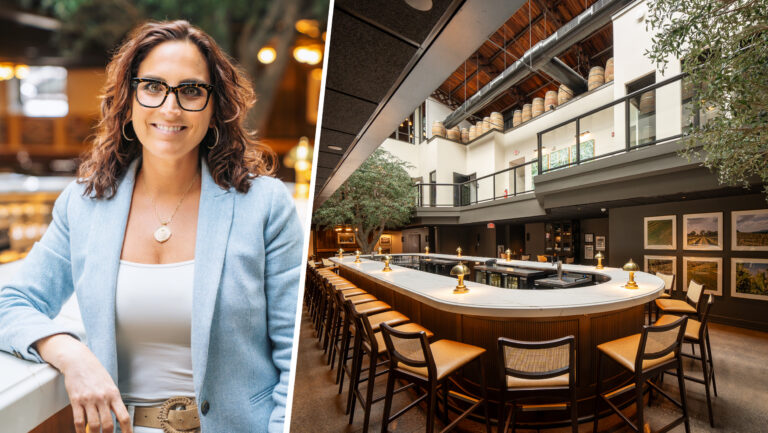
Turks Head Wines found yet another solution: separating hospitality from production altogether. Turks Head Wines sources fruit, produces wine, and bottles it in California, but its tasting room, wine lounge, private-event spaces, and recently expanded full-service restaurant are in West Chester, Pennsylvania. Founder Allison Owen says the approach allows her to deliver hospitality separate from the agricultural property on the West Coast where the wine is made.
Owen points out that many wineries in California must use their spaces to produce wine while also delivering visitor experiences. “But local laws govern what [winemaking facilities] can and can’t do—we’ve established a model that turns it upside down,” says Owen.
‘Essential for Small Winery Survival’
Millar says wineries planning development or expanded visitor use should ensure they submit “a complete entitlement application with a detailed project description to capture all aspects of winery operations.” He recommends that they contact their local jurisdiction early in the process. That can give them “an informal and preliminary read from the local agency staff on any key issues,” he adds, and “reduce potential for surprises later in the process.”
Hoopes says that a predictable regulatory system benefits both businesses and the county. “Businesses can invest, plan, and operate with confidence, while the county can enforce its rules without accusations of favoritism or arbitrary treatment,” she says. “Equal treatment should not depend on the identity of the business owner, the size of the business, or its financial resources.”
“We want to remove unnecessary barriers so wineries can connect directly with consumers and sell their wines,” says GinaLisa Tamayo, the board president of advocacy organization Family Winemakers of California. She believes a realistic solution would reduce red tape without weakening accountability.
Small wineries face rising costs, climate pressures, trade uncertainty, and overlapping regulations. According to Tamayo, a “tell us once” state-reporting system could reduce duplicate paperwork and give small producers more time to run and grow their businesses. “Direct-to-consumer access has become essential for small winery survival,” Tamayo says. “Policy needs to be clear, predictable, and workable.”

Dispatch
Sign up for our award-winning newsletter
Don’t miss the latest drinks industry news and insights—delivered to your inbox every week.
Jill Barth is a wine writer and journalist and a Fellowship award winner of the Symposium for Professional Wine Writers. Her work has been published by Forbes.com, USA Today, Wine Enthusiast, Decanter, France-Amérique, and others. She holds the Provence Master Level from the Wine Scholar Guild. Follow her on Twitter and Instagram: @jillbarth.