On June 11, the National Oceanic and Atmospheric Administration’s (NOAA) National Weather Service (NWS) issued an El Niño advisory, predicting the latest appearance of a recurring climate pattern that 17th-century Peruvian fishermen named “the little boy” after noting its impact on their catch around the Christmas holidays. The diminutive name belies its impact; the NWS says the El Niño-Southern Oscillation (ENSO), of which El Niño is a part, may be “the most influential climate driver on Earth.”
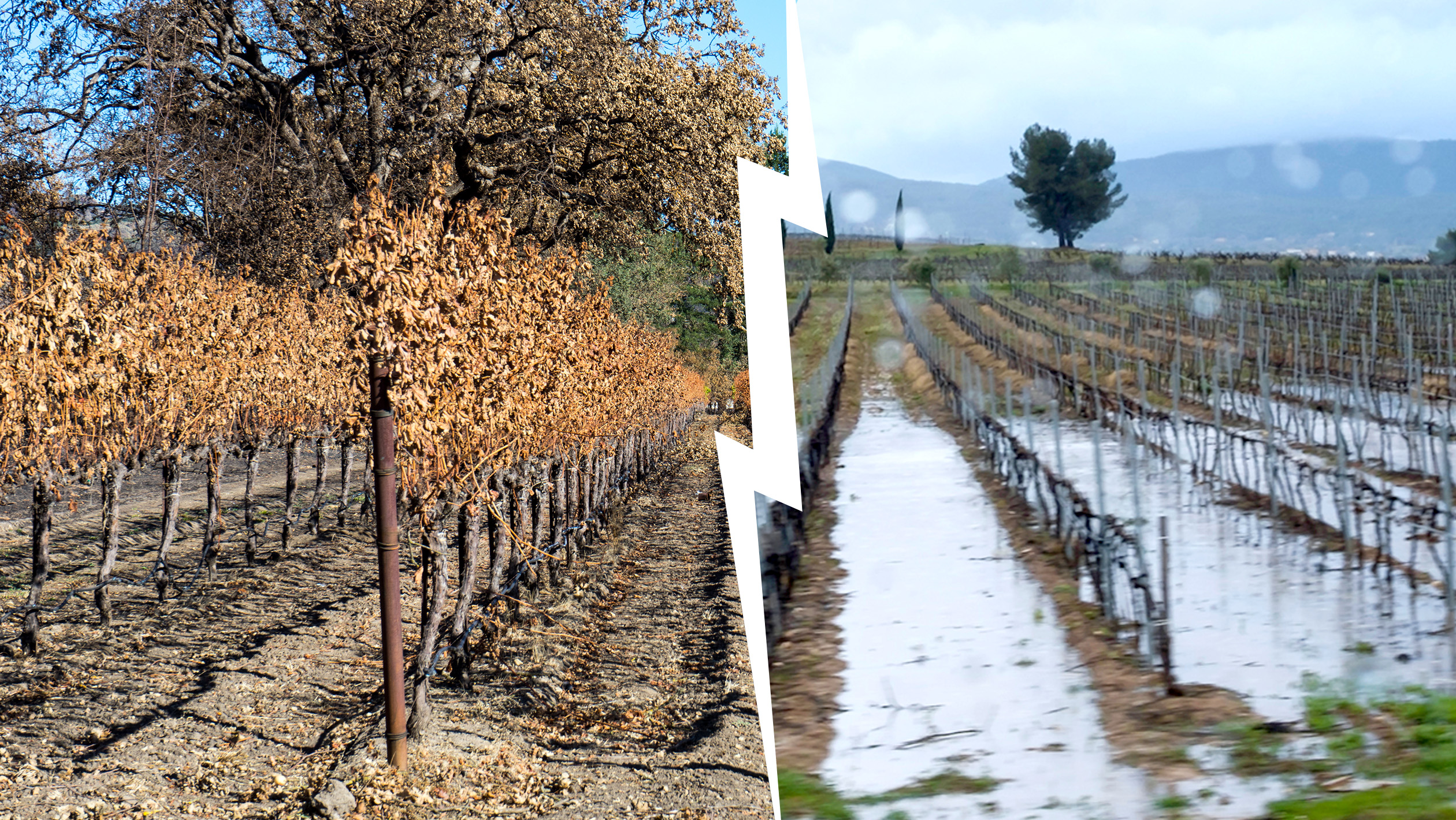
El Niño, which is the warm phase of the ENSO, originates in the central and eastern equatorial Pacific, but it can alter climate patterns across the globe. Its effects vary dramatically depending where you are. The eastern Pacific, for example, typically sees more rain and storms, whereas drought can become a problem in other areas, such as Australia.
The impact on winegrowing is just as variable. Growers may struggle with unusual amounts of rainfall or humidity, rainfall during unexpected parts of the growing season, or even a pronounced lack of water that could leave vineyards struggling. The potential impact is truly global; winegrowers as far away as South Africa are getting prepared after this year’s advisory.

Don’t miss the latest drinks industry news and insights. Sign up for our award-winning newsletters and get insider intel, resources, and trends delivered to your inbox every week.
To better understand El Niño and its impacts on winegrowing this year and beyond, SevenFifty Daily spoke with researchers and winemakers around the world who have experienced El Niño cycles and its effects.
What’s Happening in the Pacific Ocean?
When El Niño is absent, subtropical high-pressure systems create trade winds that push tropical surface water west; that water is replaced by colder water from below, a process that keeps the surface waters cool, called upwelling. But every two to seven years, those winds slow down or reverse, and sea levels and temperatures can rise for around nine to 12 months. The NWS declares an El Niño when surface temperatures in the equatorial Pacific rise by half a degree Celsius over the long-term average.
According to NOAA, there is now an 83 percent chance that Pacific surface temperatures for the last quarter of 2026 will be as much as 2.5 degrees higher than average, meaning it could be the strongest El Niño since 1950. This year, sea surface temperatures are already 2.3 degrees Celsius above average. Once sea surface temperatures rise by two degrees, it’s referred to as a super El Niño.
With more heat in the eastern Pacific, weather patterns change and, in many places, humidity, rain, and hurricanes become more likely. In North America, El Niño’s impacts are mostly felt during winter, but this year’s super El Niño is off to an early start.
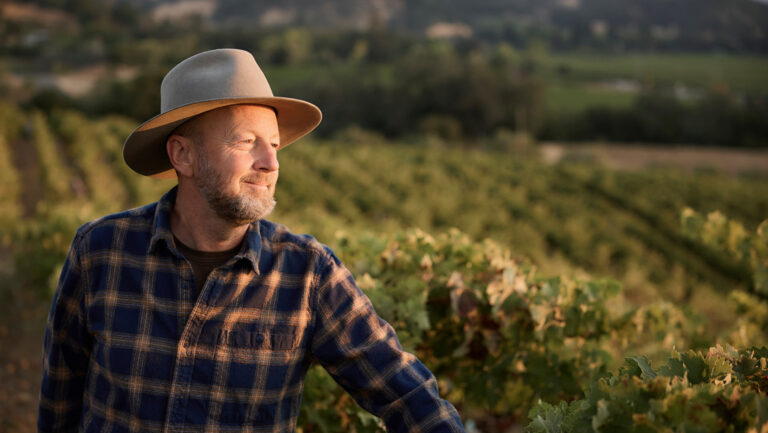
“This seems like a different type of El Niño than we have seen in the last 40-ish years,” says Marshall Miller, the COO of Thornhill Companies, which owns and operates many vineyards in Santa Barbara County, including the Bien Nacido Vineyard. “The ocean has warmed up much earlier than it has in earlier El Niño cycles. This has increased the humidity earlier into this year than would otherwise be expected.”
The Uneven Effects of El Niño Across the Globe
“You never know what’s going to happen within El Niño,” says Steve Matthiasson, the owner and winemaker for Matthiasson Wines in Napa Valley. “In southern California, they know they’re going to get more rain. Northern California can be dry in an El Niño year.”
The jet stream makes this decision. In a strong El Niño season it shifts south, driving the wet weather across the southern U.S. Typically wet Oregon and western Washington receive less rain than usual, and sometimes northern California shares in this pattern. Observers expect Napa to get its share of El Niňo-inspired rain this time around, and Matthiasson says they’re planning accordingly.
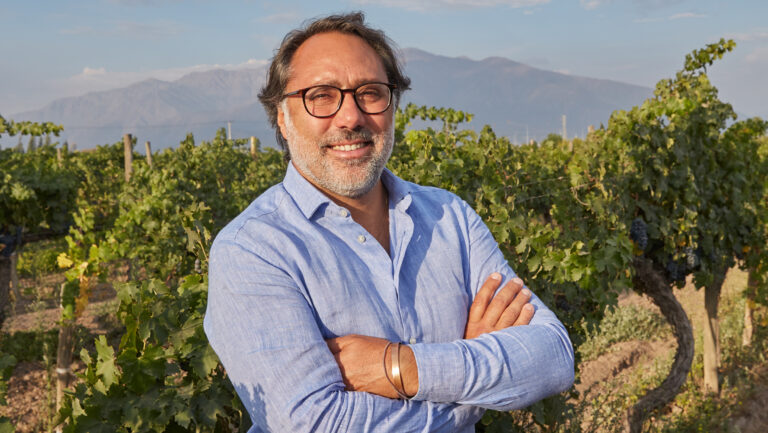
Chile is impacted as well, but the Southern Hemisphere is at a different part of the growing season when El Niño’s influence is strongest. “In El Niño years, we do receive more rain, which is a good thing for us in Chile, as it is in California,” says Concha y Toro chief winemaker Marcelo Papa. But more rain can be more challenging. “In my experience, the risk is that in some El Niño years it’s not until February, March, or April when we get rain, and then it is not good for the grapes.” He cites 2016 as an example, when harvest-time rainfall caused a lot of damage to the grapes.
Rain is not the only effect on the Chilean vintage. “Normally, in these kinds of years, during the season, we get more cloudiness, so less radiation during the season,” Papa says. The cloud cover can push back harvest by as much as two weeks.
El Niño also has an impact on the far side of the Pacific, but its effects can be harder to quantify because of the number of other variables. “The Indian Ocean Dipole to our northwest and the Southern Annular Mode (SAM) to our south both play significant roles,” says Australian consulting viticulturist Dylan Grigg, naming just two other prominent climate systems that impact Australian viticulture. “A positive SAM in spring and early summer can soften El Niño’s impacts in southern Australia.” While Australia’s Bureau of Meteorology predicts a dry, warmer end to 2026, Grigg says this winter’s “exceptional winter rains” will likely temper the effects of this year’s El Niño on the country’s vineyards.
El Niño’s impacts are not confined to the Pacific Rim and can ripple as far as South Africa. Shifting rainfall patterns that make for more rain in South America can mean heat and perhaps drought a continent away. “Typically the daytime temperature is a little bit higher,” says Gerard Martin, a research development and innovation executive at the industry association South African Wine. “Night temperatures are still cold, and there’s much less water.”
El Niño in the Vineyard
In Santa Barbara, Miller says this early start to the cycle may impact vine dormancy if winter conditions don’t get cold enough. But the main impact for Santa Barbara County will be rain. “If it increases the rain in a gentle way, say half an inch every day for 60 days, it could be tremendously positive,” says Miller. These sorts of winter rains help drive roots deeper, giving the vines more water access in a region that usually relies on irrigation during the growing season.
“The other scenario is that the water comes in short, concentrated thunderstorms,” Miller adds. “This leads to flooding, erosion, and, at the extreme, landslide concerns on hills.” In addition, short, intense rains tend to run off rather than being absorbed into the soil, so they don’t contribute to vine-accessible groundwater.
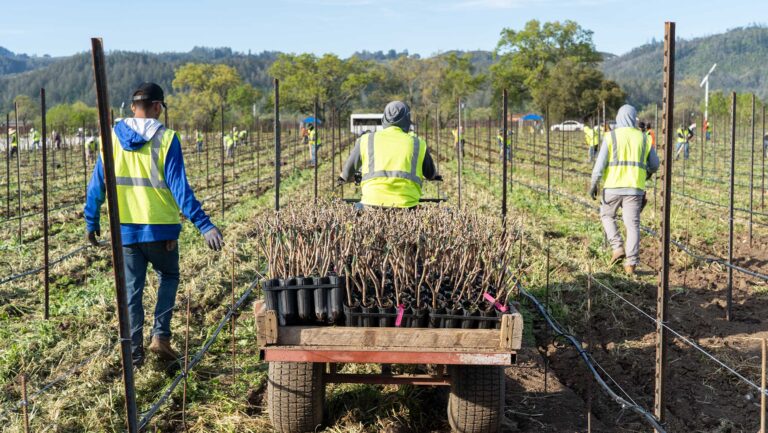
“It’s mainly a positive thing for us,” says Matthiasson, “because we can always use the water. But we have to prepare our vineyards for a lot of rain.” Matthiasson farms organically and regeneratively, so that means rushing to get compost spread and planting cover crops as soon as possible. “Cover crops help for lots of different things, but one of the things it does is help prevent erosion. We’ll also have to put up straw bales in spots to slow the water flow down, along with other kinds of erosion control measures, to prepare for a lot of rain because we want to keep all our soil in place.”
Papa sees a direct impact on the styles of wine made during an El Niño vintage. “The white wines are more fruity, crisp, with very nice acidity,” he says, owing to the cloud cover and lower amounts of sunlight. “With the reds, we have more of a challenge because less radiation means less sweet fruit, less power. We produce a more French or more European kind of wine, [instead of a] New World, fruit-forward wine.”
In South Africa, preparing for El Niño is just one piece of a long-term project, since the impacts are very similar to those of climate change. After the Western Cape suffered drought from 2015 to 2018, the University of Stellenbosch undertook research into trellising systems, deficit irrigation practices, and other techniques to manage these conditions. “We’ve seen instances in the Swartland where we’ve seen the same yields and quality with 50 percent less water,” says Martin. “So I think the industry is much more prepared for this.”

Dispatch
Sign up for our award-winning newsletter
Don’t miss the latest drinks industry news and insights—delivered to your inbox every week.
Jim Clarke writes about wine, beer, and spirits for trade and consumer publications, including Beverage Media, Fortune, and World of Fine Wine. He is a sommelier and the U.S. marketing manager for Wines of South Africa.