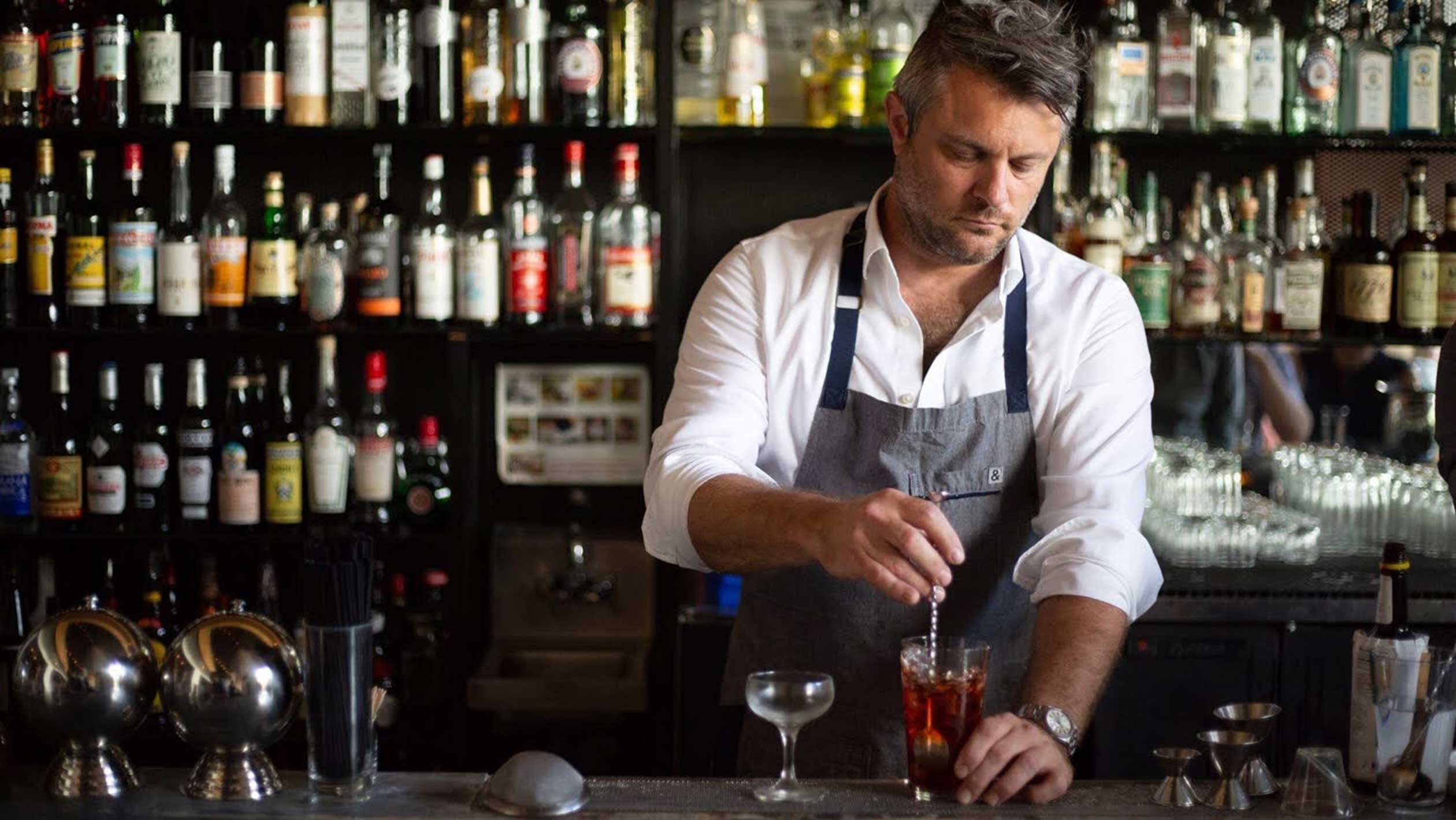
The rise of craft cocktails over the past few decades has helped establish bartending as a profession worthy of aspiration. “People used to fall into this industry,” says Lynnette Marrero, an award-winning bartender and cofounder of Speed Rack, “and there’s more intention now of really seeing this as a viable career.”
This shift coincided with a wealth of new resources. “Now more than ever, there’s so much information out there,” says Julie Reiner, the cofounder and co-owner of New York City’s Clover Club and Milady’s. Between manuals penned by industry leaders, YouTube videos, educational seminars, professional conferences, competitions, and mentorship programs, there’s no shortage of opportunities to learn, network, and demonstrate skill and drive.
“Watching the growth of the cocktail world over the past 25 to 30 years, it can be really tough to navigate for young bartenders now, because there’s so much to know,” Reiner says, and that’s beyond the requisite understanding of basic technique and classic cocktail formulas.
Don’t miss the latest drinks industry news and insights. Sign up for our award-winning newsletters and get insider intel, resources, and trends delivered to your inbox every week.
Whether you’re a barback hoping to move up, a restaurant bartender looking to sidestep to a craft cocktail concept, or a cocktail bartender in a smaller market eyeing a noteworthy bar in a big city, how do you actually progress? SevenFifty Daily spoke with over a dozen industry leaders for their insights into what it takes for an ambitious and aspirational bartender to move up in the world of craft cocktails right now.
Find Your Focus
It isn’t necessarily important to have a specialization, but it’s important to understand that cocktail bars offer a variety of drink styles and workplace cultures. “First and foremost, decide what kind of cocktail bar you want to work with,” says Reiner. “Who do you want your owners or management team to be? Understand that you’re interviewing the venue as much as the venue is interviewing you, and make sure that it’s the right fit.”

The approach to cocktails, however, contributes to a bar’s culture as much as its team and management style. Once upon a time, “it was just craft cocktails,” says Jeffrey Morgenthaler, the consulting partner of Pacific Standard and The Sunset Room in Portland, Oregon. “Now there are the tiki people, the hardcore classics people, the molecular mixology people. So by finding out what your specific interest is, you can try to connect with that facet of the community.”
Matty Clark, the general manager of New York City’s Attaboy and Good Guy’s, recommends getting out there in person. “Before you start looking for work, go to the bars you enjoy going to and see how they execute, and take notes,” he says. “Meet those bartenders. Be smart—have two drinks and don’t get drunk and out of line.” Being an exemplary patron can help you connect with the bar staff and positions you as a potentially positive addition to the team. “Come back every once in a while and ask about potential openings. That’s how I got all of my bartending gigs in the beginning.”
Build Your Résumé, Work Your Way Up, and Advocate for Yourself
A glowing résumé might help, but if you don’t have big names or competition wins, many top tier craft cocktail bars actually prioritize other attributes—for example, a variety of hospitality experiences or longevity with previous employers.
“We love to see potential hires have a range of professional hospitality experience, not just cocktail bars,” says Meghan Oleson, the administrative manager for Gin & Luck, Death & Co.’s parent operating company. “Hotels, full service restaurants, and [quick service restaurants]—working in a variety of environments builds up a dynamic set of service, beverage, and culinary skills over time.”
Longevity is also valuable. “It never looks good to be someplace for only six months,” says Reiner, no matter how prominent the bars on your résumé. “We all know those people in every single city,” Morgenthaler adds. “They get identified very quickly as job hoppers.”

According to Josh Harris, the founder of San Francisco’s Trick Dog, you can better stand out as a candidate by working to elevate your current bar. “Put your skills into action wherever you’re working now and build a reputation,” he says. “Create industry respect through your own ability to rise through the ranks and increase the stature of that place.”
Moving to an upper-echelon cocktail bar, however, might necessitate taking a support position to start; it’s rare for certain bars to hire people in at the bartender level at all. “We don’t hire bartenders,” says Harris, a sentiment echoed by several other interviewees. “Positions for bartending don’t open up because we are focusing on the development of our team. We’re looking for people in support positions that we believe are going to be poised to grow and develop, so when a position for bartending opens up, it is undoubtedly going to be filled with somebody on our team who has been working toward that,” he says, from hosts and servers to barbacks. “There’s no greater sign of humility than being willing to do that in the interest of pursuing a goal, and those people have proven to be outstanding teammates during the time they were with us.”
In a support position, however, continue to express your interest in moving up, especially if you excel in your current role. “You need to demonstrate that you know the program where you’re working,” says Clark, “and you need to advocate for yourself. You need to say all the time, ‘I want to be doing this.’ People will just leave you where you are if you’re excellent at what you do.”
Natasha Sofia, the global advocacy director for Mijenta Tequila, who worked her way up through cocktail bars in Puerto Rico and New York City, concurs: “If you want to be the head bartender, you have to ask,” she says. “You have to come up with a plan of what you bring to the table. Any time I’ve gotten a raise or promotion, I come in with a deck and I’m like, ‘Everybody sit down. I am about to show you why.’”
Become an Active Member of the Bartending Community
Participation in the craft cocktail community in any way possible can help open doors to jobs. “You have to put yourself out there,” says Marrero. “In larger markets that brands travel to, there are a lot of opportunities for education that are brand-supported. If you’re in a smaller market, how do you find those opportunities? Competitions [and other events] help you build a community, so when you decide to go somewhere else, you already have potential contacts and relationships.”
“The way I got to where I am was by just being seen,” says Glendon Hartley, the cofounder of Washington, D.C.’s Service Bar. “I was going to Bartenders’ Guild events. I made sure that people—the brand ambassadors, the tastemakers in the city—saw me, and saw that I was seeking education. Go to the events to network and educate yourself, not to party.”
“Being in competitions is a great way to showcase your style to people. [As a judge] I’ve hired people even when they lost a competition because I really liked the way that their drink was balanced.” — Glendon Hartley, Service Bar
Participation in competitions is less about winning, and more about this invaluable visibility and access to industry decision-makers. “Being in competitions is a great way to showcase your style to people,” says Hartley. “[As a judge] I’ve hired people even when they lost a competition because I really liked the way that their drink was balanced.”
Attendance at major industry events, such as Bar Convent Brooklyn, Portland Cocktail Week, and Bar 5-Day, can both signal seriousness of purpose and be a learning and networking opportunity. Tales of the Cocktail (TOTC) offers its annual Cocktail Apprentice Program (CAP)—a mentorship and networking opportunity where apprentices support conference sessions and events, which helps subsidize their attendance at the conference.
“The CAP program was one of the most pivotal things that I’ve done in my career,” says Sofia. “The people that I was admiring, that I was YouTube-ing to see their seminars, I was suddenly working with, and learning from them directly.” Fellow CAP mentees can also become resources in markets other than your own. “The people that I met were the ones that helped me get jobs,” she says. “They were the ones that became my community.”
Seek Active and Passive Mentorship
If it’s not logistically or financially possible to travel for bar education and networking opportunities, senior staff members and industry leaders can help elevate the careers of junior bartenders or barbacks through mentorship.
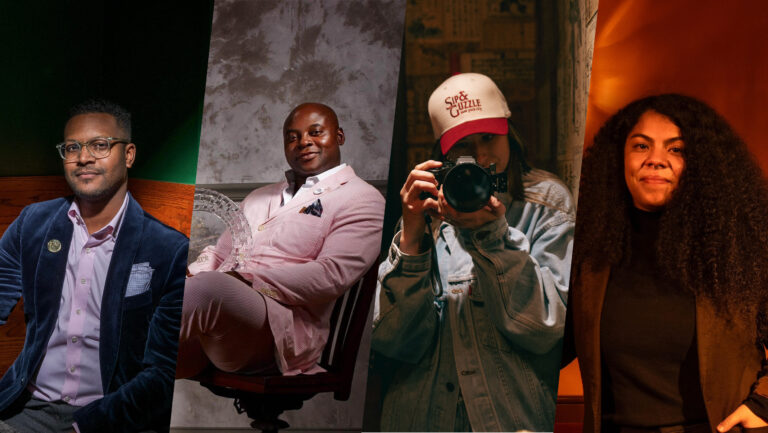
“Mentorship is foundational as a cornerstone of this industry,” says Colin Asare-Appiah, the trade director of culture and lifestyle for Bacardi and the Tales of the Cocktail 2025’s Best U.S. Bar Mentor. Asare-Appiah founded “Letters to a Young Bartender,” an annual panel at TOTC, inviting experienced bar pros to write letters to their younger selves to act as guideposts and inspiration for those just starting out. Peer mentorship is also available, as with Lucia Creed’s recently launched Raise The Bar Mentorship Alliance.
Marrero also believes in passive mentorship—taking cues and following the lead of someone’s career you admire without them necessarily taking an active role in mentoring you. “Julie Reiner didn’t directly mentor me, but within her system I saw how she ran her businesses, such as doing her own PR,” says Marrero. “That was a way of watching someone and learning from them in mentorship that’s not active, but you’re learning it by osmosis.”
Cultivate Your Social Media Profile Carefully
With the transition of millennial bartenders into leadership positions, your social media presence will likely be considered as part of your application, according to many interviewees in hiring roles.
If you’ve positioned yourself as a cocktail influencer, this might signal to a prospective employer that you have other priorities. “People with a very high social media following are going to want to do their own thing,” says Hartley, “not necessarily what is best for your program.”
However, for those with the right experience and approach, social media can also be a benefit or a service that you provide in addition to your bartending skill. Andrea Grujic was hired at New York City’s Sip & Guzzle as both a bartender and social media manager. With extensive experience in both categories, “I kind of became a package deal, and this duality of my identity is something that I used as my strength,” she says. For those who want to grow their social media platform, “maybe a bar that is trying to [de-emphasize social media] isn’t the right fit for you,” she says.
Practice Hospitality
Everyone interviewed asserted that while anyone can be taught to make cocktails, attitude, personality, and a hospitality-minded ethos are crucial—and harder to teach. “One of the hardest things for people to internalize is that the job isn’t about you,” says Clark, “it’s about the person sitting across from you. I’m looking for people who can show someone a good time, and especially turn someone’s bad time into a good time.”
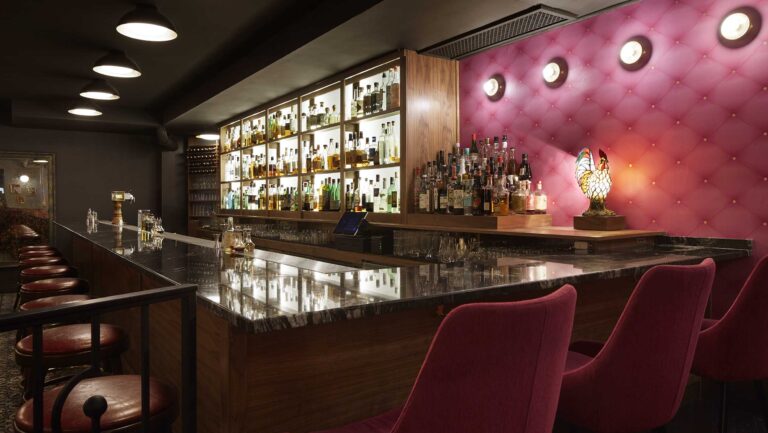
Innate hospitality skills may be measured in an interview, or observed in a trial setting by how you interact with guests or teammates, or even while you work at your current bar. Anyone in a hiring position is going to ask questions in an interview that suss out your commitment to both the guest experience and the team. “I can tell when someone’s just sort of reciting a script about hospitality,” says Morgenthaler, “and I can tell when they’re truly passionate about it.”
While bar managers may not be looking to teach hospitality, as a bartender in any environment, hospitality can be practiced. “Start tapping in to how you want to feel when you go out, and make sure you’re doing that in small ways behind the bar unprompted,” says Leishla Maldonado, the beverage director of Loma in Providence, Rhode Island, whether that’s making sure to greet every guest with a smile who approaches the bar, making people feel comfortable no matter their drink order, and not using service bar as an excuse to avoid having conversations with guests. “Bars and restaurants are communal and we need to build our programs to have that at the forefront,” she says. “These spaces aren’t just about getting intoxicated but how we connect with each other.”
Essential Reads for Bartenders, Curated by Industry Pros
- Cocktail Codex: Fundamentals, Formulas, Evolutions, Alex Day, David Kaplan, and Nick Fauchald
- The Craft of the Cocktail: Everything You Need to Know to be a Master Bartender, Dale DeGroff
- Liquid Intelligence: The Art and Science of the Perfect Cocktail, Dave Arnold
- Roundbuilding, Daniel Waddy and Kevin Armstrong
- The Joy of Mixology: The Consummate Guide to the Bartender’s Craft, Gary Regan
- Unreasonable Hospitality: The Remarkable Power of Giving People More Than They Expect, Will Guidera
- Setting the Table: The Transforming Power of Hospitality in Business, Danny Meyer
- The Flavor Bible, Andrew Dornenburg and Karen A. Page

Dispatch
Sign up for our award-winning newsletter
Don’t miss the latest drinks industry news and insights—delivered to your inbox every week.
Pamela Vachon is a freelance writer whose work on food, beverages, travel, and especially the intersection of those elements has appeared in Food & Wine, Wine Enthusiast, Travel & Leisure, VinePair, and Bon Appétit, among others. She was formerly a bartender and captain at New York’s The Modern, and teaches classes at Murray’s Cheese. She splits her time between London, New York, and Castlerea, Ireland, where she hopes one day to make cheese.