It seemed like a mystery for the great British detective Sherlock Holmes: how did a sparkling wine from rainy, cold England make such a splash in the United States, one of the most saturated wine markets in the world? Yet since the first shipment of Ridgeview arrived in the U.S. market in 2012, English sparkling wine has established itself as a serious player in the global sparkling wine market.
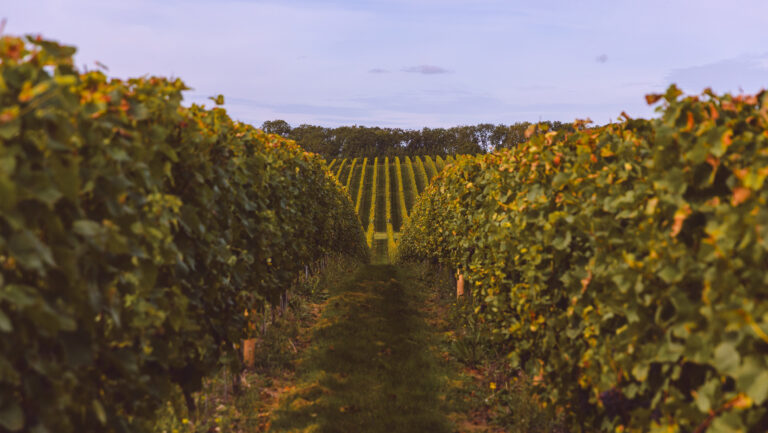
The industry is now at a pivotal moment. Producers have increased plantings, refined their winemaking, and attracted international investment from Champagne to California. According to Wines of Great Britain’s “2025 Industry Report,” plantings have increased by 510 percent between 2005 and 2024, with 4,841 hectares now under vine. But that growth has also created new challenges. As production ramps up, the industry is grappling with oversupply, unpredictable growing conditions, and how to better establish demand abroad.
After more than a decade of buzz, the question is no longer whether England can make world-class wines, but whether it can build a sustainable market for them. SevenFifty Daily looks at the evolution of this nascent sparkling wine industry, and where it currently stands in the U.S. market.
Don’t miss the latest drinks industry news and insights. Sign up for our award-winning newsletters and get insider intel, resources, and trends delivered to your inbox every week.
How English Sparkling Wine Has Evolved at Home
Although producers are loath to admit it, warming global temperatures are making English sparkling wine more viable and consistent in the very cool, often wet climate, which many say bears similarities to Champagne’s. But while Champagne has been struggling with warming temperatures, higher alcohol, and lower acid, England has more often benefited from these shifts.
In a study published in 2022, researchers looked at climate change’s impact on U.K. viticulture and found that the warmest regions could reach an average growing-season temperature of 17 degrees Celsius by 2040, compared with an average of 15.7 degrees Celsius from 1999 to 2018. The research also predicts that U.K. wine regions could experience conditions similar to the record-yielding 2018 vintage more than 50 percent of the time.
The climate is a major contributor to English sparkling wine’s standout feature: its hallmark high acidity. “The style reminds me of more classic Champagne, where the acid was just overall higher,” says Annie Shi, a restaurateur and the beverage director at the British pub-inspired Dean’s in New York City. “A lot of wine drinkers and wine lovers who are ‘acid heads’ miss that era of Champagne, where there was that backbone of acidity.”
As winemaking and grape growing have evolved in both England and Champagne, the comparison has become less relevant. “Champagne is Champagne, and English sparkling is a different product,” says Nick Bevan, the EVP of international business for Jackson Family Wines. “It has characteristics that are not dissimilar [to Champagne], but it also has a very unique character. You’re looking at a new category, and that’s the exciting part about it.”
With its fast-evolving viticultural landscape, England is drawing the attention of winemakers from around the world. Champagne Taittinger founded Domaine Evremond in Kent and released its first vintage in 2025. Jackson Family Wines, looking to expand its sparkling wine offerings in the U.S., first looked to Champagne, but ultimately decided the U.K. held longer-term potential. And it’s not just big companies coming in. Ana Sugrue, who co-owns Sugrue South Downs with her husband Dermot, notes an influx of Londoners buying land and planting vineyards, some for vanity, some for serious viticulture. “I like what’s happening here,” she says. “Young people are starting wineries.”
Greater viticultural viability has also led producers to experiment more with their winemaking. Ana Sugrue, who also teaches at England’s viticultural school, Plumpton College, says natural winemaking is catching on in the U.K. (Brít-Nat, anyone?). At Domaine of the Rose and Bear, winemaker Sarah Stott will use a portion of their Blanc de Blancs to start a solera system for future cuvées. Some producers, such as Silverhand Estate, are also experimenting with the Charmat method to make more affordable sparkling wines.
English Sparkling Wine in the U.S. Market
As the English wine industry grows, exports are becoming increasingly important. According to Wines of Great Britain, global exports increased 35 percent from 2023 to 2024. While export numbers for the U.S. market aren’t currently tracked, individual producers, such as Gusbourne, which has been exporting to the U.S. since 2016, count the U.S. as one of their leading markets.
“Ten years ago, we were really explaining that people were producing wines and growing grapes in the U.K.,” says Laura Rhys, MS, the head of wine, communication, education, and style at Gusbourne. “It was beyond people’s belief that it was happening.” Today, Rhys finds there’s more familiarity with the category as people see it on wine lists, hear about it from friends, or try it firsthand. She calls it a ripple effect, “and we definitely see the effect of that now,” she adds.
According to Cody Stephenson, the world portfolio manager for Skurnik Wines and Spirits, which brings Wiston Estate into the U.S., the rise of the English gastropub has created a natural entryway for English bubbly. “There’s a bunch of new restaurants here in New York that fashion themselves as British gastropubs,” he points out. In addition, restaurant groups that originated in England, such as Hawksmoor, Ambassador’s Clubhouse, and Dishoom, are now establishing U.S. locations, furthering the message of English food and wine.
Gusbourne, like many others, continues to target on-premise as the category works to strengthen its presence in the U.S. “This is a category that requires a hand-sell,” says Kate Hamrick Foskett, who founded the import company Bubbles of Britain three years ago. “My emphasis is ensuring the wine gets into the right hands, rather than maximizing volumes.”
While on-premise is creating inroads, there are multiple ways to amplify the category. When speaking to U.S. consumers, Stephenson likes to emphasize the fact that English sparkling wine can feel both novel and familiar. “The beauty of a lot of sparkling wine programs, both restaurants and retail, is that sparkling wine is often one section,” he says. “That offers us the unique opportunity not to be pigeonholed by a country, and have it really be about a style and price point.”
Challenges Ahead
But along with growth comes growing pains, both at home and abroad. “To be very honest, I think that the English wine industry is struggling at the moment for a few reasons,” says Ana Sugrue. “One is overproduction. There are more vineyards, and when you have a lot of vineyards, you have a lot of grapes, and that means that the price of the grapes goes down.”
Although 2024 was the lowest-yielding vintage since 2016, it was the fourth-largest harvest in the last 10 years because new plantings were starting to come online. Because this difficult year followed the huge 2023 vintage, wineries were already overstocked and “there was very little appetite for wineries to buy more, so prices reduced by about 50 percent,” says Dermot Sugrue. This continued into 2025 despite good growing conditions, he says, and grape prices “dropped to historic low levels” by the end of the year. Prices this year are mixed; more growers and buyers entered into contracts with fixed grape prices ahead of the harvest.
And while climate change has its benefits in a marginal climate like the U.K., it still comes with significant challenges. The swings in overall yield from one vintage to the next show just how much variation producers are dealing with. And while temperatures are trending in a positive direction, winemakers are still at the mercy of an unpredictable climate.
Another issue is that the English wine industry is built on a network of growers and producers, with most wineries buying fruit. There is a growing segment of small wineries, but wine sales are dominated by a small number of large producers. According to Wines of Great Britain, only 24 producers make up 88 percent of sales. That imbalance has Ana Sugrue concerned.
“Some of the big guys are struggling, and when the big guys are struggling, then the whole industry is struggling,” she says. “You can imagine if [the big guys go] bust, it will have a massive impact.”
Stateside, one of Hamrick Foskett’s biggest challenges is getting customers on board with a price akin to what she calls an affordable Champagne. “All of our wines tend to be at a premium price point, and that’s generally because they’re made in smaller quantities,” she says. “The majority of them have extensive aging on them and are vintage-only wines, and the cost behind producing those is expensive.”
Bevan believes that a recognizable name is a key part of English sparkling wine’s future success. While a few names have been tried—Brit Pop, Britagne—nothing has stuck. Bevan says that Champagne benefits from excellent branding; its short, snappy name has become shorthand for a premium product. If English sparkling wine is able to create its own memorable identity, it could help the category succeed.
As the category continues to come into its own, both with winemaking and a global presence, wine professionals are excited by the opportunities it brings. “The reason why we’ve been so invested in English wine is that I actually think it’s great value now for the guest,” says Shi, who sells Hambledon and Hattingley Valley Brut sparkling wines for $105, a reasonable price on a New York City wine list.
“With wine as expensive as it is, and feeling like everyone wants to drink the same 10 producers sometimes, I wanted to find something out there that is genuinely high quality, that is priced below maybe what it should be, that we can introduce to people, and can get them really excited,” she adds. For more and more U.S. trade pros, the answer to that problem is English sparkling wine.

Dispatch
Sign up for our award-winning newsletter
Don’t miss the latest drinks industry news and insights—delivered to your inbox every week.
Shana Clarke is a wine, sake, and travel writer, and the author of 150 Vineyards You Need To Visit Before You Die. Her work has appeared in Saveur, Fortune, NPR, Wine Enthusiast, and Hemispheres. She was shortlisted for the Louis Roederer 2020 International Wine Writers’ Awards and ranked one of the “Top 20 U.S. Wine Writers That Wineries Can Work With” by Beverage Trade Network in 2021. She holds a Level 3 Advanced Certificate from Wine & Spirit Education Trust and is a Certified Sake Sommelier. She will always say yes to a glass of Champagne. Learn more at www.shanaspeakswine.com and follow her @shanaspeakswine.