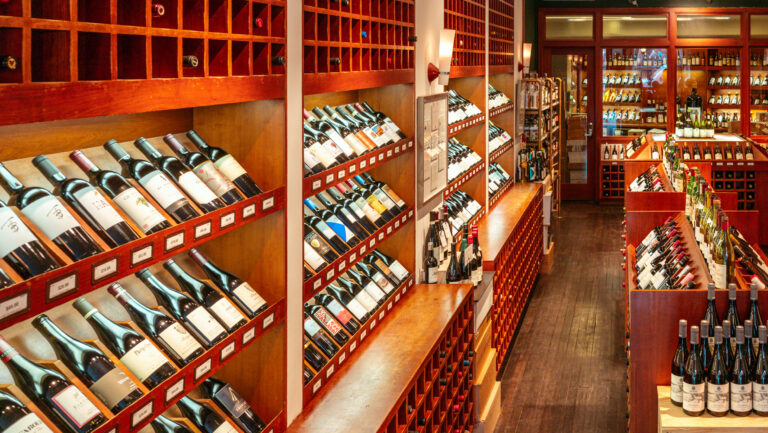
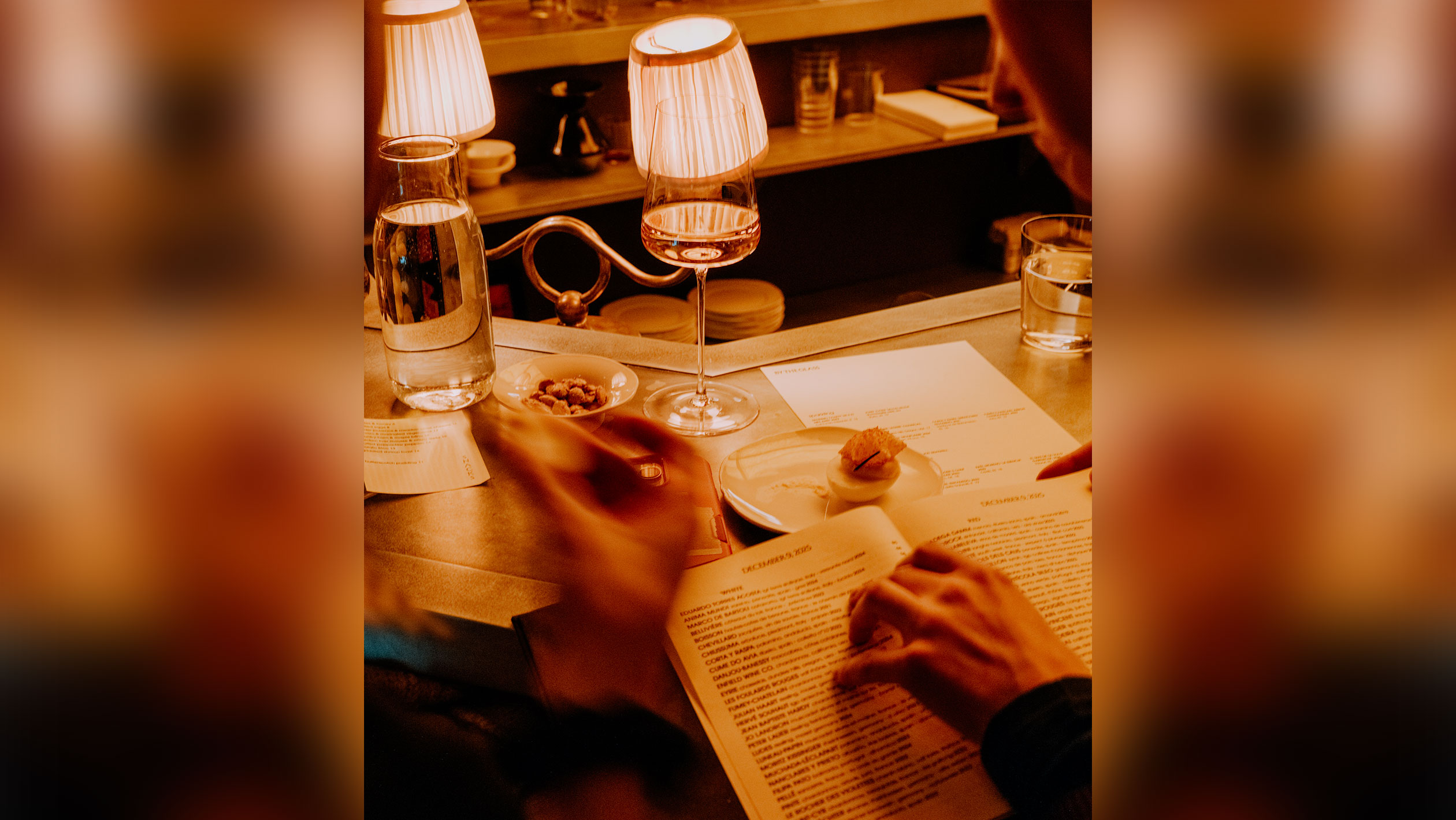
At Bibliotheque, a wine bar and bookstore in New York City, reading the wine list feels like a literary experience in itself. While perfectly matched to the setting, the experience is nonetheless surprising. The list’s table of contents might steer you toward a chapter on Short Stories (wines by the glass) or the Young Adult section (bottles under $80). It’s playful and even silly at times, but somehow it still makes sense. In short, it offers a completely new way of thinking about wine and how they can be categorized and sold.
Wine lists, like food menus, have always evolved with the way people dine, but the pace of change has accelerated in recent years. The pandemic completely upended on-premise dining, and economic pressures and shifting consumer preferences continued to reshape how restaurants buy, price, organize, and sell wine. As a result, wine lists look much different today than they did 10 years ago.
“My god, they have changed so much,” says Chase Sinzer, the owner of Stars, Claud, and Penny in New York City. “Lists are less dogmatic, less bound by ‘the same,’ and less controlled by what everyone’s buying.” And while many of these changes have emerged from difficult circumstances, the ways beverage professionals are reimagining and reengineering their programs to meet today’s demands offer an exciting glimpse at where wine lists are heading.
Don’t miss the latest drinks industry news and insights. Sign up for our award-winning newsletters and get insider intel, resources, and trends delivered to your inbox every week.
This direction of change, however, is far from universal. While many wine-focused restaurants are meeting today’s challenges with innovative solutions, others have responded by cutting costs, trimming back dedicated beverage staff, and relying more on simple, self-service lists with familiar classics. Where innovation succeeds, there’s often a common trait: a business model that was built around a love of wine and a mission to make it more accessible. When great wine is at the heart of a business, challenging times can inspire new ways to keep it approachable—and preserve the joy of discovering and sharing it.
After speaking with several wine-focused beverage directors across the U.S., it’s clear there’s an appetite for big ideas, experimentation, and lasting change around the definition of a great list. Over a series of articles, we’ll explore the many ways wine lists are evolving, from how they’re designed and organized to how they’re priced and sold. We’ll start with the list itself—and the changing ideas around what makes one great. So, what do the best wine lists look like today?
From Encyclopedia to Edit
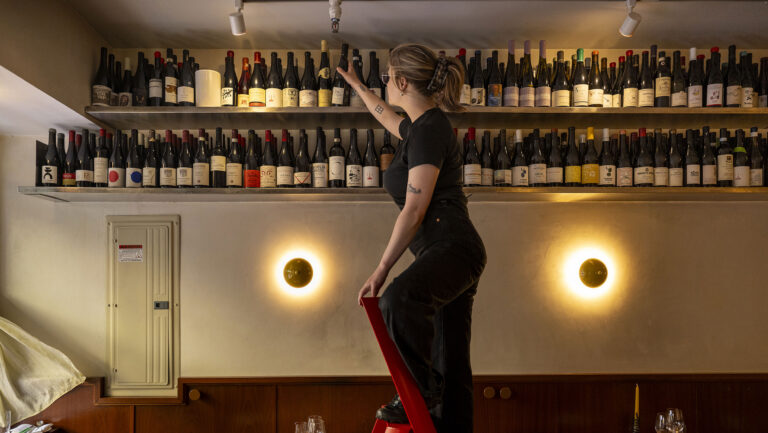
When talking to wine professionals about the great wine lists of the past decade, one word comes up over and over: encyclopedic. “Previously, lists seemed focused more on encyclopedic vertical and horizontal references from benchmark producers in classic regions,” says Alec Cummings, the wine director at The Morris and Sirene in San Francisco and Oakland, California, respectively.
This approach persisted as we emerged from the pandemic. “As restaurants reopened—I’m thinking around mid-2021—people were so starved for gathering and conviviality that they were spending money on wine like nobody’s business,” says Evan White, the beverage director at Bludorn in Houston. “You could throw anything and everything on a list and it would sell, especially expensive, blue-chip wines.”
But the economy in general, and the wine industry in particular, have been reshaped dramatically in the past five years. “The economy is in a much, much different place now,” continues White. “Now, instead of just stacking your list with the most unicorn bottles possible, there is much more thought and curation; lists feature more gems, undervalued and over-performing wines, and wines that are adjacent to their more famous neighbors.”
A major reason for this shift is, of course, financial. “We’ve seen a shrinking of the number of wines being offered just in general, and that’s because a wine program consumes a lot of cash,” says Greg Lambrecht, the founder of Coravin. On the other hand, data from Coravin’s U.S. By-the-Glass Report “shows that consumers want more variety,” with 44 percent of survey respondents saying they want a wider selection of wines by the glass.
At Lei in New York City, beverage director Matt Turner has seen similar shifts. “There’s more of an interest from the people who are drinking wine, enthusiastic about wine, to drink more types of wine, not necessarily more quantity of wine,” he says. “So to me, wine lists are getting broader in terms of style. You’re adding on countries that were not on lists five years ago.”
What has emerged from these two forces is more tightly edited lists with a broader range of viewpoints. With less cash but more editorial freedom, beverage directors are saying, “Let’s take a step back and really decide what matters for us and present that,” says Turner.
Many of these changes tie back further to broader industry shifts. “I think the next generation of wine drinkers has pushed us forward,” says Scott Woltz, the beverage director at Bibliotheque. “Traditional wine lists often reward people who already know about wine. What I’m seeing now is more lists that are narrative. Lists are not trying to impress sommeliers, but trying to impress guests or first-time drinkers.”
In many ways, today’s best lists have undergone a fundamental shift: from lists that reward being knowledgeable enough to navigate an encyclopedia to ones that facilitate discovery. “Now, reading my favorite lists feels more like exploration and less about theoretical knowledge,” says Cummings.
Woltz agrees. “A wine list shouldn’t feel like a test. It should feel like an invitation.”
Designing a Wine List for Discovery
How these changes show up on the page often varies dramatically from one restaurant to the next, but an effort to encourage discovery is visible across different approaches.
Bibliotheque’s list offers the most dramatic example. While the back half of Bibliotheque’s list looks like a traditional wine list—organized by region—the front half of the list is trying something completely different. “I think there needs to be a different angle coming at the majority of wine drinkers who don’t know those kinds of things,” says Woltz.
By organizing the front half of the list around literary genres, Woltz is aiming to redesign the list so that wine knowledge isn’t a prerequisite. “I love the idea of guests, whether they’re knowledgeable about wine or not, choosing a wine based on feeling and not an appellation,” says Woltz.
On the wine lists at The Morris and Sirene, Cummings prefers to emphasize style over region, which he finds to be a more useful approach for his guests. “We want to find the wine that you want, and that’s usually ‘I want a medium-bodied spicy red’ not ‘I want a wine from the Loire Valley or Piemonte,’” he says. “All in all, we just want the list to feel intuitive and serve the folks who know a ton, the folks who only know a little, and even the folks who don’t really care that much.”
While regionally organized lists remain the norm, a growing number of restaurants around the U.S. are playing with wine list design. At the Sunken Cork in Kansas City, Missouri, the wines are described by their vibe, such as picnic wine or countryside bistro wine. At the Brasero in Chicago, the list features 100 South American wines under $100, grouped by style. Paul Greco’s Terroir, a pioneer in this space, currently offers a wine to toast Taylor Swift and Travis Kelce’s wedding (J.J. Prüm Wehlener Sonnenuhr Riesling Kabinett 2023).
At Lei, Turner is using a completely different approach to facilitate discovery, keeping the focus more squarely on hospitality. To summarize the list’s organizing principles, Turner says, “Here’s a chunk of stuff that we have to offer and we love all of it. Let’s figure out what to drink.” In other words, Turner is hoping his list, with relatively few subcategories, becomes a conversation starter between the guest and his team of highly knowledgeable sommeliers.
At Chambers in New York City, beverage director Pascaline Lepeltier hasn’t simplified the wine list itself—indeed, encyclopedic lists will always exist—but she has simplified the guest’s relationship to it. In a similar way to Lei, “The restaurant is designed to encourage an interaction with the sommelier to be able to take them through any kind of journey they want,” says Lepeltier. “What’s absolutely key today is the idea of service. I’m really trying, through the list, to promote and enhance the real beauty of going out to restaurants.”
A great wine list always comes back to hospitality, whether that’s through a creative, easy-to-explore written list, a team of highly engaged sommeliers, or both. These are choices, however, that a restaurant needs to make at the start: “It’s an insane amount of time to put it together,” says Lepeltier. “It’s a deliberate choice for us to be a wine restaurant. It means that we are allocating money and we’re allocating people to be able to do this.”

The New Point of View
The best wine lists today have less in common than ever before. While there was once a recognizable formula for an ambitious program—benchmark producers, rare vintages, enough trophy bottles to impress serious collectors—those markers of prestige are no longer the only path to distinction.
“We’ve all been too obsessed with selling the most expensive bottles, getting our check averages up, popping corks of DRC,” says White. “But the reality is that you will have much better luck and see better sales if you meet your guests where they are instead of forcing them into buying a pricey Burgundy.”
“Rarity alone isn’t necessarily added value anymore,” says Lepeltier. “Discovery can be. I am a full-time floor sommelier by trade—not a critic, not an influencer—and this is my craft. So it is my job to find wines and serve them in a way to justify the price paid by our guests at the restaurant.”
What increasingly distinguishes the best lists isn’t their sizes or formats, but how deliberately they’re designed around the restaurant and the guests they are serving. There is no longer a single canon that every ambitious wine list must reproduce. As Turner points out, “you can have two amazing wine lists and they could not overlap on any producers.”
Now, a great list can come from having a distinct and compelling point of view, with the wine director acting as an editor rather than the promoter of an established hierarchy. For Sinzer, that individuality is becoming a defining feature of the best programs: “Today’s best lists express the writer’s vision and remain tethered only to a singular aesthetic instead of the current trends.”
In today’s dining landscape, where wine can be expensive and intimidating, a strong point of view can offer something else: trust. “I’m going to go out and find something I trust—a person or a wine list or a [restaurant]—and I’m going to dive in with that,” says Turner.

Dispatch
Sign up for our award-winning newsletter
Don’t miss the latest drinks industry news and insights—delivered to your inbox every week.
Caitlin A. Miller is a New York-based wine writer and a senior editor for SevenFifty Daily. Her work has appeared in Food & Wine, Vinous, and Christie’s International Real Estate Magazine. She holds the WSET Diploma in Wines, the WSET Level 2 Award in Spirits, and was the recipient of the 2020 Vinous Young Wine Writer Fellowship.