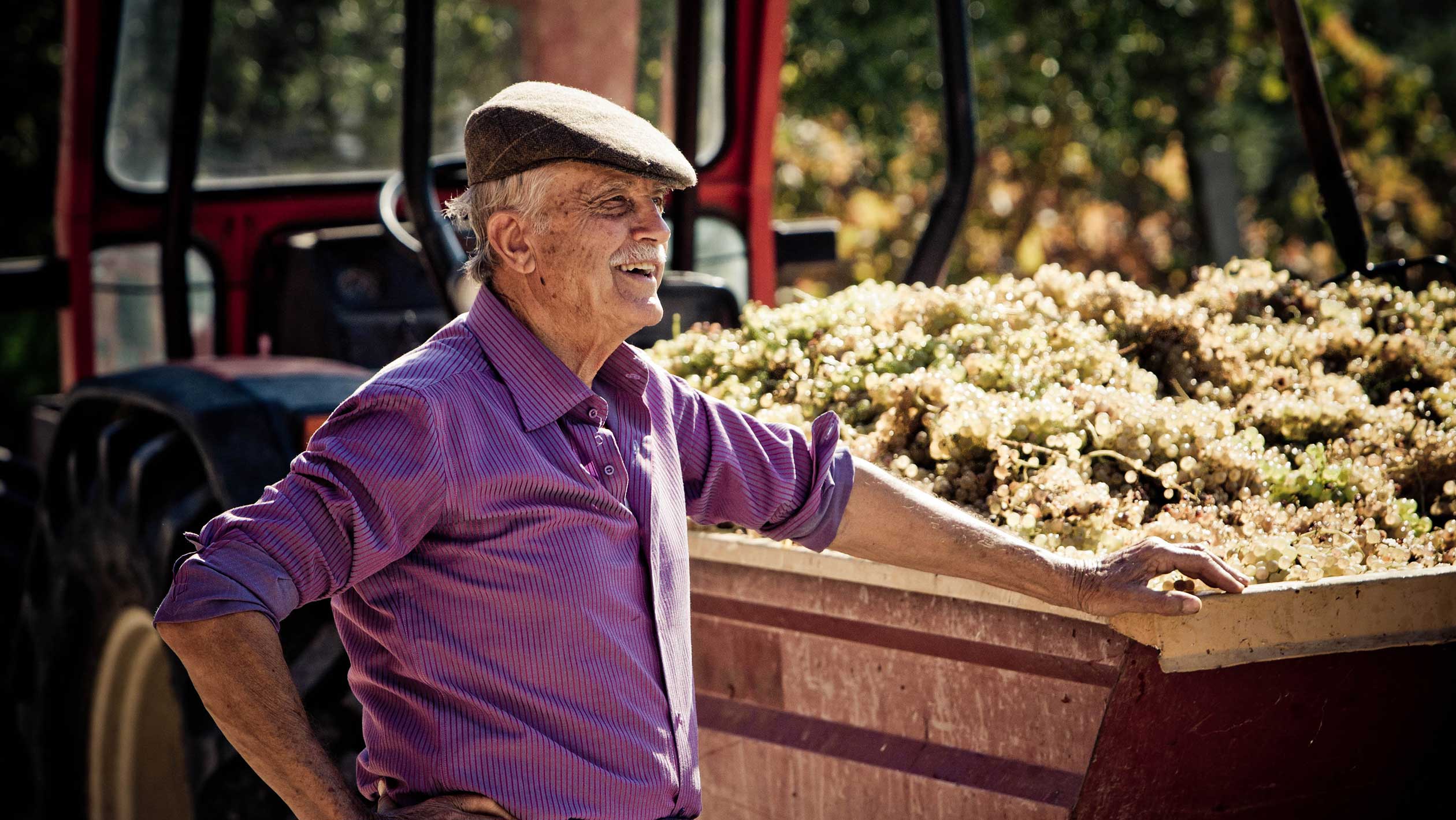
Editor’s note: Emidio Pepe died on July 28, 2026, at the age of 94. His winemaking estate will continue to be run by his daughters and granddaughters.
Often competing for attention on bottle lists alongside cult-status producers from Tuscany and Piemonte, it’s not always easy for the wines of lesser-known Abruzzo to tempt the American consumer. But ask any sommelier or industry expert, and two producers will always surface as key exceptions to the region’s relatively humble reputation: Valentini, who is lauded for the complexity of their Trebbiano d’Abruzzos—and Emidio Pepe, who redefined the region’s red grape, Montepulciano, with their perfectly aged examples.
“Emidio Pepe proved to the world the potential, quality, and ageability of grapes from Abruzzo,” says Jeff Porter, a wine educator who also hosts wine tours throughout Italy. Michael Duffy, the wine director at New York City’s Michelin-starred Italian restaurant Rezdôra and newly opened Massara, which each feature nearly a dozen vintages of the signature variety from the producer, agrees. “Through Pepe’s efforts, Montepulciano was given its first opportunity to shine as a ‘noble’ variety,” says Duffy.

Don’t miss the latest drinks industry news and insights. Sign up for our award-winning newsletters and get insider intel, resources, and trends delivered to your inbox every week.
But Pepe’s big break didn’t happen overnight. It’s the result of going against popular—and profitable—trends, as well as an almost bullish bet on quality over quantity. “Their winemaking philosophy is one of almost ascetic patience, coupled with deep sensitivity to the environment and the integrity and diversity of the ecosystem,” adds Duffy.
Swimming Against the Current
In many ways, the single greatest challenge to Emidio Pepe’s success has been the region itself.
“In the ’70s and ’80s, wineries in Italy and the U.S. were on totally different timelines,” explains fifth-generation winemaker Chiara De Iulis Pepe, whose grandfather, Emidio, took over the winery in 1964. “Italians were all about growing fast and embracing industrialization. Grandfather wasn’t growing super quickly, he wasn’t adopting all of the new innovations … he cared about artisanality and details, and that meant resisting and staying small.”
Essentially, De Iulis Pepe says, the “big problem” for Abruzzo was that so many winemakers went “so big so fast, which kind of killed details, killed artisanality, [and] killed precision.”
But over the past 60 years, Emidio Pepe’s production has remained small, at just about 80,000 bottles per year, ensuring the attention to detail was never lost. Plus, about 40 percent of production is held back for aging, and De Iulis Pepe, who took over winemaking in 2020, aims to raise that number to 65 percent thanks to the winery’s recently expanded cellar space. This is because the winery doesn’t stick to a typical annual release schedule. Instead, the wines are released on a more subjective basis depending on balance, maturity, and drinkability.
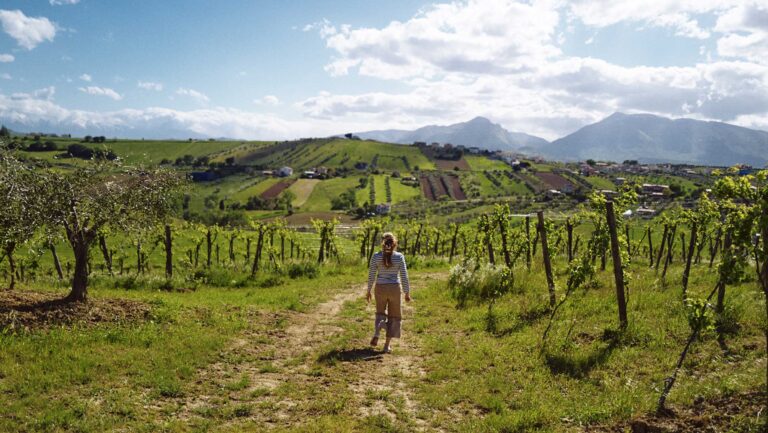
Another reason for Emidio Pepe’s success is the care the winery takes to marry its traditional winemaking values with the health of the environment. “[The vineyards] have been biodynamic since long before it was in vogue, and the health of the microbiological community is prized,” says Duffy. For example, in areas where other winemakers in the region might plant vines to maximize yields, Pepe planted sunflowers to invest in soil health.
Doug Polaner, whose New York City-based company, Polaner Selections, has been importing Emidio Pepe wines since 2005, notes that few wineries in the world make this kind of enormous investment, which is just one more factor that sets Emidio Pepe apart from great wineries in Italy—and the world at large.
Capturing the U.S. Market
After being excluded from a consortium trip to New York City in the early 1970s, Pepe packed a suitcase with a few bottles of Montepulciano and made the trip himself, confident that his wines would reach a willing audience. He was right; the American market was much more receptive to his winemaking philosophy, which celebrated labor and time-intensive traditions like hand-harvesting and destemming grapes, crushing them manually, and generally avoiding the siren call of mechanization.
“He spoke no English, and he basically walked into the first Italian restaurant he could find,” says De Iulis Pepe. “The owner met with him, and the following day, he met with an importer who spoke Italian, and that was the start.”
The winery also found an indispensable early champion in legendary chef Lidia Bastianich, who, even before opening her first restaurant in the early ’70s, favored Pepe wines for her home consumption. As her influence on Italian cuisine in the United States grew with her restaurant empire in New York City and beyond, Pepe was along for the ride: “Every time I would walk into any of those restaurants, I always had the impression that everybody there had a reverence and knowledge around [our] wines,” De Iulis Pepe says.
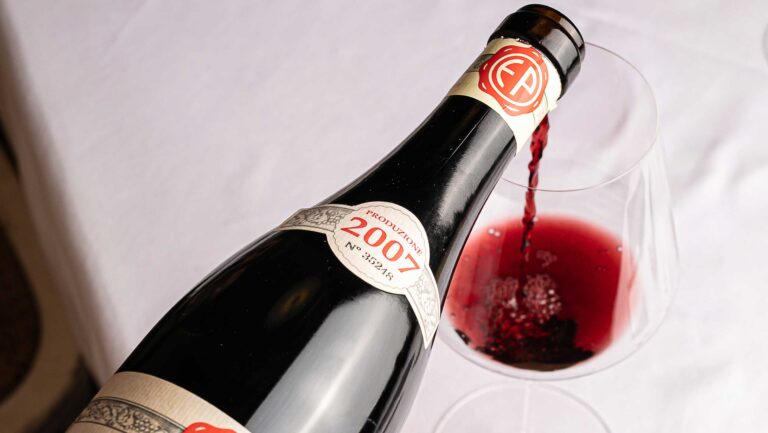
As more progressive Italian restaurants opened their doors in major cities around the country, the opportunity to showcase wines from beyond the usual suspects of Piedmont and Tuscany expanded. “These places offered an open-your-mind experience with producers and regions that were not quite part of the ‘fine wine’ establishment but could nonetheless dazzle with their inherent quality and unique attributes,” explains Polaner.
“It has been a slow build over many years,” he adds. “There is also the notion of pedigree associated with top wines that can age well and truly benefit from cellaring. The Pepes took that one step further and actually aged the wines in their cellars and released some of them later to show them in their uber-complex and fully mature stages of development, a practice that they continue to this day.”
By applying thoughtful innovation to her winemaking, De Iulis Pepe sees Emidio Pepe’s role evolving into lauded ambassadors for a new generation of Abruzzo wine.
“If you’re a young winemaker in Italy, Abruzzo is the dream place to go and start a project,” she says. “The land is viable, and it’s not like Piemonte where you need a ton of money. There is proof of terroir, and not much legislation and constraints around winemaking. You can truly put your creativity into the service of making wine.”

Dispatch
Sign up for our award-winning newsletter
Don’t miss the latest drinks industry news and insights—delivered to your inbox every week.
Oset Babür-Winter is a writer and editor based in New York City. She was previously the Senior Drinks Editor at Food & Wine, and has contributed stories to Bon Appétit, New York Magazine, Wine Enthusiast, and more. She holds a Level 3 award in wines from the Wine and Spirit Education Trust.