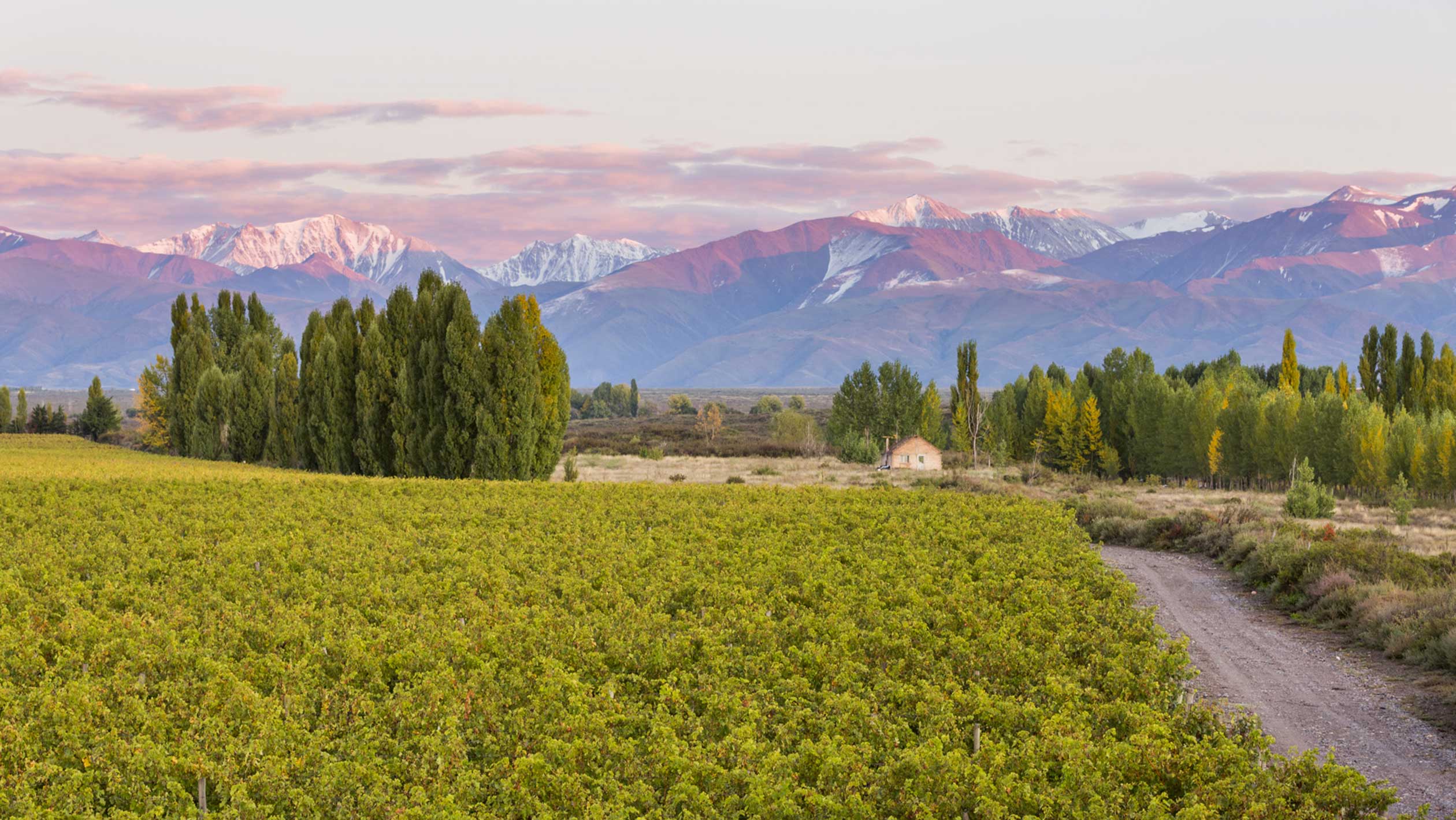
The idea that great wine is made in the vineyard has become a common refrain in the wine industry. The best wines in the world are usually tied to a prized piece of land, with Domaine de la Romanée-Conti‘s La Romanée-Conti serving as one of the most famous examples. Old World regions like Burgundy, with centuries of accumulated knowledge and prestige, seemed to have a monopoly on the world’s great terroirs.
Then, fifty years ago, the 1976 Judgment of Paris began to change people’s understanding of where great wine could be grown and made. That message resonated deeply with Nicolás Catena Zapata, the third-generation owner of Catena Zapata in Mendoza, Argentina. “After hearing about the epic win of Californian wines over French classics … [Nicolás] asked himself: why not strive to make a Grand Cru in Argentina?” writes Laura Catena, Nicolás’s daughter, in her book, Gold in the Vineyards.
In the 1980s and ’90s, that question took Nicolás on a journey through the diverse terroirs of Mendoza—and around the world—to find out if New World regions like Mendoza could produce wines comparable to the world’s best. What began as a search for a great vineyard site ultimately helped reshape how Argentine wine itself was understood.

Don’t miss the latest drinks industry news and insights. Sign up for our award-winning newsletters and get insider intel, resources, and trends delivered to your inbox every week.
Over the following three decades, perceptions of Argentine wine evolved significantly, particularly among the trade. By the 2000s, influential critics like Jancis Robinson and Jamie Goode had become early proponents of site-specific wines from Mendoza. The region’s current stature is reflected in The World’s 50 Best Vineyards rankings: As of 2025, two out of four wineries in The World’s 50 Best Vineyards Hall of Fame are located in Mendoza—including Catena Zapata—and Mendoza is the most awarded region on the annual list.
Catena Zapata—and its prized Adrianna Vineyard specifically—is now widely regarded as one of the most influential vineyard sites in South America and a benchmark for high-altitude viticulture. How exactly did this vineyard, planted on the edge of viticultural possibility, come to claim its place among the greatest vineyards in the world?

The Search for Argentina’s Grand Cru
“It all started with my father going to France on a trip with me,” says Laura Catena, who is now the managing director for Catena Zapata, and the founder of the Catena Institute of Wine. “We were meeting with this producer from Bordeaux and we brought him a Cabernet Sauvignon from Argentina.” The response—that the wine tasted like it was from a warm climate and had no aging potential—was not what Nicolás wanted to hear. It was, however, extremely motivating.
“He came back from that trip and told his team to go look for the coldest place [in Mendoza],” says Laura. “His team said there’s the high part of Gualtallary—Monasterio—where there’s no vineyards, and it’s for a reason.” Nicolás’s response? “That’s exactly where I want to plant,” recalls Laura.
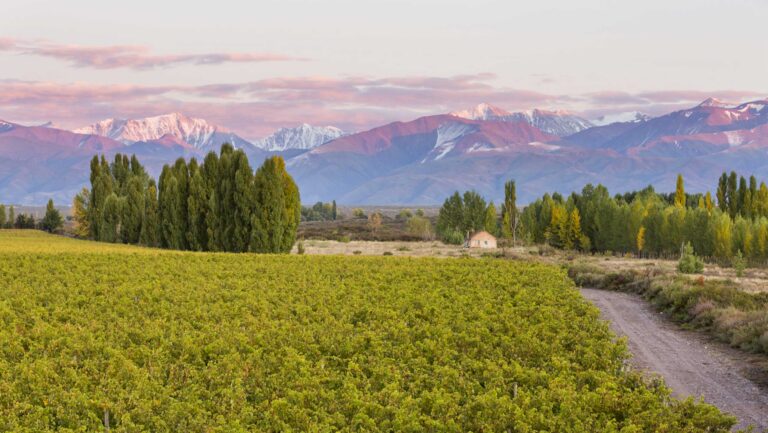
The land that would become the Adrianna Vineyard stood out for several reasons. First, it is extremely high elevation—4757 feet (1450 meters) above sea level. Back in 1992, when the vineyard was planted, that elevation was unheard of for viticulture, and many experts advised Nicolás not to plant there, warning that the grapes wouldn’t ripen. Nicolás wasn’t deterred.
“We understood quickly that this vineyard was different compared with anything else in Mendoza,” says Luis Reginato, the vineyard manager for Catena Zapata. “And we also understood that it was different compared to anything else in the world.”
According to Reginato, the combination of latitude and elevation is particularly unique, and these factors can change dramatically in short distances in Gualtallary. Reginato points to the Jaboncillo Hills, a range of low-lying hills that are perpendicular to, and much younger than, the Andes Mountains. “The fault that elevated these hills also elevated the area around them,” says Reginato. “And Adrianna Vineyard was elevated by this fault.”
These hills contain high levels of calcium carbonate, the main component of limestone, and create many different aspects. Adrianna Vineyard is mostly south-facing, which means the vineyard “gets less sun, less heat, creating an even cooler microclimate,” adds Reginato.
Understanding exactly how those conditions influence vine growth and wine quality became a decades-long scientific endeavor.
Turning Terroir into Data
The reason we know so much about Adrianna Vineyard’s unique terroir is because of the Catena Institute of Wine, which Laura founded in 1995. “The idea is to understand what’s happening in this moment, and to preserve that for the future,” says Roy Urvieta, Ph.D., an enology specialist at the Catena Institute. The institute has now published over 35 scientific papers with leading institutions and universities around the world.
Given Adrianna Vineyard’s unique location, the Catena Institute has focused on understanding its unusual attributes and how exactly they impact winegrowing. “Twenty years ago, we didn’t have information about sunlight intensity and the effects of altitude,” says Dr. Urvieta. “We didn’t know why the grapes ripen so well at high elevations.” But thanks to the Catena Institute, many of these topics are now well understood.
For example, studies at Adrianna Vineyard have shown that as the altitude increases, the atmosphere becomes thinner, allowing more light to get through. UV-B rays—the most energetic fraction of sunlight—in particular are increased at high altitude, which puts the plants’ defenses in motion. “The plant has to protect itself,” says Urvieta. “The plants produce more anthocyanins, more antioxidants, more polyphenols, and more terpenes.” All of these changes can create positive impacts on the resulting wines.
Urvieta’s own research on Adrianna Vineyard and the broader region of Mendoza has even helped prove that terroir is scientifically measurable. The study looked at Malbec wines from 23 parcels across 12 geographical indications in Mendoza over three vintages. Even though all the wines were made under standardized winemaking conditions, the researchers were able to distinguish wines from different locations based on their phenolic composition.
Those differences can be further translated from the data to the sensory perception of what’s in the glass. Few examples illustrate that better than White Bones and White Stones, two Chardonnay wines produced from neighboring parcels—just 50 meters apart—within Adrianna Vineyard.
“The wines from these two parcels are very different in every vintage,” says Reginato. “The soil in White Bones retains more water and has more nutrients compared to White Stones. This translates to more vigor in White Bones, with longer shoots and a bigger canopy that provides shade over the grapes. These grapes preserve more herbal aromas and flavors, and have more aromatic intensity. White Stones, with more direct sunlight over the fruit, ripens sooner and the wine shows more volume in the mouth.”
The emergence of parcel-specific wines marked a new phase for Argentine wine. Rather than emphasizing variety alone, the wines highlighted subtle differences within a single vineyard, echoing the site-specific traditions of Burgundy. In the process, the conversation around Argentine wine began to shift—from a focus on grape varieties to a focus on place.
Redefining Argentine Wine for the Trade
All of this work would be of little consequence if it didn’t help Nicolás reach his prime goal: to make wines that stand with the best in the world. For anyone who’s tasted wines from the Adrianna Vineyard, the proof is in the glass, and these wines are now an important part of the U.S. wine trade.
For decades, Argentine wine, mainly Malbec, meant one thing in the U.S. market. “Malbec’s massive growth in the United States came through accessible wines with excellent value for money, although mostly within entry-level ranges,” says Nicolas Martianhes, the sommelier and restaurant manager at Balvanera in New York City. The decades of work that Nicolás initiated have been the key to evolving that narrative, particularly with the trade.
“Catena Zapata is very committed to trade education, and they have brought many people to the Adrianna Vineyard over the years to stand in the soil pits and learn about the terroir on-site,” says Brad Mayer, the SVP of marketing at Winebow, who imports Catena Zapata to the U.S. “Seeing these various soil types is revolutionary.”
And once you capture the trade, the excitement inevitably spills over to consumers. “When I recommend one of their Chardonnays—White Bones or White Stones—I like to serve them at the upper limit of their temperature range, almost like a light red wine,” says Martianhes. “That is when the magic happens: looks of confusion and amazement appear as people struggle to believe that an Argentine Chardonnay can have such depth, texture, and minerality.”
Today, “We are seeing growing acceptance of ultra-premium Argentine wines in the U.S.,” says Mayer. “[Adrianna Vineyard] is often now referred to as the Grand Cru of South America, and wines like River Stones Malbec and White Bones Chardonnay have made global history by scoring perfect 100-point ratings from top critics.”
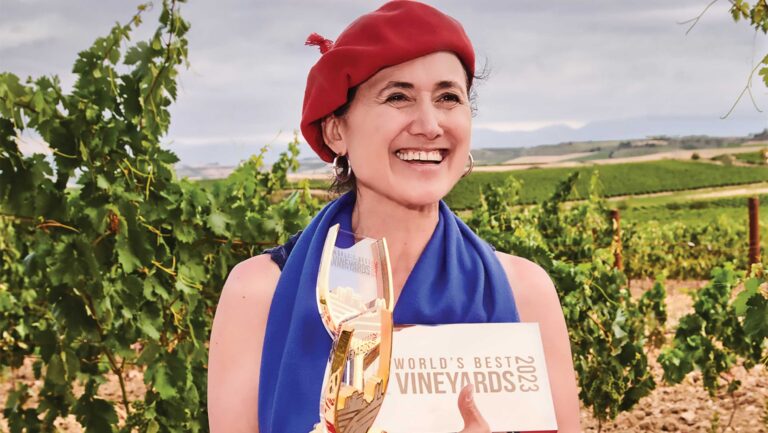
The influence of the Adrianna Vineyard goes well beyond the U.S. market. In 2023, Catena Zapata was crowned The World’s Best Vineyard by The World’s 50 Best Vineyards voting academy, made up of more than 700 global wine trade professionals. “Fewer vineyards are trying to copy or emulate established approaches to winemaking,” says Emma Sleight, the director of content and creative at The World’s 50 Best Vineyards. “They really stand out when they do their own thing, and that’s where you see the most exciting advancements.”
In the three decades since Adrianna was planted, its significance has grown far beyond the wines it produces. By demonstrating the nuances of Argentine terroir, the vineyard has changed how the trade understands Mendoza—and what it expects from the country’s top wines. “This vineyard showed to the world that Argentina can produce wine at the quality level of the best wines in the world,” says Reginato. “And not only with Malbec, but with different varieties and in different vintages.”

Dispatch
Sign up for our award-winning newsletter
Don’t miss the latest drinks industry news and insights—delivered to your inbox every week.
Caitlin A. Miller is a New York-based wine writer and a senior editor for SevenFifty Daily. Her work has appeared in Food & Wine, Vinous, and Christie’s International Real Estate Magazine. She holds the WSET Diploma in Wines, the WSET Level 2 Award in Spirits, and was the recipient of the 2020 Vinous Young Wine Writer Fellowship.