For wine pros, there’s something inviting about a long wine list. Curating a wine menu with thousands of choices seems like an opportunity for exploration, discovery, indulgence, and—yes—flexing. Both the writing and perusal of an epic wine list can be a rewarding intellectual and emotional experience.
But for guests, however, long wine lists often feel overwhelming and intimidating, even perhaps a little old-fashioned. We’ve all heard of the paradox of choice, in which having too many options can feel paralyzing.
“Writing a small list is more challenging than creating a 3,500-SKU list, because you have to make sure there’s something for everyone who walks in the door,” says Savannah Riedler, the wine director at Lilo in Carlsbad, California. “If you have fewer options that’s a lot harder. You have to be really disciplined, and always consider how each option will pair with the style of food. But it can make the process of choosing wine easier, and ultimately better for both the guests and the staff.”

Don’t miss the latest drinks industry news and insights. Sign up for our award-winning newsletters and get insider intel, resources, and trends delivered to your inbox every week.
There’s something to be said for building a finely honed yet still-complete wine list. But tailoring the selection to 100 SKUs of wine or less, while still offering a range of style, regions, and price points, is easier said than done. Here’s how wine pros are getting big results by thinking small.
Find the Sweet Spot Between the Familiar and the New
With smaller lists, there is less room for error when it comes to selecting the wines to feature. At Parallel in Portland, Oregon, the list hovers between 80 and 100 bottles, forcing sommelier and co-owner Stacey Gibson to make selections with precision, without worrying about oversights.
“My goal was to offer something for everyone, from people who don’t really drink a lot of wine, to super wine geeks,” says Gibson, who runs Parallel with her chef husband Joey Gibson. “For me, that means offering recognizable regions and grapes, while also offering lesser-known varieties from places that most people won’t recognize.”
Gibson highlights wines from the local Willamette Valley and the benchmark regions most people are familiar with, while also providing carefully considered esoteric grapes that are still versatile. As they can offer exceptional value, lesser-known grapes and regions are arguably just as essential as the tentpole Pinots and Chardonnays.
“I wanted a blend of safe bets and excitement, without focusing on trends,” Gibson explains. She points to the 2015 Calabretta Nerello Mascalese from Sicily, which, at $75 per bottle, is an unexpected deal for an aged wine, or the Douloufakis Vidiano from Greece, which is just $14 per glass. “It’s an indigenous grape from Crete,” she says of the latter, “and it’s something a lot of experienced wine lovers haven’t encountered, and such a geeky find. But in the end, it’s also just a delicious, crisp white that people who don’t know much about wine will love.”
Providing Value Is Essential
Wine is traditionally seen as one of the few areas where restaurants can reliably make a profit. But with margins and wallets tightening everywhere, and sales of wine declining, sommeliers and beverage directors are eager to keep prices reasonable.
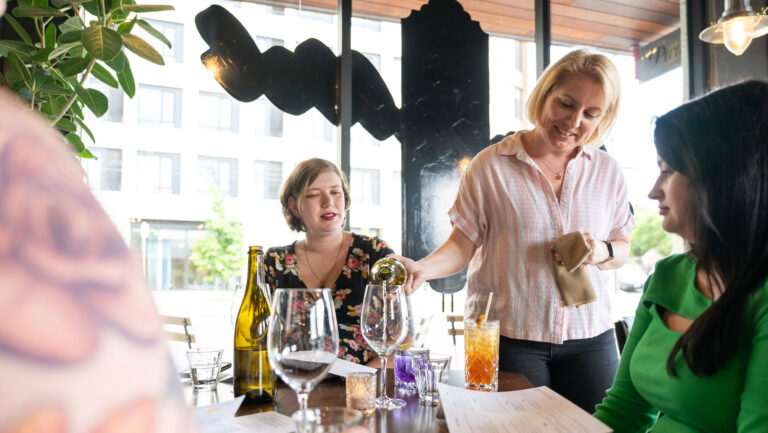
“Money always matters, but that’s never been truer than it is now,” says Gibson. “Our by-the-glass range goes from $11 to $18 right now, and our bottles start at $45, with a few over $265. I want people to feel comfortable ordering a second glass or bottle.”
Aimee Olexy, who opened Philadelphia’s The Love with Stephen Starr in 2017, underlines Gibson’s assertion, and says that offering value on the wine list can sometimes be the best way to create lifelong customers. Both work one-on-one with guests to find something they will love at a price they feel comfortable with.
“The way I see it, the lower the price that we can offer, the better,” Olexy says. “I want people to buy wine to lift their experience and their dining memory, not to make a profit. We also have a program where we allow guests to taste anything from our glass pours, and that can really help make things fun tableside.”
Smaller Lists Allow for Swift Placement Changes
Wine lists are never static beings, but curators of small lists have the ability to change their selections more quickly. While Olexy always keeps The Love’s list micro—it hovers around 60 bottles now, including still and sparkling wine, cider, and “sweets”—it changes to reflect what’s emerging from the kitchen. And because the list is so compact, Olexy can make specific purchases on the fly, based on what she sees trending on the floor week to week. With a large list or a vision that focused on her own personal wine philosophy, Olexy wouldn’t be able to react as nimbly.
“I really study what guests are buying, not what vendors are trying to sell me,” says Olexy. “I also listen to the servers and the bar captains. I work to introduce new and interesting things by relating them to pieces the guests and staff know.”
For example, the wine team is trained to ask what people already know and love, and then gently encourage them to explore other options if they’re interested. A Sauvignon Blanc lover, Olexy says, might be encouraged to try their Pecorino by the glass.

Tell a Story
On a tightly edited list, wine pros have to carefully consider the kind of story they want to tell—and at Lilo, Riedler wants to tell the story of California, and the ocean.
“Chefs Eric [Bost] and John [Resnick] are inspired by classic French and Japanese techniques, while also seeking to honor the food and culture of coastal California,” Riedler says. “For me, that meant defining California on the wine list. Large and small producers, heritage grapes, the story of missionaries, and the Sideways effect.”
Spotlight Smaller Producers
While wine programs of all sizes feature smaller, less recognizable producers, Olexy argues that it’s easier to draw attention to the wineries that guests might not automatically reach for when there’s an edited list of choices. Plus, she’s able to spotlight wines that have their own story to tell.
“The Illahe Vineyards has a great story about sustainability and horse-drawn grape delivery,” Olexy says of the 80-acre Willamette Valley winery. She also loves featuring well-crafted locally made wine, like Galen Glen Winery in Andreas, Pennsylvania, with Sarah Troxell at the helm.
“I don’t follow rules,” Olexy says. “Guests don’t buy wines because you have every vintage or appellation covered. They buy because of smooth service, good prices, and good-looking stuff. We keep it simple.”

Dispatch
Sign up for our award-winning newsletter
Don’t miss the latest drinks industry news and insights—delivered to your inbox every week.
Kathleen Willcox is a journalist who writes about food, wine, beer, and popular culture; her work has appeared in VinePair, Edible Capital District, Bust magazine, and Gastronomica, and on United Stations Radio Networks, among other venues. She recently coauthored, with Tessa Edick, “Hudson Valley Wine: A History of Taste & Terroir.” She lives in Saratoga Springs, New York.