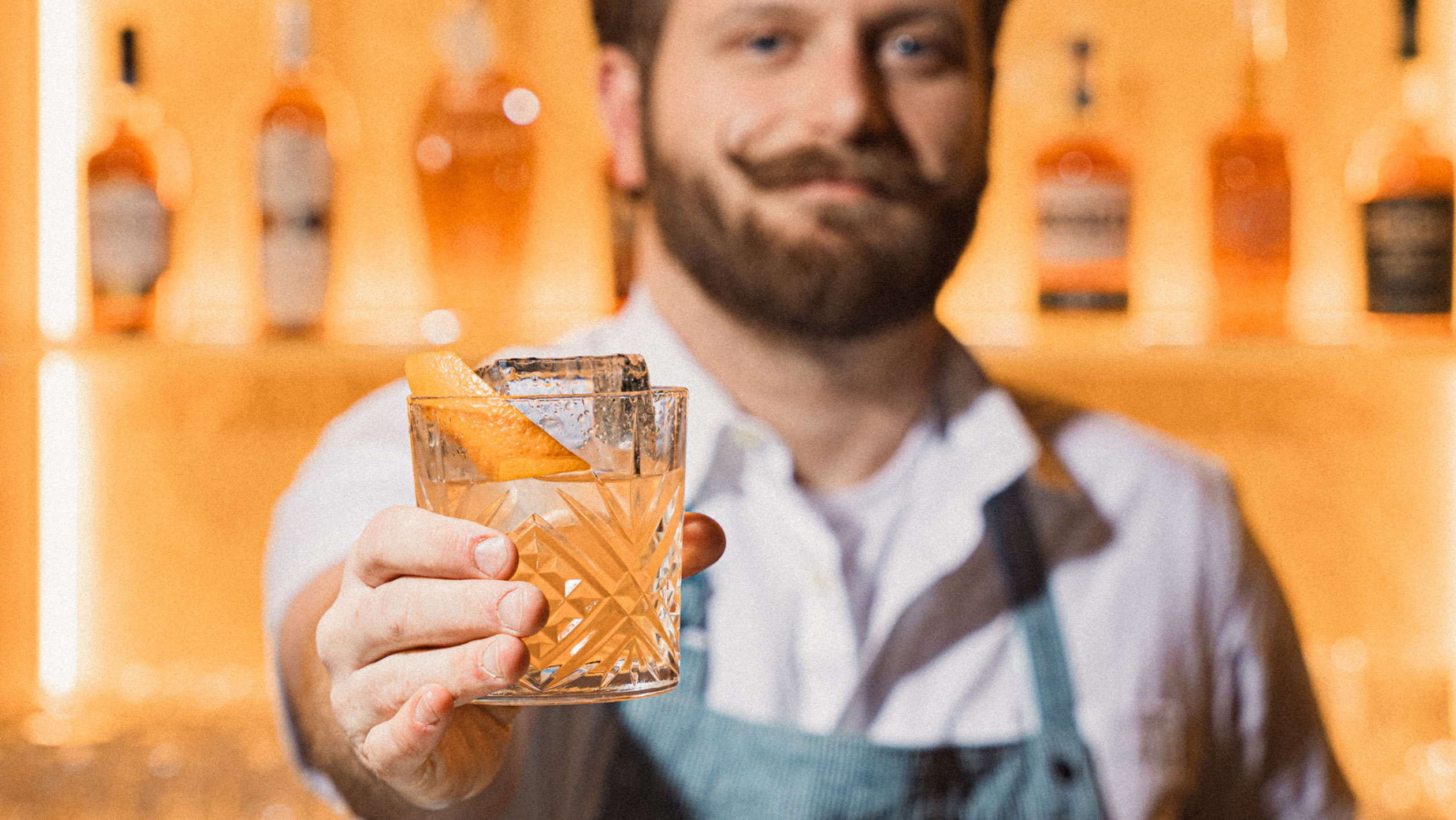
Whether for a high-volume cocktail bar, a full-service restaurant with an ambitious cocktail program, or an intimate space where citrus is juiced to order and ice is hand-cut, delivering consistent drinks in an expedient manner is crucial to both a bar’s hospitality, and its bottom line.
“Guests frequent cocktail bars for any number of reasons besides the cocktails themselves,” says Daniel Waddy, the head bartender of London’s Satan’s Whiskers, “but while we are in the business of delivering hospitality, the ability to dispense drinks with the required speed and consistency is key.”
In a constantly shifting economic landscape where profit margins are already stretched thin, a bar’s efficiency can be the difference between staying profitable or not. “Especially in the world of craft cocktail bars with reservation-based systems, guests are only there for a limited amount of time,” says Quintin Scalfaro, the beverage director of G-Love and The Love Shack in Portland, Oregon. “If someone wanted to have three cocktails but you only had time to service them for two, that was a missed opportunity for them as well as the business.”
Don’t miss the latest drinks industry news and insights. Sign up for our award-winning newsletters and get insider intel, resources, and trends delivered to your inbox every week.
Speeding up bar service doesn’t necessarily entail a massive overhaul of the entire beverage program. Tweaks to the menu, logistics, staff training, and operations can all play into a bar’s overall efficiency. SevenFifty Daily spoke to beverage directors and bartenders about which small changes can have the biggest impact on service speed.
Rethink the Menu Design
At the heart of efficient bar service is the drink menu itself. Can guests seamlessly navigate to what they want and can the bar deliver these drinks in an acceptable timeframe? Sometimes it is a matter of culling the drink list on a macro or micro level. “Simplicity will still wow your guests,” says Gabriel Urrutia, an adjunct professor at Florida International University’s Chaplin School of Hospitality and Tourism Management. “It’s obviously a lot better to offer 10 cocktails with fewer ingredients that are always perfectly made than 50 complicated drinks where sometimes they’re good and sometimes they’re not.”
This also helps guests make faster—but unrushed—decisions. Contextualizing drinks can be beneficial, especially if your menu includes ingredients that may be unfamiliar. “I think it’s important to have the drinks in some sort of category, not just ‘house cocktails,’” says Steve Schneider, the bar manager and head bartender of the Guzzle half of New York’s Sip & Guzzle. “All of my menus have a structure. At Guzzle, we have comfort drinks, highballs, no-frills classics, etc., so we can just break down each category [for anyone who asks] rather than each drink itself.”
Tailor the design of the menu so that the quickest builds are poised to attract the most attention. “I always want to make sure that there is a prominent Old Fashioned and a prominent three-turn Martini that I know are going to be our highest sellers,” says James Lindbloom, the director of beverage and special events at Sternewirth in San Antonio, Texas. “I want to make sure those are appropriately priced and in a place on the menu that is eye-catching.”

Create Hyper-Intentional Bar Logistics
Bars and bar equipment already feature elements that emphasize efficiency: speed racks, speed pourers, cheater bottles, and so on. Capitalize and build upon these elements with intentional bar set-up. The goal is to attain an economy of movement so most drinks can be built in front of a well without needing to take a single step.
Loma in Providence, Rhode Island, hand cuts ice and juices citrus to order, so logistics are critical for efficiency. “This means extreme consistency in the mise en place,” says Leishla Maldonado, one of the bar’s owners. “Everything from where we’re putting our tongs to where we place our knife has to be the same every single time in order for us to make it work.” At Loma, their standard operating procedure is to get every ticket out within seven minutes of the order.
While many bars change up the speed rack or the backbar along with changes in the cocktail menu, Hailey Knight, the beverage director of Félix Cocktails et Cuisine in Charleston, South Carolina, believes that long-term consistency can work better. “We never move our bottles, whether it’s juice, bitters, or spirits, so muscle memory takes over,” she says. “If you worked here five years ago, the absinthe bottle is still exactly where it was. That consistency makes a huge difference when you’re in the weeds.”
Cocktail mise en place can go beyond prepping juices and garnishes to include steps such as pre-loading ice in various cocktail glasses to save time during a busy service. “Our glass chiller is our best friend,” says Jordan Joseph, the beverage manager of Crawford Hospitality in Raleigh, North Carolina. “We use a specific setting on our Perlick glass chiller that allows us to keep ice in there.” The rocks and Collins glasses are set with the appropriate cube ahead of time.
Elements behind the bar that have nothing to do with drink building can also impact your efficiency. “Having a really quick POS system is really important,” says Lindbloom, especially if your system requires bartenders to turn away from the bar counter in order to process transactions. Several interviewees mentioned Toast or other handheld systems that allow tabs to be opened or closed quickly without turning your back on the bar.
Establish Round-Building Skills
Building rounds is a skill that can be taught and developed, training bartenders to build numerous drinks in the most efficient manner while maintaining the quality of every one. “The easiest way to make great drinks is to make them individually, but this often isn’t the reality of professional bartending,” says Waddy, who co-authored Roundbuilding with Kevin Armstrong. “Drinking in bars is a sociable activity, so it frequently involves preparing more than one drink at the same time. When preparing drinks in rounds, this involves ensuring that the drinks that are most susceptible to deterioration have the least time to wait before service, and all the drinks in the round are completed as closely together as possible.”
A round may not only include drinks on a single ticket, but may take multiple tickets into account, or orders from patrons at the bar counter, looking for opportunities to double up on certain cocktails, or for drinks that utilize common ingredients. Elements such as chilling necessary glassware and preparing garnishes happen first for maximum efficiency, since they don’t contribute to the race against ice melting.
Roundbuilding also takes into account other beverages such as sodas or bottled beers that require few if any steps to complete, and delineates how to look across a flight of drink orders as a series of steps, ensuring that no drink is finished and waiting while any other drink has more than a step or two needed to complete it. Adding ice is generally the last step in an effective round.
Empower Front-of-House Staff
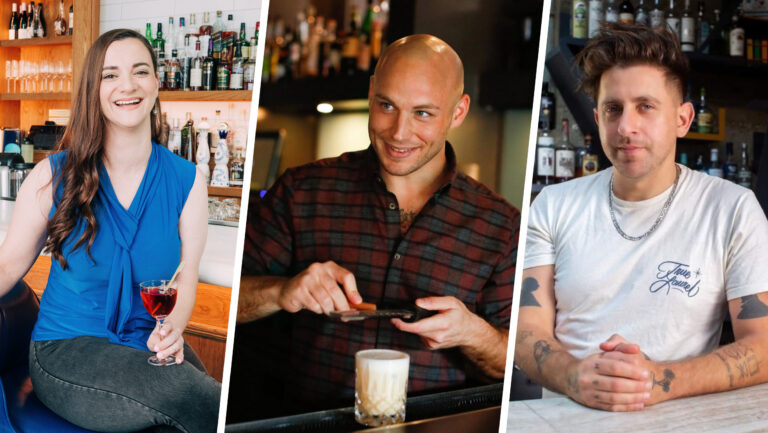
Division of labor is meaningless to a guest who feels like they’ve been waiting too long for a drink; everyone interviewed here empowers other team members to assist in efficient drink delivery in various ways.
Barbacks can also build drinks and serve guests. “Barbacks are expected to know the specs,” says Schneider. “A good bartender mentor will always invite that,” adds Urrutia. At some bars this may be limited to pouring wine or beer, or building one-to-ones like gin and tonics, but it all results in time freed up for bartenders to attend to cocktails, and plays a part in staff retention. “Keeping staff stimulated and offering them room for growth will make them more likely to stay with you,” says Waddy. “Your barback might be your head bartender in a few years’ time if you bother to nurture their interest. If not, then you’re hiring again in six months.”
At Sternewirth, whose capacity can reach 500 guests at once, servers are responsible for drink garnishes, which frees up bartenders’ hands. Other high-volume bars assign a dedicated support staff member as a drink runner on busy nights.
At San Francisco’s True Laurel all staff are cross-trained and few employees only have shifts in a single department. “Once you become a bartender, you might still have two serving shifts or maybe a barback shift a week,” says Nicolas Torres, the bar’s co-owner and bar director. “The more holistic approach of going into your shift knowing how each department works in the front-of-house also helps with efficiency.”
Considerations for Batching and Free Pouring
Batching cocktails reduces the number of touches in a given drink’s build, typically by combining all of its non-perishable ingredients into a single spec. Some bars rely on this for speed and efficiency, while others feel that it cheats guests out of some of the show. “Batching can be an ugly word,” says Schneider, “so I like to say it’s painstakingly prepared ahead of time.” Torres likens it to what happens in professional kitchens. With cocktails as with food, “what you’re seeing is the finishing,” he says, regardless of whether or not any ingredients are batched.
Batching also allows more time in the service for other elements that enhance the guest experience. “You aren’t doing as many steps to make a drink,” says Torres, “but what it is giving you time for is not only the finishing of the drink, but the guest interaction.” At The Love Shack, they offer batched rounds of mini cocktails to buy time by getting something into the hands of large groups while individual drinks are being prepared.
Free-pouring has a part to play in a bar’s efficiency, as it allows for flexibility and saves a step in rinsing a jigger, especially for simple builds like vodka sodas. “Every bartender will benefit from learning to free pour, even if it isn’t the favored method in their current venue,” says Waddy. “Take the time to do a pour test. This is the first thing we work on when we hire a new bartender.”
With the ability to free-pour, multiple bartenders can also share a single well. “We free pour [at Guzzle] because the other bartender might need to cut in,” says Schneider. “Free pouring is a perfect way to do high volume.”
Practice Awareness
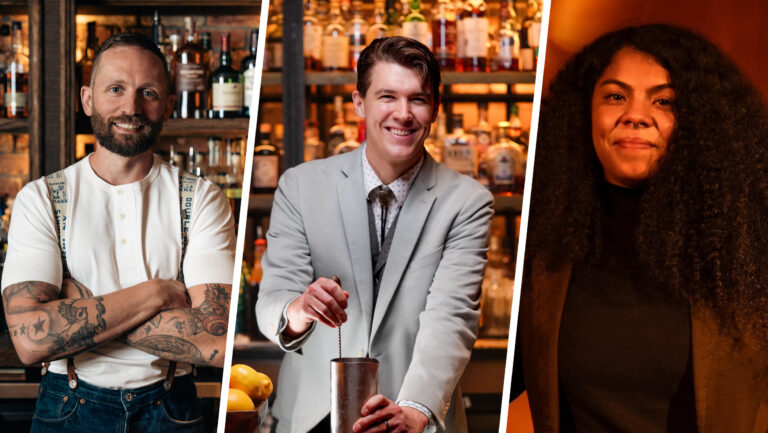
One of the simplest changes that individual bartenders can implement to speed up service is to be present. “Just as important as anything is keeping your head up,” says Schneider. “When you’re shaking and stirring, that’s the time to scan the bar and look to see what needs to be done next.” The symbiosis between effective barbacks and bartenders means that barbacks can focus on what’s behind the bar so that bartenders can focus on what’s in front of it.
“Every single transaction I’ve ever had stemmed from me looking at someone,” says Schneider. “You need to make eye contact and just hold yourself tall and proud and not be looking down the whole time, because if you don’t take these orders, then you’re not going to be efficient.”

Dispatch
Sign up for our award-winning newsletter
Don’t miss the latest drinks industry news and insights—delivered to your inbox every week.
Pamela Vachon is a freelance writer whose work on food, beverages, travel, and especially the intersection of those elements has appeared in Food & Wine, Wine Enthusiast, Travel & Leisure, VinePair, and Bon Appétit, among others. She was formerly a bartender and captain at New York’s The Modern, and teaches classes at Murray’s Cheese. She splits her time between London, New York, and Castlerea, Ireland, where she hopes one day to make cheese.