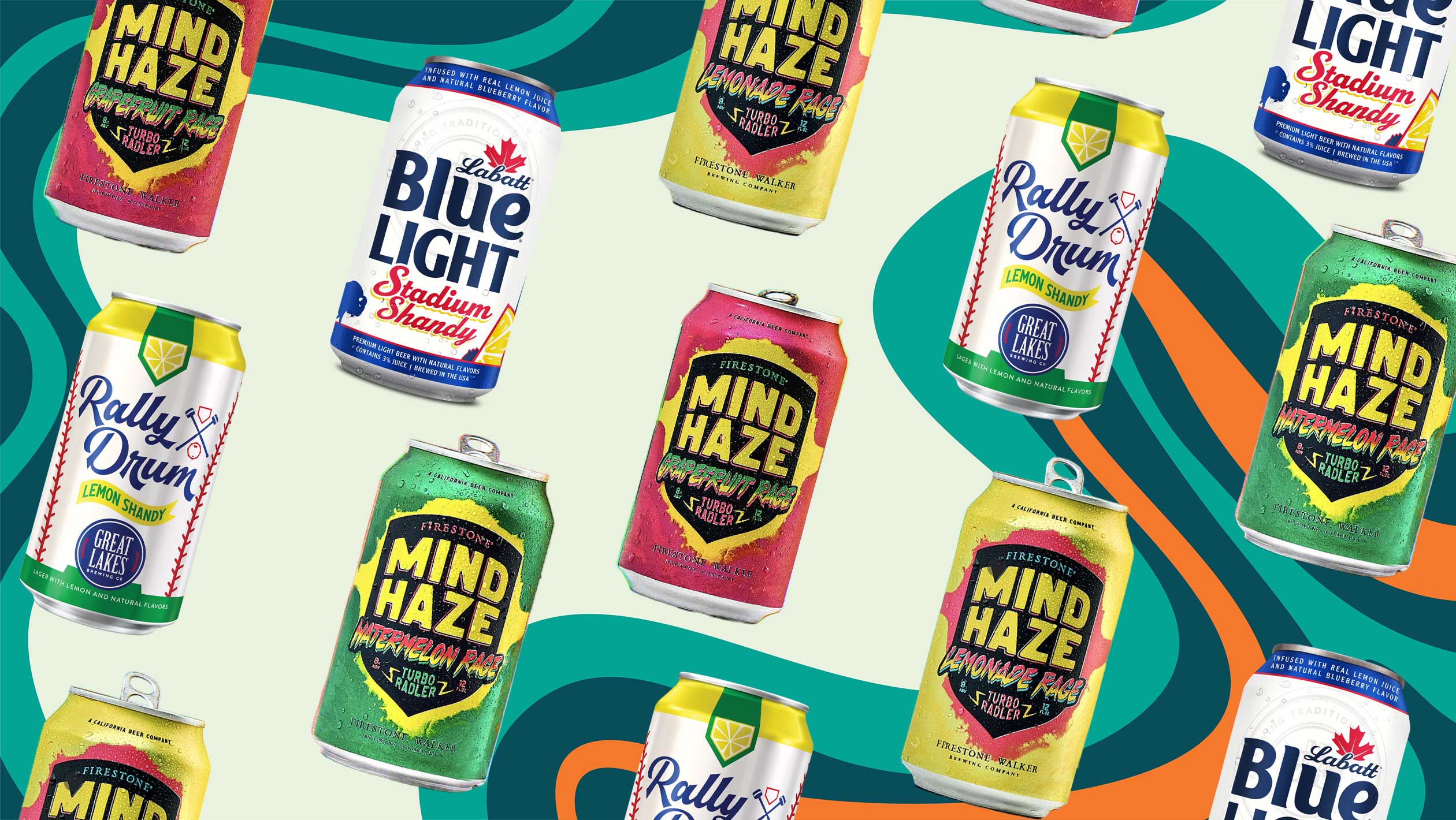
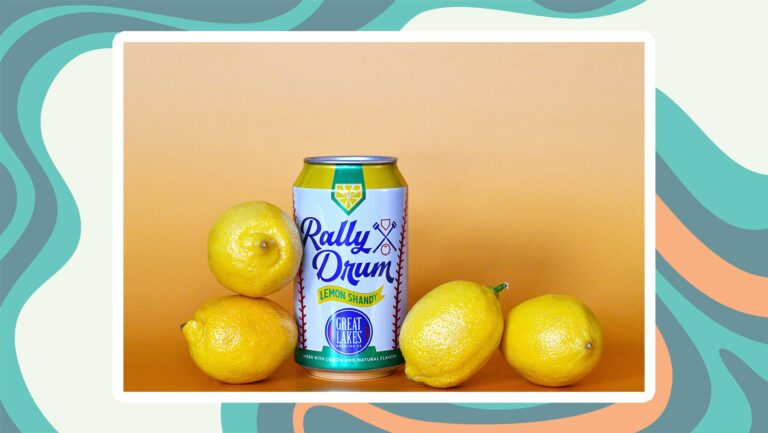
Over the years, Great Lakes Brewing has taken several swings at a baseball-season beer. In 2012, Rally Drum began as a piney red ale that missed on summer refreshment, before becoming a crushable low-alcohol lager in 2021. The switch worked until the Cleveland brewery released another light lager, year-round Cold Rush, last August.
“It didn’t make sense to sell two [similar] lagers,” says Chris Brown, the co-CEO. Fruit beers always sold well for Great Lakes come summer, so the brewery reformulated Rally Drum as a 4% ABV shandy, a popular British drink made by mixing beer (often a lager) with lemonade or citrus-flavored soda.
The lightly sweet Rally Drum Lemon Shandy, a blend of lager and lemon juice, debuted this spring. Early sales returns are promising. The brewery’s biggest distributor quickly reordered Rally Drum, a hit thanks to its crowd-pleasing flavor and minimal alcohol.
Don’t miss the latest drinks industry news and insights. Sign up for our award-winning newsletters and get insider intel, resources, and trends delivered to your inbox every week.
In the U.S., lemony shandies and fruity radlers—a German speciality mixing beer with fruit juices like grapefruit or citrus sodas—broke out in the mid-2010s, led by Leinenkugel’s Summer Shandy. But sales slumped amid a glut, shaking out brands like shandy-focused Traveler Beer. Tastes shifted to hazy IPAs that, with new hop varieties, filled a fruity void.
But recently, as drinkers increasingly seek maximal taste while being mindful of alcohol, breweries are re-embracing the breezy fun of shandies and radlers. Dollar sales increased 28 percent in 2024, according to NIQ, as the fruit-forward styles are again staples at bars, restaurants, retailers, and concert and sports venues.
“People are attracted to the fruit and low-ABV element,” says Calvin Fredrickson, the account manager at Spiteful Brewing in Chicago. Sales volumes of its Grapefruit Radler (2.7% ABV) are up 20 percent as Spiteful “taps into the better-for-you category of beer.”
This year, discount grocery Aldi introduced the store’s own Wernesgrüner Lemon Radler. At 2% ABV, it meets “today’s demand for light, flavor-forward beverages,” says Arlin Zajmi, the director of buying for alcoholic beverages at Aldi. The chain’s alcohol sales are up more than 50 percent year-over-year, Zajmi adds, “in part, due to the popularity of Wernesgrüner Lemon Radler.”
Targeting New Drinking Occasions Increases Sales
The radler’s origin story is rooted in meeting consumer needs. According to legend, a Bavarian innkeeper besieged by bike riders extended his beer supply by blending lager with lemon soda, creating the radler—German for “bicyclist.”
Breweries today are following that playbook by targeting sweaty outdoor occasions. The upcoming NFL season is the last that the Buffalo Bills will play at their Orchard Park, New York, stadium. So Labatt Brewing is releasing Labatt Blue Light Stadium Shandy, a blueberry-lemon shandy that “ties into the bittersweetness of the beloved stadium closing after 52 years,” says Jason Folaron, the brand manager for Labatt USA.
The NFL season’s kickoff in still-hot September also steered the stylistic choice. A shandy aligns “with tailgating at a Bills game, especially during the season’s warm months,” Folaron says.
Summertime is prime season for amusement parks, where concession stands serve cold beer. In 2024, Kennywood Amusement Park, located southeast of Pittsburgh, Pennsylvania, tapped Penn Brewery to create Strawberry Funnel Cake Shandy. “That became the most popular beer in the whole park,” says Justin Rossetti, the restaurant operations manager at Kennywood, which brought the shandy back for another go-round this season.
Spiteful is finding radler fans at Chicago music venues like the Salt Shed. It has an outdoor stage, and sun-baked concertgoers “are pounding the radler,” Fredrickson says. The brewery’s radler is also a base for an easy mixed drink. Bars might add a shot of gin to punch it up, or toss in tequila to create a no-fuss Paloma. As Fredrickson puts it, “The radler is our most flexible beer.”
Radlers and Shandies Are Ripe for Experimentation
For America’s rule-flouting brewers, shandies and radlers are templates for innovation and experimentation. Because of their sweetness and lower ABV, the styles “lend themselves perfectly to be explored and updated,” says Jeff Richards, the senior director of marketing at Elysian Brewing.
The Seattle brewery’s new summer release, Lemon Daydream, updates the shandy by blending a light blonde ale with Meyer lemon to appeal to “a nontraditional beer drinker,” Richards says.
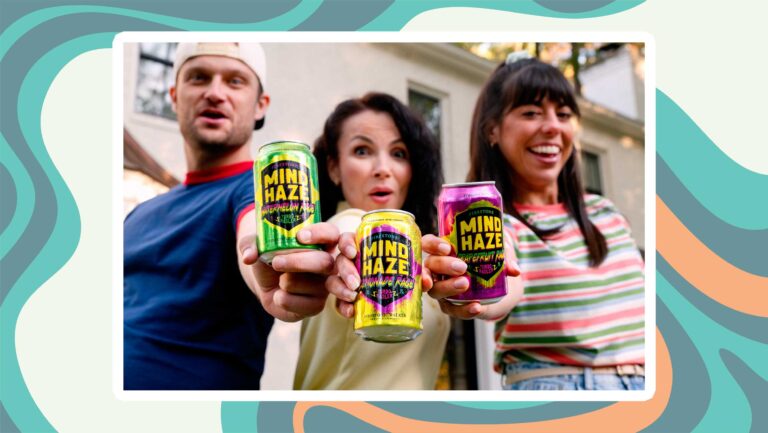
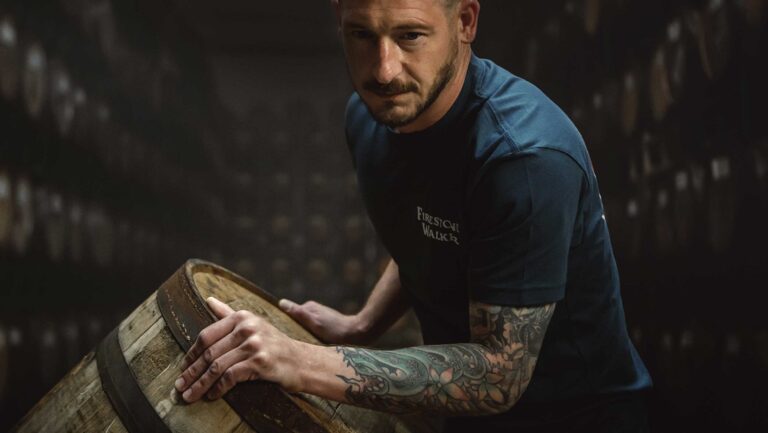
Few radlers are less traditional than Firestone Walker’s recently released Mind Haze Rage “turbo radlers” that offer amplified alcohol (8% ABV) and flavors such as watermelon and grapefruit.
“Rage hits a sweet spot,” says Hannah Barnett, the brand director for the Paso Robles, California, brewery. The turbo radlers appeal to drinkers who might opt for fruit-forward cocktails or seltzers, as well as IPA fans accustomed to intensely flavored double IPAs. “It fits the trend of drinks that are bold but easy,” Barnett says.
Craft beer is entering an era of clearly defined flavors; a radler or shandy has the approachability of fruity sweetness, without the need to learn about a hop variety.
“Fruit is instantly recognizable, which makes it a great entry point for trying something new,” says Sam Hendler, the CEO and cofounder of Jack’s Abby Craft Lagers in Framingham, Massachusetts.
Blood Orange Wheat Radler is consistently the top seller in the brewery’s beer hall. “Even if someone isn’t familiar with a beer style like a radler, seeing a flavor they know and enjoy creates an immediate connection,” Hendler says.

Dispatch
Sign up for our award-winning newsletter
Don’t miss the latest drinks industry news and insights—delivered to your inbox every week.
Contributing editor Joshua M. Bernstein is a beer, spirits, food, and travel journalist, as well as an occasional tour guide, event producer, and industry consultant. He writes for the New York Times, Men’s Journal, New York magazine, Wine Enthusiast, and Imbibe, where he’s a contributing editor in charge of beer coverage. Bernstein is also the author of five books: Brewed Awakening, The Complete Beer Course, Complete IPA, Homebrew World, and Drink Better Beer.