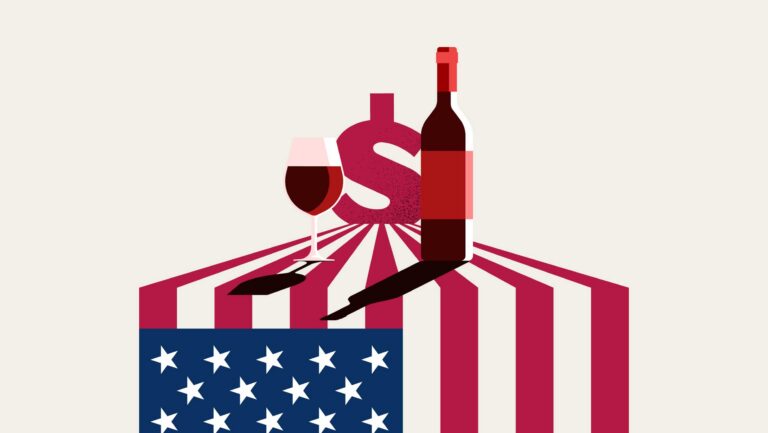
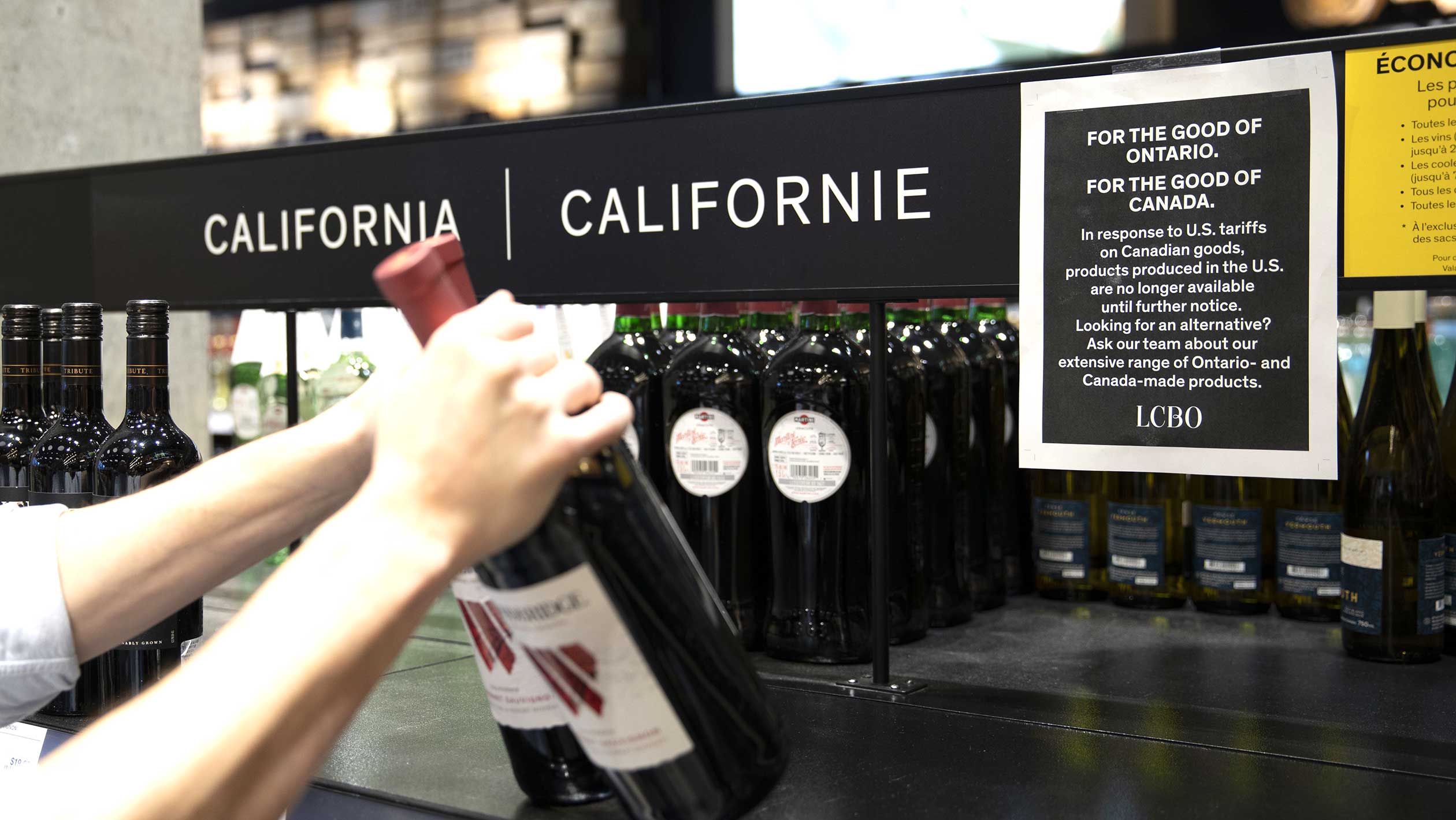
Almost exactly one year ago, President Donald Trump announced drastic levies to be implemented on international imports. In response, Canadians got mad—then they got even. California Cabernet Sauvignon and Chardonnay, along with all other American wines, were pulled off shelves. Unsold bourbon and other U.S.-made bottles were seized.
Canada is a small market, with just 41 million residents compared to the U.S.’s 340 million. But they are—or were—big supporters of U.S. wine and spirits.
Previously, Ontario purchased almost $1 billion of American alcohol annually. Canada has been the largest buyer of California and Washington wine. In 2024, 35 percent of U.S. wine exports went northward.

Don’t miss the latest drinks industry news and insights. Sign up for our award-winning newsletters and get insider intel, resources, and trends delivered to your inbox every week.
Now, U.S.-Canada relations are prickly. Exports of American spirits to Canada plummeted 85 percent in 2025, with under $10 million worth of product crossing the border. U.S. wine exports to Canada have plunged 94 percent. And the ongoing trade dispute is devastating producers on both sides of the border.
“Canada is one of our five largest export markets,” says Chris Swonger, the president of the Distilled Spirits Council of the United States (DISCUS). “We are anxious. We are being hurt by it significantly. We are hopeful that U.S. and Canadian relations will improve.”
U.S. wineries and distilleries have lost thousands, if not millions, in sales, and in turn, lost Canadian customers, who can’t access their favorite American drinks. Canadian importers, distributors, and restaurant owners are dealing with holes—in their portfolios, on their back bars, in their wine programs.
Beverage alcohol remains a victim of geopolitical unrest. The potential for alcohol to flow freely across the borders relies on external factors, and tensions and emotions are high. DISCUS filed a complaint with the Office of the U.S. Trade State Representative, accusing Canadian provinces and territories of biased markups towards Canadian spirits. Ontario premier banished Crown Royal, a Canadian whisky, from the province after the brand’s parent company Diageo announced a plan to move production to the U.S.
As we approach the first anniversary of the tariffs, SevenFifty Daily looked at how U.S. tariffs and Canadian boycotts have upended the industry—and what their impact continues to be moving forward.
The Initial Blow
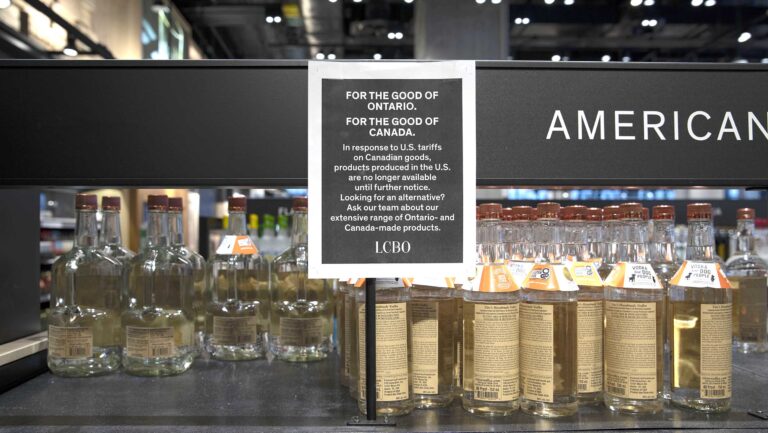
When President Trump enacted punitive tariffs on Canada, the country retaliated by targeting alcohol—a politically potent and highly visible category. Provinces and territories (Canada controls its flow of liquor and wine through government-led monopolies) seized existing stocks of American products and pulled bottles from shelves.
The result was chaos. American producers scrambled as wines were frozen in transit. Canadian wine shops lost expected inventory—Toronto’s Grape Witches had 100 cases of inbound U.S. wine frozen.
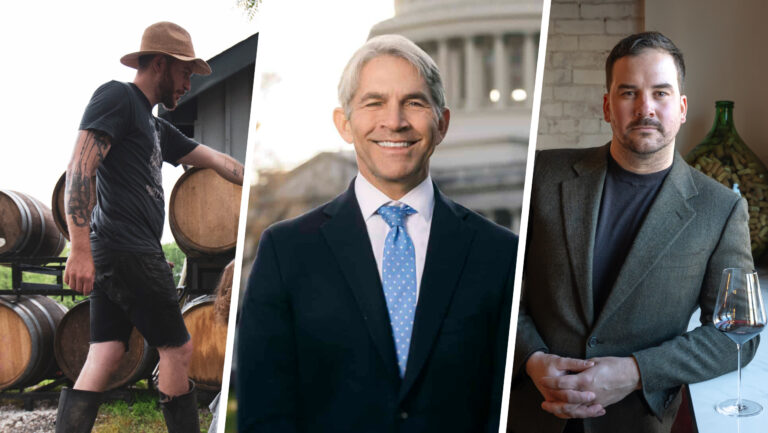
Todd Cavallo, the owner-winemaker of Wild Arc in New York’s Hudson Valley, had $10,000 in orders—a substantial number for a small producer—cancelled when the tariffs started.
“We were already barely surviving with the global market downturn,” says Cavallo, who counted Ontario and Quebec as major markets. “We’ve had to take on additional work outside the farm to pay bills in the interim.”
Toronto-based Rogers & Company, who imports prestige California brands like Dominus, Shafer, and Duckhorn, had over $1.5 million of product seized by the Liquor Control Board of Ontario (LCBO).
“Immediate and necessary actions were staff layoffs—I couldn’t support the level of team we had,” says managing director Harris Davidson. “I closed a physical office. I’ve got delivery staff on workshare.”
Upwards of $100 million in U.S. alcohol remains in government possession.
Unpacking the Losses
The impact goes beyond financial losses. There are existential elements to losing the Canadian market. How do you recoup time and money spent on the ground, visiting accounts and building connections with industry leaders north of the border? How do American producers stay top-of-mind when their products aren’t even available?
“Seven months off the shelves is a lifetime,” says Swonger.
The Bard Distillery, a small Kentucky distillery, found huge success in Alberta and British Columbia. In 2025, they planned to work with that momentum to expand across Canada. They expected the market to account for 15 to 20 percent of sales. Then boycotts hit.
“For a small distillery like ours, every case we sell makes a difference,” says Thomas Bard, the distillery’s cofounder and the craft chair of the Kentucky Distillers’ Association.
He has tried to pivot and move Canadian allocations elsewhere. “U.S. distribution is difficult for small producers with limited resources,” says Bard. “With the U.S. feeling the economic pinch, sales are slow. New markets are hard to enter.”
American Producers Enter Their Villain Arc
Even if the situation returns to a calmer state, relations between the two countries will remain delicate. “Small Canadian importers we work with can’t take the risk of inbound wine becoming unsellable when whims shift yet again,” says Cavallo. “We lost our largest export market for at least three years.”
“Even if everything is suddenly greenlighted to ship, Canadian consumer sentiment against all American products is permanent, massively damaged for a generation,” says Alex Krause, the cofounder of Birichino in Santa Cruz, California.
In response to the U.S.-Canada trade war, American wines and spirits have become martyrs, stuck in a complex dispute between the governing bodies of two neighboring countries.
“It’s incredibly damaging for the California wine category,” says Davidson. “It’s stigmatizing. It’s telling consumers where they should focus their resentment.”
Bard has seen a tremendous decline in Canadian visitors on the Kentucky Bourbon Trail. “Those that do come in are wonderful, quick to let us know they love our product, and understand this is a political issue. They maintain they stand united against their threat to their sovereignty.”
New York’s Seneca Lake wineries have also seen a huge decline in Canadian visitors, who would hop the border to pop by. “Canadians are visiting Canadian wineries, and they’ve launched campaigns encouraging them to stay home,” says Brittany Gibson, the executive director of the Seneca Lake Wine Trail.
There are still fans of American alcohol in the Canadian market. “We included two U.S. wines at our holiday tastings in Toronto and Ottawa and we sold out of both,” says Nicole Campbell, a founder of Grape Witches. “I felt like folks were just really excited to have it—we didn’t have any pushback about the tariffs, just sad faces when we sold out.”
“These are small farmers we love, often on just the other side of the border. They have nothing to do with the tariffs,” she continues.
In December 2025, provinces started selling American products again, but there’s an asterix—it’s only temporary, to offload soon-to-expire products. The money will go towards charity.
There have been lines every day. The province of Nova Scotia (population one million) sold $2.2 million of American spirits in the first week.
“We will not be ordering any more from the United States once this inventory is gone,” Tim Houston, the Nova Scotia premier, said in a statement. “But Nova Scotians have already paid for this product. We don’t want it to go to waste.”
New Opportunities Arise
Governing bodies urged Canadians to find facsimiles of their favorite American products. International producers have been eyeing Canada, and are investing more in the market. Importing to the U.S. right now is tricky with President Trump’s new tariffs (for example, South African wines are subject to a 30 percent tariff).
The Canadian market has new space without U.S. alcohol for sale—on the shelf, on wine lists, and in consumers’ glasses.
“We believe that tariffs are a threat but also an opportunity,” says Alessandro Pasqua, the U.S. president of Italy’s Pasqua Wines. “We are confident that quality wines have the chance to gain more visibility in this crisis situation and we’re well positioned to meet that demand.”
Canadian makers have also benefitted from the event. The LCBO has seen demand for Ontario products jump 20 percent. Ontario wine sales rose 56 percent, and Canadian wines are up 19 percent. Campbell has never sold more Canadian wine than at her 2025 holiday tastings.
“We’ve seen a significant increase in sales to bars and restaurants this year, as many operators intentionally move away from U.S. competitor brands and prioritize carrying Canadian-made products,” says Steve McVicker, the cofounder of Matt & Steve’s, who make Canadian canned Caesars.
However, while Canada makes excellent Chardonnay and Pinot Noir, many feel there’s no replicating product like California wine, or bourbon, which is legally required to be made in the U.S. “We can try to import wines, but there’s no substitute for Napa Cabernet,” says Davidson. “We’re seeing people migrate to other categories. There’s no one-to-one substitute.”
“The American and Canadian spirits industry is close,” says Swonger. “We’re intertwined—an industry of distinctive products. You can’t make American whiskey in Canada. You can’t make Canadian whisky in the U.S. American consumers love Canadian whisky. Canadian consumers love American whiskey.”
Christian P. Hamel, who runs the wine program at the glitzy, four-floor Harbour Sixty in Toronto, started the year with a good stash of American wine to pull from. It’s dwindling, so he’s introducing guests to new categories. Recently, he got a California Cabernet Sauvignon drinker to sip something from China. “I’m happy that the other categories that maybe didn’t get the spotlight before are stepping in,” says Hamel.

Bad Neighbors
All of these government decisions and headlines forget that the Canadian and U.S. alcohol industries are closely linked as neighbors.
“Canada is our largest and most important export market,” says Kristina Kelley, the executive director of the Washington State Wine Commission. “We’ve been working with Canada for decades—bringing our winemakers there, building relationships with trade and media.”
They’ve built education platforms and are bringing key members of Canadian trade and media down to keep the state top-of-mind. “We’ve recognized how valuable the Canadian market is to our economic welfare,” Kelley continues.
That relationship only deepened in 2024, when a devastating frost wiped out 90 percent of the Okanagan Valley’s production. The British Columbia government allowed producers to source grapes from Washington while their vineyards recovered, which in turn, helped Washington State’s oversupply issue. In total, 4,500 tons of Washington grapes were exported to British Columbia in 2024.
All of this is subject to tariffs now, as well as other deterrents. For example, JoieFarm, a southern Okanagan producer, tried to sell their wines, sourced from Washington for the 2024 vintage, to the LCBO. While the wines were vinified on Canadian soil, by Canadians, they weren’t Canadian enough.
Understandably, emotions are high on both sides of the border.
“The most frustrating thing is, when tariffs are discussed between the U.S. and other countries, spirits are immediately targeted in retaliation, even when spirits are not part of the trade disagreement,” says Bard. “It’s an easy target—-such a visible market, and our livelihoods are immediately and directly impacted, arbitrarily and severely.”
“Consumers should be able to choose how they express their displeasure with how we’re being treated by the Trump government,” says Davidson. “Whether you buy American wine or whiskey.”

Dispatch
Sign up for our award-winning newsletter
Don’t miss the latest drinks industry news and insights—delivered to your inbox every week.
By day, Kate Dingwall is a writer, editor, and photographer covering the intersection between spirits, business, culture, and travel. By night, she’s a WSET-trained working sommelier at one of the top restaurants in Canada. She writes about strong drinks and nice wines for Forbes.com, Wine Enthusiast, Vogue, Maxim, InsideHook, People Magazine, Southern Living, Liquor.com, and The Toronto Star.