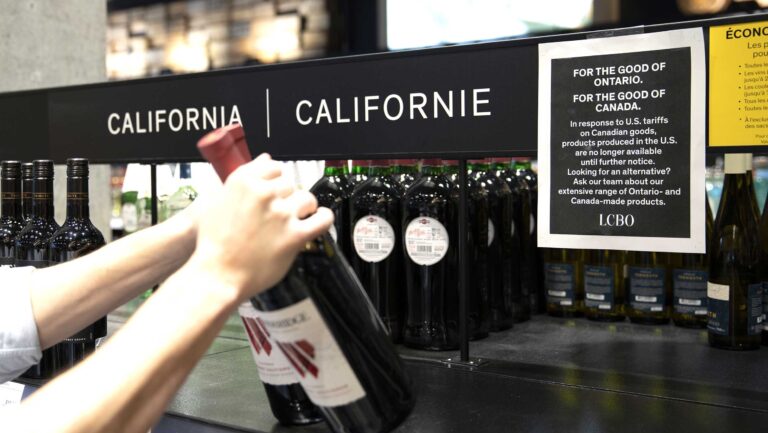
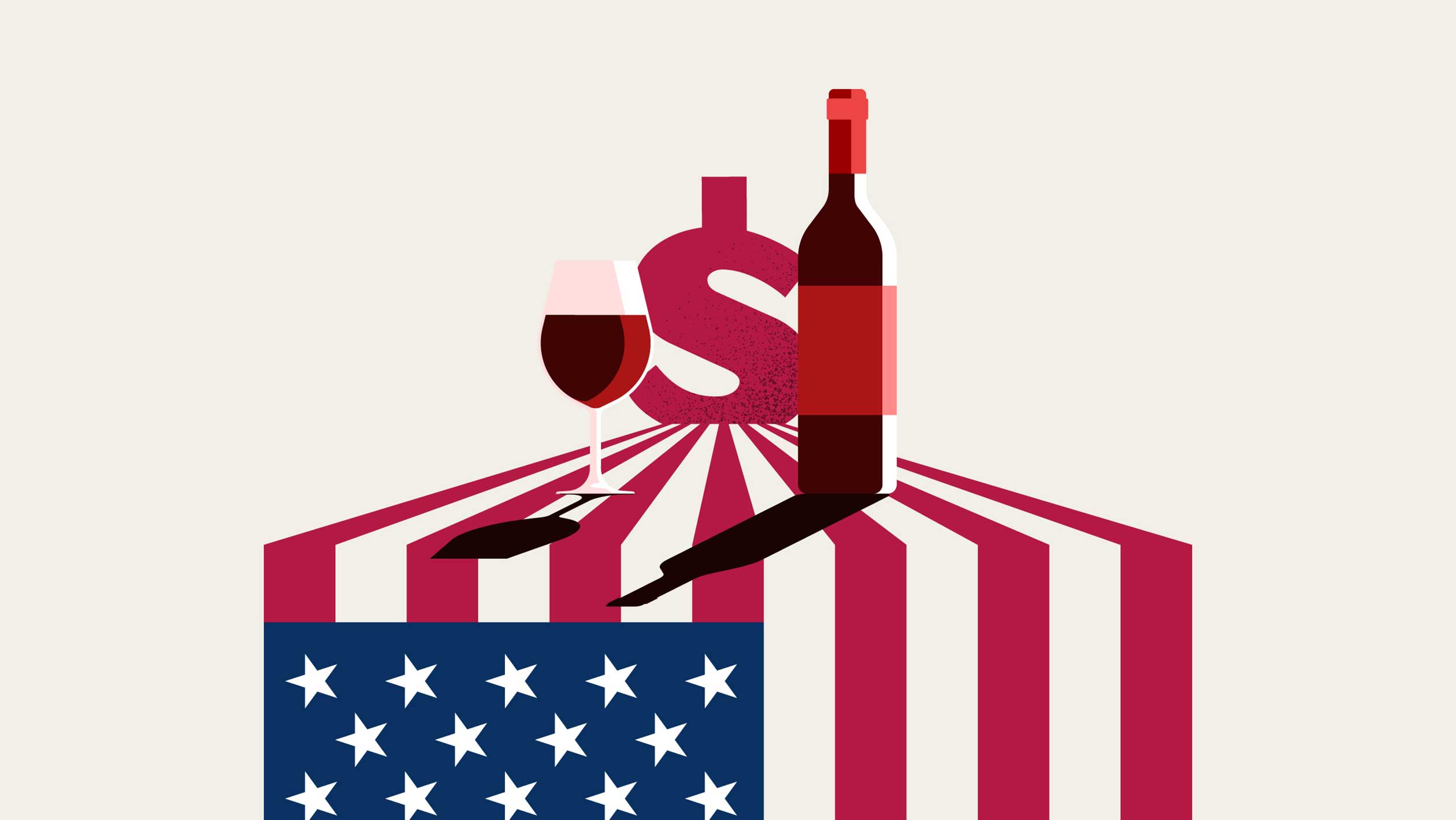
On February 20, 2026, the Manhattan-based wine importer Victor Owen Schwartz, the owner of V.O.S. Selections, won his case against President Donald Trump’s tariffs, V.O.S. Selections v Trump, in the Supreme Court—a small-business David felling the executive branch’s Goliath. The majority ruled the tariffs had been unlawfully imposed under the International Emergency Economic Powers Act (IEEPA). “It’s about the division of powers and the administration blatantly going against the Constitution,” Schwartz told SevenFifty Daily after the verdict was announced. Still, after listening to the president’s furious response to the decision, Schwartz predicted, “He’s going to put new tariffs in. If we get refunds, the money is going right back to the government.”
Indeed, Trump immediately declared universal 10 percent tariffs under a different law, Section 122 of the Trade Act of 1974. While those, in turn, are being challenged by the attorneys general of 24 states, they remain in effect for 150 days. It’s the latest sally in trade wars that have pitted the Trump administration, not just against other trading partners, but against import-dependent sectors of the American economy like wine. Having endured tariffs during Trump’s first term, and again in 2025 after repeated presidential flip-flopping, U.S. wine pros are expressing frustration.
“This feels like another pivot we need to bob and weave with to keep our business going,” says Matt Goss, the co-owner of Credo Imports in Pennsylvania. “Having somewhat arbitrary tariffs applied to countries where we do business is difficult to navigate, but having them change on a whim and frequently adds another level of complexity.”
Don’t miss the latest drinks industry news and insights. Sign up for our award-winning newsletters and get insider intel, resources, and trends delivered to your inbox every week.
Balance sheet projections have become nearly impossible. “We can’t solve problems in advance because we don’t know what’s happening,” says Daminao Sorato, the vice president of on-trade sales for importer Ethica Wines.
The situation has made pricing especially dicey. “We try to make it predictable,” says David Parker, the CEO of Benchmark Wine Group. But with the tariffs, “every day it’s like a new number. No one can run a business efficiently if you don’t have reliable information you can trust to stay the same. You can’t put those kinds of changes in front of customers.”
Indeed, customers down the line are also feeling the effects of the erratic policies. “The hardest part of the tariffs isn’t the percentage increase but the uncertainty,” says Adrien Falcon, the co-owner and beverage director at the Manhattan restaurant Arvine. “Pricing becomes unstable. There’s a massive supply chain going through those wines. Whoever opens that bottle is the last tiny part of an immense process that made that bottle happen. Everyone has to protect their business.”
That entails increasing prices in ways that shore up the rationality that the tariffs have upended. “Because of the three-tier system, you can’t turn the tap on and off for pricing,” explains Andrew Sinclair, the CEO of González Byass USA. “At the distributor level, it’s such an incredible amount of negotiation and administrative work that, with any price increase, they expect a minimum 90-day notice. There are regional retailers who insist on 120 days. You can’t keep on playing whack-a-mole.”
Setting prices is more akin to Tetris. It’s a delicate balance to achieve, as players from producers to importers and distributors to on-premise and retail buyers discern how much of a hit they, their suppliers, and their buyers can take and still play the game.

Prices Are Going Up, But the Pain Isn’t Shared Equally
Last year, wine drinkers were generally sheltered from tariffs. Many importers got out ahead of Trump’s orders. “We hedged our bets with $60 million of European inventory,” says Rocco Lombardo, the president of Wilson Daniels. “We brought in as much as possible before tariffs were levied in April, so our price increases were none in 2025.”
González Byass didn’t raise prices until September, and it takes months for the changes to cascade down through the three tiers, according to Sinclair. Some distributors also strategically just “took it on the chin, versus raising prices and losing accounts,” notes Vincent Morrow, MS, the wine and beverage director for Union Square Hospitality Group in New York.
In 2026, however, the scales have tipped. “A big amount of wine was digested by the market, so there is not a huge inventory here anymore,” says Lamberto Frescobaldi, the president of Italian producer Marchesi de’ Frescobaldi. As stateside supplies dwindle, business costs are soaring. The dollar has been devalued by the tariffs, and the war in the Middle East is driving up shipping fees. “If somebody hasn’t raised prices by now, they’re closing down shop,” says Volio Imports founder Charles Lazzara, who raised prices on inventory in November.
“What we’re seeing now is a more layered and complex environment where suppliers, importers, distributors, and retailers are all being forced to rethink their strategies at the same time,” explains Lance Emerson, the senior vice president of commercial finance at RNDC. “Many suppliers initially absorbed the tariff impact to stay competitive, but the pressure has steadily mounted, and we’re now entering a phase where adjustments are becoming unavoidable.”
Hardest hit will be the lowest end of the market, “where even subtle changes can have dramatic impact on volume and velocity of sales,” says Sinclair.
“We have an under-$25 section, and one of the customers was like, ‘Wait a minute. I remember when this bottle was $3 cheaper,’” says Simi Grewal, the co-owner of the bottle shop DECANTsf in San Francisco. “It’s a significant jump on the lower end. People really notice such a striking difference.”
They’re not overreacting. A 2025 paper by the National Bureau of Economic Research examining tariffs on European wines during Trump’s first term found that wine drinkers actually pay more than the tariffs themselves. As the authors explain, “markups along the chain of intermediation between importer and consumer can scale up the percent pass-through in tariff costs, cumulating over distribution stages and resulting in a direct dollar impact on prices to be greater than tariffs paid, even though the percent change in consumer price is less than the tariff ad-valorem rate.”
When consumers get more price-conscious, so do pros. As importers and distributors make safer bets against slimmer margins, the $25 to $50 range is also suffering, says Schwartz. “There’s a lot of product looking for homes,” he says. “You can’t imagine the number of emails I get every day from terrific producers. I want to consider them, but the appetite for risk is diminished.”
Only the high end can easily absorb price increases. Champagne’s inflation has been especially steep, but Parker is seeing record sales on fine and rare wines. “The volumes are going up even though prices are going up,” he says. “One way you read that is it’s added a bit of prestige to buying habits.” The Haves are asserting their Haveness, so to speak.
But that sector goes for prestige labels. “If you’re not a known brand, the super high end will also be very challenging,” predicts Lazzara.
Though the Trump administration argued that tariffs will benefit American producers, prices are also rising on domestic wines. With steel tariffs at 50 percent, Jon Murray, the general manager of New Mexico’s Vara Winery and Distillery, is paying a 28 to 32 percent surcharge on imported tirage cages. “Logistics, getting through port, customs clearing, everyone is adding on their three to eight percent surcharge every step of the way.” Last year, he offset the average increase of 80 cents per bottle by switching to a local label maker and getting cheaper fruit on the oversaturated grape market.
The 2026 books may not balance as well. At another small U.S. winery, the Central Coast’s JL Wood, co-owner Paul Morrison says he will raise prices against increased costs of “key imported inputs.” In the meantime, notes Oscar Garcia Moncada, the wine and spirits director at Manhattan’s 67 Wine and Spirits, “Tariffs haven’t increased sales of American wines.”

How Suppliers Are Strategizing Around Tariffs’ Increased Costs
Even as they nudge prices upward, importers struggle to minimize buyers’ pain. “Everyone is prioritizing stability; suppliers are reallocating marketing spend, optimizing logistics, and finding operational efficiencies to avoid sharp shocks to consumers,” Emerson notes.
“We ran through our book four times last year,” says Schwartz. “We had to look at every item to figure how to possibly raise prices, absorb some, pass some on. It was navigating through icebergs. Every time we get a container, we’re looking at what’s coming in and pricing it accordingly with a very sharp eye.”
The situation is testing the relationship between producers and importers as they negotiate how to share the burden. “The conversation is very sensitive,” says Panebianco Wines and DB Wine Selection owner Nunzio Castaldo, who imports 200 small Italian and French producers. With President Trump threatening to raise tariffs to 15 percent, “my proposition is if we can split the tariffs, we can leave prices as is,” Castaldo adds. “Otherwise, if they can only do five percent, I will do the same, and we adjust prices with the remaining five percent. If they cannot contribute anything, it’s my decision to make a five or 10 percent adjustment. You cannot add the tariff all the way because you will be completely out of the game.”
That’s why no one is simply jacking up prices. Wilson Daniels held off on increases until February 1 when it added four to six percent to the price of its wines. “We had no choice because we could only absorb so much,” says Lombardo. With the devaluation of the dollar, the actual cost of goods from western Europe has increased by 20 to 25 percent, he says. “So we passed on about 20 percent of the increase in cost, and the other 80 percent we split between us and the producers.”
Sorato’s increase at Ethica Wines was similar. “The distributor, final customer, producer—everyone was okay to increase prices in a minimum way to not lose volume,” he says. He didn’t go any higher than six percent. “You will lose significant sales if you bump up to the next price point.”
Some aren’t worried about that. “In our own situation, we can move up in price and still offer excellent value for money,” Sinclair says. “Spain as a country of origin is a good place to do that, as wines are undervalued compared to other Old World producers.”
For producers from more expensive regions, flexibility has helped. “Our approach is not to react short term but be very tactical,” says Stephane Decaux the CEO of Champagne Piper-Heidsieck. “We are working closely with our U.S. partners to manage the increases and mitigate their full impact, so we can share the burden and not reflect the full impact of the tariff or the exchange rate increase. Agility is key for us this year.”
At Volio Imports, Lazzara is using his marketing budgets as a slush fund, moving money from marketing for producers unable to split the cost of the tariffs. As prices rise, he says, “We may then move resources back to marketing, so that we can go out and work hard to make sure people see the value in the new price.”
In the meantime, the Trump administration announced in April that tariff refund applications are open. Some are better positioned than others to receive them. “Way before the SCOTUS decision, we decided we would protest and send in a petition after every shipment because that gives us a right to request a refund if it is forthcoming,” says Sinclair.
But on- and off-premise buyers should not expect to see price reductions following refunds. “So many people have cut costs and reduced pricing, and they’re so far behind on expected revenue, I think you’ll see much of any refund being put towards getting caught up on higher production costs and marketing, covering debt, and salaries,” says Goss.

What Retailers and Restaurants Are Doing to Keep Sales Going
At the same time they’re staring down 2026 price increases, restaurants and retailers are suffering declining demand. Buyers have been innovating to make the numbers work. “What we’ve observed since tariffs went into effect is a shift toward more intentional, scenario-based planning,” notes Emerson. “On-premise is adjusting menus to maintain guest expectations, off-premise is curating more strategically.”
“As a buyer, I have to be very careful now with the bread and butter brands we need in store that are everyday go-to’s and be less creative with new wineries and wine projects that require extra work moving from shelves,” says Garcia Moncada. When he runs flash sales and in-store tastings offering 10 to 15 percent off, he sees product move. “But it’s still challenging. We have to throw darts at the board and see what sticks.”
At DECANTsf, “Things that we always relied on to be $10 to $14, I’ve had to push out of that category or just take a hit on because I know people love it,” Grewal says. “I’m just hoping the volume will move.” She is also changing up inventory, carrying half as many Sancerres, foregoing preorders on imported rosé, and even diversifying beyond wine to carry pastas, oils, dry goods, and gifts.
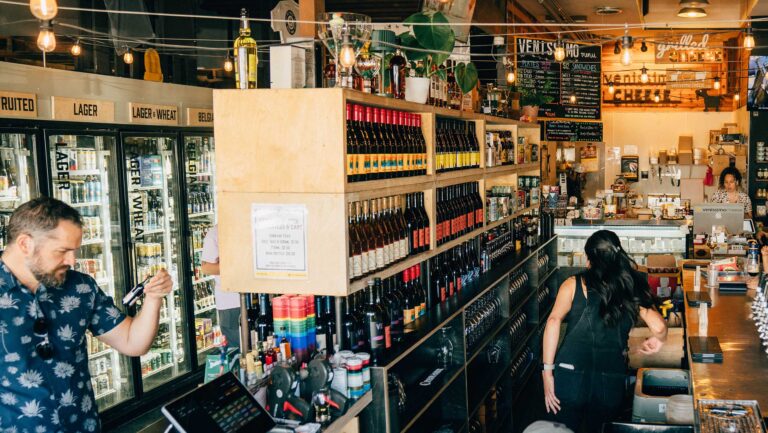
At Rocks & Acid, a wine shop and bar in Chapel Hill, North Carolina, owner Paula de Pano has been able to hold off on raising bottle prices because she also pours by the glass, and she’s raised glass prices by $2. At $18 for three two-ounce pours, tasting flights also help, as do events. When she can’t afford a whole case from a producer she wants to support, she has other retailers split it with her.
Restaurants, for their part, “eat cost, decrease margins, keep reasonable prices for guests,” says Falcon. “You just need to keep sourcing, tasting new things, so you’re not sitting on a wine order for weeks where nothing is selling. You keep a stream of ideas going so you can take it from there.”
At Union Square Hospitality Group, Morrow is mastering that approach to buck trends. “We swam upriver to make our list less expensive,” he says. He tells his wine directors, “You need X amount of wines by the bottle under $80 because those slots are moving.” Like de Pano, he prices by-the-glass and event wines higher so that he can keep prices down on the bottle sections. “There is price elasticity with Sancerre and Chablis that doesn’t exist for other SKUs,” adds Morrow. “If you raise Sancerre by a dollar, you can lower markup in bottles.” It helps to have multiple restaurants to work with. “If there’s a 28-case discount, Union Square Cafe can buy 20 cases and walk eight cases to Gramercy Tavern.”
All of that is easier when your restaurants are on the higher end. Mark Bucher is the owner of the mid-priced steak frites chain Medium Rare. “If a wine is too expensive and it falls out of my matrix, I dump the wine,” he says. Under tariffs, he’s switched out his entire list. And still, he says, “Wine sales are down 50 percent, bottles maybe 80 percent. They are getting a glass, not a second glass. For me, it makes a big difference. Mid-market always gets hurt. That’s the majority of restaurants in America.”
Bucher’s experience proves Goss’s prediction that tariff-fueled inflation will only exacerbate the downturn in alcohol consumption. In the meantime, against increasingly miserable odds, importers, “will do as we always do: communicate honestly and quickly with our producers and distribution partners to arrange a new way to split costs, incentivize larger orders and scout new unexplored areas of the market,” says Goss. “We’ll survive and keep advocating for our winemakers. But it is a constant challenge.”

Dispatch
Sign up for our award-winning newsletter
Don’t miss the latest drinks industry news and insights—delivered to your inbox every week.
Betsy Andrews is an award-winning journalist and poet and the co-author of Coastal: 130 Recipes from a California Road Trip. Her writing can be found at betsyandrews.contently.com.