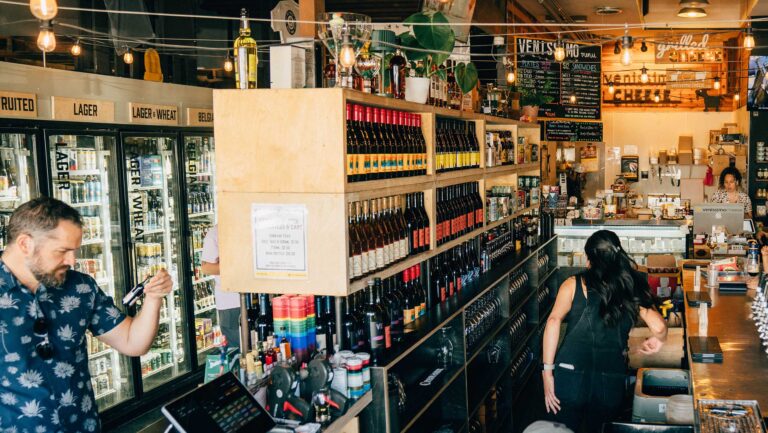
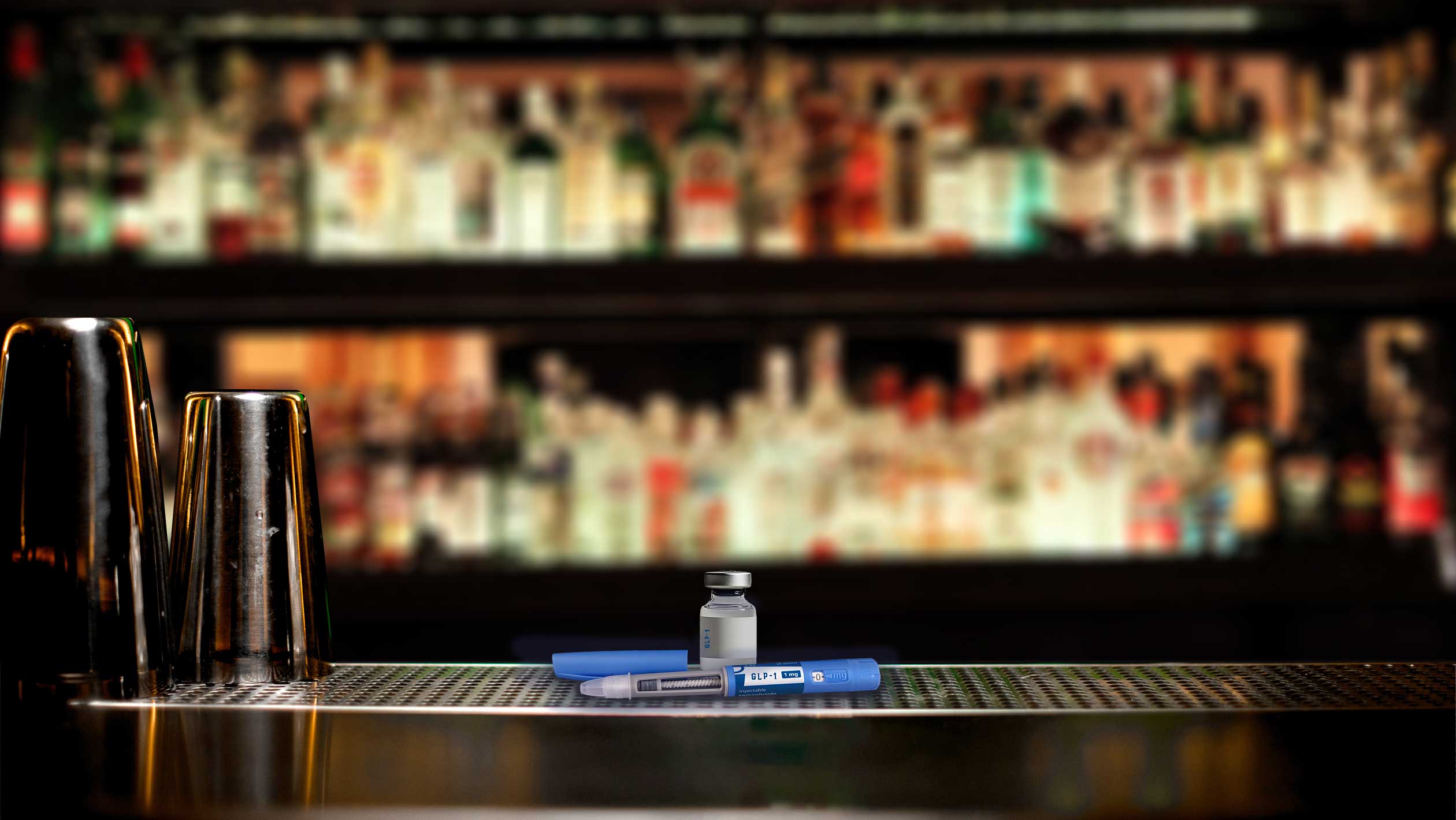
Trova Wine and Market, a sommelier-driven wine bar in Dallas, Texas, shut its doors in January. When conducting the postmortem, owner Michelle Bonds saw two culprits: the growing sober curious movement and Ozempic.
Likewise, when Fundsmith Equity, an investment fund run by stock market guru Terry Smith, offloaded its stake in Diageo that same month, it pointed fingers at increasing threats from GLP-1 antagonists like Ozempic and Wegovy. “We suspect the entire drinks sector is in the early stages of being impacted negatively by weight loss drugs,” Smith wrote in a shareholder letter.
Ozempic and Wegovy are part of a new class of semaglutide medications (a subcategory of GLP-1 antagonists) initially introduced as a game-changing treatment for type 2 diabetes but popularized by its appetite-curbing side effects.
Don’t miss the latest drinks industry news and insights. Sign up for our award-winning newsletters and get insider intel, resources, and trends delivered to your inbox every week.
Now, it’s estimated that one in eight American adults have taken the drugs—including 15 million people currently using it. Novo Nordisk, the parent company and manufacturer of Ozempic and Wegovy, says 25,000 Americans start Wegovy every week. As these drugs continue to become more commonplace, many are finding Ozempic tames cravings beyond food. Patients are reporting newly developed aversions or complete intolerances to alcohol.
“Even half a glass turned me absolutely inside out,” says Stefanee Clontz, a director of operations at Atlanta-based medical spa Hydraplus. “I have steered clear of red wine for almost 18 months—and I only took semaglutide for 12 weeks.”
In February, a government-funded study showed that Ozempic’s impact on drinks consumption has the potential to treat alcohol abuse. It’s an incredible breakthrough for addiction treatment. The growing popularity of these drugs, however, is sparking concern for alcohol producers, retailers, and marketers.
If GLP-1 medications do discourage drinking, it’s just one more piece of bad news following a tumultuous few years for wine, spirits, and beer. The alcohol industry is currently navigating tariffs, declining consumption, climate disasters, and neo-prohibitionism. Should Ozempic also be raising alarm bells?
As these questions become increasingly germane, SevenFifty Daily spoke to GLP-1 researchers, doctors, and beverage professionals to find out if Ozempic is playing a part in floundering wine and spirits sales, and whether it will have an economic impact on the alcohol industry going forward.
Ozempic’s Impact on Alcohol Consumption
Active ingredients in Ozempic (and similar semaglutide drugs like Wegovy and Rybelus, though this article will refer to them as Ozempic, as a widely used catchall) mimic a natural hormone called glucagon-like peptide-1, or GLP-1, which slows down how quickly food is digested, in turn suppressing the appetite and signalling fullness to the brain.
Jenn Tosatto, a beverage director in Kansas City, and her mother started an Ozempic alternative after the stress of the pandemic derailed their health goals. In the last year, it helped Tosatto lose 94 pounds.
Its merits as a revolutionary new diet drug aren’t the only upsides of Ozempic. “Beyond the first descriptions of GLP-1 as an insulin-stimulating hormone about 40 years ago, we now have data establishing GLP-1 medicines as effective for weight loss, reduction of heart disease, strokes, sleep apnea, osteoarthritis, kidney disease, and metabolic liver disease, with many trials exploring new indications,” says Daniel Drucker, a Canadian endocrinologist who has pioneered GLP-1 research. “It has been a very exciting field to work in.”
The drug has its potential downsides for those on it, namely, adverse reactions to alcohol.
“The day you take your injection, you really don’t want to eat or drink much of anything,” says Tosatto.
Clontz, who frequently works with weight loss clients and prescribes GLP-1 drugs, has noticed Ozempic completely changes a person’s previously routine alcohol intake. “Our clients who drink red wine regularly say their alcohol consumption has decreased significantly since they started their semaglutide program.”
The biggest switch: diminished sugar cravings. “When clients no longer crave sugar, they drink fewer glasses of wine,” she continues. “The acidity of red wine—specifically red, not so much white or sparkling—causes such terrible nausea that clients are averse to enjoying alcohol like they did in the past.”
“I can’t stomach even a sip of alcohol,” says 32-year-old Tania Williams, a journalist who started Wegovy two months ago.
The Ripple Effects of Weight Loss Drugs
While these side effects are common, they aren’t universal. Some patients can continue drinking, others can indulge in small doses. Many have to completely abstain.
Bartender Alex Jump, the founder of Focus on Health and a 2023 SevenFifty Daily Drinks Innovator, has found demand for non-alcoholic products is stronger than ever. “I certainly think this is partially due to this new cultural phenomenon [of GLP-1 drugs] we are seeing in the U.S.”
Tosatto is noticing a shift away from sugar, specifically from guests who mention they’re on Ozempic—they’re abandoning high-sugar drinks entirely, or following alcoholic options with zero-proof cocktails or sodas.
“It might be as subtle as a vodka Red Bull drinker ordering Greyhound [a gin or vodka and grapefruit juice cocktail],” she says. “Or it’s a switch from hard liquor to seltzers and beers.” On Reddit, entire subreddits are dedicated to the question of what to drink while on Ozempic; suggestions for night-out drinks include: soda water with bitters, White Claws, white wine, vodka tonics, and water.
A Toronto cocktail bar owner, who requested anonymity, found his happy hour has been booming, and he doesn’t think it’s the deals—guidelines for Ozempic suggest alcohol consumption earlier in the day rather than in the evening. He won’t dig into specifics out of respect for customer privacy. “All I can confirm is that people’s drinking habits are much different than they were before Ozempic became so widespread.” His observations are backed up by the numbers; according to CGA’s Cocktail Sales Tracker, velocity in the late-night period (10 pm to 6 am) was down nine percent year-on-year for 2023, while it increased in the mid-afternoon period (3 pm to 6 pm) by 16 percent.
Just as Ozempic is altering drinking habits, it’s affecting purchasing patterns. “I’m cancelling that red wine subscription,” a Reddit user posted on the Ozempic subreddit.
Tommy Fogarty, the owner of Thomas Fogarty Winery, who specializes in single-vineyard Santa Cruz wines, has seen loyal subscribers pause their membership. “A couple club members have been honest with me about the fact that they’re curtailing wine strictly because they’re taking Ozempic or an equivalent,” he says. “I figure if there’s two or three telling me, there’s probably many more who take the drug and aren’t comfortable admitting it.”
An owner of a small-batch natural wine club, who asked to remain anonymous in order to share these figures, has seen subscribers drop 50 percent between 2022 and 2024. They find this a reflection of a more general change in consumer behavior, which includes women embracing weight loss drugs.
“Ozempic has impacted my wine intake,” says Melissa Galla, who subscribed to said club. “It turns off the noise and cravings for alcohol, just like it does for food. I still love and enjoy wine and cocktails, but my consumption has decreased, and so has my tolerance.” She cancelled her subscription shortly after starting Ozempic.
Should Alcohol Producers Be Worried?
After a white-hot few decades of sales and growth, the alcohol industry is in an uncomfortable period of course correction. Demand is down, sales are slow, tensions are high, and new threats like tariffs and Ozempic exacerbate the situation.
Joshua Brown, the beverage director at Pennsylvania 6, Jack & Charlie’s, and Leonetta in New York City, doesn’t think Ozempic is the biggest threat to the industry—it’s the drug in concert with everything else going on. “These factors combined with Ozempic could have an impact,” he says. “Lifestyle changes coming off the lockdown: more people vape, more people do CBD, more people don’t drink. All of these factors have led to a downturn in ordering wine.”
The wine club owner who has seen their subscriptions drop off also attributes it to the recession economy, a decline in alcohol consumption more generally, and alarming headlines about alcohol’s impact on health.
“I do think it is a bit too early for us to credit the recent slowing in consumption of alcohol solely to GLP-1s,” says Jump. “Instead, what I believe we are seeing is a larger change in cultural drivers including (and, maybe primarily) a desire for a healthier lifestyle.”
Smith, when acknowledging that he sold off his Diageo stakes, predicted that consumers will be drinking less, but better. Tosatto has also noticed this—she finds both her and her mother have a more intentional relationship to alcohol after starting on a semaglutide. They savor every sip of one glass. “I’ve noticed that some of my guests on GLP-1 drugs have similar approaches now,” she says. “It’s not about not drinking. It’s about being more mindful about your drinking.”
Change is afoot in the industry and Ozempic’s role is part of a narrative that is still unfolding. Is Ozempic an independent threat, or part of a larger shift towards wellness? “The bar industry needs to be ready to anticipate these challenges,” says Jump. “We need to be ready to adapt.”

Dispatch
Sign up for our award-winning newsletter
Don’t miss the latest drinks industry news and insights—delivered to your inbox every week.
By day, Kate Dingwall is a writer, editor, and photographer covering the intersection between spirits, business, culture, and travel. By night, she’s a WSET-trained working sommelier at one of the top restaurants in Canada. She writes about strong drinks and nice wines for Forbes.com, Wine Enthusiast, Vogue, Maxim, InsideHook, People Magazine, Southern Living, Liquor.com, and The Toronto Star.