As recently as 2022, and still to this date in some states, on-premise establishments that served beverages with THC risked forfeiting their liquor license. The message from regulators was clear: weed and alcohol couldn’t coexist.
What a difference a few years make. Fast forward to October 2025, and currently liquor-licensed premises in nearly a dozen states serve cannabis-infused beverages. Visitors to bars and restaurants across the country will spend millions this year to drink them on-premise. And this is just the beginning; according to a report from cannabis economist Beau Whitney the estimated potential annual sales revenue of THC beverages in bars alone is more than $663 million.
Those figures are motivating. Many state representatives have found ways to open the door to THC beverages in their state’s bars and restaurants—and many bar owners are already experimenting with them on their menus. With a decline in alcohol consumption, these drinks have the potential to bring in new customers, offer an alternative to bargoers who want to cut back, and appeal to of-age Gen Z consumers who have shown a preference for cannabis.
Don’t miss the latest drinks industry news and insights. Sign up for our award-winning newsletters and get insider intel, resources, and trends delivered to your inbox every week.
With the market for on-premise THC beverages still in its infancy, SevenFifty Daily spoke to bar owners, lobbyists, and cannabis experts to learn more about this new revenue channel and how it has impacted the bar business.
New Legislation Provides Clear Legal Path for Sales
For a long while, cannabis beverages were more of an afterthought in the burgeoning cannabis industry. But then, the 2018 Farm Bill legalized hemp consisting of THC content below 0.3 percent, distinguishing it from the higher THC-concentrated marijuana. The THC threshold for hemp applies to the product’s dry weight, not its total THC potency, which means producers can develop beverages with multiple milligrams of THC while still staying under the 0.3 percent concentration limit. This created a loophole for manufacturers of consumable hemp products to make their products strong and psychoactive, even in states that haven’t legalized recreational marijuana. Businesses were swift to capitalize on this gray area, developing a now-thriving nationwide cannabinoid drinks market. (Though proposed federal legislation could close this loophole if passed.)
Minnesota paved the way for THC beverages to be sold in bars with a 2022 law, which opened the door for venues that serve alcohol to start making and selling hemp-infused drinks with up to five milligrams of THC. The law required staff to serve the beverages directly from the can or bottle and stipulated a five-hour gap between substances for customers who wanted to consume both alcohol and THC. The latter rule was nearly impossible to monitor or enforce, and was later done away with, along with a July 2024 update which green-lighted THC beverages both on draft and for mixing into cocktails.
With a regulatory framework established, the past two years have seen other states follow with hodgepodge legislation of their own, though in many of these states—such as Texas and South Carolina—the issue faces scrutiny over health and safety concerns and the legal landscape is fast-changing.
“There’s a lot still up in the air, but we’re definitely moving forward in the right direction,” says Bob Galligan, the director of government and industry relations for the Minnesota Craft Brewers Guild, which has overseen all state legislation concerning THC beverages in bars. “We’re still the North Star for the industry and we’re pleased to see that other states are following our example.”
Finding the Balance Between Booze and THC Beverages
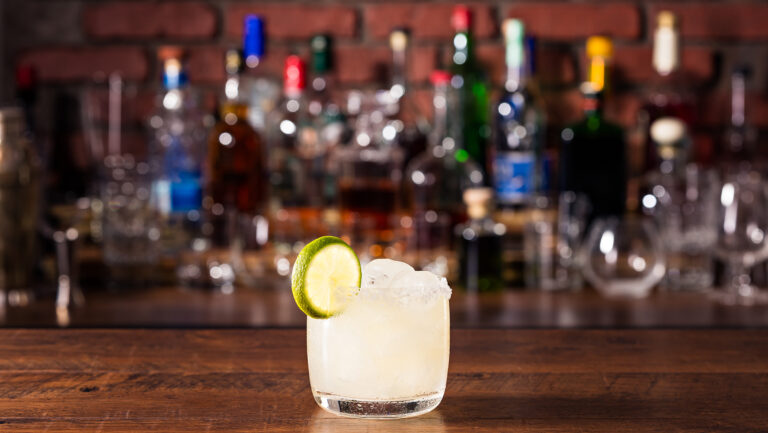
For bars integrating THC beverages onto the menu, whether through cans, on draft, or by infusing it into specialty cocktails, it’s common to start with one SKU to measure demand. In Houston, Texas, The Original Ninfa’s has served homemade Tex-Mex dishes and Margaritas since 1973. Its first THC-infused beverage, the Tranquilita Margarita, features a mix of locally made Ocho Verde cannabis spirit, non-alcoholic tequila, lime juice, and cucumber. At four milligrams of hemp-derived THC per 16-ounce drink, the Tranquilita Margarita won’t “put anyone out” after just one, according to Ninfa’s manager Carlos Martinez, but is “designed to be refreshing and different from Margaritas with alcohol.” For Ninfa’s, the response from their clientele was clear: the Tranquilita Margarita accounts for nearly 10 percent of drink sales from the menu.

The Beetle Bar & Grill in Chicago offers a trio of THC-infused beverages under the non-alcoholic section of its drink menu. Owner-operator Kitt Nicoly’s team first debuted Flora Passion Fruit Margarita, a canned drink with five milligrams of THC, back in 2023. When sales exceeded expectations—the drink accounted for 25 percent of The Beetle’s total non-alcoholic sales—Nicoly added the 10-milligram-THC Juniper Terps Botanical Seltzer and a 25-milligram-THC canned Bong Water, both from local cannabis producer Marz.
Despite its success, Nicoly doesn’t see it changing the bar’s identity. “We’re not cannabis vendors; we’re a bar and restaurant that happens to offer our NA customers three options for hemp-infused drinks,” he says. “It’s a novelty and attracts some customers we might not otherwise see, but we’re definitely traditional: beer and liquor first.”
The Earl Giles Restaurant & Distillery in Minneapolis, Minnesota, took a different approach and embraced cannabis beverages as a core part of its identity. As well as liquor and mixers, Earl Giles produces their own line, served in their restaurant and bar and distributed statewide and beyond. They also formulate beverages for other companies and offer consultation. Robert Kaiser, the head of THC, believes the market is such that it’s important to offer some options, recommending “a little variety in flavor, effect, and brands.” He adds, “We are in the restaurant space […] so having something that’s going to complement your food, too.”
The other consideration is the economics and whether THC drinks might cannibalize some profits. “Typically cocktails are a little more expensive than a THC beverage, and if people are making better margins on their drinks, it’s hard to sacrifice some of that,” says Kaiser. There’s also the cost of the license, compliance, and insurance to consider. “The ticket [bill] per client [drinking THC beverages] is usually a little smaller, but for us it has been a great value-add to the building.”
Educating the Consumer
Not all bars have seen the same results. Victoria Smith, a longtime server at Rusty’s in Naples, Florida, helped set up the tap for Howdy, a five-milligram THC-infused lemonade seltzer, in April. Four months later, Smith says Howdy sales still make up just a small percent of total draft revenue, compared to Rusty’s 13 alcoholic brews on tap. “People still don’t know what it is, and part of that is on us,” Smith says. “I think it’s a combination of it being new and people not being familiar with it, but also kind of a stigma toward cannabis.”
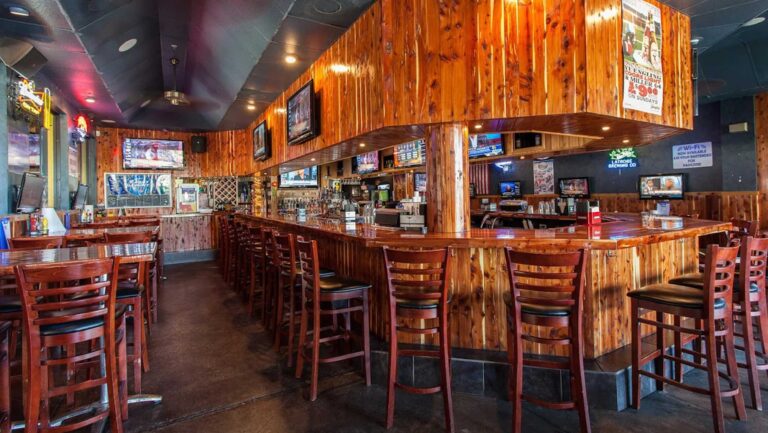
Kaiser believes bringing cannabis beverages into the social space of the bar—rather than segregated in the dispensary—helps chip away at that stigma. “You walk into your neighborhood bar and all of a sudden they have a new category on the menu, and you see other people drinking and having fun, and no one’s diving off the deep end. It has really helped overall and with access to education.”
Earl Giles’ Canna Club, a weekly cannabis happy hour, which attracts a community of 75 to 100 regulars, has contributed to that normalization and welcomed cannabis users into the bar space. “It’s been touted as the Cheers of cannabis,” Kaiser says. “It just keeps growing.”
Bradley Thomas Stephens, the vice president of the United States Bartenders Guild, has heard “nothing but positive” feedback from bartenders and owners in states that have legalized the sale of these products in bars, but he stresses the need for education when introducing the category to a business. “I believe that hiring a consultant or bar manager that is experienced in this area is important,” he says. “Moving your program into this slowly and thoughtfully instead of feeling like you have to hurry to be first.”
Responsible Consumption Remains a Priority
Smith says she keeps a close eye on her Howdy drinkers and advises that the five milligrams of the psychoactive compound is “enough for most people,” especially after a couple of alcoholic drinks. While most drinkers stick to either the THC seltzer or alcohol, Smith has noticed some mix-and-matching among her regulars, swapping one to two beers with a Howdy.
At the Earl Giles, however, the menu requests that patrons pick an intoxicant and stick with it for the evening, which is a requirement of their insurance policy. Servers let guests know ahead of time so as not to disappoint anyone if they’d planned to switch track. At their cannabis happy hour they don’t serve alcohol. “We don’t want someone to have a bad experience,” says Kaiser, “because some people might blame that brand or product or the establishment.”
Selling cannabis beverages in bars creates issues around liability, as standard policies and dram shop laws don’t cover incidents related to THC. Specialized insurance policies are emerging to meet this need, but compliance can be costly and complicated. Robust age verification protocols for cannabis beverages are also vital which, as with alcohol, comes down to bartender education and training. Stephens hopes this will soon become a standard part of bartender training.
Galligan agrees. “This is a 21-plus market and people have a responsibility,” he says. “We don’t get a whole lot of people experimenting in public. For the very few who do, it’s still a bartender’s role to take care of someone they’re pouring for.”

Dispatch
Sign up for our award-winning newsletter
Don’t miss the latest drinks industry news and insights—delivered to your inbox every week.
Chris Kudialis, a reporter who lives in Las Vegas, Nevada, has written articles for the Los Angeles Times, the Charlotte Observer, the Houston Chronicle, the Detroit Free Press, Leafly, the Nevada Independent, and Brazil’s Rio Times, among other metropolitan dailies. He is an alumnus of the University of Michigan and speaks Spanish and Portuguese in addition to his native English.