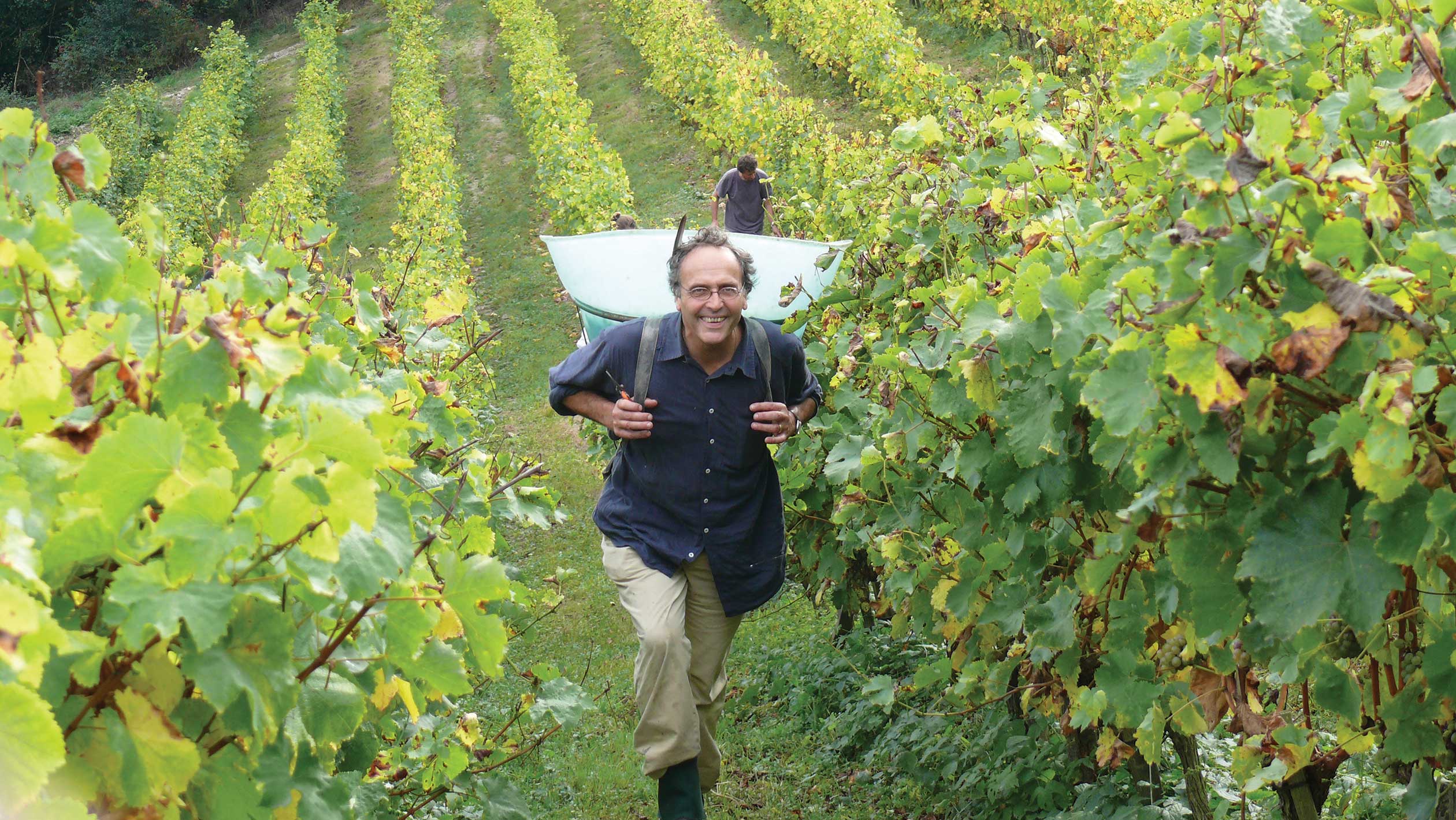
Nicolas Joly’s wines aren’t for everyone. They’re complex, intense, and confusing, particularly for those in pursuit of textbook Chenin Blanc.
Joly is aware of this. He’d go further to argue that the wines of La Coulée de Serrant, his estate and monopole appellation in Savennières, aren’t his wines at all. He’s not a winemaker—he’s a farmer, a philosopher. “I love to drink Joly’s wines and I love to drink his words,” says Sancerre winemaker Cyril de Benoist of Domaine du Nozay.
Joly’s Chenin Blancs are some of the world’s most stylistically and philosophically disruptive wines. Robert Parker dubbed him the godfather of Savennières. Writer Hugh Johnson called Joly the “high priest” of biodynamics and his white wines, the “most characterful in the world.”

Don’t miss the latest drinks industry news and insights. Sign up for our award-winning newsletters and get insider intel, resources, and trends delivered to your inbox every week.
But Joly’s acclaim wasn’t easily won. His contrarian commitment to biodynamics weirded out the wine world, and brought forth accusations of ruining his family’s land. So how exactly did Joly go from villain to icon?
Call It Fate
In the 12th century, Cistercian monks planted vines on a steep slope overlooking the Loire. King Louis XI named La Coulée de Serrant “a drop of gold.” Empress Josephine was equally enamoured.
Joly’s parents purchased the land in 1962. But Joly was drawn abroad. He moved to the United States in 1970 to pursue an MBA at Columbia University and later, a career at J.P. Morgan.
“I’m a great believer in what we call fate,” says Joly. “Why did I do my MBA? I don’t know. Why work for JP Morgan? We were well paid. Why quit? I have no idea. I just knew.” Seven years later, he returned home.
He worked the land with his mother, falling in step with agricultural norms. Vines were blasted with chemical fertilizer, but Joly noticed the land looked saggy and sad—the soil dry, the local flora and fauna wilted.
A book from Austrian philosopher Rudolf Steiner changed his trajectory. By 1984, his entire 30-acre estate had transitioned to biodynamic cultivation.
The results were immeasurable. The biological balance of the vines was restored and the vines bloomed—they felt alive, as did the wines.
Energy is a big deal to Joly. In tastings, he tends to gloss over the technical notes. Instead he talks about vitality, life, and terroir—how every organism in a vineyard must thrive to make a fine wine.
In the ’80s, this was a nonsensical notion. “The critics were coming from everywhere,” says Joly. “For eight years, my parents received phone calls saying I was destroying the vineyards. But they trusted me.”
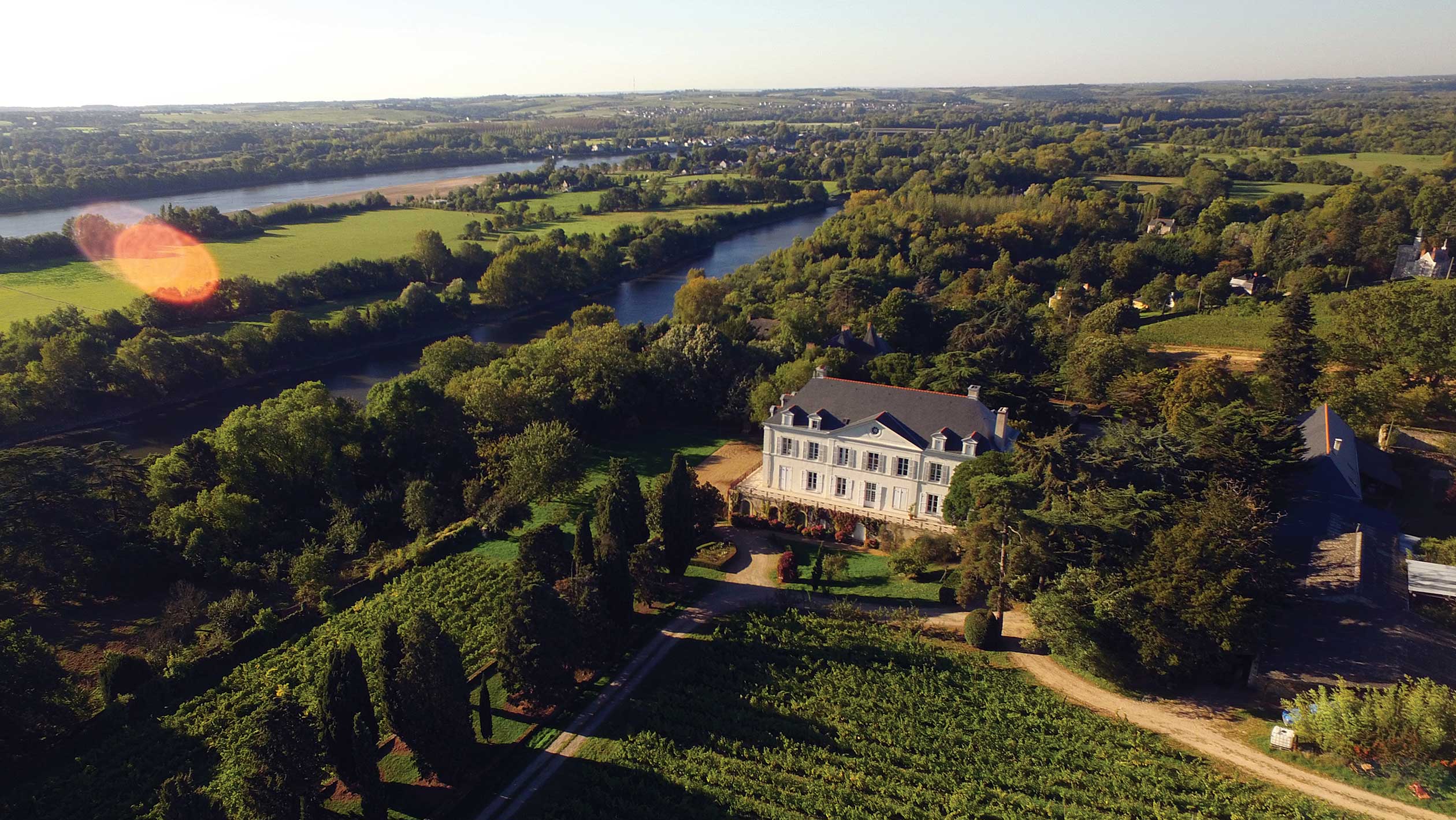
The slander continued until a visitor stopped in: Lalou Bize-Leroy, then the co-director of Domaine de la Romanée-Conti. “She got it,” says Joly. “And she hadn’t come to learn—she had come because of the hearsay. But she got it.” (Bize-Leroy, controversially, went on to push the domaine towards biodynamic viticulture.)
Other industry luminaries followed. “Anne-Claude LeFlaive, Aubert de Villaine,” recalls Joly. “Suddenly, we weren’t alone.”
Understanding the Wines
Joly is dogmatic about the belief that high-quality viticulture can only come from living soil, and that terroir is the product of interactions between all of the ecosystems in a vineyard. In essence: happy vines, happy wines. Cows, goats, horses, donkeys, sheep, and bees roam the vineyards, offering their own additions to the vineyards, be it pollination or manure. All of this was documented in Joly’s 1999 book Wine from Sky to Earth—now a bible of biodynamics.
He finds the relationship between the earth and cosmos essential (a nod to Steiner’s anthroposophy movement) and considers the position of the moon, planets, and constellations when making viticultural decisions. Subscribers to the natural wine movement may think this old hat. But when Joly was proposing these theories, they were outlandish—wine should be made in the cellar, not the vineyard.
“I didn’t come to love wine through having collectors in my family,” says Kristin Olszewski, the owner of Nomadica. “I came to love wine by first falling in love with the principles of permaculture—nature’s wisdom woven into design. Wine was my next evolution after farming vegetables, and Nicolas Joly was my entry point. His belief that wines should express a sense of place, a mark of time, resonated deeply with me.”
Navigating Controversy
While Joly has a fervent following, his wines (now made by his daughter Virginie) are still divisive. He picks late—long after his neighbors have finished and when botrytis has started enveloping the grapes. “Customers don’t want more than 12% ABV, and I’m sorry, but I don’t care,” he says. “I will pick when my vines are ready.”
Publicist Christine Deussen worked for Joly’s American importer when the wines first came stateside in the early ’90s. “The wines just seemed so out there back then.”
“We started with them in 2005, when biodynamics and natural wine weren’t a thing yet on restaurant lists,” says Mark Cuff, who has been importing Joly’s wines into Canada via his agency, The Living Vine, for 20 years. “They were dominated by large brands from Italy, California, and Australia selling big, juicy reds and heavily oaked whites.”
As a 25-year-old sommelier, Cuff hated those big wines. He looked to bring in organic wineries and emailed Joly for advice. He answered the following day. Three months later, samples arrived. It was slow to sell.
“Selling biodynamic wines in the first 10 years was extremely challenging—almost impossible,” says Cuff. “Few people understood or cared about this new artisanal movement.”
But Americans were into it. “They’re more open-minded than Europeans,” Joly says. “We’re always a bit stuck on ourselves—it’s easier to sell wine in America.”
Still, his wines aren’t a universal pour. Joly is staunchly against what he calls “cosmetic” wines—the viticulture equivalent of heavy fillers and Botox. A group of Bordeaux winemakers—serious, technical, exacting winemakers—stopped by last year. While they shared the same country and profession, Joly found nothing was translating philosophically. “It was like speaking another language.”
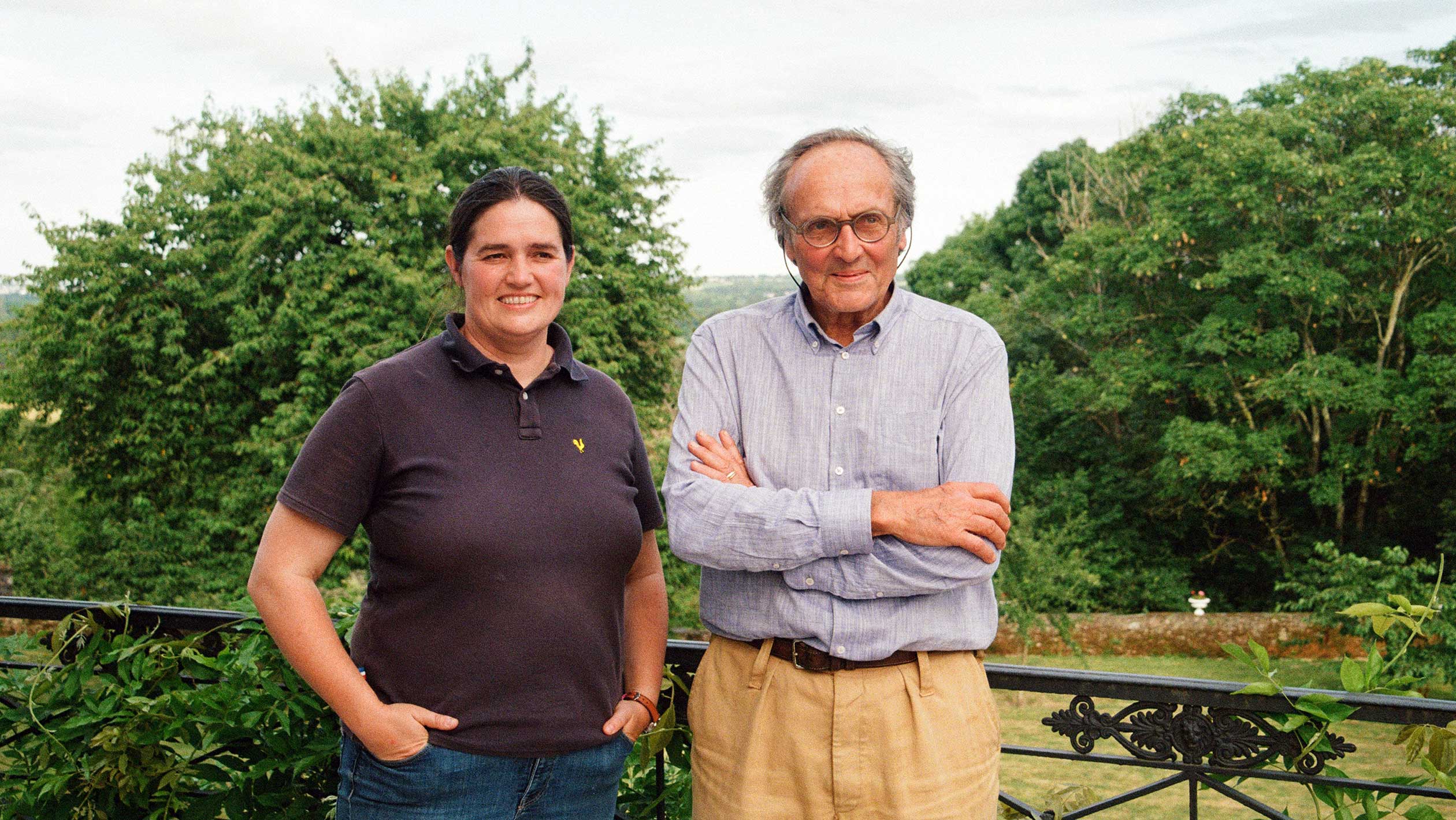
Joly’s wines are acquired, but they’re also inquisitive and cerebral—as much a thinking exercise as a drinking one. Vintages will vary wildly in taste depending on what nature dictates. They aren’t always approachable, and that’s part of the magic.
“My favorite part of working with the Joly wines is pouring a first taste for a new buyer; it never gets old seeing someone process the experience,” says Chris Raftery, the Empire regional manager at Wilson Daniels, Joly’s importer. “Tasting Joly often yields responses that run from bewilderment to awe to silent reflection, from mind completely blown to a new understanding of what white wine can be.”
“One doesn’t simply open a bottle of Coulée de Serrant and slug it back—no,” says Olsewski. “These wines are unique, raw, wild. Sometimes they can be enjoyed immediately, and sometimes they are more fickle, needing a decant or even 24 hours to open up.”
The Church of Joly
Famille Joly wines offer an unrelenting mystique. His fans are disciples, indoctrinated into the world of alternative agriculture. “Nicolas Joly was the formative love of my life,” says Olszewski. “Nicolas Joly has never taken winemaking lightly; there is a profound sense of duty and care for the land his vines inhabit. This seriousness is felt in all of his wines. I’ve always said I taste rainbows and pure beaming light in Joly’s wines. They reward patience and engagement, just as the pursuit of biodynamics does.”
“I deeply admire the wines and their impact on my career as a sommelier,” says Jayton Paul, a Michelin Guide Sommelier award winner and the wine director of Published on Main in Vancouver. “My first encounter with Coulée de Serrant was a revelation—it highlighted Chenin Blanc’s potential and the transformative power of regenerative, sustainable, and biodynamic winemaking.”
Does Joly know his impact? Ask him what the highlight of his career is, he has one word: cows. “I love what happened to our land when we bought a Nantes cow.”
If you’d have to press, his other highlight would be sitting in the vineyards, looking at the constellations twinkle. “Phew goes to my heart,” he says. “You’re surrounded by a level of life well above your value.”

Dispatch
Sign up for our award-winning newsletter
Don’t miss the latest drinks industry news and insights—delivered to your inbox every week.
By day, Kate Dingwall is a writer, editor, and photographer covering the intersection between spirits, business, culture, and travel. By night, she’s a WSET-trained working sommelier at one of the top restaurants in Canada. She writes about strong drinks and nice wines for Forbes.com, Wine Enthusiast, Vogue, Maxim, InsideHook, People Magazine, Southern Living, Liquor.com, and The Toronto Star.