When I first set out to report on Sierra de Gredos, the Spanish wine region west of Madrid that has been reanimated by the ethereal mountain Garnachas of Daniel Landi and Fernando García’s Comando G, it was to explore the new projects that have flourished here and what might be next for the region. However, that changed when the most devastating forest fires ever recorded in Spain reached Gredos, severely affecting it.
Between July 22 and 26, multiple fires destroyed 77,000 hectares of forest and pasture land in the provinces of Ávila and Madrid. Together these provinces account for approximately 85 percent of the Sierra de Gredos winegrowing area, with its 2,000 hectares of mostly old, bush-vine vineyards.
Though the fires have since been stabilized and no longer constitute a national emergency, many of the region’s grape growers and wine producers remained on high alert into August. But looking ahead, the question remains: Will these devastating wildfires stop Sierra de Gredos’s wine revival in its tracks?

Don’t miss the latest drinks industry news and insights. Sign up for our award-winning newsletters and get insider intel, resources, and trends delivered to your inbox every week.
Assessing the Wildfire Damage
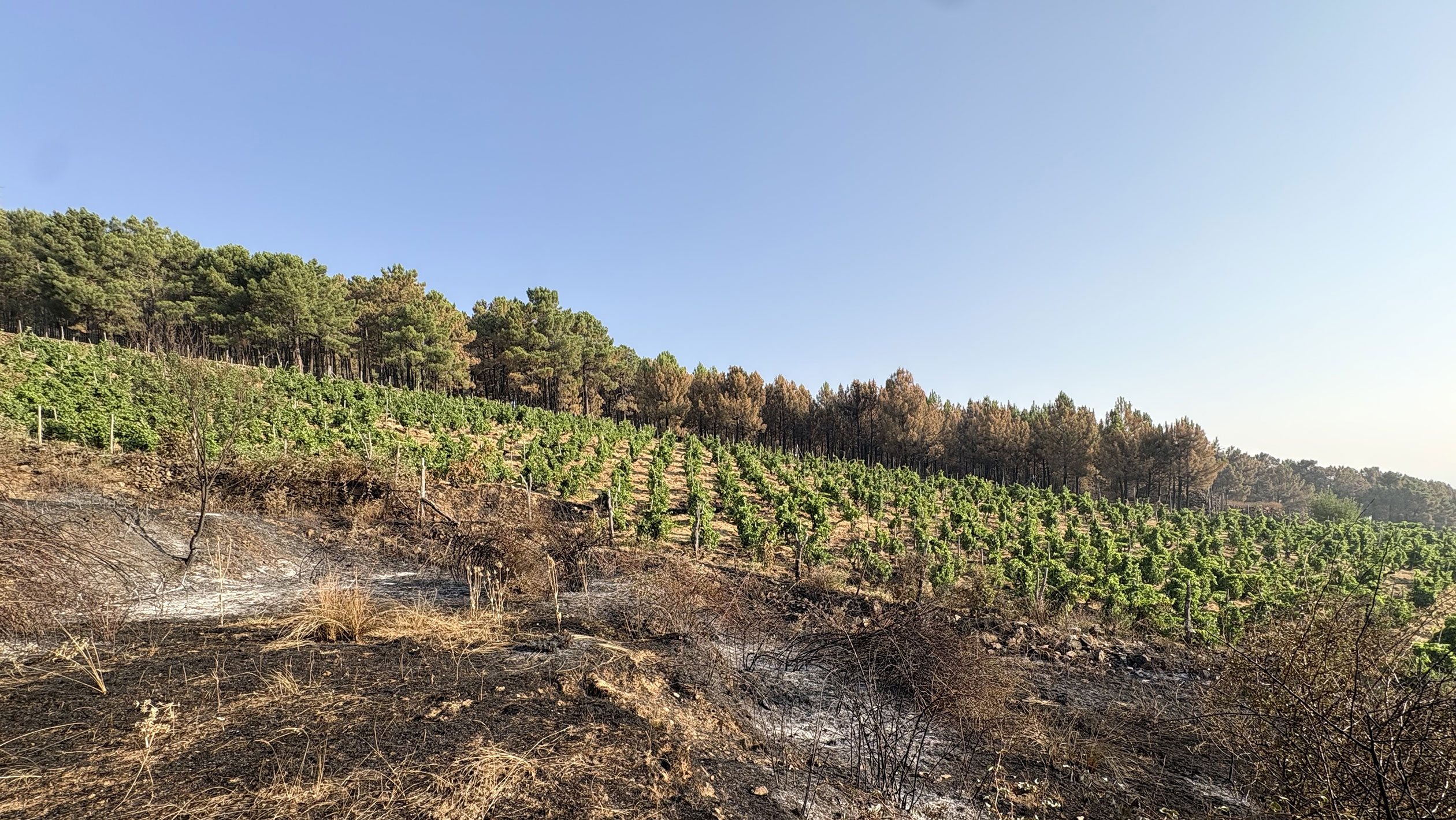
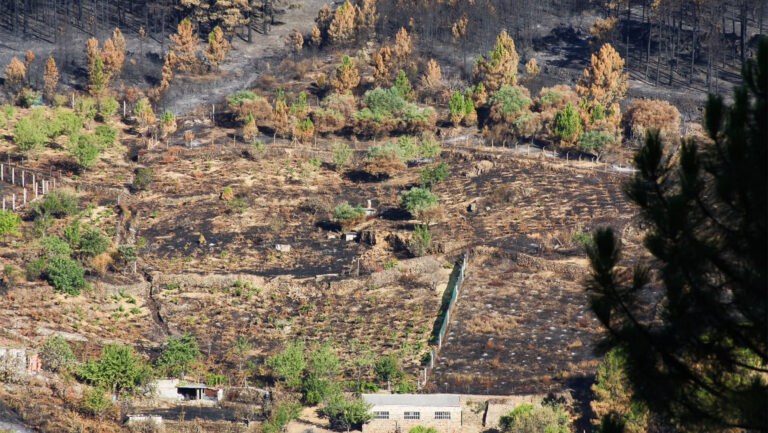
A significant number of this community of producers have been directly affected, particularly in the municipalities of Burgohondo, Cebreros, El Tiemblo, Hoyo de Pinares, and El Barraco—all part of Cebreros DO—along with San Martín de Valdeiglesias in the adjacent Vinos de Madrid DO. According to preliminary estimates, about 200 hectares of vineyards within Cebreros DO, representing around 40 percent of the registered vineyard area, have been damaged by fire, smoke, or both.
“We know for certain that we’ve lost some vineyards entirely, while others have apparently survived,” says Juan Diez Bulnes, the owner of Bodegas Bernabeleva, one of the worst-affected wineries in San Martín de Valdeiglesias. “As for the grapes, I still don’t know if we’ll have any, or what they’ll taste like. At the winery, we’ve lost the office—or at least a large part of it—as well as sections of the facade, windows, glass, water and lees tanks, and the outdoor wastewater treatment equipment.”
“At the very beginning you are very afraid because you don’t know how fast this thing is going to evolve,” says Emmanuel Campana, a co-owner of Domaine Dexaie in the relatively cool, high-elevation, western extremity of Gredos. Campana and his business partner Carmen de la Pascua live in Burgohondo—the epicenter of the first Ávila fire—and were among those residents forced to evacuate as the fires spread.
“But this is not the first time that we have experienced wildfires here,” adds Campana. “When we arrived in Alberche in 2021, we had fires in Cebreros; in 2022 also. These things happen all the time, but obviously it’s a thing that you can work on to have less impact. It’s crazy for example that in this area we don’t have any cortafuegos (firebreaks).”
At Bodega El Reventón, owners Adrianna Catena, Alejandro Vigil, and Gearóid Lane also suffered significant losses. The winery is part of an influx of high-profile international winemaking ventures to Gredos since the pandemic, which also includes producers such as Portugal’s Niepoort Vinhos; both Catena and Vigil also run El Enemigo in Mendoza.
Bodega El Reventón purchased Comando G’s El Reventón vineyard from Daniel (also known as Dani) Landi in 2023 and the single-vineyard wine they produced from this land clearly illustrates their belief in the potential of Gredos as a fine wine region. “One of the most fascinating aspects of Gredos,” notes Vigil, “is that, although it is generally considered a warm region, Garnacha can achieve a level of finesse, elegance, and precision that reminds us of the great wines of Burgundy. Capturing that balance while preserving the purity of the vineyard is both the greatest challenge and the greatest reward.”
Sadly, El Reventón’s second single-vineyard wine parcel, San Gregorio, fell victim to the recent fires, though Lane reports that the team should be able to recover “80 to 90 percent” of the vines. “We are, of course, devastated, but more determined than ever to drive forward on our mission to produce fine Garnacha wines in Gredos, and to do all we can to support the local community,” adds Lane.
The Bigger Picture in Gredos
The fires have been an unwelcome diversion from the transformational story of Gredos, much of which has been propelled by Comando G. In less than two decades, focusing on prized plots of old Garnacha bush vines grown on mainly granitic soils, Landi and García have elevated what was a forgotten farming region into the realm of Spain’s most valuable fine wine terroirs. Their pivotal success has spurred this new community of producers to write the next chapter in the region’s revival story.
One of those winemakers closest to Comando G is Curro Barreño, who grew up with Landi and now makes wines from Landi’s family vineyards under the Vitícola Mentridana label. “When Dani and I were children,” he says, “we felt a deep love for our land, but at the same time, shame for a place that was disappearing because of its perceived lack of value. [Dani and Fer] influenced us to believe that we had, and still have, something valuable that is important to protect.”
This admiration is shared by David Villamiel, young co-owner of A Pie de Tierra in Aldea del Fresno, who also grew up in the Méntrida area. “I remember in my teenage years, while all my friends and peers still wanted to be football players, I already wanted to be like him,” he reflects.
“Coming from the deeply rural place I am from, it was impossible not to look up to Dani and Fer. They offered a glimmer of hope and showed that another path was possible, even without leaving the village.”
Landi and García have been relatively fortunate: the fires did not reach their vineyard sites in Villanueva, Navatalgordo, Cadalso de los Vidrios, or Rozas de Puerto Real. However, their one-hectare slate parcel in Cebreros, which produces their Las Iruelas bottling, suffered heavy smoke exposure, likely writing off the single-vineyard wine for this vintage.
Taking Action in Response to Wildfires
On July 26, Landi described the events on Comando G’s Instagram: “Madness. A nightmare. A true environmental tragedy and a devastating blow for Gredos.” But he also emphasized the role that policymakers can play in preventing disasters like this from happening.
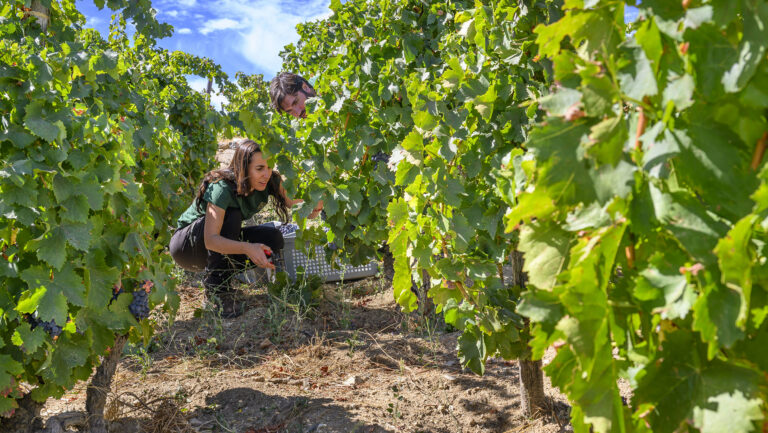
Along with several other local wine producers, including Juanan Martín of Rico Nuevo, Comando G has drafted detailed proposals for regional authorities. These include a request for subsidies for clearance of forest land and impassable roads to provide firebreaks, along with support for additional vineyard planting and the restoration of dry-stone walls.
Fourth-generation viticulturist Martín, who was mentored by Landi before launching his project in 2018 in Burgohondo, has been especially vocal about the socioeconomic context of the fires.
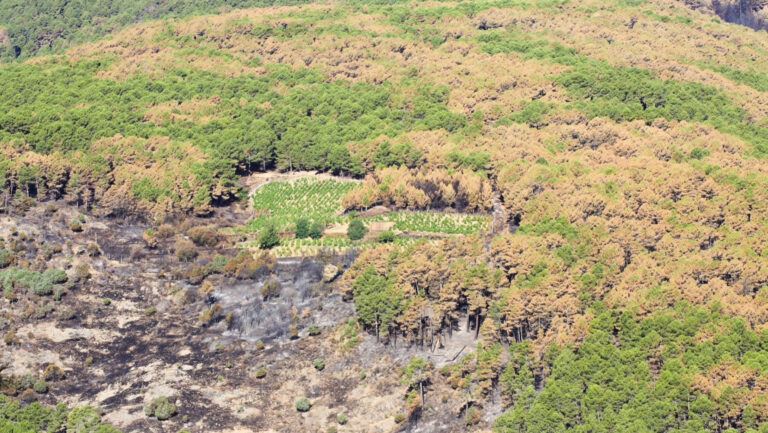
“When I was a child, the countryside around Burgohondo was much more actively managed,” he says. “There were many more animals grazing, people working small plots, collecting firewood, maintaining paths, and clearing vegetation. Today, in many areas, the vegetation has become continuous. There is simply much more fuel available for a fire to burn through. This is why I get frustrated when the discussion about wildfires focuses only on climate change or on firefighting.”
For Martín, an error that continues to be perpetrated at the authority level is to think of rural development, agriculture, livestock farming, and fire prevention as separate concerns, when in fact they are all part of the same problem.
This, he insists, is where vineyards—and a strong winemaking industry—can play a crucial role.
“A vineyard is not just a crop,” says Martín. “In a region like Gredos, small vineyards form part of a mosaic of agriculture, pasture, and woodland. Keeping vineyards, livestock, and people in the countryside helps maintain that mosaic. If we really want to prevent another Burgohondo, I don’t think the answer is simply to have more helicopters or more firefighters during the summer. We need people back in the countryside … and a much simpler administrative framework for doing preventative work.”
In the short term at least, important emergency measures have been announced. The regional government of Castilla y León has announced a recovery package of up to €90 million, including direct support for evacuated families, farmers, and businesses, as well as measures to recover pasture, and agricultural and tourism infrastructure in the affected areas.
The Spanish government has also moved toward declaring severely affected areas zonas afectada gravemente por una emergencia de protección civil (areas severely affected by a civil protection emergency), an official status that opens the door to additional national support.
Looking to the Future
While the wildfires have thrown a wrench into Gredos’s growth trajectory, it won’t stop this community from pushing forward. Currently there are around 50 active wine projects around Gredos, but for Barreño, who has been raised on stories of Gredos’s rich history and witnessed its decline, the revival is still in its infancy.
“Gredos was a very important agricultural and wine-producing region 200 years ago,” he says. “It requires a lot of hard work to recover even 10 percent of what it once was. Now we’re just a drop in the ocean, but a drop with a powerful impact.”
Expanding this community will naturally fuel a deeper exploration of the region’s mosaic of terroirs and, in turn, the quality and precision of its wines.
“The more there are the better,” confirms Domaine Dexaie’s Carmen de la Pascua. “Today we don’t even know the full potential of the area. You might find a very beautiful wine and say, ‘wow, this is the potential,’ but there are so many places that are not planted, so this is the very beginning.”
As Gredos undertakes a historically early harvest, with many wine producers still assessing the potential damage to this year’s crop of grapes and wines, their work continues to symbolize a resistance to the economic decline that has affected Gredos for so long. Yes, their efforts have been dealt a severe blow, but their intention is clear: to regroup and move forward with greater strength.

Dispatch
Sign up for our award-winning newsletter
Don’t miss the latest drinks industry news and insights—delivered to your inbox every week.
Darren is a London-based freelance wine writer and winemaker. He produces one-off wines in collaboration with winemakers around the world through his nomadic winemaking project, The Finest Wines Available to Humanity (tfwath.com). Find him on Instagram @tfwath.