Just a few decades ago, Ningxia, a remote area of north-central China, was an impoverished, predominantly rural region. Its severe, semi-desertic climate and underdeveloped infrastructure made farming difficult and contributed to widespread poverty.
In recent years, however, a vibrant wine industry has taken root despite such harsh conditions, transforming the region into the driving force behind China’s rapid emergence as a serious wine-producing country. China is indeed ranking third in the world for vineyard surface area with 753,000 hectares under vine, and is now the world’s 15th-largest winemaking country. With an annual output of 2.6 million hectoliters, it produces volumes comparable to New Zealand, Hungary, and Georgia. In November 2024, China’s accession as a full member of the International Organization of Vine and Wine (OIV) provided clear proof of its growing vinous ambitions.
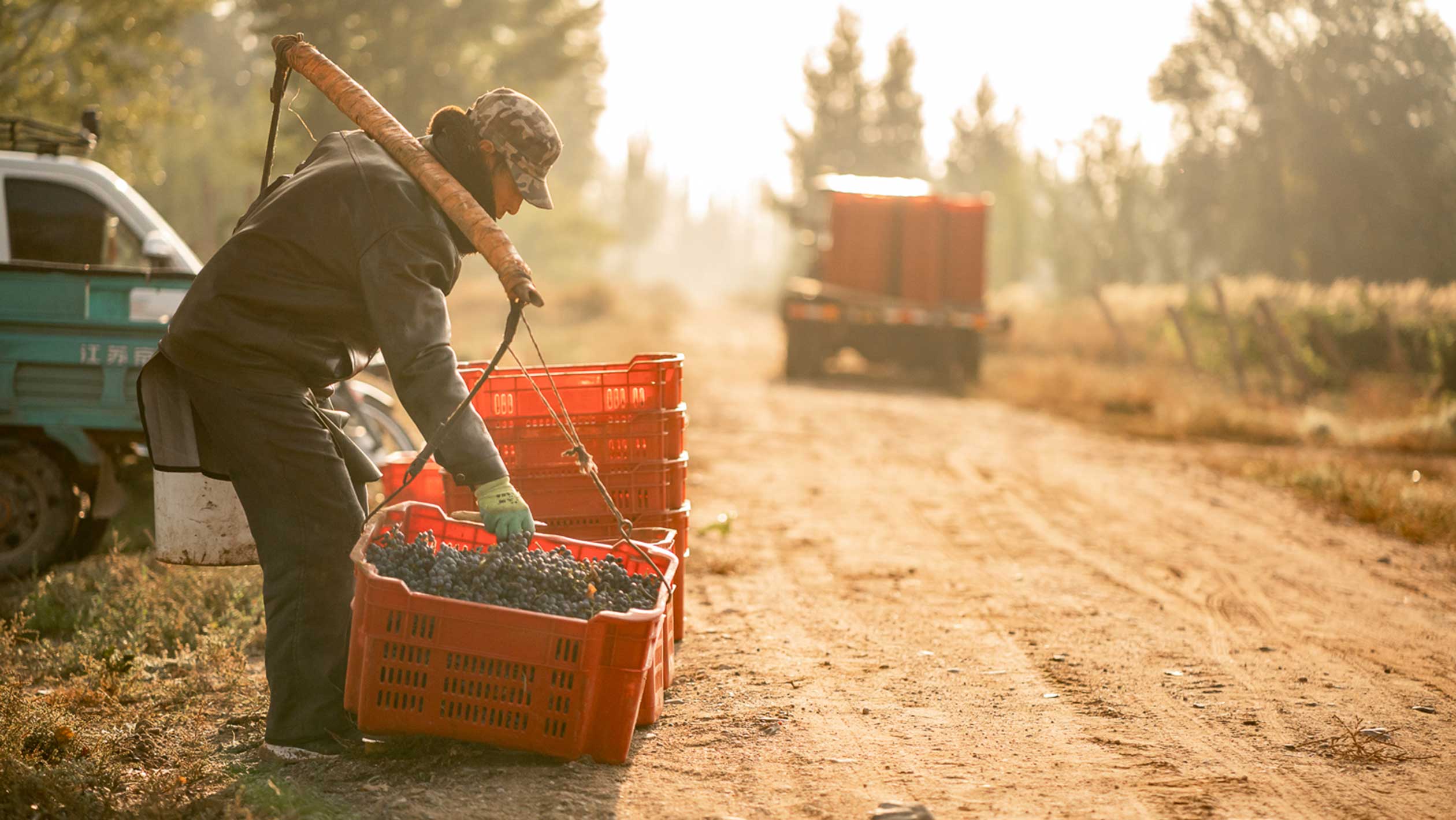
Government initiatives aimed at combating desertification and developing the local economy have been a key driver of Ningxia’s enthusiastic winemaking project. In the late 1990s, the area counted barely 200 hectares of vines, but by the mid-2000s, large-scale plantings were already underway, advancing at the quintessentially rapid pace that characterizes China’s approach to most industries, from AI to construction. Only two decades later, Ningxia is home to hundreds of wineries and nearly 39,000 hectares of vines, an area comparable to the entire vineyard surface of New Zealand.

Don’t miss the latest drinks industry news and insights. Sign up for our award-winning newsletters and get insider intel, resources, and trends delivered to your inbox every week.
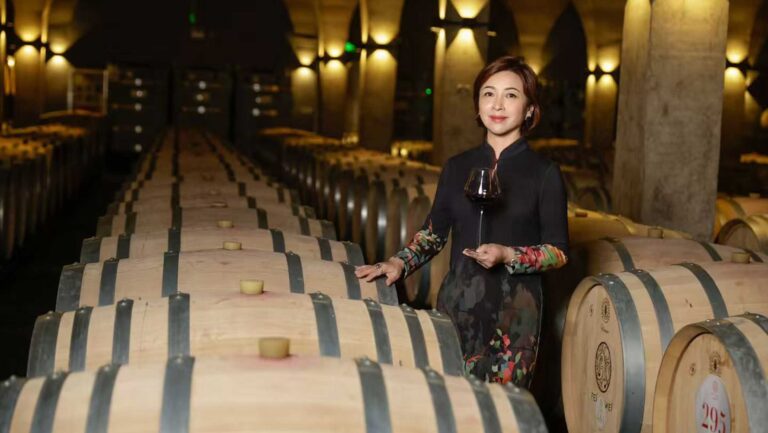
“In Ningxia, vineyards have been developed on barren land classed as unsuitable for farming,” explains Lily Zhang, the co-owner of Feitswei Winery. “So the government has provided strong support, as this land has no other practical use beyond grape growing.”
A strong focus on wine tourism, viewed as an effective means to boost the local economy and as a platform to promote Ningxia wine, is helping expedite the ongoing establishment of the region’s industry. New wineries are often designed with visitors in mind, offering tasting rooms, accommodation, restaurants, and touring experiences. Chateau Dulaan, for example, is an extensive wine tourism complex, featuring dining, lodging, an education center, and a wide range of visitor activities. The local government is even developing a wine resort village in southern Ningxia, with a visitor hub surrounded by wineries attracted there by favorable vineyard lease incentives.
Ningxia’s Wine Style
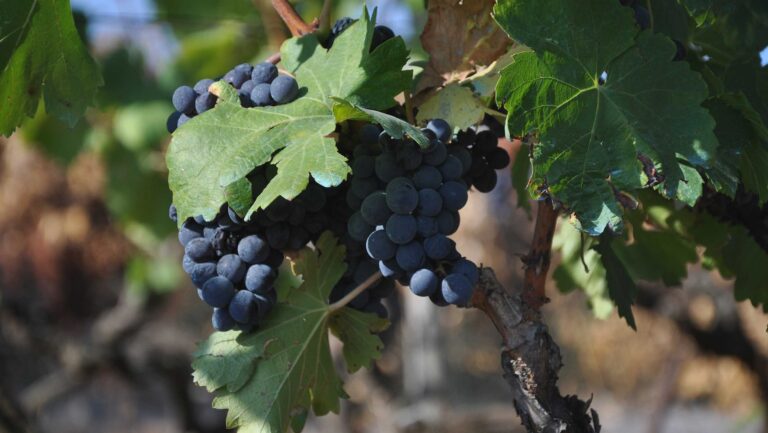
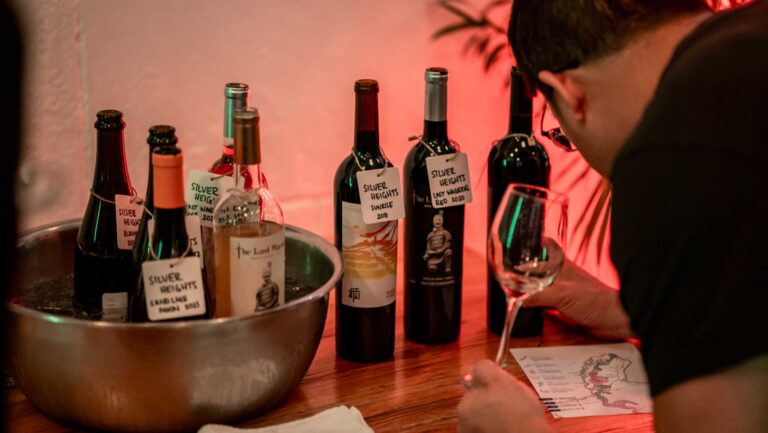
The most common Vitis viniferas in Ningxia are mainly of French origin. Marselan, for instance, a cross of Cabernet Sauvignon and Grenache, is particularly well suited to its arid climate. Producers often allow Marselan to express its hallmark fleshy mouthfeel, but overall, winemakers adopt a refreshing diversity of approaches, from crunchy, fruit-forward styles to more structured examples. In fact, the relative youth of the region encourages them to extend such a variety of expression to all other grapes, from Devo Winery’s traditional-method fizz to Silver Hight’s orange blend, and from Kanaan’s concentrated Rieslings to Xiban’s off-dry Chardonnay.
“We are pursuing different directions, with a rich variety of products targeting markets of different sizes and characteristics,” says Zhang. “This is a natural path for a young region, and this stage of innovation is crucial for the formation of Ningxia’s distinctive style.”
The rapid pace of experimentation is beginning to reveal varieties that might become true signatures of the region. These include Cabernet Gernischt, a European-origin grape that is thought to be genetically identical to Carménère (though some vines may actually be Cabernet Franc). “This is one of the varieties brought over more than a century ago, at the dawn of China’s modern wine industry,” says Christelle Chene, a brand ambassador for leading producer Xige, and a fervent champion of the grape. “Locally, it was known as ‘Snake Dragon Cabernet’ … it’s the only grape here that imparts distinctly ‘eastern’ floral aromas, like hints of medicinal herbs.”
International red varieties such as Cabernet Sauvignon, Merlot, and Syrah continue to perform strongly, too, but evolving consumer taste preferences are leading wineries to pay greater attention to white varieties—once a minor focus. “In the past, wine was associated with business banquets and the gift market; that’s why red was more popular as it was perceived as more formal and prestigious,” explains Deng Zhongxiang, a consulting enologist currently managing a solo project and over 10 clients across Ningxia.
According to Zhongxiang, the growing appeal of white wine is being driven by the rise of “true” consumers, who buy wine for their own consumption and tend to favor lighter, more approachable styles. “To adapt to this shift, we’re developing more whites,” he says. “Viognier seems to be the white variety with the greatest potential. It’s got abundant aromatics, its skin can withstand intense sunlight while resisting disease, and it also retains good acidity.”
Beyond China’s Borders
While Ningxia wines are gradually gaining recognition, exports remain modest, which reflects the broader trend for Chinese wine. Southeast Asia, particularly Hong Kong, Macau, and Singapore, are the primary markets for Ningxia’s wines, with some notable shipments to Australia, too. The U.S. is often a key target, yet a rather challenging one, due not only to trade tensions, but also to complex bureaucratic hurdles.
“China is still quite new to export wine and it seems like every region has its own systems,” says Camden Hauge, the owner of recently launched New York City-based China Wine Club. “Also, [for] small winemakers this is the first foray into export, so it takes time to get their paperwork together. Regarding the tariffs … the makers have been very generous in meeting us halfway, and we are lucky to be the first here and so there is no direct point of comparison, price-wise.”
Ningxia wines sell for high prices, which complicates things further. Prices are driven by multiple factors, including the domestic perception of wine as a luxury product and inherently high production costs. The labor-intensive practice of burying vines each winter to protect them from temperatures that can plunge to -20 degrees Celsius dramatically impacts the final price, but so do the limited production volumes and the widespread use of new oak barrels, which in China can cost up to three times more than in the West.
Measures such as subsidies for domestic transportation and tax rebates do encourage exports, but domestic consumption remains the primary focus. “We must first establish recognition and quality credentials within China’s vast domestic market,” says Zhongxiang. “Meanwhile, export can’t be about profitability, it’s more about brand-building. We need the quality of Chinese wine to be acknowledged.”
It may still take some time for this to happen, but Ningxia already has all the credentials to compete with far more established wine regions, and it was all achieved in just a couple of decades.

Dispatch
Sign up for our award-winning newsletter
Don’t miss the latest drinks industry news and insights—delivered to your inbox every week.
Dr. Jacopo Mazzeo is a U.K.-based freelance drinks journalist, consultant, and photographer. He contributes to leading trade and consumer publications including Decanter, Wine Enthusiast, Whisky Magazine, and Good Beer Hunting. Jacopo consults on consumer trends and marketing strategies, is a former sommelier, and judges international wine, beer, and spirits competitions. Before he embraced full-time journalism, he studied musicology at the University of Bologna and took a PhD at the University of Southampton. Follow Jacopo on Instagram @jacopomazzeophoto