
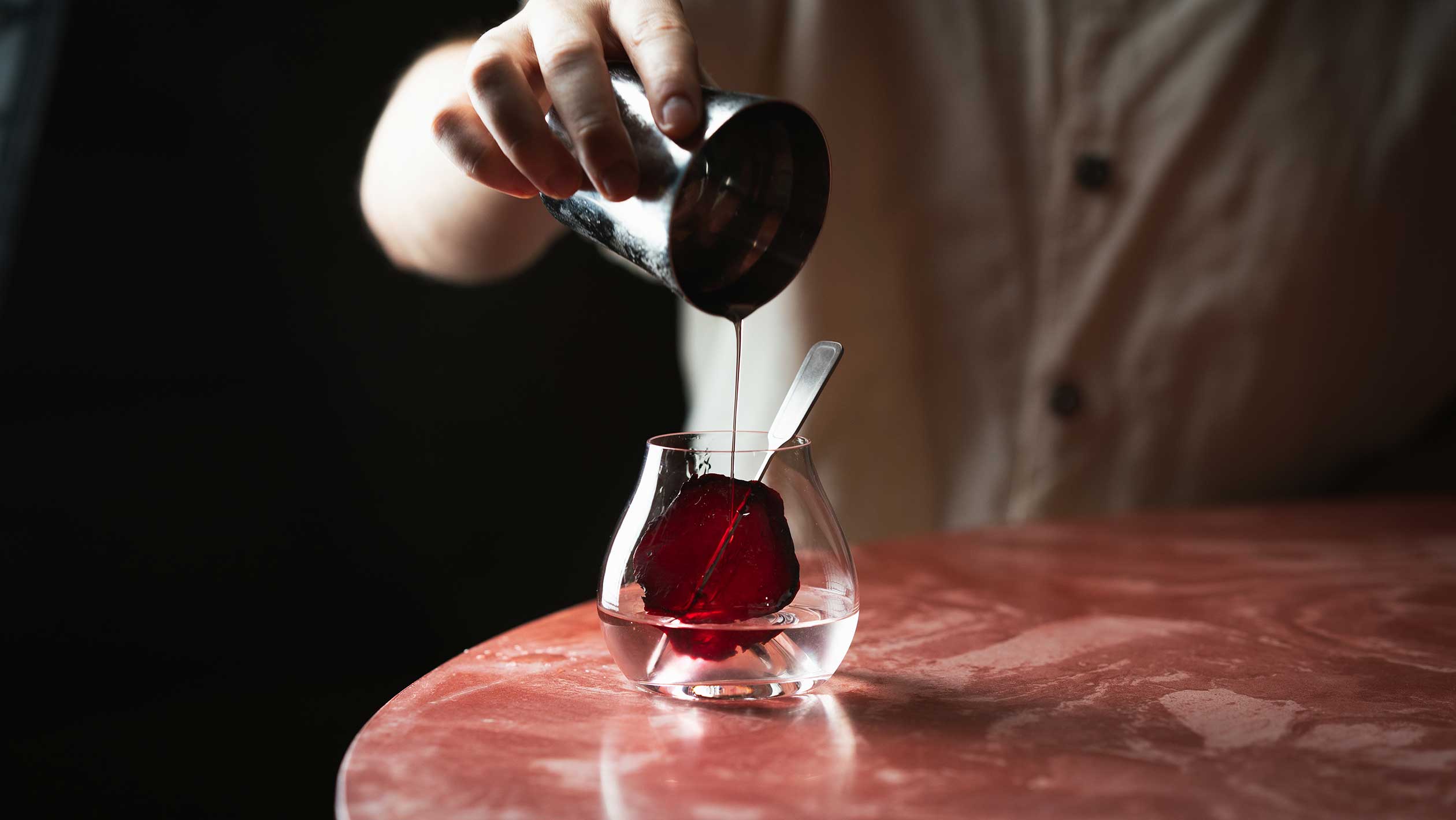
Cocktail culture has evolved dramatically over the past 20 years. A landscape once dominated by sugary, juice-filled drinks like the Appletini and Sex on the Beach has become increasingly driven by savory profiles and complexity. As palates evolve, bartenders across the globe are shifting focus toward new ingredients.
“The number one thing I get asked is, ‘Is this drink too sweet?’” says Jonathan Adler, the former beverage director of New York City cocktail bar Shinji’s, which recently closed. “I think a lot of people are much more educated when it comes to cocktails these days.”
For decades, lemon and lime juice have been foundational cocktail ingredients, typically balanced with added sugar. Today, many are exploring new ways to introduce more subtle sweetness, and root vegetables have emerged as a reliable option. The natural starches found in ingredients like sweet potatoes, carrots, and beets, among others, create natural sweetness while adding savoriness, texture, and body—checking all the boxes for more sophisticated palates.

Don’t miss the latest drinks industry news and insights. Sign up for our award-winning newsletters and get insider intel, resources, and trends delivered to your inbox every week.
SevenFifty Daily spoke with bartenders around the world about why—and how—they are incorporating root vegetables into their bar programs.
1. Building Body Beyond Citrus
The way root vegetables are treated affects texture and body within a drink. Juicing root vegetables extracts sweetness while minimizing body, while blending a vegetable creates a texture and mouthfeel that is thicker than what standard simple syrup can provide.
Different root vegetables can also contribute different flavor profiles: sweet potatoes and carrots lend sweetness, beets add earthiness, parsnips offer floral notes, and radishes deliver a funky spice. Those qualities can complement certain spirits, like parsnips with botanical gin or sweet potatoes with barrel-aged whiskey.
For batched cocktails, root vegetables are often more stable than citrus. The juice from fresh citrus fruits can oxidize and flatten acidity, muting aromatics, and eventually develop bitter or cooked notes. Juices from most root vegetables contain less acid, more natural sugar and body, and tend to maintain flavor longer and integrate more consistently with spirits in refrigerated batches. Some bars further extend shelf life by using acid-adjusted solutions like verjus (unfermented juice of unripe wine grapes), rice vinegar, or acid phosphate in place of fresh citrus.

2. Reducing Waste, Maximizing Value
Adler, who spent the first 13 years of his career as a chef, says using root vegetables in cocktails strengthens the connection between the kitchen and bar. While some scraps like vegetable peels, trimmings, and ends can be used directly in cocktails to add body and depth, others can serve as a garnish. “Eating the garnish while enjoying the drink really elevates the flavors,” Adler says.
Beyond reducing waste, root vegetables offer beverage programs a level of pricing and supply consistency that’s harder to achieve with seasonal citrus and other fresh produce. For Akshar Chalwadi, the beverage director at Chicago restaurant Indienne, root vegetables are one of the most food-friendly, readily available, and sustainable options a bar can have in its program, especially since most of them are available year-round. “They don’t fluctuate in terms of price the way fresh fruit does, and you can use each and every part of the root,” says Chalwadi.
Barney O’Kane, the cofounder of De Vie in Paris, agrees that root vegetables can help reduce costs. “We operate on hyper-seasonal offerings, where we rotate through one dish or drink a week,” he says. “We only source high-quality local and organic produce, which tends to be on the pricier side. This encourages us to work in a very closed-loop system, where we find uses for all our internal waste streams.”
At De Vie, cocktails are built around upcycled byproducts from both the kitchen and bar. For one cocktail, beets cooked in spent coffee grounds are served alongside a pasta dish, while the beet skins are smoked and infused into a beetroot molasses spirit. Mixed with dry vermouth and raspberry eau de vie, the resulting beetroot cocktail carries earthy, smoky, and lightly chocolatey notes. The approach allows the team to use every part of the vegetable while maximizing both flavor and value.

3. Cocktails That Complement a Meal
Root vegetables add vibrant color, earthy depth, and natural sweetness to cocktails. “There’s a familiarity and warmth there,” says Rick Guedes, the beverage director at Tryon Park Hotel in Charlotte, North Carolina. “When looking for new cocktail ideas, we often think back to comforting flavor profiles. I think root vegetables have that quality to them.” Tryon Park’s rooftop cocktail bar Merchant & Trade leans into those comforting flavors by reworking classic cocktails with root vegetables, keeping the drinks both refined and approachable.
Guedes believes that familiarity also makes root vegetables especially well suited to pairing cocktails with food. Their recognizable flavors create a bridge between the kitchen and bar, allowing local produce to appear throughout the dining experience rather than only on the plate. In the past, guests may have started out with a cocktail before moving on to wine, but Guedes sees this shifting. “Mixology has been moving in that direction for quite a while now. You can start to pair cocktails in the same way as wine, and they’re actually more versatile,” says Guedes.
That philosophy shows up in Merchant & Trade’s Sunday Dinner cocktail, a rum-based riff on an Old Fashioned that includes locally grown North Carolina sweet potatoes and oloroso sherry. The sweet potatoes are used to make a rich syrup that adds a savory sweetness to balance out a slightly bitter note from the sherry. Sage and maple syrup complete the drink, which pays tribute to a family feast. Guedes recommends the cocktail to pair with the restaurant’s demi-glazed Drunken Ribeye. “You can’t go wrong with steak and potatoes, and this cocktail has that same kind of balance to it,” Guedes says. “You can pair it with red meat or something nice and hearty, like you would at a Sunday meal.”
4. Creative Ingredients That Push Boundaries
Chalwadi sees root vegetables as an opportunity to expand guests’ perceptions of how these ingredients can be used beyond savory dishes. Even vegetables with assertive flavors can reveal unexpected versatility in cocktails. Radishes, for example, bring a pungency that Chalwadi pairs with smoky mezcal to create a more balanced drink. “Radish is an ingredient not everyone is going for because of the strong aroma that it carries,” he says. “I thought it would be fun to use it for the funk it gives, and it can easily blend with mezcal. The smokiness of mezcal cuts through some of the radish’s funk and works well with basil and clarified green apple juice.” He uses the radish to make a liqueur, steeping it in vodka with a little sugar and verjus for balance.
At De Vie, root vegetables are often used to bring vivid color to cocktails, like the signature Carrot cocktail. “Often the most enjoyable thing about purple carrots is the bright, beautiful color,” says O’Kane. “By fortifying fresh purple carrot juice with a carrot spirit, we prolong its shelf life while locking in its color.”

5. More Than a Passing Trend
O’Kane has noticed that guests are seeking more experience-led cocktails, so ingredients like root vegetables that seem unconventional fit the bill. “The savory cocktail seems to be a mainstay on many cocktail menus globally,” he says. The overlap between kitchen and bar also helps the drinks pair more naturally with food and their savory nature works just as well in the beginning, middle, or end of the meal. “For us, consuming cocktails during a meal is the basis of our whole business model,” O’Kane adds. “But we see the change in the zeitgeist globally.” The trend is global, with root vegetables showing up in cocktails at bars and restaurants from the U.S. and Paris to Tokyo.
Root vegetables sit at the intersection of two shifts behind the bar: deeper integration between kitchen and cocktail programs, and a push toward lower-waste, seasonally driven drinks. Roots bridge both trends because they’re abundant, inexpensive, highly versatile, and bring a savory-sweet depth and texture that allows cocktails to function more like a course within a meal rather than a standalone aperitif.

Dispatch
Sign up for our award-winning newsletter
Don’t miss the latest drinks industry news and insights—delivered to your inbox every week.
Alissa Bica Raines is an Advanced Sommelier and wine and spirits writer. Along with SevenFifty Daily she contributes to Wine & Spirits, Food & Wine, The Unicorn Review, The Somm Journal, and The Tasting Panel with her recurring column, Bica’s Bar. She also uncovers rare grape varieties on her blog, Off the Beaten Wine Path.