Japanese whisky has long been dominated by two players: Suntory and Nikka. Spanning the entire history of Japanese whisky—Suntory’s Yamazaki is recognized as the country’s first whisky distillery and celebrated its 100th anniversary in 2023, and Nikka honored its 90th in 2024—the powerhouses established the rigorous quality protocols that enabled their ongoing success. When the category took off in the U.S., starting in the early 2010s, it was whisky from these producers that garnered acclaim and was hunted off the shelves by a wave of newly devoted consumers.
Producers such as Mars (founded in 1949), Fuji (in 1973), and Chichibu (in 2008) added to the scene over the decades, but in recent years, that trickle of new entrants has become a torrent as more entrepreneurs and enthusiasts seek to capitalize on the category’s success. Across 2022 and 2023, around 23 whisky distilleries went into operation in Japan, according to Japanese whisky specialist site Nomunication.jp, with the category valued at $4.3 billion in 2024.
There are now approximately 140 whisky distilleries operating in Japan, with many of the new openings yet to release their first single malt. Among this next crop, a dynamic trio is leading the pack: Komoro Distillery, Kanosuke Distillery, and Hatozaki. A combination of demonstrated distilling expertise, alongside strong funding commitment, has them positioned to thrive in Japan and beyond, including the U.S. market.

Don’t miss the latest drinks industry news and insights. Sign up for our award-winning newsletters and get insider intel, resources, and trends delivered to your inbox every week.
“The new wave isn’t trying to recreate [Suntory’s] Yamazaki or [Nikka’s] Yoichi; they’re carving out something personal,” says Dominic Dijkstra, the director of mixology at the Waldorf Astoria Osaka. He oversees the hotel’s destination-worthy cocktail bar Canes & Tales as well as the Osaka outpost of the famed Peacock Alley. “They’re small enough to take risks, and disciplined enough to keep the quality exceptional.”
These distilleries are already benefiting from the changes to Japan’s whisky guidelines passed by the Japan Spirits & Liqueurs Makers Association (JSLMA) which essentially dictate that in order to be labeled Japanese whisky, the entire production process must take place in Japan and the final product can contain only grain and water, with a mandatory inclusion of malted grain. Enhanced transparency alongside common sense guidance helps consumers to recognize brands doing things the right way and make informed purchasing decisions as a result.
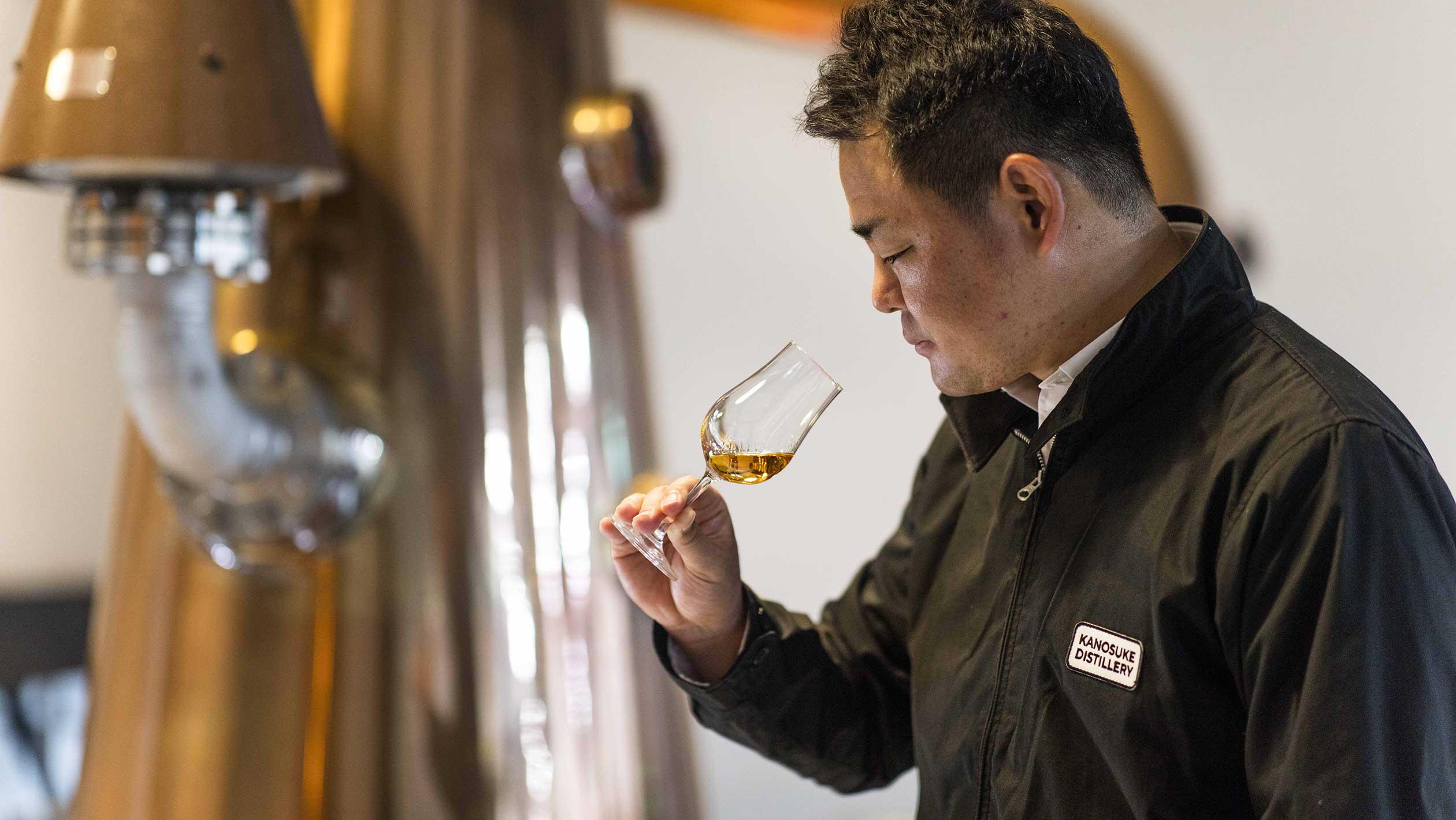
“We anticipate the next decade of Japanese whisky will bring greater diversity, stronger regional identity, and deeper authenticity,” says Kanosuke founder and master blender Yoshitsugu Komasa. As the new guidelines weed out misleading imposters, authentic producers get to lean into what makes their offerings worthwhile.
A New Distillery With Ambitious Growth Plans
Located in the mountains of Karuizawa about two hours west of Tokyo, Komoro is headed up by vice president and master blender Ian Chang, with an approach informed by his prior 17-year tenure at Taiwan’s Kavalan Whisky, where he turned the distillery into a global force.
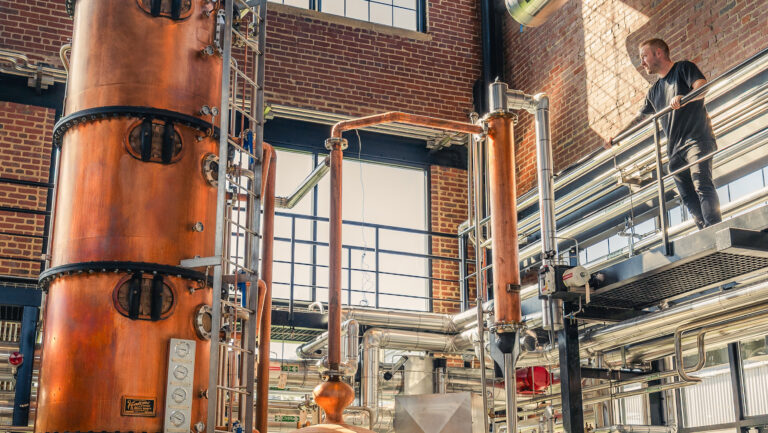
He jokes that Komoro is like a second marriage for him, and he’s imparting a similar ethos there as the one he learned during his tutelage under Jim Swan, Ph.D, utilizing multiple yeast strains in fermentation, and a broad range of casks types for maturation, including the STR casks that Kavalan popularized. Komoro also plans to produce peated whisky for one month of the year. They make use of bulbous, onion-shaped Forsyths pot stills to capture oily, heavier flavors. Komoro, which was founded in 2019 and began production in the summer of 2023, is targeting the release of a three-year-old single malt in 2026.
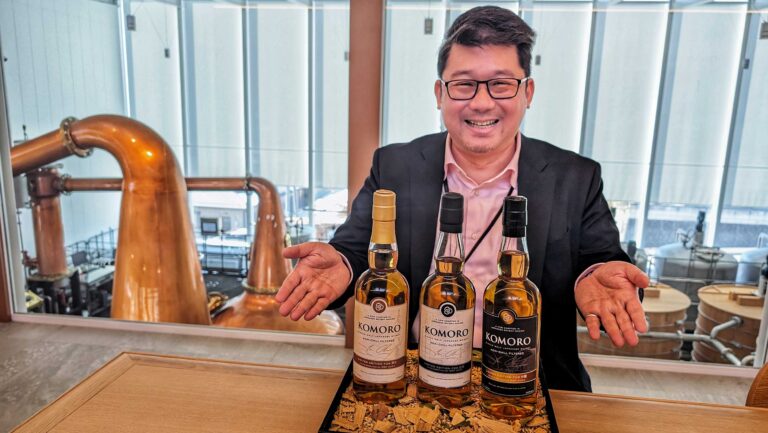
Earlier this year, Komoro’s parent company Karuizawa Distillers announced plans to open a second distillery in Furano, on the island of Hokkaido. “Our philosophy is to create flavors with perhaps different sizes and shapes of stills, but also at different locations, influenced by the local environment and climate, and hopefully we can create different styles and nuances,” Chang says.
The plan isn’t to stop at two locations, either. “This is a very under-the-radar project, but the aim is about five in total, allowing for five different single malts but also blended malts and many different varieties,” Chang says. “It provides many colors in our palette to broaden our portfolio. Blending is the core of Japanese whisky, and [therefore] I feel we should adopt the same philosophy.”
While Chang represents the today and even tomorrow of Komoro, he’s already planning ahead for a future era of Japanese whisky. “In my next phase, it’s like an athlete moving on to become a coach,” he says, hinting that within perhaps a decade he may shift to more of an emeritus role. “I’m trying to teach the new people, the next generation.”
Shochu Legacies Inform A New Approach
Kanosuke and Hatozaki have a similar background: each is built on a four-generation foundation of shochu production while beginning its modern whisky journey in 2017.
At Kanosuke, located along the sandy beach of Fukiagehama on the island of Kyushu, shochu practices honed at parent company and forebear Komasa Jyozo, founded in 1883, are key to producing gentler, more mellow spirits, rather than punchy, bold flavors. The distillery, which Komasa named after his grandfather, Kanosuke Komasa, who was responsible for creating Japan’s first barrel-aged rice shochu in 1957, received funding from Diageo’s now-shuttered Distill Ventures.
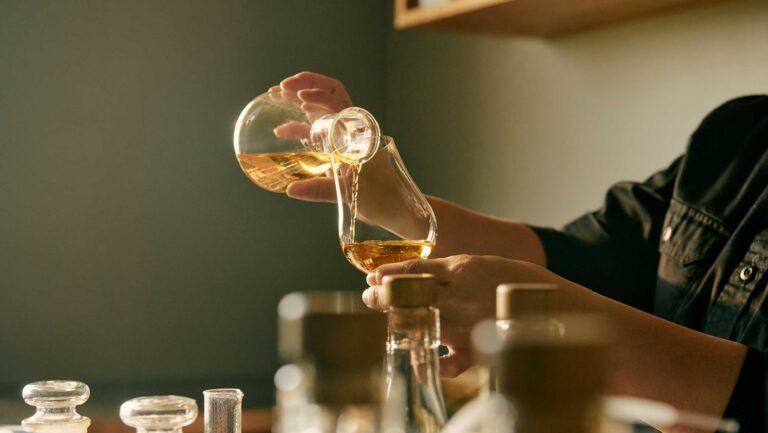
“Our fermentation and distillation techniques are deeply influenced by shochu-making, with meticulous temperature control, careful yeast management, and a deep respect for the local climate,” says Komasa. Shochu casks are then deployed to age its malt whisky. “Our whisky journey is not a new beginning but an evolution of our family’s legacy—we have been distilling shochu for over 140 years in southern Japan,” Komasa says. “Our heritage and our ambition is to carry Japan’s traditional distillation culture forward through whisky.”
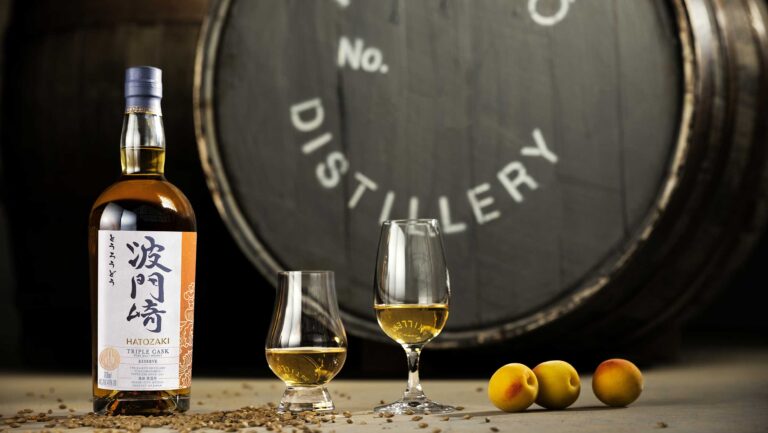
Hatozaki, produced at Kaikyō Distillery, showcases whisky with a distinct maritime character thanks to its locale on the coast of the Seto Inland Sea in Hyōgo prefecture. Master distiller Kimio Yonezawa began making whisky to honor the centennial of his family’s shochu distillery dating to 1917, and named the whisky for the Hatozaki Lighthouse—built in 1657, it’s the oldest stone lighthouse in Japan—situated near the distillery.
“Casks here breathe the sea air and we believe you can sense that coastal freshness in the whisky, while the steady climate encourages gradual oxidation and integration,” says Rick Bennett-Baggs, the global brand director for importer Marussia Beverages.
A New Era of Transparency
Similar to popular and highly-regarded expressions such as Nikka From The Barrel, Hatozaki doesn’t hide the fact that its lineup includes whisky sourced from around the world. Its blended products currently available are therefore world whiskies, not Japanese whisky. “At the same time, we have our own single malt whisky quietly maturing in our coastal warehouses in Akashi, which represents the next chapter of our story—a fully Japanese-made spirit that will sit proudly alongside our globally blended range,” Bennett-Baggs says.
Just as when a litany of American whiskey producers received backlash for sourcing their whiskey, the problem was never in the act of doing so, but in the dishonesty surrounding it. “We see the new standards as a way to show leadership through honesty and innovation, which can only be a good thing for our brand but also the whole Japanese whisky category,” Bennett-Baggs says.
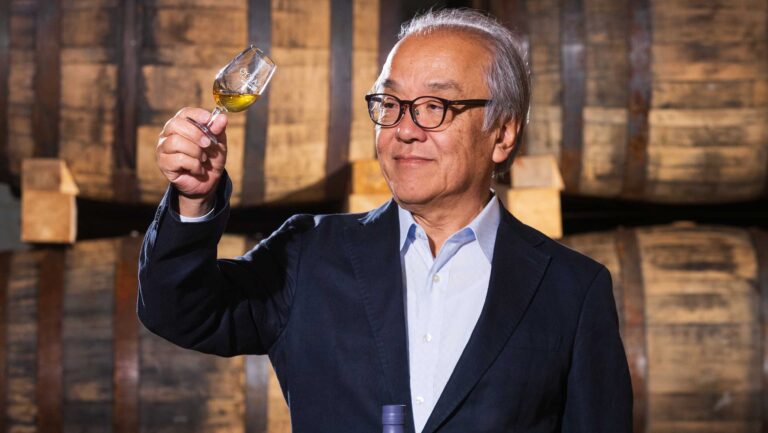
“Transparency is the new luxury in Japanese whisky, and the distilleries that embrace that are the ones earning real respect, both in Japan and abroad,” Dijkstra says. “For these new producers, [transparency] is not a limitation, it’s a chance to define what “Made in Japan” truly means today.”
While these are nascent brands, and Komoro doesn’t yet have a whisky on the market, early returns are strong. For instance, a Kanosuke brand representative said that unofficial 2026 numbers indicated double digit growth for U.S. sales compared to 2025. A representative from retailer BevMo! by GoPuff, meanwhile, indicated that sales for Hatozaki Finest are up 15 percent year to date across its network of stores in California, Arizona, and Washington (though Hatozaki is also distributed broadly across the U.S.).
Space in the Market for More
The three producers above may be best poised to capture a slice of the international whisky market, but there are other innovative upstarts and craft producers to know as well. While a larger and more mature category such as bourbon has begun to see market stagnation, Japanese whisky is still on the upswing, and there’s room for more.
“The one that I’m currently paying attention to is Suzaki Distillery,” says Issey Teruya, the second generation owner of Sammy’s Bar Kiwi, a whiskey and spirits bar on Okinawa, where the distillery is located. Teruya is also one of the organizers of the Okinawa Whisky & Spirits Festival.
Suzaki is following the high-humidity, high-temperature climate template that Kavalan set the standard for to achieve rapid maturation, though releases have been limited in quantity. “They’re also using barrels that have been used to mature awamori,” Teruya says, referring to Okinawa’s traditional rice spirit which predates the likes of shochu.
Shizuoka Distillery, founded in 2016 and located in a prefecture known for its agricultural abundance, is another to watch. “Shizuoka’s dual still setup, part ex-Karuizawa, part Scottish, gives their spirit a depth and texture that’s really special,” Dijkstra says.
Teruya gives a nod to Shizuoka Distillery as well, and notes it’s important to pay homage to distilleries such as Chichibu and Akkeshi (founded in 2016) who have been maneuvering their own Japanese whiskies into the market.
“Akkeshi fascinates me because they’ve taken inspiration from Islay but interpreted it through a Japanese lens—their whiskies have this beautiful interplay of smoke, umami, and precision, they’re bold yet incredibly elegant,” Dijkstra says. “I’m also watching Nagahama, Saburomaru, and Rokkosan closely.”
What makes this new generation of whiskies stand out is more than an adherence to new Japanese whisky regulations or simply being younger alternatives to major brands. “They might be small, but they’re building real integrity around process and transparency,” Dijkstra says. “Each one has its own identity, and that individuality is what makes this new generation so exciting.”

Dispatch
Sign up for our award-winning newsletter
Don’t miss the latest drinks industry news and insights—delivered to your inbox every week.