In many ways, 2025 turned out to be the challenge everyone expected. Tariffs, and their resulting effect on the economy, rattled bars and brands both: prices rose, access to various supplies was strained, exports lagged, and domestic consumption dwindled.
As with any challenging year, however, there were bright spots, especially in the on-premise, with Gen Z’s cocktail preferences skewing toward quality over quantity, with willingness to pay the necessary price for premium serves. A November report by NielsenIQ also indicates that on-premise is a top priority for consumer spending, and there’s data to suggest that over a quarter of consumers expect to go out more in the early months of 2026.
SevenFifty Daily spoke with retailers, analysts, and beverage industry leaders about the trends they see impacting the spirits and cocktail industries in the year ahead.
Don’t miss the latest drinks industry news and insights. Sign up for our award-winning newsletters and get insider intel, resources, and trends delivered to your inbox every week.
1. Ready-to-Eat Cocktails and Added-Value Serves Will Proliferate
A report from IWSR suggests that Gen Z is not only re-engaging with alcohol at a level similar to previous generations, but eagerly returning to on-premise, and with an exploratory mindset. As Gen Z makes an effort to get out of the house, consumers are increasingly looking to drinking spaces for more than just drinks. “We’re realizing with the next generation that people want to be in person; they want to put aside the screens and be more intentionally present,” says Colin Asare-Appiah, the trade director of culture and lifestyle for Bacardi. To that end, “people want more, but it’s not necessarily about drinking more. It’s about more showmanship, more theater.”
This will play out on-premise in a multitude of ways, but especially in multi-sensory serves. “With the continued polycrisis that we are living through, consumers will increasingly seek out new forms of distraction, and humor and silliness will rise,” says Jennifer Creevy, the director of WGSN Food & Drink. “What we are calling ‘ready-to-eat’ cocktails will emerge, including products like gelatin-based cocktails that burst in the mouth, or cocktails topped with creamy or chewy foams. These playful sips really allow for everyday humor and deliver the escapism that everyone is searching for.”
Several beverage directors pointed to the comeback of jello shots at trendsetting cocktail bars; they’re already on the menu at Milady’s in New York City, Silver Lyan in Washington, D.C., and Midnight Rambler in Dallas, and elevated versions are also available at retail.
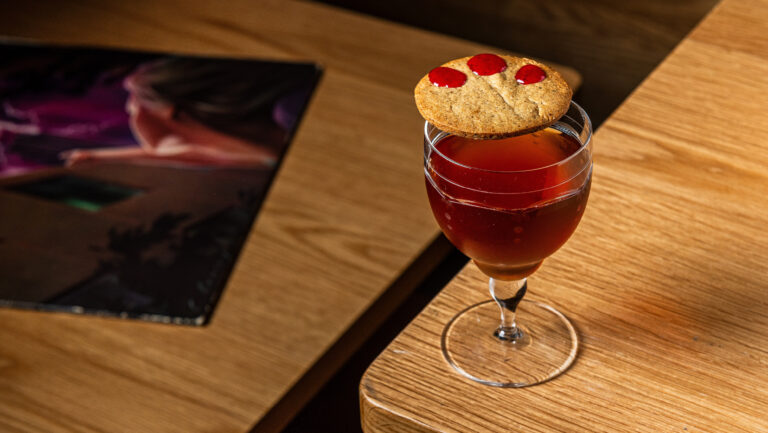
This also translates to unexpected garnishes or cocktail add-ons. “With our Espresso Martini variation, we serve it with a madeleine on the side, and then we encourage our guests to dunk it in the cocktail and treat it like a biscotti,” says Will Patton, the managing partner of Press Club in Washington, D.C. “We serve our split-base Manhattan variation—one of the bases being Cognac—with a VSOP sugar cookie. Our signature cocktail is [In a Cadillac which features] dueling Martinis, but we serve it with Marcona almonds.”
These toothsome elements aim to appeal to consumers on multiple levels. “The idea of having these little snackable items is obviously [offering] more implied value [and] something that is more experiential, but also it creates a point of entry when you’re engaging with the guests,” says Patton. “I think that experience, along with value, is something that people are really, really searching for.”
2. Gen Z Will Bolster the Gin Category
Gin has trailed behind just above every other core spirit in recent years, but there is a feeling among beverage directors and retailers that Gen Z consumers could be the ones to revive the category, without the prejudice against it that their vodka-loving millennial siblings held.
“Gen Z is not scared of gin,” says Kevin Beary, the beverage director for Chicago’s Three Dots and a Dash. “They haven’t had the same bad gin experiences that previous generations had, and with the current Martini resurgence and how hard everybody’s hitting the vodka Martini, I think it’s a natural evolution that they’re going to shift to gin, as gin just makes better Martinis.”
Molly Horn, the chief mixologist and spirits educator for Total Wine & More, agrees, thinking gin will continue to rise in popularity. “It is a very approachable, easy to mix, and super diverse category with all different price points and styles, which makes it ripe for the exploratory customer,” she says.
Horn also anticipates more gin brands arriving from the EU. “There’s a lot of exciting innovation happening in gin across the EU—think bold flavors and distinctive styles that really appeal to younger American gin consumers,” she says. “I also see existing producers developing brand extensions that cater to different flavor profiles, such as a more spice-forward expression versus a more savory, umami expression.” The British James Gin, for example, recently added an American Mustard expression, which is warm and savory, to a lineup that includes their spicy Asian Parsnip. These aren’t flavored gins, but they’re moving completely outside the range of traditional botanicals.

3. Waste-Based and Hyper-Sustainable Spirits Will Move from Novelty to Mainstream
Distillates made from food or beverage byproducts are not new unto themselves; look no further than rum and grappa. But more recently developed spirits based on whey—a byproduct of the cheese industry—have shown growth over the last decade, and the trend is expanding.
In 2025, two new brands came into the market with bold strokes, including the ready-to-drink Waste, developed by Thad Vogler of San Francisco’s Bar Agricole. “[It] claims to be the world’s first ready-to-drink canned cocktail made from upcycled ingredients; crafted from reclaimed carbon dioxide, alcohol distilled from surplus crops, and organic citrus; and packaged in recycled aluminium,” says Creevy. The U.K.-based distiller Murray & Yeatman also introduced Realizzato, tapping into the indefatigable Espresso Martini energy, with a coffee liqueur distilled from spent coffee grounds. Wheyward Wheyskey, a barrel-aged, whey-based spirit, which launched in 2023, was just tapped as a finalist for the Distilled Spirits Council of the United States’ 2026 Innovation Showcase.
“I think what we will also see more of is spirits made from hyper-sustainable products such as breadfruit,” says Horn. For example, the breadfruit-based Mutiny Island Vodka announced a new national distribution agreement with Southern Glazer’s Wine & Spirits in October. The trend neatly aligns with data from the past few years showing that Gen Z and millennials are willing to pay more for sustainably produced products.
4. New AI Tools Will Optimize Efficiency Behind the Bar and Connect with Consumers
As artificial intelligence expands to every area of our lives, bar operators are putting it to use to enhance functionality while keeping drink ideation and creation in the hands of bartenders. POS platform Toast recently launched its ToastIQ, which impressed Gabriel Urrutia, an adjunct professor at Florida International University’s Chaplin School of Hospitality and Tourism Management. “It can analyze historical patterns, it can automate workflow, and it can personalize offerings, with menu upsells already built into its functionality,” he says. AI-powered restaurant management software company Nory also recently raised significant capital to advance their proprietary AI models and develop autonomous AI assistants, offering operators functionality that is entirely focused on restaurant profitability. This next phase of investment also includes the brand’s expansion into the U.S. market.
Beverage alcohol brands are also exploring ways to use AI to connect to consumers. Weber Ranch recently rolled out Tex, an AI chatbot mixologist that was developed with insights from bar professionals to deliver consumer-friendly guidance. It’s a potentially critical link in a system where home bartenders have an array of AI-generated mixology apps at the ready.
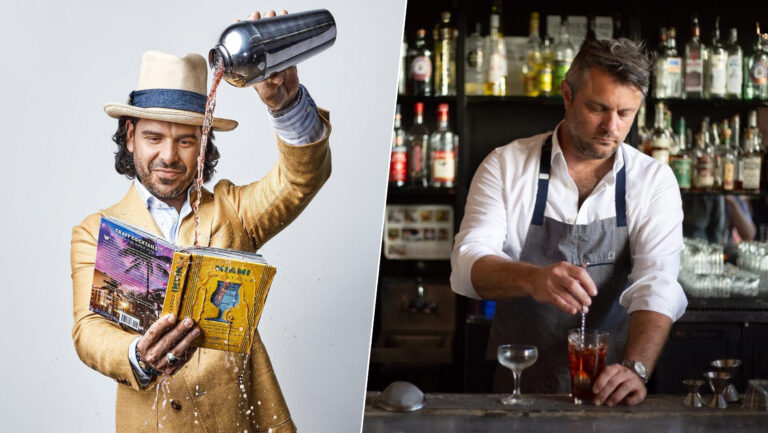
“Any savvy operator right now would be really missing the mark to not be leaning on AI for their data analytics,” says Beary. “It’s made a bunch of things that we do in the bar a lot easier.” Beary uses AI to gather data on micro trends, such as asking “what are people drinking on Tuesdays at 7 pm?”
Bar professionals are also putting it to work for staff education, event experiences such as trivia or movie nights, and cocktail names. “Across the industry, AI is providing another tool for creativity,” says Asare-Appiah. “It’s very similar to social media in that it provides you another space to expand upon your creative ideas.”
5. Cocktails Will Incorporate Still Wine as an Ingredient
Fortified and sparkling wine are time-tested cocktail ingredients, but more bartenders are now reaching for still wine as well, with 67 percent of consumers stating an interest in wine cocktails, according to Dataessential’s “2026 Future of Drink Report.” “One thing I’m seeing a lot more now is wine in cocktails as a modifier,” says Patton. The trend also plays into the ongoing drive for lower-proof cocktails.
“When we think about how we can lengthen a cocktail, or add acidity, tannins, or a fruit component, wine is always a good option, because for a guest, they recognize something like Chardonnay,” says Patton. “And what’s more iconic than Chardonnay for a buttery apple note?”
“With the resurgence of freezer Martinis or freezer cocktails, the swapping out of water for something more flavorful is certainly helpful,” says Beary. “[It] really allows you to do no or very little dilution, using a flavorful wine or aromatized wine to fill in that place.”
Still wine also plays a role in many draft or custom carbonated cocktails, which are also holding steady as an outlet for operators. “I’m taking still white wine and mixing it with gin, lemon juice, and simple syrup, and carbonating the whole thing, and putting that on draft,” says Jeffrey Morganthaler, the consulting partner of Pacific Standard and The Sunset Room in Portland, Oregon.
6. The Agave Market Beyond Tequila and Mezcal Will Mature
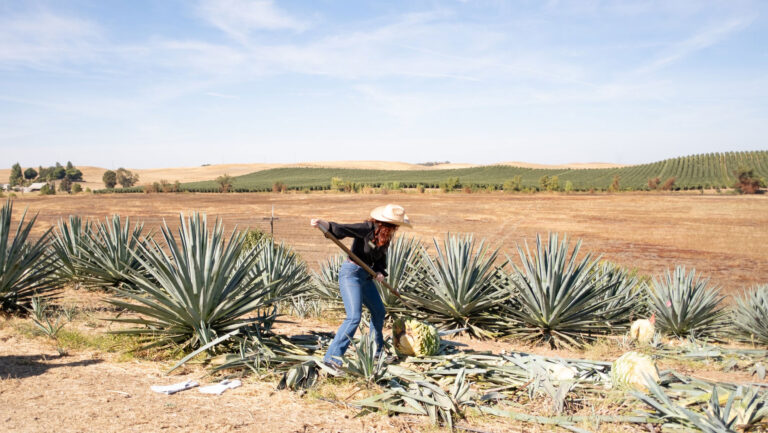
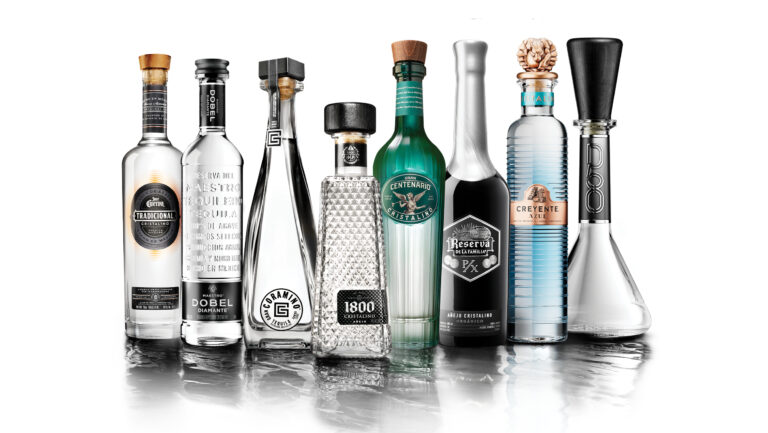
Tequila continued to reign in 2025 as the most resilient spirit in a challenging landscape, with a November report by Wine and Spirits Wholesalers of America (WSWA) showing it as the only core spirit exhibiting any growth. But even though it still represents a small fraction of total U.S. agave spirits sales, the broader agave category, with its variants and adjacent spirits, is expected to proliferate.
“We forecast the continued rise of Mexican spirits, with some of those lesser-known varieties gaining popularity like sotol, as well as the evolved use of tequilas and mezcals,” says Creevy. IWSR forecasts a six percent CAGR for sotol, made from a wild-growing succulent called Dasylirion, through 2027.
“A lot of consumers are gravitating towards the octopus of what tequila brought to the table,” says Urrutia, who also points to a rise in agave spirits from various South American countries. Domestic agave is also growing, albeit from a very small starting place.
According to the WSWA, reposado tequila specifically is up 12.5 percent over the past 12 months, a trend noted by several bar directors as being a regular consumer request. Insights shared by Lander Otegui, the executive vice president of marketing and innovation at Proximo Spirits, which includes Jose Cuervo, 1800 Tequila, and Gran Centenario, indicate that “cristalinos continue to show the strongest growth and are considered one of the most dynamic and fastest-growing spirits categories.”
Additionally, “mezcal continues to gain momentum,” says Michele Giammittorio, the senior director of spirits category management of Total Wine & More. “As mezcal continues its ascent, it also has the potential to elevate awareness of related spirits such as raicilla and sotol, and spark broader curiosity among consumers.”
Brands are also experimenting with new flavor innovations to test consumer interest. “The diverse agave varieties used in mezcal production create a wide spectrum of flavor profiles,” says Giammittorio. “One upcoming trend we are excited about is flavored mezcal, which is a small but exciting innovation for the category.” Brands such as Mal Bien, Vago, Erstwhile, and Cinco Sentidos have released flavored mezcals ranging from limón and elote to five-spice duck and mole poblano.

Dispatch
Sign up for our award-winning newsletter
Don’t miss the latest drinks industry news and insights—delivered to your inbox every week.
Pamela Vachon is a freelance writer whose work on food, beverages, travel, and especially the intersection of those elements has appeared in Food & Wine, Wine Enthusiast, Travel & Leisure, VinePair, and Bon Appétit, among others. She was formerly a bartender and captain at New York’s The Modern, and teaches classes at Murray’s Cheese. She splits her time between London, New York, and Castlerea, Ireland, where she hopes one day to make cheese.