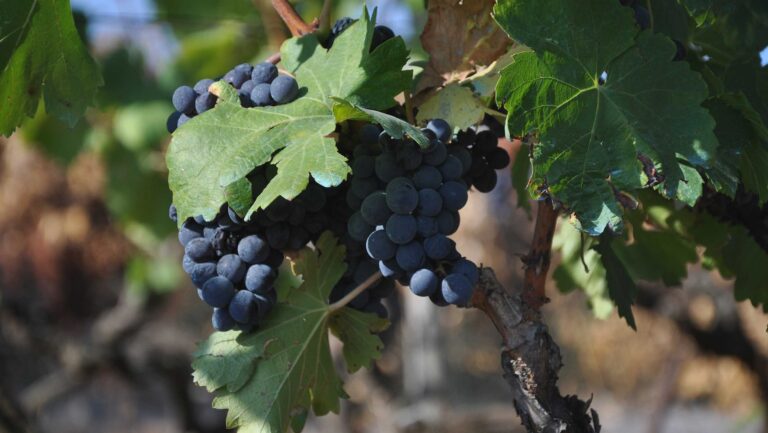
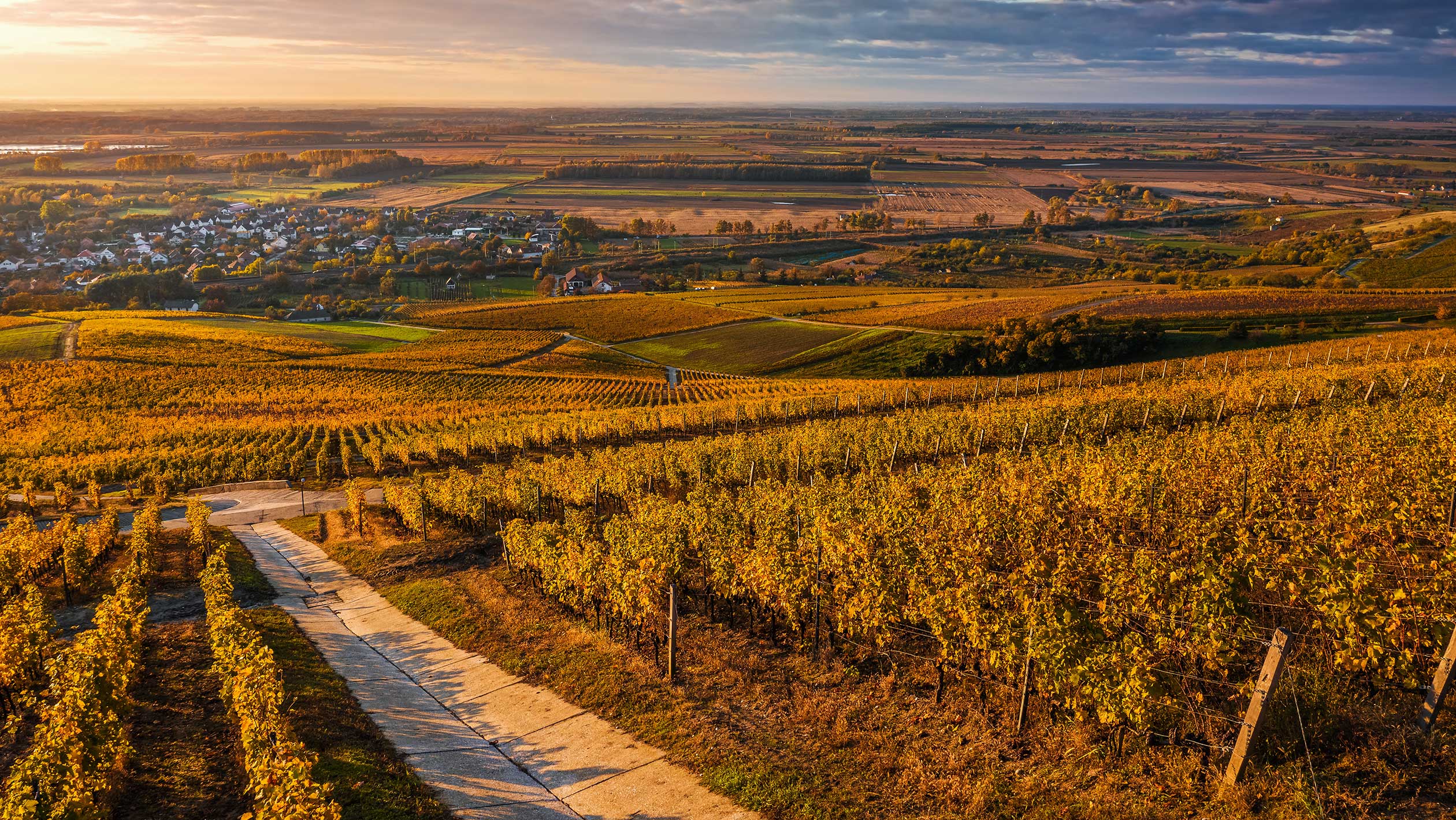
For centuries, Hungary has rested its wine reputation on its world-famous sweet wine: Tokaji Aszú.
But while Aszú’s familiarity is advantageous, it’s been the country’s dry wines that have garnered recent attention both at home and abroad. From Furmint and Hárslevelű—the grapes from which Tokaji Aszú is primarily comprised—to Kadarka and Kékfrankos, these wines started popping up on lists at wine bars and sommelier-driven restaurants in the 2010s, particularly in major markets like New York City and San Francisco.
This new era of Hungarian wine has had over a decade to gain recognition, momentum, and sales in the U.S. market. Now, Hungarian producers face their next challenge: turning growing trade enthusiasm into lasting demand in a market where awareness, availability, and distribution remain hurdles.

Don’t miss the latest drinks industry news and insights. Sign up for our award-winning newsletters and get insider intel, resources, and trends delivered to your inbox every week.
Gaining Traction with Indigenous Varieties
“I think Hungarian wines are in a very light upward movement, which is saying a lot because it does not feel like very many things are moving in that direction in the wine industry,” says Athena Bochanis, the founder of Palinkerie, which solely imports Hungarian wine.
It’s difficult to find data to illustrate the state of Hungarian wine in the U.S., particularly because government support for the country’s wine industry has historically been inconsistent at best. According to the United Nations Comtrade database on international trade, $3.04 million worth of Hungarian wine and grape must was imported to the U.S. in 2025. That figure has decreased from an all-time high of $5.95 million in 2022, but it’s up slightly from a decade ago. On an individual business level, Bochanis notes that “last year [Palinkerie] had a really good year; financially we were still ahead of the year before, which was really not the case for a lot of wine importers.”
Daniel Satola, the founder of Credo Imports, reports similar strength; Hungarian wines are the most profitable in Credo’s portfolio, which specializes in small-batch, family-owned wineries from Europe. Satola focuses on collaborating with distributors that recognize the marketing appeal and sales potential of various Hungarian wine styles, including dry wines for everyday drinking.
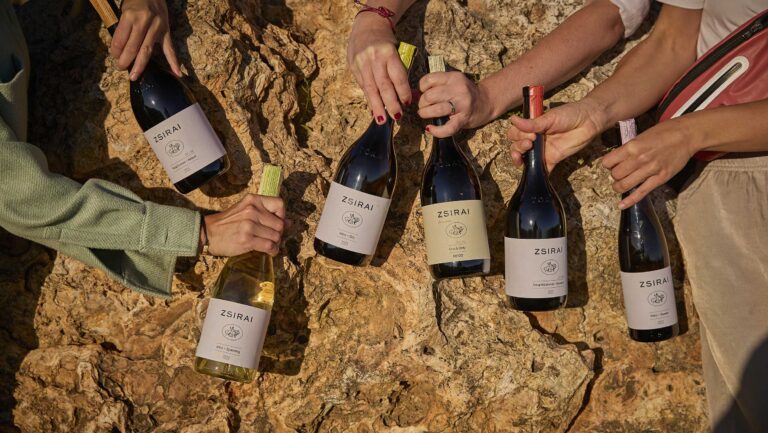
“Dry wines are what people are interested in,” says Máté Csanaky, the head of sales and marketing at the family-owned Zsirai Winery in Tokaj. “[Furmint] has a huge potential, and many wine lovers are looking for something new.” At the estate in Mád, Tokaj’s most famous village, Zsirai produces Aszú, dry Furmint, and Hárslevelű, and exports of Zsirai wines to the U.S. have increased in recent years.
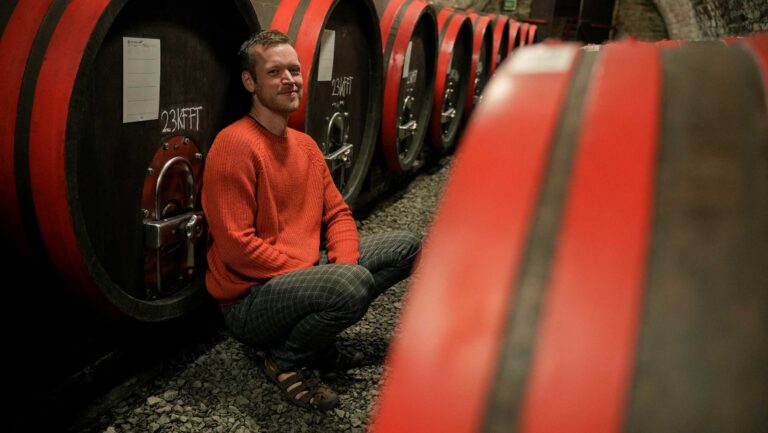
And it isn’t just dry Furmint that is gaining traction with buyers; as Hungary becomes more established in the U.S. market, more sommeliers are understanding the breadth of the country’s wines.
“I have emails like, ‘Hey, do you have something that’s in between a Kadarka and a Kékfrankos that I could replace my Pinot with?’” says Eric Danch, the cofounder of Danch and Granger Selections, which imports wines from Central and Eastern Europe. “Those are questions that would not have happened five years ago.”
Zoltán Heimann Jr., the owner and winemaker of Heimann Winery, which was founded by his parents in Hungary’s Szekszárd region in 1989, first found international success with its ongoing revival of the indigenous Kadarka grape. More recently, Heimann Jr. unveiled the Heimann & Fiai line, putting single-varietal red Kadarka and Kékfrankos wines in the spotlight.
“We have to focus on a lineup that makes sense internationally,” he says. The winery has modestly increased its exports to the U.S. from 4,600 bottles in 2020 to 5,700 bottles in 2025.
Brent Kroll, a sommelier and owner of the Washington, D.C., wine bars Maxwell Park and Pop Fizz Bar, also feels that Kadarka is especially well poised to gain traction as more customers embrace chilled red wines. “On my part, I’m sold,” he says. “I like them and I’m inclined to want to buy more.” Following a visit to Hungary in 2025, Kroll now has his sights set on the country’s under-the-radar sparkling wines like Zsirai’s Methode Traditionelle, a blend of Középhegy, Furmint, and Hárslevelű.

The Slow, But Effective, Hand Sell
While Furmint has gained traction with sommeliers over the years, which has aided in the trade’s understanding of the quality of Hungarian wines, there is still “work to do on the consumer side,” says Satola. “Guests don’t walk in asking for Furmint the way they might ask for a Sancerre, so it’s still a hand-sell in most rooms.”
Petra Zsirai, who runs Zsirai Winery with her sister, Kata, agrees. “Although Hungary has a rich tradition as a wine-producing country, we are still unknown to most people,” she says. “We think the quality is there, we just need more focused communication to reach the end consumers.”
Some see Hungary’s position as an under-the-radar winemaking country—as well as its high quality-to-price ratio—as a selling point, however. “Honestly, I don’t see [the hand sale] as a problem,” says Satola. “That moment of discovery, where a somm gets to introduce someone to something they’ve never had, is part of what makes the wine work on a list.”
And if a buyer can get a glass in front of the consumer, the wine speaks for itself. Heavenly Creatures, a Portland, Oregon, wine bar and bottle shop that opened in 2022, notes that Hungarian wine “has always been a part of our DNA,” says cofounder Joel Gunderson. The staff regularly offers comparative tastings with varieties like Chenin Blanc and Chardonnay “to help people understand how Hungarian wines stack up against what we consider benchmark whites,” he adds.
At Maxwell Park, Kroll has used past BTG placements of Hungarian wine to introduce consumers to the country’s offerings. He’s previously featured a Kadarka from Schieber Winery in Szekszárd, as well as a Gróf Degenfeld Hárslevelű and Evolúció late-harvest Furmint, both from Tokaj. “It’s a ripple effect,” says Kroll. “Guests feel comfortable ordering wines they don’t know somewhere like Maxwell Park, and they bring that confidence to other settings.”
Hurdles to Future Investment
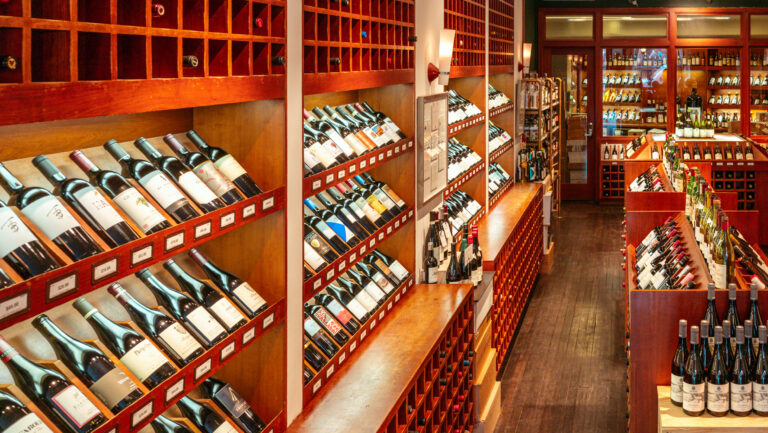
But while Kroll would happily feature more wines from Hungary—particularly Kadarka, sparkling Tokaji, and aged dry Tokaji—he says that new options are difficult to find in the U.S. market. “The next step is aligning with importers who can bring more into the market,” he says. “Outside of the bigger wineries, they are underrepresented here.”
Though more importers are bringing Hungarian wines into the U.S.—aside from specialty importers like Credo, Danch & Granger, Palinkerie, and Citadella, which was founded in 2019, national importers like Skurnik Wines & Spirits and Wilson Daniels may have a Hungarian producer or two in their portfolios now—limited exposure remains a challenge. “A handful of importers are getting deeper into the market, but Hungarian wine is still a hand-sell. We are not over that threshold yet, but it’s moving in that direction,” he says.
Given the U.S. market’s declining wine sales and tariff tumult, it’s a tricky time to ask importers and distributors to invest in a country that doesn’t have as much recognition. “I think people are playing it safe because it’s a tough market right now and taking a big leap on these wines is scary to some people,” says Danch.
With an importer landscape more crowded than it was five years ago, Satola suggests that “the category doesn’t need more people each bringing in a pallet and hoping for the best.” Instead, he envisions a larger, category-level marketing effort behind a signature Hungarian grape like Furmint. “I’d love to see importers, distributors, and Hungarian producers pooling resources behind on-premise placement and somm education, because that’s where the momentum already is,” he adds.
Future marketing support is unlikely to come from the Hungarian government. Following Péter Magyar’s election as prime minister in April, Wines of Hungary, the state-backed organization dedicated to boosting tourism and promoting Hungary’s wine regions globally, was dismantled. Now, all marketing efforts will be handled by Hungary’s Ministry of Agriculture and Food Economy. Events scheduled for Wines of Hungary in the U.S. were halted earlier this year as Lounge Event Kft., the intermediary between Wines of Hungary and its international contractors, allegedly transferred funds out of the country meant for international marketing efforts; the government has launched an investigation of Lounge on suspicion of misappropriation of funds and money laundering.
Though Bochanis knew that the country’s political turbulence could mean that the U.S. campaign for Wines of Hungary would be short, she calls the lack of government support “a huge loss” because campaign activities were impactful. Palinkerie sent five or six clients on a Wines of Hungary trip to the country, which resulted in strong sales and a lasting impression for buyers. “Like everyone, I really hope that the next chapter in Hungarian politics just sees something that’s a little bit more stable,” she adds.
And Hungary is far from immune to the broader challenges facing winemakers around the world. The 2026 vintage is expected to be smaller due to severe drought, as well as frost damage in some regions, and the 2024 vintage was impacted by extreme heat. Though climate change isn’t a Hungary-specific issue, many producers don’t have the financial resources to invest in climate-change mitigation practices.
While those broader hurdles are far more complicated to overcome, Bochanis sees a bright side, and a sign of how far the country has come in the U.S. market. “The fact that it’s Hungarian is not really the challenge anymore,” she says, “which is really cool.”

Dispatch
Sign up for our award-winning newsletter
Don’t miss the latest drinks industry news and insights—delivered to your inbox every week.
Alia Akkam is a writer who covers food, drink, travel, and design. She is the author of Behind the Bar: 50 Cocktails from the World’s Most Iconic Hotels (Hardie Grant) and her work has appeared in Architecturaldigest.com, Dwell.com, Penta, Vogue.com, BBC, Playboy, and Taste, among others, and she is a former editor at Edible Queens, Hospitality Design, and Beverage Media. A native New Yorker, Alia now calls Budapest home. Follow Alia @behdria.