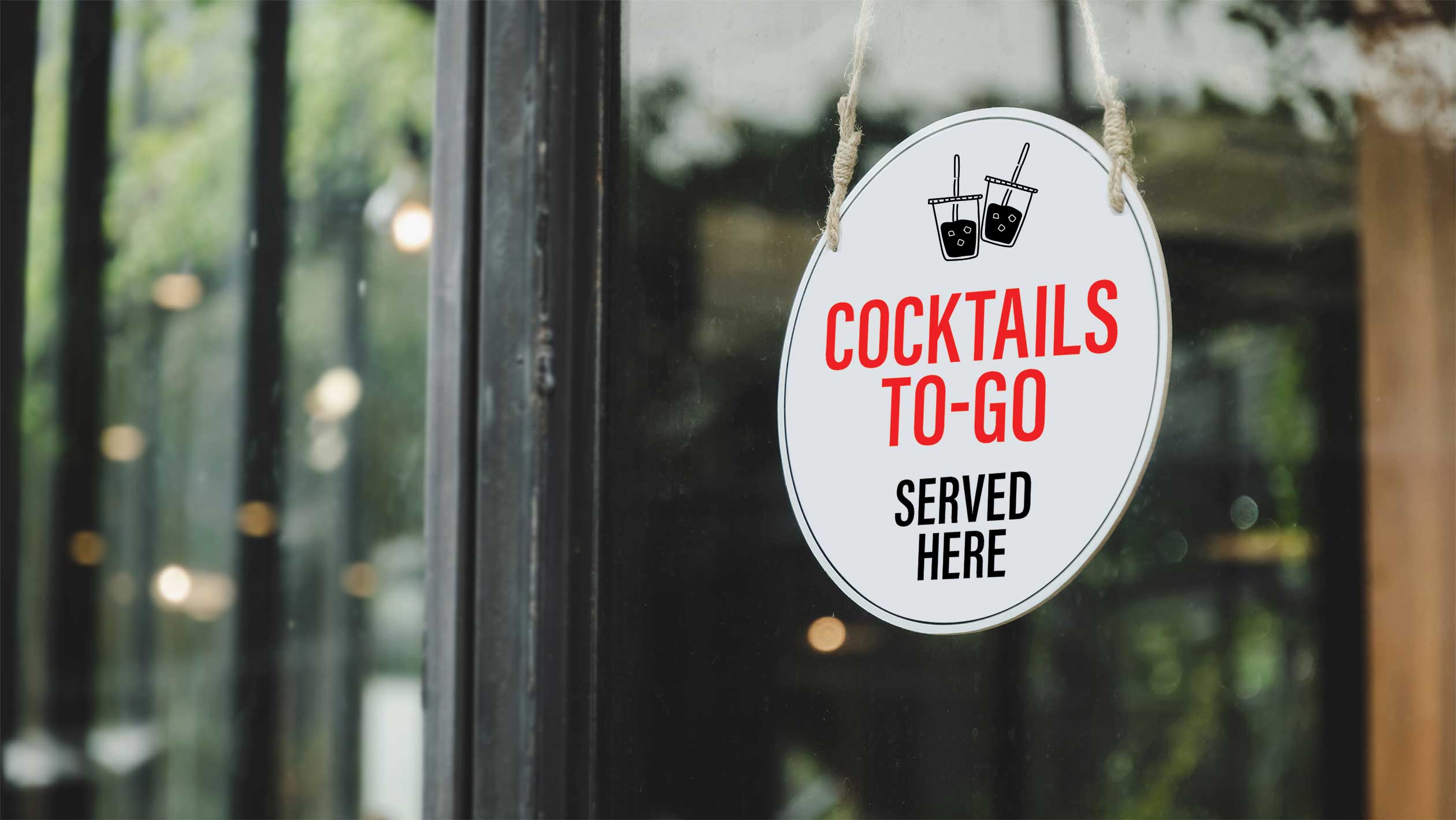
In June 2020, Iowa passed the first pandemic-era cocktail to go law to help bars and restaurants survive during a time when indoor dining was widely prohibited. Thirty-eight other states followed. Today, all but eight of those states still allow on-premise establishments to sell cocktails to go in some form. In New York, the pandemic-era policy was extended to 2030, and California, Illinois, and New Jersey have temporary allowances. More than half of U.S. states now have permanent laws allowing alcohol to go. In 16 of those states and Washington, D.C., third-party delivery services can fulfill to-go alcohol orders.
Yet, for all this legislation, the number of businesses offering cocktails to go now is far fewer than when in-person restrictions were in place. The reasons vary by state and by individual business, but alcohol to go for on-premise establishments isn’t the universal revenue driver that it once was.
“None of my clients have to-go cocktails anymore,” says Linda Kavanagh, the owner of the New England Culinary Group and the Connecticut-based, hospitality-focused PR agency MaxEx. “From COVID to 2023, 75 percent of them devised a way to make the to-go cocktail enticing.” Now, “without high demand, these costs just don’t make sense anymore.”
Don’t miss the latest drinks industry news and insights. Sign up for our award-winning newsletters and get insider intel, resources, and trends delivered to your inbox every week.
Other restaurants, however, are finding new ways to make it work, with cocktails to go helping to diversify revenue streams. Ainsley Giglierano, the vice president of public affairs and state policy at the Distilled Spirits Council of the United States, expects drinks to go to remain “a regular part of dining culture moving forward.” When it comes to bars, though, they’ve encountered a different set of challenges—and solutions. Five years after this milestone in drinking culture, SevenFifty Daily spoke to restaurant and bar managers to find out if and how cocktails to go are still driving sales in 2025.
When, Where, and How Cocktails To Go Are Working
The revenue promise of cocktails to go can be seen in the city long famous for its allowance: New Orleans. Charles Regnard, the sommelier at Copper Vine, a wine pub and inn in the Central Business District, says to-go drinks offer “an extra way to engage with our guests,” rather than replace the customer base that would otherwise sit down at the bar. During large events or a Saints home game, Regnard estimates as much as 30 percent extra revenue comes from takeaway drinks sales.
A location with heavy foot traffic in an area known for cocktails to go can make sales easier. In places without that benefit, a bar program focused on drinks that people don’t typically make at home can be the path to steady sales.

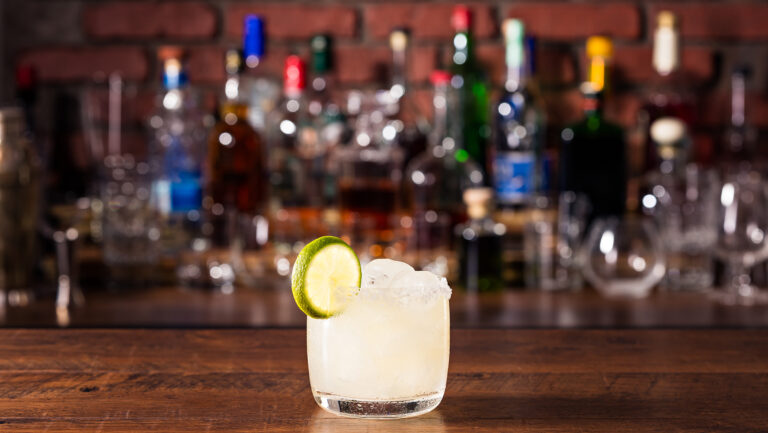
Rustan Lundstrum opened Coach Meeting House in Oyster Bay, New York, on March 14, 2020. When the restaurant got its liquor license on April 1, it added frozen Margaritas to go to compliment the restaurant’s take-out taco trays. Sales quickly took off and remain important today. The legal to-go drink pause in New York in 2021 “was a huge blow,” Lundstrum says, as the drinks made up 20 percent of gross sales and 40 percent of profit at the time. “Thankfully Governor Hochul brought them back. To-go business never rebounded to prior levels, but it’s still solid.”
To-go margins overall are higher with alcoholic drinks. “If you can upsell the customer an artisanal cocktail, slushie, or something else they can’t make at home the same way, your to-go business has good margins,” Lundstrum says. In the summer, to-go cocktails make up about 25 percent of his bar sales; in colder months that figure is about 10 percent. Specials like a “buy one, get one” deal on Tuesdays and a set price fill-your-own container on Monday help boost sales. Competitive pricing also helps: $15 for a 20-ounce drink and $20 for a 32-ounce drink to go, compared to $15 for a 12-ounce cocktail seated.
“You can’t just post your cocktail menu and hope people get something unless you’re in a major tourist area with foot traffic,” Lundstrum says. “In the ‘burbs of Oyster Bay, you have to be—and stay—creative.”
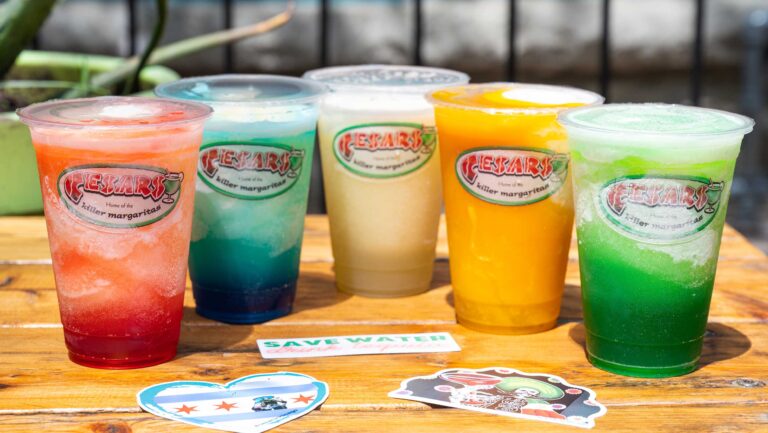
Packaging can be a make-or-break consideration, too. Cesar’s Mexican restaurant—famed for its Killer Margaritas—was one of the first restaurants in Chicago to use a sealing machine for boba drinks to package cocktails to go, says owner Israel Sanchez, and the practice continues today. Sanchez estimates about 60 to 70 percent of dine-in tables order Margaritas to go on weekends, which helps free up seating occupied by people lingering over a last drink. Some walkthrough orders come in with people on their way to the shore, too.
Delivery platforms like Uber Eats and GrubHub, however, remain a key point of sale, with the vast majority of orders including some sort of alcoholic beverage. A precise sales percentage is hard to measure because the drinks to go are paired with food orders, but Sanchez estimates about 10 percent of delivery sales are Margaritas to go, “which is huge because it’s a component that we never had before, but now we rely heavily on.”
Average delivery orders can increase by up to 30 percent when alcohol is offered, according to DoorDash, and a 2024 survey of 400 restaurants found that 79 percent of owners view alcohol delivery as a great revenue driver.
The State of Cocktails To Go at Bars
The situation for bars that aren’t attached to a restaurant is less straightforward. To-go programs created extra expenses with fewer upsides once people could easily drink on-premise again. Bars that kept to-go programs have moved on from basic, straight-forward offerings.
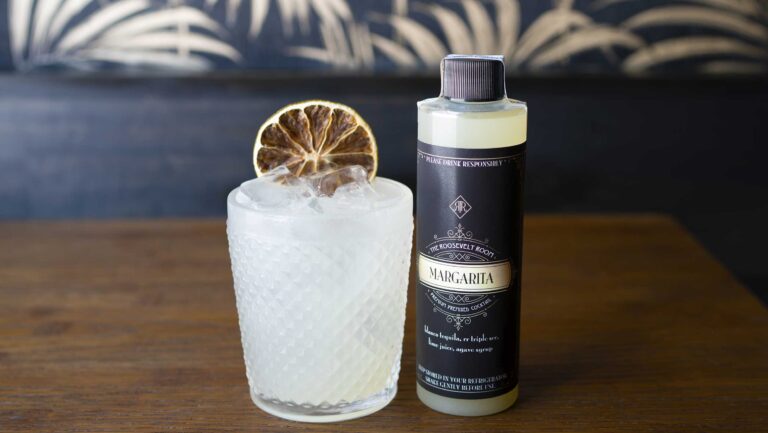
The Roosevelt Room, a high-end bar in Austin, is known for its cocktail menu with 90-plus drink options. “We wanted our to-go program to live up to those standards, so we weren’t just going to offer a small menu of 10 drinks,” says owner-operator Justin Lavenue. “We ended up offering almost all of them.” (One notable exception? A Blue Blazer, for obvious reasons.) Drinks are made to order, and available in either a 250- or 750-milliliter bottle, with recipes adapted to each bottle size. The container choice, along with the custom labels and handwritten thank you cards, matches the elevated atmosphere of the bar.
Deliveries play an important role here, too. The Roosevelt Room was one of the first cocktail bar accounts on Uber Eats in Texas, Lavenue says. Today, orders for cocktails to go are about 85 percent for delivery, 10 percent for pick-up, and five percent from people who sat at the bar for drinks and want to continue at home. On a good day, Lavenue estimates between $500 and $1,000 in to-go sales, or about 40 to 50 bottles.
“It’s a nice little padding,” Lavenue says. “It’s not a huge part of our program because people still want to go out and have the experience, but it’s worthwhile and allows people to enjoy the drinks at home. I think that’s helped to keep us top of mind for some of our regulars, and helps introduce new people to the offerings.”
Cocktails to go are a brand extension at other bars as well. Bread Bar in Silver Plume, Colorado, a town of under 200 permanent residents, exists in what partner-owner Stephen Fenberg describes as a “living ghost town”—an old mining town that never fully transitioned to tourism, yet never truly went away either. The bar started selling its Old Fashioned variation to go as an experiment in late March. Even without a promotional push, the drink saw promising early sales, particularly from “folks who probably aren’t in the bar every weekend,” Fenberg says.
The sales aren’t a lifeline like cocktails to go were for many bars at the start of the pandemic, but the diversified revenue stream helps contribute to the long-term sustainability of the business. Bread Bar’s cocktails to go come in glass bottles with four servings inside, protected by a cork enclosure to “honor the quality and the spirit of what we’ve developed over the last nine years or so,” Fenberg explains.
Cocktail bars attached to distilleries have found success as well. Lucky Sign Spirits in Gibsonia, Pennsylvania, sells to-go drinks in eight-ounce plastic bottles that serve as an entry point to the brand. “Many questions we receive from consumers that are new to our products are about how they can utilize our spirits themselves, in their home bars,” says beverage manager Lisa Belczyk. Sales of cocktails to go from the bar at Lucky Sign Spirits has consistently been about five to 10 percent of sales over the past two years. A business’s walkability plays into to-go sales; the first Lucky Sign Spirits location was in a more walkable neighborhood, and to-go sales there were closer to 10 to 20 percent.
The craft cocktail bar The Wallingford Dram in Kittery, Maine, took an entirely different approach with to-go drinks. In 2020, owner Julian Armstrong turned the bar’s signature cocktails into canned ready-to-drink beverages that can be purchased to go from the bar as well as Armstrong’s ramen restaurant next door, Anju Noodle Bar. Most of the RTDs purchased at Anju come after diners finish a meal, along with regulars who stop by specifically for the drinks. On a good night in the warmer months, the two businesses still sell between 40 and 50.
Rather than keep to-go sales of made-to-order cocktails, some bars and restaurants have turned to RTDs as well, which are easier to prepare for the guest and can fill the gap from pandemic-era to-go profits.
There’s no one-size-fits-all approach to to-go cocktails, but with permanent laws in place, designing something specific to the business can help boost sales. “Convenience continues to be a thing that people look for and will pay money for,” Lavenue says. “I don’t think it’s going anywhere, unless the legalities of it change.”

Dispatch
Sign up for our award-winning newsletter
Don’t miss the latest drinks industry news and insights—delivered to your inbox every week.
Nickolaus Hines is a journalist who writes about beer, spirits, food, and travel. He’s the food and drinks editor at Matador Network and has written about drinks for Liquor.com, Men’s Health, October, Hop Culture, Supercall, and VinePair.