
Fifteen years ago, as craft brewers elevated the bitterness and booziness of IPAs, Founders Brewing went low while others went high. Instead of 7% or 8% ABV, the brewery’s citrusy All Day IPA limboed in at 4.7% ABV, transforming the brawny IPA into an easygoing afternoon drink.
All Day created the session IPA category and continues to be the Grand Rapids, Michigan, brewery’s best-selling beer, spawning variants, but the alcohol “pendulum feels like it’s swinging even further now,” says Chuck Buckingham, the chief marketing officer.
Founders’ portfolio also included an alcohol-free hop water and a non-alcoholic beer. But what about a beer cutting the difference between nothing and something? This spring, Founders released Low Profile, an 85-calorie IPA with 3% ABV. “It’s a lighter-ABV proposition for consumers looking for moderation,” Buckingham says.
Don’t miss the latest drinks industry news and insights. Sign up for our award-winning newsletters and get insider intel, resources, and trends delivered to your inbox every week.
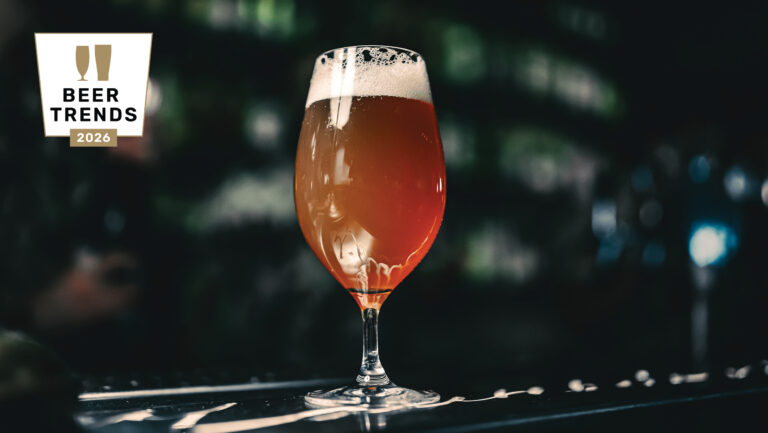
Low Profile is among the latest entrants in America’s emergent mid-strength beer category that’s defined by alcohol content—roughly between 2.5% and 3.5% ABV—and not style. They target drinkers looking to cut back but not entirely cut out alcohol. Mid-strength pilsners and IPAs deliver more flavor and less alcohol than light lagers, which are typically around 4% ABV.
Small Beer in Austin, Texas, makes a snappy 2.5% ABV lager and a tropical 3% IPA that aromatically punch above their weight. “Our IPA has fewer calories and carbs than a Coors Light,” says Jess Thomas, a cofounder. “We’re reimagining light beer.”
American Craft Breweries Join the Mid-Strength Party
Less-intoxicating beers are foundational to drinking culture in the U.K., Scandinavia, and Australia, whose governments incentivize lower-alcohol beer production by levying higher taxes on stronger beers. Australia’s bestselling beer is Great Northern Super Crisp, a 3.5% ABV lager, while moderate milds and bitters are British pub staples.
In the 2010s, American craft breweries embraced extremes of flavor and alcohol as a market differentiator and driver of attention and sales. Drinkers in their 20s and 30s embraced barley wines, double IPAs, and imperial stouts—the stronger the better. But craft beer’s core, aging demographic can’t crush Tuesday-night 12% stouts, then awake for kid duties and work.
“You’re going to be fine if you have a few mid-strength beers,” Thomas says, adding that they open up new sales avenues for on-premise customers. “You can have a beer with lunch and go back to work and it’ll be okay.”
Like non-alcoholic breweries, many mid-strength brands stay squarely in their lane. Dad Strength offers three 2.9% IPAs, while Original Henry Lambert’s Beer is a 2.5% lager that debuted this spring. Lambert’s labels feature a large gold medallion touting the tiny ABV, the alcohol microdose serving as a moderation-minded signifier.
“What you’re holding sends a signal that you’re trying to be more intentional with your drinking,” says Jack Parker, a cofounder of the New York City brand.
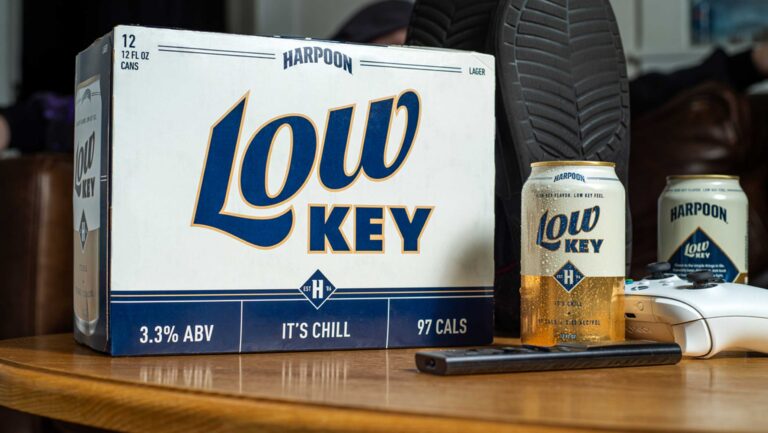
Breweries are centering mid-strength beers in lifestyle occasions. This February, Harpoon Brewery released the fruity 3.3% ABV Low Key, avoiding stylistic callouts and marketing it around extended-drinking occasions like Boston Chilling, the brewery’s daytime music festival held in early June.
“It was built around the idea of a chill day in the sun drinking beer,” says Rob Day, the vice president of marketing for Barrel One Collective, Harpoon’s parent company. “We wanted to capture the vibe and the moment that you’d drink Low Key.”
The Taste Test for Mid-Strength Beer
The session IPA category faltered, in part, because too many entrants tasted watery and unbalanced, like bad diet IPAs. To forge a successful new category, breweries are taking pains to avoid early flavorful missteps.
A decade ago, former pharmaceutical chemist Tom Kester began formulating mid-strength beers to discover “how low you can go before you see a deteriorated flavor profile,” says Kester, a cofounder of Pivo Nova Brewing. “That’s below 2%.”
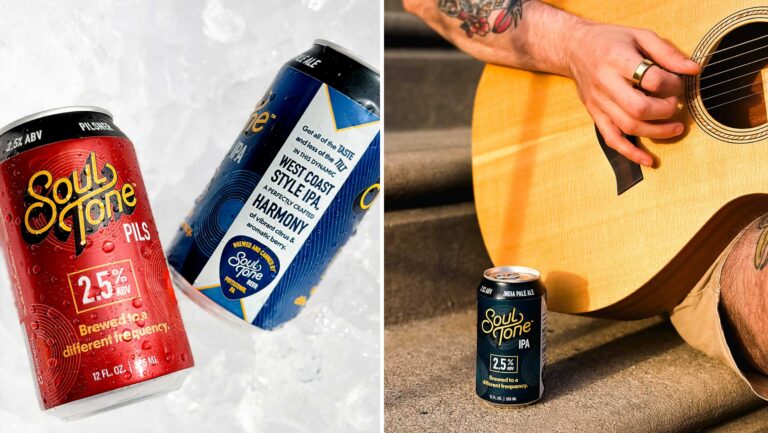
Kester spent six years doing research, trialing yeast strains and brewing temperatures, before developing a patented process that Pivo Nova pitched to breweries. After years of noes, Sly Fox Brewing in Phoenixville, Pennsylvania, partnered with Pivo Nova on the Soul Tone Beer line featuring a 2.5% ABV pilsner and a West Coast IPA released in April.
While Sly Fox’s distribution is rooted in Pennsylvania, Peter Giannopoulos, the president of brewery operations, believes that “Soul Tone has the ability to be a larger brand with wider reach as this segment comes online.”
Can Brewers Make Mid-Strength Stick?
Driving interest requires education. Caroline Foulk launched Beer Girl Brewing in Laguna Beach, California, in 2024 with two gluten-reduced, 3.5% ABV lagers targeted to women. “When I say ‘mid-strength,’ it can fall on deaf ears,” Foulk says. Instead, she focuses on letting her beers speak for themselves through in-person sampling. “Getting out in the market has been the best way to win over consumers,” Foulk adds, noting that Beer Girl is now available in seven states. (It recently earned a $125,000 investment on Shark Tank, not long after Dad Strength received $300,000 on the show.)
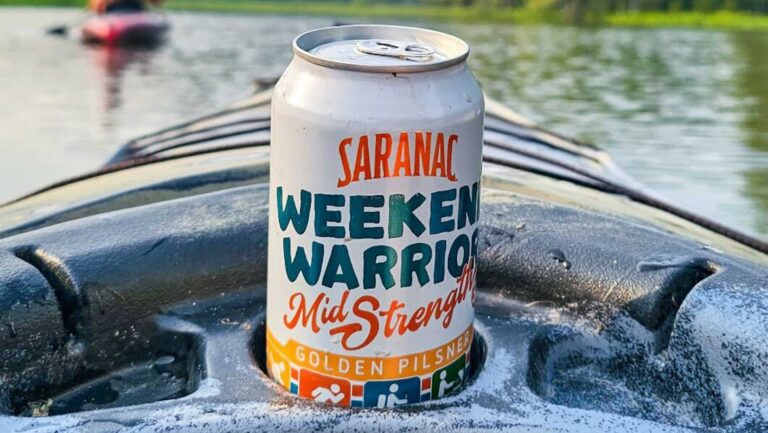
Package size matters for trial. Last spring, F.X. Matt Brewing in Utica, New York, introduced Saranac Weekend Warrior 3% ABV pilsner in 12-packs, a misstep in hindsight. “The inhibitor is the initial reception that low alcohol won’t taste good,” says Fred Matt, the president of F.X. Matt. Consumers don’t want to buy unproven brands in bulk. “We should have launched with six-packs.”
This year, Saranac switched to six-packs and added a Weekend Warrior hazy IPA, now stocked in a new low-alcohol section at Wegmans grocery stores. “It’s almost like building craft beer again,” Matt says. “It’s going to be sample, sample, sample, educate, educate, educate.”
Cost can be a concern, especially as many drinkers associate excessive alcohol with value. But the rise of non-alcoholic beer proves that there’s value in added occasions when you want a beer without the buzz. Non-alcoholic beer paved the path for mid-strength’s opportunity.
“The first question we often get from skeptical people is, ‘Why would a consumer pay just as much or more for less alcohol?’ ” Thomas says. “I say, ‘Look at Athletic.’ That’s the simplest response.”

Dispatch
Sign up for our award-winning newsletter
Don’t miss the latest drinks industry news and insights—delivered to your inbox every week.
Contributing editor Joshua M. Bernstein is a beer, spirits, food, and travel journalist, as well as an occasional tour guide, event producer, and industry consultant. He writes for the New York Times, Men’s Journal, New York magazine, Wine Enthusiast, and Imbibe, where he’s a contributing editor in charge of beer coverage. Bernstein is also the author of five books: Brewed Awakening, The Complete Beer Course, Complete IPA, Homebrew World, and Drink Better Beer.