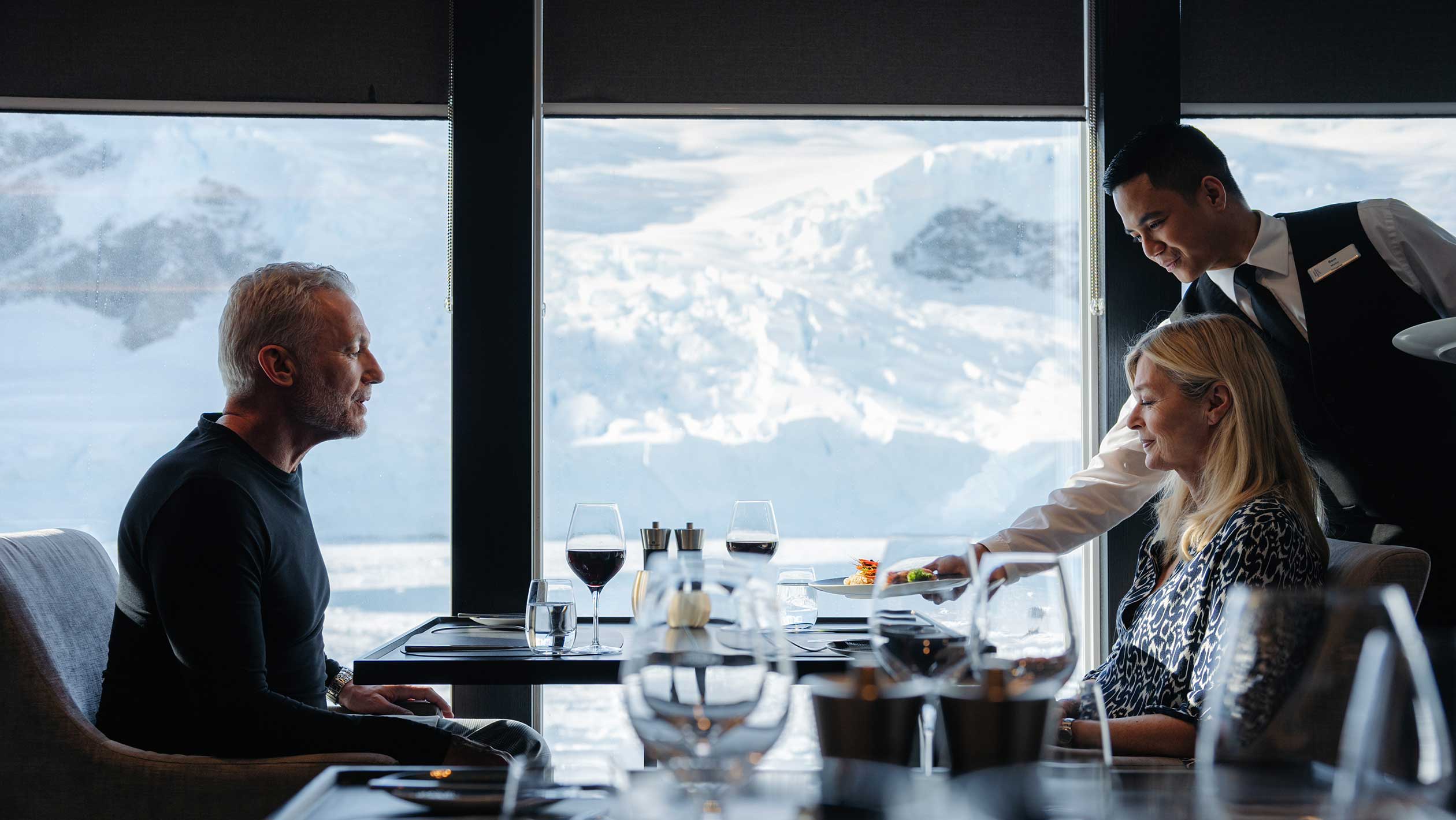
Last year, Illinois-based Cooper’s Hawk Winery & Restaurant marked its 20th anniversary with competitive blind-wine tastings and limited edition magnums. But the biggest celebration happened at sea, when the company chartered Virgin Voyages’ vessel Valiant Lady for a four-night Caribbean cruise for its wine club members.
Virgin Voyages integrated Cooper’s Hawk wines through culinary pairings, custom menus, and cocktails, giving consumers new opportunities to engage with the brand, and the cruise line a chance to highlight experience-led food and beverage offerings. Members chose Cooper’s Hawk wines across a wide range of bars and restaurants—not just during scheduled activations.
This scale of execution may exceed most producer-cruise collaborations, which lie somewhere between placement on a list and an immersive buyout. Still, it illustrates how cruise lines are increasingly positioning themselves as useful platforms for wineries to reach consumers in a unique setting.
Don’t miss the latest drinks industry news and insights. Sign up for our award-winning newsletters and get insider intel, resources, and trends delivered to your inbox every week.
“Cruise ships have the immense advantage of a captive and highly engaged audience,” says Charles Steadman, the director of food and beverage experiences and strategic partnerships for Virgin Voyages. When a guest orders wine in a restaurant or attends a tasting in a hotel, the featured brand interacts with the consumer for no more than an hour or two. “But on a cruise ship, we create the world a sailor lives in for several days,” he says. Passenger touchpoints on the open seas can be a valuable way for wineries to build awareness, foster loyalty, and forge a deeper connection than in land-based settings.
From Placement to Partnership
Tim McEnery, the founder and CEO of Cooper’s Hawk Winery & Restaurant, says Virgin Voyages’ adults-only environment, hospitality-first culture, and focus on genuine connection made them a natural fit, as did the flexibility to create customized programming. “Our primary goal was member engagement, and our hypothesis was that deep engagement drives long-term loyalty.” The sailing sold out, with members immediately inquiring about a follow-up cruise; when Cooper’s Hawk announced their second wine club charter, set for February 2027, more than 30 percent signed up to cross the gangplank again. “Members trust that what we deliver is wholly unique, not a standard cruise or trip with our name attached to it,” he adds. “That combination of access, community, and one-of-a-kind programming is what makes these partnerships so powerful, and why we see cruising as a channel we’ll keep investing in.”
Other ways exist for wineries to get onboard. During an event hosted by the Washington State Wine Commission, Holland America’s director of food and beverage Drew Foulk visited Four Feathers Wine Services, a turnkey producer that makes and packages custom premium wines for nearly 300 clients nationwide. After he saw their sparkling operations, the conversation evolved into developing a bubbly specifically for the cruise line.
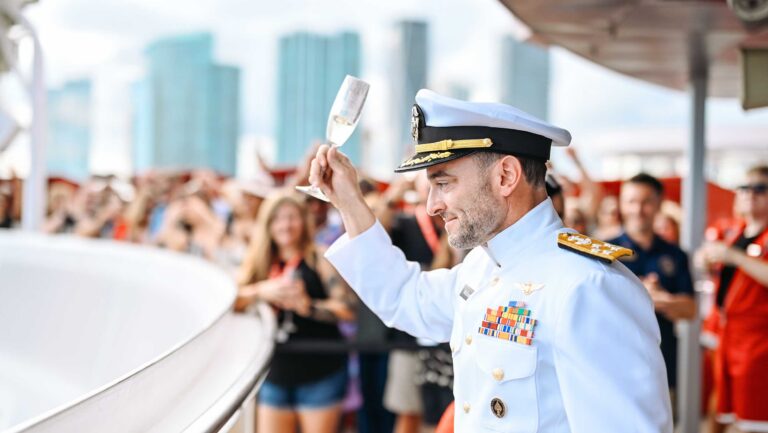
Rebecca De Kleine, Four Feathers’ general manager and director of winemaking, says the project was especially enticing as it directly ties into their goal of furthering their investment into traditional-method sparkling wine production, while proving that Washington state can produce it at scale. And the value goes well beyond the volume, she says. “We’re primarily a B2B wine company, so consumers often drink wines we’ve grown, without ever seeing the Four Feathers name,” she points out. “Holland America gives us an opportunity to demonstrate our capabilities through a very visible hospitality program and to introduce Washington wine to consumers from all over the world.”
Launched fleetwide in 2024, the resulting brut uses Columbia Valley fruit, a nod to Holland America’s Pacific Northwest heritage, and was an instant hit among guests. “While we don’t publicly share specific revenue figures, one strong indicator of success is guest adoption,” says Foulk. “Today it’s the most-served adult beverage across our fleet.” For her part, De Kleine deems it a “significant” portion of Four Feathers’ business, especially within their sparkling wine sector.
Princess Cruises works with Caymus Vineyards, Silverado Vineyards, and Frescobaldi for producer-specific wine-pairing dinners. Frescobaldi’s wines are featured in a $99 Grand Tuscan Dinner at Sabatini’s Italian Trattoria, while the Caymus and Silverado dinners cost $145. “Our beverage and culinary teams collaborate on the menu, pairings and presentation,” says Sarah Hancock, the director of beverage operations and development for Princess Cruises. “Every element must remain true to the winery while working seamlessly aboard Princess.” The partnerships give the wineries a captive audience and a polished setting in which to showcase their wines, while allowing Princess to differentiate its food and beverage program with lauded producers and curated culinary experiences.
Why Wineries Are Looking to Cruise
Steadman has noticed a shift in consumer behavior, with a passive consumption mindset giving way to a more active one as people increasingly seek to learn about, participate in, and connect with a brand rather than simply purchase a product. Wineries are finding cruise lines well suited to that experiential approach. “A sailor might first discover a wine at dinner, experience it again through a pairing or activation, revisit it at another venue, and hear its story through our onboard teams,” Steadman says. “That creates multiple meaningful touchpoints within one journey.”
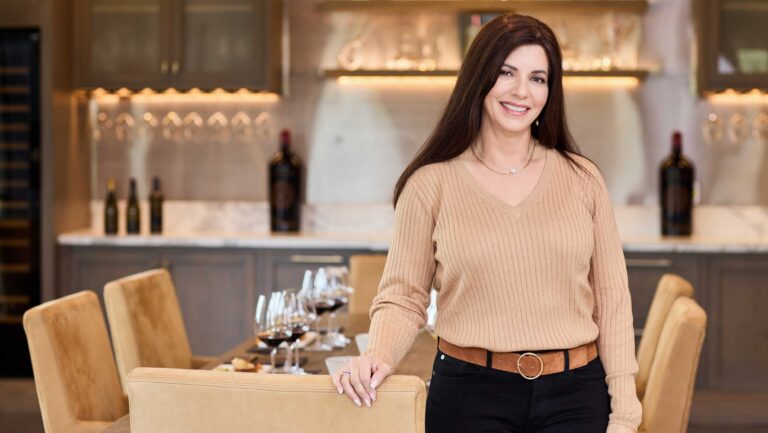
This past June, boutique Napa winery Eleven Eleven Wines took its winery outside of the tasting room when they participated in a seven-day Mediterranean sailing aboard the 200-passenger Scenic Eclipse II, bringing roughly 60 guests—including wine club members and new customers—into its orbit. In addition to hosting tastings and a dinner and gifting attendees with swag, the wines were available at the ship’s bar and lounge, extending the experience to guests beyond its fan base.
As a first-generation Greek American, Eleven Eleven cofounder Ellie Anest found it especially impactful to connect the winery’s traditions while sailing through the Mediterranean. “When you spend seven days traveling, dining, and experiencing new places together, you develop a very different relationship than you can during a traditional 60- or 90-minute winery visit.”
The ROI Goes Beyond Onboard Wine Sales
While sales from tastings, dinners, glasses, and bottles are part of the equation, a successful cruise alliance ideally doesn’t end when the journey does. So how does engagement translate into ongoing business value? The real measurement, Anest believes, comes in the form of repeat purchases, wine club memberships, referrals, and winery visits. “Distribution puts a bottle in someone’s hand, but an experience gives them a reason to remember the bottle—and the people and story behind it,” she says.
To date, Eleven Eleven has seen a 33 percent conversion rate among non-wine club passengers plus two referrals. Anest says she’d absolutely consider another partnership, putting more tracking mechanisms in place including dedicated QR codes for club members, cruise-specific offers, and referral codes to better measure acquisition, conversions, purchases, and winery visits.
But long-term value can look differently depending on the cruise line’s business model. Adventure cruise line HX Expeditions seeks partners that share their sustainability approach and commitment to supporting smaller communities. Beyond that, “what creates the greatest value is often the story attached to the wine and how it enhances the overall dining experience,” according to Florian Kibgilka, the director of hotel operations for HX. Since most wine is bundled into the all-inclusive fare, sales aren’t a primary revenue focus, and consumption patterns and guest feedback are used to determine what resonates.
HX recently started working with Austria’s Weingut Regele on a wine pairing dinner for their Tide to Table culinary excursion in Greenland and on a fortified Zweigelt for the line’s 130th anniversary, which is matured in barrels passed among HX vessels. Since the partnership is still new, it’s too soon to quantify its long-term impact, but it illustrates how direct sales aren’t always the key metric.
No matter how wine is experienced onboard, Anest believes a cruise partnership needs to be more than another distribution channel. “What can you create that they couldn’t experience ordering your bottle at a restaurant–and most importantly, what happens after the experience is over?”

Dispatch
Sign up for our award-winning newsletter
Don’t miss the latest drinks industry news and insights—delivered to your inbox every week.
Kelly Magyarics is a wine, spirits, travel, and lifestyle writer in the Washington, D.C. area who holds the WSET Diploma. You can reach her on her website, kellymagyarics.com and on Twitter and Instagram @kmagyarics.