American Viticultural Areas (AVAs) are a way to call out the notable features of a winegrowing region, create a brand that is recognizable to professionals and consumers, and ultimately tell a better story about the wines crafted from a certain area. These reasons and more help explain the proliferation of proposed new AVAs in the United States. From California to Minnesota to New Jersey, seven new regions seek to call out the quality of their wines with their own AVA.
Getting an AVA approved can take several years as it wends its way through the Alcohol and Tobacco Tax and Trade Bureau (TTB), which approves the legal designation. These seven areas are still in the early stages, but wine professionals affiliated with the potential AVAs offer a sneak peek at what to expect from each.
Annapolis-Sea Ranch AVA, California
The proposed Annapolis-Sea Ranch area is wholly contained within the West Sonoma Coast AVA and is located directly north of the Fort Ross-Seaview AVA and south of the Sonoma County border. If approved, it will be 26,637 acres with 651 acres of grapes spread over a dozen vineyards.

Don’t miss the latest drinks industry news and insights. Sign up for our award-winning newsletters and get insider intel, resources, and trends delivered to your inbox every week.
Fog is a defining factor in the region, says Patrick Shabram, who owns a geographic consulting business. The area is only a few miles from the coast, but much of the coastal fog is blocked by the surrounding mountains. “Because of the filtering of the fog, there is enough solar radiation close to the upper end of the fog layer to allow full maturity in grapes,” he adds.
Most vineyards are planted between 600 and 1,000 feet above sea level. Counterintuitively, higher elevation areas in Sonoma County are warmer, says Carroll Kemp, the winemaker and cofounder of Alma Fria. “The farther away you get from the [Pacific Ocean], either going inland or going up in elevation, the warmer it makes you because you’re farther away from the air conditioner.” The area is cooler than the Fort Ross-Seaview area but still much warmer than the coast.
Additionally, most vineyards in the area are planted on a sandy loam called Ohlson Ranch. Sonoma County’s highest concentration of this soil type, which is similar to Goldridge but contains more sandstone, is found in Annapolis-Sea Ranch.
This area is known for Chardonnay and Pinot Noir. The reds in particular reflect the fact that Annapolis-Sea Ranch has the highest percentage of redwood trees in the West Sonoma Coast AVA, which Kemp says lend citrusy “redwood spice” and damp conifer characteristics alongside black tea-like tannins.
Lake Hennessey AVA, California
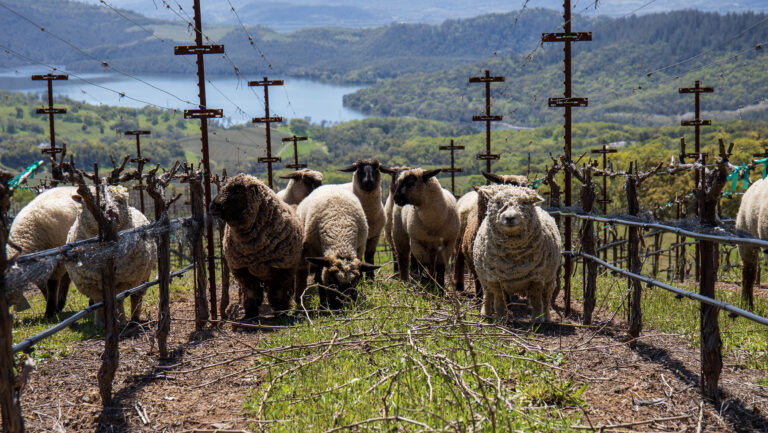
The 4,495-acre Lake Hennessey AVA will further delineate the Napa Valley AVA by adding a new subdivision immediately east of the St. Helena AVA and south of Howell Mountain AVA. Sobrante soil, a well-draining, medium-depth loam, is the main soil type, with some Haire and Bale present. Elevations stretch from 240 to over 1,400 feet above sea level. Approximately 355 acres are planted, with Cabernet Sauvignon, Cabernet Franc, Merlot, and Petit Verdot being the predominant varieties.
The main distinguishing characteristic of the climate in the proposed Lake Hennessey AVA is that it’s slightly cooler than its neighbors to the west, east, and south, but warmer than the Howell Mountain AVA. “Air sliding down Howell Mountain to the valley lowers the nighttime temperatures,” says Shabram. The lake may also help draw the air down, and wind coming through the Sage Canyon Gap seems to help moderate daily highs, but air drainage is the main contributor to climate.
“We typically harvest these wines a little later, so we get a nice ripening season in the area,” says Perry Clark, the president of Amizetta Family Estate Wines. “The cooler weather and longer ripening lead to jammy flavors, black fruit characteristics with exceptionally smooth tannin content coupled with balanced acidity.”
Deschutes River AVA, Oregon
The 723,760-acre Deschutes River AVA will be the first recognized winegrowing region in central Oregon. The area, which was proposed by the Central Oregon Winegrowers Association, is nestled between the Cascade Range and Ochoco Mountains. It encompasses the cities of Redmond, Madras, and Pineville.
The potential AVA sits between 1,500 and 3,500 feet, the ideal elevation for growing grapes in this warm and arid region. “The desert climate means high solar radiation and significant diurnal shifts, which contribute a nice balance of acidity in the white wines especially,” says Kerry Damon, the vineyard manager for RedSide Vineyard. While traditional European grapes such as Cabernet Franc, Cabernet Sauvignon, and Riesling are doing well at the lower elevations, five wineries and eight growers on 77 acres are also experimenting with hybrids such as Marquette, Marechal Foch, La Crescent, and Frontenac Gris at higher elevations where periods of freezing temperatures last longer.
Soils are also part of the AVA’s story. They are made up of a shallow and complex mix of wind-deposit silt, volcanic ash, and colluvium atop volcanic and sedimentary bedrock. “We’re seeing both red and white wines with some mineral complexity,” says Damon. “In the red wines, we get to a high degree of ripeness,” which generates ripe fruit flavors such as cherry, plum, and cassis.
Hunterdon Hills AVA, New Jersey
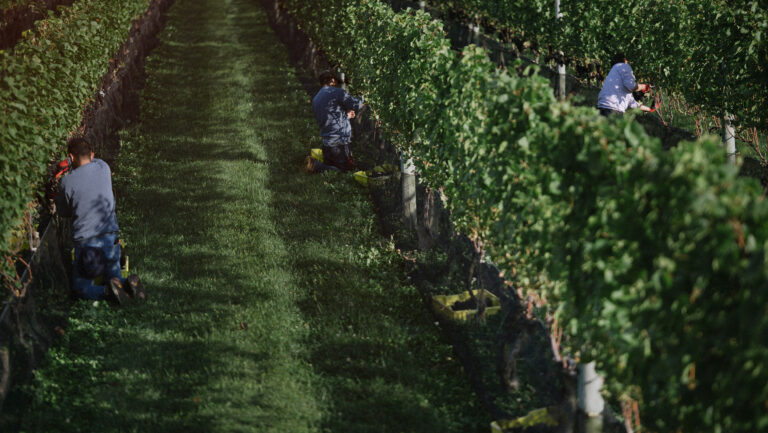
Rutgers University recently conducted a study of existing and proposed AVAs in New Jersey to determine which areas had the highest percentage of quality land for winegrape growing. It identified the Hunterdon Hills area as having the second-highest percentage of suitable land for premier grape production. The region sits squarely in Hunterdon County in the west part of the state and covers slightly more than 200,000 acres. Boundaries include the Delaware River to the west and foothills of the Sourland Mountains to the south.
The area boasts deep, well-drained loam soils and enough water that almost all the vineyards are dry farmed. While many New Jersey vineyards are planted on relatively flat land, most of the Hunterdon Hills’ 12 vineyards grow between 300 and 600 feet. “We tend to have cooler nights and more diurnal shift, which helps us retain natural acidity and aromatics,” says Mike Beneduce, the owner and winemaker at Beneduce Vineyards in Pittstown.
These growing conditions make the area perfect for high-acid, aromatic whites such as Riesling, Gewürztraminer, Chardonnay, and Albariño. Growers are also crafting medium-bodied reds including Pinot Noir, Cabernet Franc, and Blaufränkisch.
Niagara Lake Plain AVA, New York
The proposed Niagara Lake Plain AVA sits directly north of the existing Niagara Escarpment AVA and covers 161,280 acres. It is also bound by the Niagara River to the west, Lake Ontario to the north, and a series of roads and creeks to the east. Eight wineries have approximately 340 acres under vine. The most popular grapes are Cabernet Franc, Chardonnay, and Pinot Noir, although growers also have plantings of other varieties such as Saperavi, Gewürztraminer, and Riesling.
Jim Baker, the owner of Chateau Niagara Winery, attributes the AVA’s distinguishing characteristics to a combination of geology and weather. “The area was formed by the Niagara Escarpment, a 250-foot step in land caused by erosion after the last ice age,” he says. Waterfalls from ancient lakes poured tons of sandstone and gravel into the region, creating a massive fan of well-drained soils.
Lake Ontario is three times deeper than nearby Lake Erie and doesn’t typically freeze in the winter, “so it acts as a temperature sink and makes this the second warmest spot in the state for growing after Long Island,” says Baker.
In addition, the predominating winds in the area often push apart the clouds directly over the Niagara Lake Plain region, causing a phenomenon local farmers refer to as ‘the hole in the sky.’ “We have close to twice the solar radiation as areas even close by,” Baker notes.
According to Nicholas Schroeck, the assistant winemaker for Chateau Niagara, that intense solar radiation leads to red grapes with thick skins, strong tannins, and a salty minerality that reminds him of wines from Priorat. “The whites have more of a mineral bent than a fruit- or elegance-based bent,” he adds.
Minnesota’s Glacial Ridge AVA, Minnesota
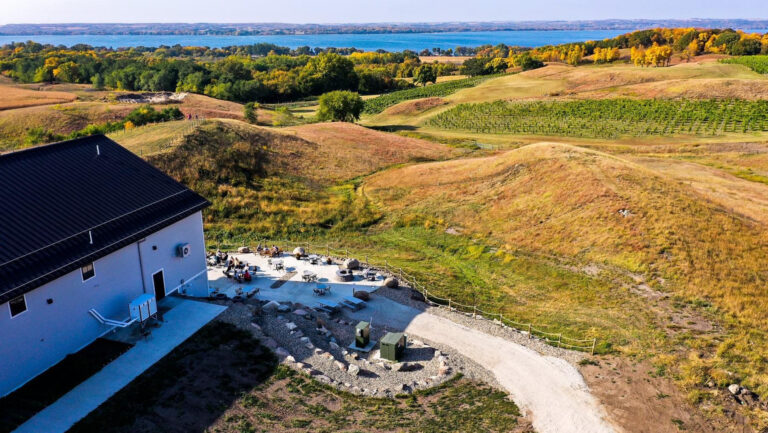
If approved, Minnesota’s Glacial Ridge AVA will cover more than a million acres in west-central Minnesota, although only 55 acres are planted. The region is currently home to seven vineyards growing mostly hybrid grapes developed specifically for cold-climate regions, including Marquette and Frontenac for red wines and La Crescent, Frontenac Blanc, and Itasca for whites.
The proposed AVA stretches between six counties, including Grant to the north and Kandiyohi to the south. It tracks a band of Alexandria Moraine soil that was created when slowly melting glaciers deposited gravel and sand during the last ice age. “When the glaciers stalled in this area, they also created a hilly landscape that’s not typical of this region,” says Sarah Grew, the marketing specialist and production assistant at Rolling Forks Vineyard in Glenwood. The hills rise up to 1,500 feet; they provide vineyards with good southern exposure and promote air drainage, which helps mitigate the ever-present risk of frost.
Jason Kallsen, a sommelier and founder of Twin Cities Wine Education, calls Minnesota’s Glacial Ridge ground zero for the presence of “kettle lakes,” deep bodies of water that create distinct microclimates. “The wines have a little more richness and texture when you compare them to the rest of the state,” he says.
The Dalles AVA, Oregon
The proposed Dalles AVA generally parallels the Columbia River to the north, while its eastern boundary follows the western rim of the Deschutes River canyon. The proposed area contains 66,900 acres, of which 325 acres are currently planted in three larger vineyards and several smaller ones.
Dave Brown, the owner and manager of Threemile Vineyard, says this area is most notable for what’s known as the Chenowith Formation, which consists primarily of sedimentary and volcaniclastic material deposited by streams and mudflows from eroding volcanic highlands to the west. “It was fast running, picked up a lot of mineralization, and is very porous,” he says. “This is the only place where the Chenowith lava flow exists.” Its relatively soft, semi-consolidated rock is easier for grapevine roots to penetrate than the hard Columbia River basalt that forms the surface bedrock across much of the surrounding Columbia Basin.
In addition, the average elevation in the proposed area is 980 feet above sea level—well below the 1,230-foot average for vineyards in most surrounding areas. Lower elevation, in this case, equals warmer temperatures and the ability to grow more warm-weather varieties such as Syrah, Tempranillo, Cabernet Sauvignon, Albariño, Marsanne, and Roussanne. However, Brown says to expect a cooler, fresher expression of the wines crafted from the area.

Dispatch
Sign up for our award-winning newsletter
Don’t miss the latest drinks industry news and insights—delivered to your inbox every week.
Sophia McDonald is a freelance writer who lives in Eugene, Oregon. Her work has appeared in numerous publications and on websites, including Wine Enthusiast, Eating Well, Sip Northwest, and 1859 Oregon’s Magazine.