“When I first started going to Burgundy in the early ’80s, nobody was really talking about Aligoté,” says Daniel Johnnes, the wine director at Daniel Boulud’s Dinex Group. “It was just a simple, highly acidic wine, and the only time people were talking about it was in terms of a kir, a little refreshing cocktail. But time has shown that Aligoté can make a serious wine.”
Aligoté is Burgundy’s second-most-planted white grape variety, making up 6.5 percent of the region’s vineyards, but it features in none of the area’s best-known appellations. Given its tendency toward high acidity, much of it has traditionally gone to Crémant production.
Today, Aligoté has increasingly become not only a serious wine, but a popular one. “I think there’s a shift towards a preference for more acidity, more minerality, and you’re getting that in Aligoté,” says Jeff Patten, the founder of Flatiron Wines & Spirits in New York City and San Francisco. “We’ve long supported Aligoté in our retail stores. At least 10 years ago we started writing newsletter articles about the variety, and we’ve always carried a bunch of examples.”

Don’t miss the latest drinks industry news and insights. Sign up for our award-winning newsletters and get insider intel, resources, and trends delivered to your inbox every week.
As a new generation of producers has emerged and put the focus on terroir and “producing good quality grapes, naturally, the wine got better,” Johnnes says. “Aligoté became a little trendy, so people saw there was a good market for it. So production expanded and the quality improved. There’s been a natural evolution. It’s been really good for the consumer and for the grower.”
Aligoté’s Rise in Bouzeron
Bouzeron, the only French appellation entirely devoted to the variety, has seen a corresponding rise in interest. “Twenty-five years ago, the Bouzeron Association represented only seven vignerons,” says Pierre de Benoist, the president of the association and manager of Domaine de Villaine, which his family owns. “In 2025, I registered 43 vignerons, not only vignerons located in Bouzeron, but from outside as well,” he says, noting that vignerons from neighboring Rully and further afield across Burgundy are investing in the appellation.
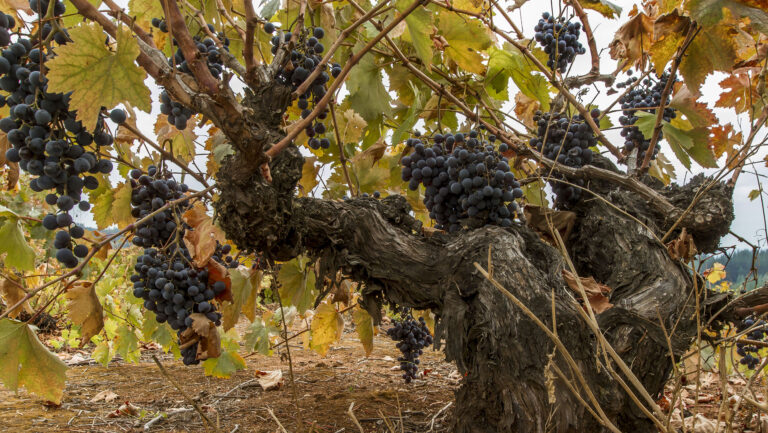
After the devastation of phylloxera, Bouzeron was one of the only places where Aligoté was replanted at top, high-elevation sites between 250 and 310 meters above sea level; in other areas of Burgundy it was often consigned to poor sites that gave it little chance to show its quality, says de Benoist. The presence of old vines—up to 115 years old on the De Villaine estate—in their location led to rapid acceptance of the Bouzeron AOC when de Benoist’s family led the application process back in 1997. “It is very important; you can’t express terroir without good plantings,” de Benoist says.
Bouzeron’s success has gone on to inspire Aligoté growers elsewhere. “I think Bouzeron showed the way to quality Aligoté,” de Benoist says. “We showed people that we are able to express the terroir thanks to the quality of Aligoté,” through stricter control of yields, pruning, and other vineyard practices.

Understanding Aligoté Clones
There are two major sets of Aligoté clones, Aligoté Doré and Aligoté Vert. De Benoist says Bouzeron was fortunate to be planted with Aligoté Doré, named after the grapes’ golden color at veraison. Many areas outside of Bouzeron were planted with Aligoté Vert, a higher-yielding clone. “Aligoté Vert is very well adapted to a rich terroir and very productive,” says de Benoist, which made it popular at a time when volume was the priority. “It produces so many grapes per plant that they stay green, and maybe this is the reason why we called it the ‘green’ Aligoté. It kept its acidity very well, so it was very good as a base wine for Crémant and for kir cocktails.
If anything has held back the recognition for Aligoté Doré’s potential, it’s Aligoté’s aromatic character. “If you are a good vigneron, Chardonnay can express the terroir very quickly. One year after bottling, you can feel the notion of terroir in the wine. With Aligoté, it takes more time,” says de Benoist. “Maybe you have to wait two, three, or four years before tasting the quality of the terroir, because at the beginning, the aromatic flavor from the plant is very present, and you have to let the wine digest the aromatic components before it can express the terroir.”
Global warming and improved winemaking has created a new identity for Aligoté Vert. “You have some producers that are now making Aligoté with oak aging, which softens the acidity and makes it more appealing for people with a taste for Meursault,” says Patten.
Climate change has had other impacts. De Benoist notes that Meursault is pursuing a 10-year trial allowing Meursault AOP wines to include up to 10 percent Aligoté as they explore ways to maintain freshness in the appellation’s wines. He argues that for both Aligoté clones, the grape’s thicker skin will protect its character as conditions grow warmer, whereas Burgundian Chardonnay is more likely to change. “With Aligoté, the thicker skin of the fruit is perfect for protecting the juice against the luminosity of the sun,” he says. “In Aligoté, we will continue to taste the freshness from the acidity, complemented by a small touch of bitterness from the skin, which adds complexity.”
Aligoté Beyond Burgundy
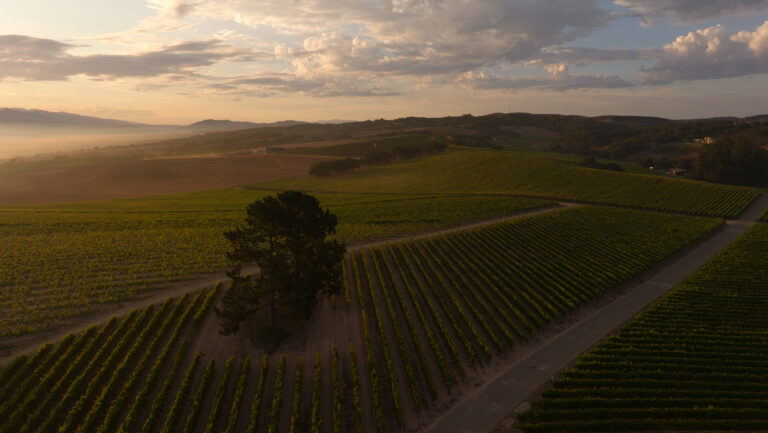
There is a great deal of Aligoté in Eastern Europe, particularly in Moldova and Ukraine, and California, where winegrowers who specialize in Burgundian varieties are also embracing the grape. However, there is very little data on where the grape is grown globally as Aligoté is typically included with “other white” varities in most reports. Dieter Cronje, the winemaker at Presqu’ile in Santa Barbara, California, sourced Aligoté from Jim Clendenen, the late winemaker and owner of Au Bon Climat. “We got our plant material from Jim Clendenen’s vineyards out in Santa Maria before it was ripped up, and grafted it over in 2018 and 2019,” says Cronje. Presqu’ile has five acres of Aligoté now, with more being planted.
Cronje says the grape has not lived up to its tart reputation. “We do see quite a bit of acidity, but it’s in no way out of sync with what we get in Chardonnay,” says Cronje. “We do tend to see quite a bit more malic acid here than I think most vineyards do. But by completing [malolactic fermentation] we’re able to tame the acidity if we do have a high-acidity vintage.” Cronje also favors warm fermentations and puts off sulfur additions to dampen excessively fruity notes.
While de Benoist says he shared some cuttings of Aligoté Doré with a vineyard in Santa Cruz, most of the plant material in California is Aligoté Vert. “Right now there’s not as much genetic diversity in Aligoté in California as there is in so many of the mainstream varieties,” Cronje says. “So you really don’t have a lot of choices. As that changes, I’ll find it interesting to see who plants what and how that gets appreciated, or not, by the market.”
Aligoté’s Appeal Beyond Burgundy Drinkers
“[Aligoté is] getting some of the Burgundy magic for a lower cost, absolutely, especially as Burgundy costs have gone up so much,” says Patten. “I think the more important part of the puzzle is just the increasing interest around the world in native varieties and trying new things. I don’t think it’s a grape just for Burgundy lovers. I think it’s a grape for anybody who is interested in high-acid wines, anybody who’s interested in exploring wine and discovering indigenous grapes.”
Johnnes tells a story about a casual visit to the home of winemaker Aubert de Villaine, who—aside from being the founder of Domaine de Villaine—is also a partner in the prestigious Domaine de la Romanée-Conti. When de Villaine welcomed him with a bottle of Bouzeron De Villaine, Johnnes “was thrilled,” he says. “It was a testament to his friendship, right? He didn’t have to prove anything, he didn’t have to show off. And it was absolutely delicious. This is what wine is about. It’s making it unpretentious and a moment to share. And I think that’s what Aligoté can do at its best.”

Dispatch
Sign up for our award-winning newsletter
Don’t miss the latest drinks industry news and insights—delivered to your inbox every week.
Jim Clarke writes about wine, beer, and spirits for trade and consumer publications, including Beverage Media, Fortune, and World of Fine Wine. He is a sommelier and the U.S. marketing manager for Wines of South Africa.