Over the course of the last decade, the booming demand for tequila in the U.S. helped usher mezcal into the spotlight. Now, drinkers are beginning to explore beyond agave’s biggest names, and some producers believe that curiosity may extend to another traditional Mexican spirit: sotol. IWSR forecasts a six percent compound annual growth rate (CAGR) for sotol through 2027.
“It’s still niche,” says Jose Luis Hermoso, the IWSR research director for Central and South America. “We haven’t had any big boom, especially with people drinking less. The fact that we are in fact growing is a good thing.”
Hermoso says sotol’s CAGR volume in the U.S. was 20 percent from 2019 to 2024, but the spirit’s volume declined by nine percent from 2023 to 2024. Still, he concludes, “globally, sotol consumption is growing. The 2019 to 2024 CAGR for sotol globally was [up] seven percent.”
Don’t miss the latest drinks industry news and insights. Sign up for our award-winning newsletters and get insider intel, resources, and trends delivered to your inbox every week.
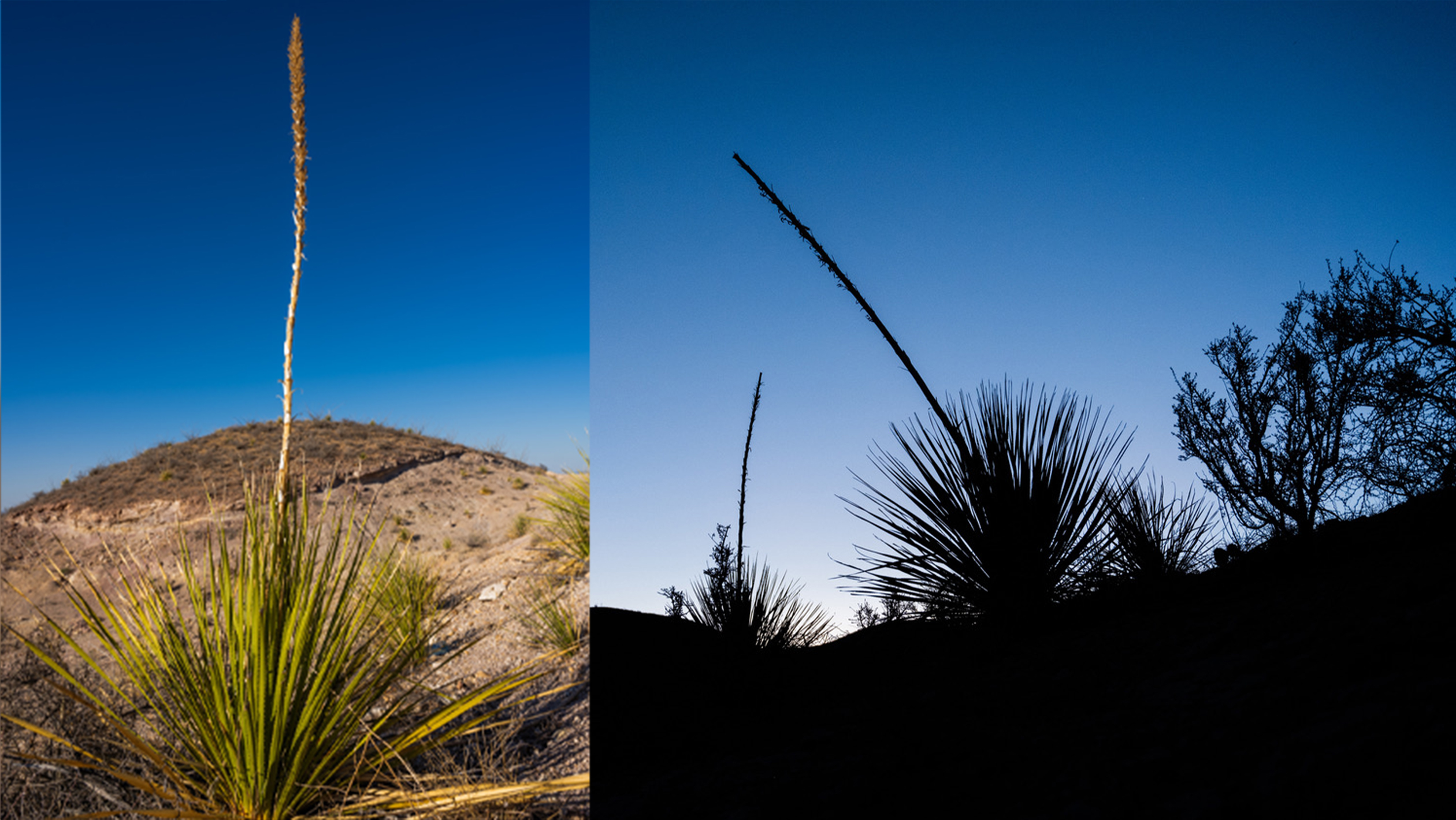
Unlike tequila and mezcal, which are made from the Mexican agave plant, sotol is produced from a shrub known as Dasylirion commonly found in areas of Mexico including Chihuahua, Durango, and Coahuilam where it is holds denomination of origin (D.O.) classification. The plant also grows in Oaxaca. However, sotol from the state does not have D.O. status—nor is it recognized in the U.S., where Dasylirion grows in places like New Mexico, Arizona, and in Texas, which produces a small amount of sotol.
Indigenous peoples long made use of the Dasylirion plant, and sotol’s own history began when Spanish colonizers taught locals distillation techniques in the 17th century. However, sotol developed the reputation of a cheap moonshine-like spirit for the lower classes, and it was banned throughout much of the 20th century. In the 1990s, the Mexican government began issuing legal production permits that allowed sotol to reemerge from the shadows, just as tequila and mezcal were rising in popularity in bars in the U.S.
Sotol is a terroir-driven spirit with a unique flavor profile that effectively distinguishes it from agave spirits. “If you tasted [sotol from different regions] next to each other, they could seem as different as whiskey and gin,” says Ansley Coale, the cofounder of Craft Distillers, which builds and markets spirit brands, including some sotol. “That’s one of the promises of the product, there are more variations than mezcal.”
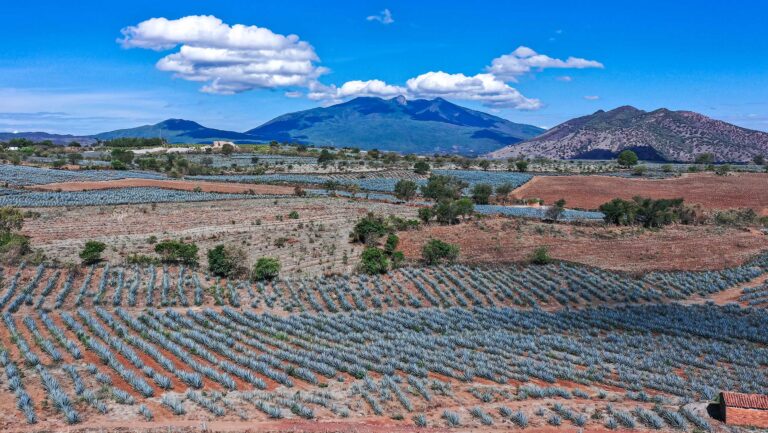
The regions that have earned sotol’s D.O. sprawl across forest-covered mountains, deserts, and prairies, with each stamping the spirit with their own identities. Mountain sotol is verdant and lush with notes of eucalyptus and earthy mushroom, whereas desert sotol can be spicier with notes of pepper and tobacco. Sotol takes on a more floral, fruitier character when it’s from the prairies.
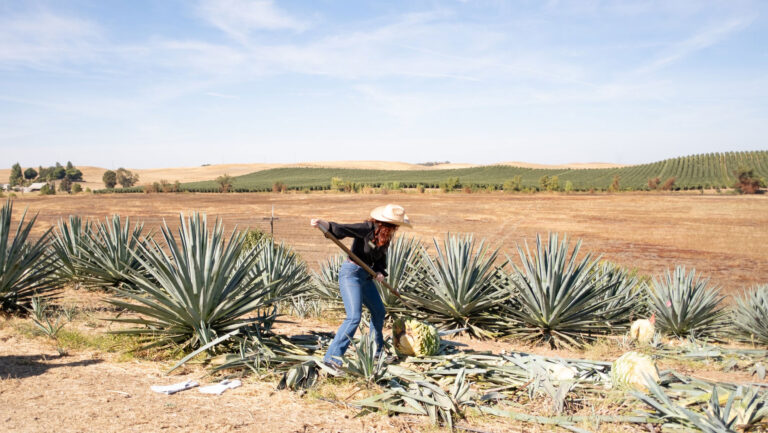
Sotol is considered more sustainable, too. While agave plants must be completely uprooted, with the ecosystem constantly disturbed and new plants taking years to grow, the roots of Dasylirion plants can remain intact as long as they’re harvested with care.
Sotol first made its way into the U.S. in 2006, and increasingly in recent years, it’s gained traction at bars specializing in agave spirits. A few factors are driving growth for this spirit, but whether sotol will reach the heights of tequila and mezcal has yet to be seen. Still, some producers are betting the centuries-old spirit may be the next major Mexican category to break through.
The Growth of Sotol, from Producers to Bars
Hacienda de Chihuahua, founded in 1996, was one of the first major commercial sotol producers in Mexico. The brand was one of the first to arrive in the U.S. in 2006. One of the most visible signifiers of the category’s growth is the steady crop of brands that have launched in the last five years.
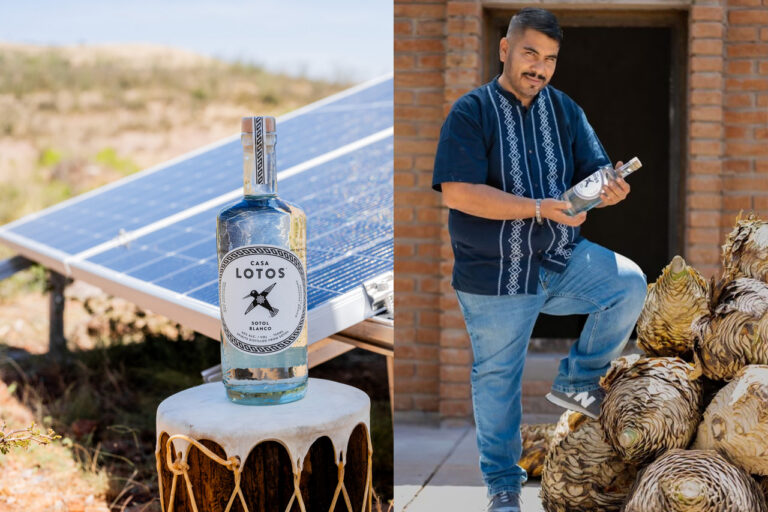
“I’ve seen a much bigger spike in sotol brands emerging recently, especially in New York City,” says Luis Alatorre, the general manager of The Cabinet Mezcal Bar in Manhattan. More recently launched sotol brands like Casa Lotos in 2024 and Cardenxe in 2022 have joined some of the category’s established names like Sotol Por Siempre, Sotol Clande, and Flor Del Desierto. In 2022, the first celebrity-owned sotol hit the market with Lenny Kravitz’s Nocheluna Sotol. But perhaps more significant is the growth in production volume and distribution some of the existing producers are experiencing.
“Producer numbers are growing, but a small number of large, established producers are the most prominent,” says Hermoso. “What is more common is established producers with enough capacity increasing the number of brands produced under contract for other brand owners to be marketed in the U.S.”
Across the country, sotol is finding its place on back bars. Beverage director Alex Dominguez built a sotol-driven bar program for New York City’s Bar Calico when he took the reins in 2021. At None of the Above in St. Louis, Missouri, bar manager Fionna Gemzon regularly features the spirits in cocktails. “It’s really only in the last two years I’ve started seeing it appear everywhere—and not only in Mexican bars or Mexican-adjacent, Southwestern bars like Bar Calico,” says Dominguez.
Mexico is still the primary consumer of its own spirit, accounting for 63 percent of sotol consumption globally in 2024. The U.S. accounted for 36 percent; the rest of the world combined makes up that last one percent, according to IWSR. When Cat Bite Club opened in Sinagpore in 2023, founding partner Jesse Vida made sure to include the spirit on the menu. Now, Vida sees more brands and more visibility, and says “it’s no surprise sotol as a category is now more discovered and sought after” amid the popularity of agave spirits.
The Push for Awareness
Although interest in agave spirits paves a clear path toward this Mexican spirit, for it to really shine, consumers need to understand why sotol is unique and special, and that it’s not actually made from agave.
“I see bartenders still calling it an agave spirit,” Dominguez says of the education gap. “But a lot of sotol distillers are just happy to get exposure.” There’s the option to position sotol right alongside tequila and mezcal, which stands to give the spirit some momentum, but the bartenders most enthusiastic about sotol tend to experiment with it, using it to replace gin or rum or building entirely new cocktails around it. Framing sotol as something new and distinctive could be the better formula for success.
“More seasoned drinkers are champing at the bit, waiting to get onto the next exciting thing,” says Melissa Mathieson, the founder of Siete Sirenas Mexican Spirits. “Sotol answers that, as does [Mexican spirits like] raicilla and bacanora. Even with the tequila boom, some people are already getting bored with it and everything happening in the industry, and they’re interested in these other spirits that could come next.”
Sotol brings plenty to the table in terms of how brands and bartenders can engage consumers. There’s its history, which can get personal distillery to distillery. Take the head distiller at Casa Lotos, Geraldo Ruelas, for example. “He’s fifth generation,” says Aaron Dujovne, the founder of Casa Lotos. “Geraldo learned from his grandfather. Now his kids are distilling.”
Then there are the unique flavors of the sotol plant and its potential for sustainability. How this is all presented to consumers varies bar to bar, but whether sotol is framed as mezcal replacement or as its own novel category, drinkers are slowly but surely becoming interested and informed.
“When we first launched, it was hard to find distribution,” says Luigi Ambrosi, the founder of Cardenxe. “No one knew about or believed in the category. That was only in 2022. Now, most bars I go to in New York, they know what sotol is, and good bars already have a bottle on the back bar.”
Challenges for Sotol
Sotol appears to have a solid future, but likely not the runaway success of tequila or mezcal. It’s still at the beginning of its journey, so much of its potential growth rests in how consumer education is handled and how consumer interest subsequently translates to demand. Sotol has the appeal of a new, exciting spirit to explore, but it’s making its grand U.S. entrance at a time when the industry at large is stacked against anything new.
“Everyone is tightening the purse,” says Dominguez. “It becomes even more important for spirits to stand out.” But the hardest part of the job is often trying to convince a customer to “try this spirit from Northern Mexico” when all they want is “whatever they’re accustomed to,” adds Dominguez.
The cost of sotol only adds to its challenges. “Tequila can be expensive, but the amount of case deals bars can get, they’ll prioritize sustaining that business over … bringing in newer products,” says Dominguez. “If bars cut down on costs, sotol will be one of the losers.”
This, in turn, creates a challenge at the distributor level. “Distributors don’t have time for anything they can’t sell right now,” says Coale. “Introducing a new product that might not sell that well for a few years … you can get very close to zero on the chances of a larger distributor taking that bet.”
Instead of sweeping the nation, sotol is slowly but steadily popping up in bigger cities with mature bar scenes, where bartenders already well-versed in Mexican spirits can get their hands on what’s new. The spirit has history, culture, flavor, uniqueness, and versatility in cocktails working for it, but it might not have the fortune of good timing like tequila and mezcal. Ultimately, the economy may have the final say.

Dispatch
Sign up for our award-winning newsletter
Don’t miss the latest drinks industry news and insights—delivered to your inbox every week.
Courtney Iseman is a drinks writer and consultant based in New York City. She is level-one certified in spirits education by the Wine & Spirit Education Trust and a cicerone certified beer server. Her work has appeared in outlets including The Washington Post, Bon Appétit, Inc., Slate, Food & Wine, Wine Enthusiast, Punch, VinePair, and Craft Spirits & Distilling.